
Faiz Hameed jailed marks a historic moment in Pakistan’s civil-military history, as a military tribunal has sentenced the former head of the powerful Inter-Services Intelligence (ISI) to 14 years in prison on charges including political interference, abuse of authority, and leaking classified information. The verdict represents the first-ever conviction of a former ISI chief, signaling a rare instance of accountability at the highest level of Pakistan’s security establishment.
The ruling has drawn widespread attention domestically and internationally, given the ISI’s long-standing influence over Pakistan’s political and security landscape.
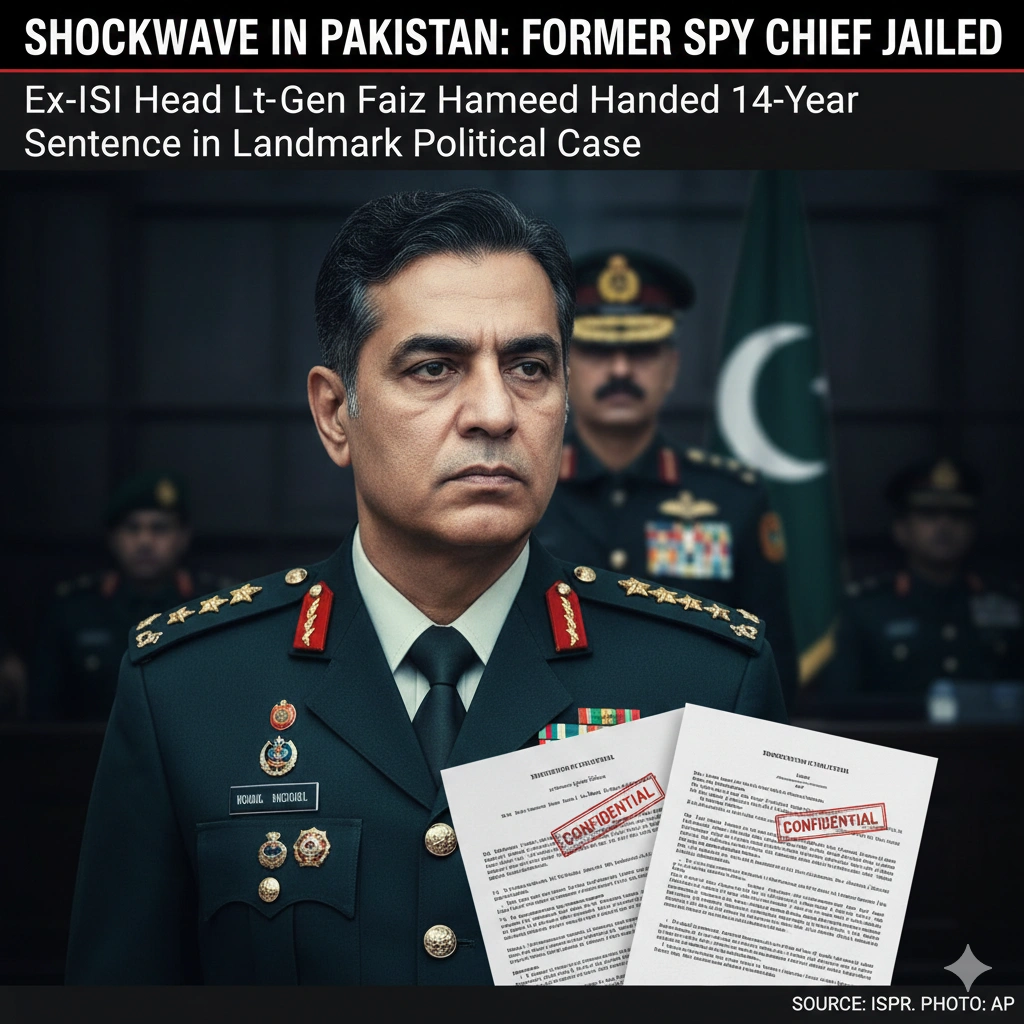
Military Tribunal Convicts Faiz Hameed After Year-Long Trial
According to an official statement released by the Pakistan Army, the sentence followed a trial lasting more than a year under military law. The tribunal found Faiz Hameed guilty of multiple offenses, including:
- Interfering in political processes
- Misuse of official authority
- Leaking sensitive state information
- Causing wrongful financial and institutional losses
The army confirmed that Faiz Hameed jailed had already spent nearly two years in military custody, which will be counted toward his sentence.
Who Is Faiz Hameed and Why His Case Matters
Faiz Hameed served as Director-General of the ISI from 2019 to 2021, a period marked by intense political maneuvering in Pakistan. He became one of the most publicly visible intelligence chiefs in recent history, particularly during the rise of former Prime Minister Imran Khan.
His tenure coincided with significant political developments, including Khan’s consolidation of power and later political turmoil that eventually led to Khan’s removal from office. Observers have long alleged that intelligence officials played a role in shaping political outcomes during this period.
The fact that Faiz Hameed jailed now stands convicted makes the case unprecedented in Pakistan’s history.
Links to Imran Khan’s Political Era
Faiz Hameed was widely viewed as a key figure during Imran Khan’s ascent to power, often described by analysts as an influential behind-the-scenes actor. Khan himself remains imprisoned on multiple corruption-related charges, adding further political sensitivity to the verdict.
While the military has not explicitly linked Hameed’s conviction to any individual politician, the case has reignited debate about the military’s historical role in civilian governance and electoral politics.
Charges and Legal Grounds Explained
The army stated that the charges against Hameed were proven under applicable military laws, which allow for the prosecution of retired officers accused of actions that harm state interests.
Key legal findings included:
- Unauthorized political engagement while in service
- Breach of confidentiality obligations
- Abuse of intelligence resources for non-institutional purposes
Despite the conviction, the army confirmed that Faiz Hameed jailed retains the right to appeal the verdict in civilian courts, keeping the legal process ongoing.
Implications for Civil-Military Relations in Pakistan
Analysts say the sentencing could have far-reaching consequences for Pakistan’s civil-military balance. Historically, intelligence chiefs have operated with near-total immunity, making this ruling a potential turning point.
Some experts believe the case reflects an effort by the military to:
- Reinforce internal discipline
- Distance the institution from political controversies
- Restore public confidence amid criticism of political interference
Others caution that the long-term impact will depend on whether similar accountability is applied consistently in the future.
Public and Political Reactions
Public reaction to news of Faiz Hameed jailed has been sharply divided. Supporters of stronger civilian oversight have welcomed the verdict as a step toward accountability. Critics, however, argue that selective justice risks deepening political polarization.
On social media and political forums, the case has sparked renewed discussion on:
- The role of intelligence agencies in democratic systems
- Judicial transparency under military law
- The future of political neutrality within Pakistan’s armed forces
What Comes Next for Faiz Hameed
While the sentence is significant, legal experts note that the appeals process could take years. Civilian courts may review procedural aspects of the trial, though overturning military verdicts remains rare.
For now, Faiz Hameed jailed stands as a landmark development—one that may reshape how power, accountability, and intelligence oversight are viewed in Pakistan.
Source: Qatar Tribune
For the latest updates from Pakistan, visit our Pakistan news page.