
The EU terrorist designation for IRGC has moved closer to reality after Italy announced a major foreign policy reversal, signaling support for labeling Iran’s Islamic Revolutionary Guard Corps (IRGC) as a terrorist organization. On January 29, 2026, Italian Foreign Minister Antonio Tajani confirmed he would formally raise the proposal at a crucial EU foreign ministers’ meeting in Brussels, marking a dramatic shift from Rome’s previously cautious stance.
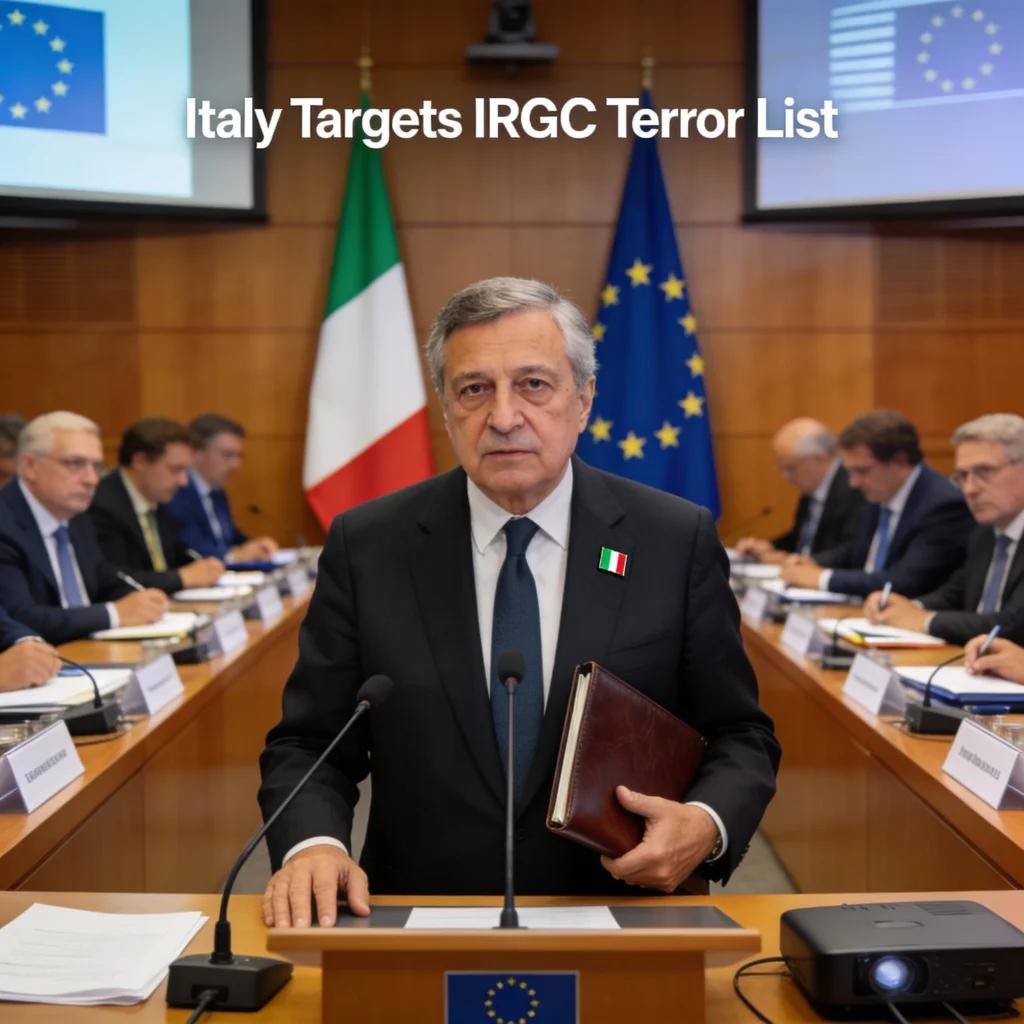
Italy’s U-Turn on the EU Terrorist Designation for IRGC
For years, Italy resisted calls for an EU terrorist designation for IRGC, primarily due to concerns that such a step could sever diplomatic channels with Tehran or undermine negotiations related to Iran’s nuclear program. However, mounting evidence of repression has altered Rome’s calculus.
In a public statement on X (formerly Twitter), Tajani cited civilian casualties during ongoing protests as justification for a “clear and decisive response” from Europe. Alongside the proposed terrorist designation, Italy is also pushing for targeted sanctions against individuals involved in suppressing dissent inside Iran.
This shift aligns Italy with Germany and the Netherlands, two EU heavyweights that have consistently supported tougher measures against the IRGC.
Why the IRGC Designation Matters
Designating the IRGC as a terrorist organization would be one of the most consequential foreign policy decisions the EU has taken against Iran. With an estimated 200,000 members, the IRGC is not only a military force but also a powerful economic and political actor within Iran.
If approved, the EU terrorist designation for IRGC would:
- Place the IRGC alongside ISIS and Al-Qaeda on the EU terror list
- Trigger asset freezes and financial restrictions across all EU member states
- Criminalize material or financial support for the organization
- Severely restrict travel and economic engagement linked to IRGC entities
Such measures would go far beyond existing sanctions, fundamentally reshaping EU–Iran relations.
France Signals Support, Isolating Remaining Opponents
A key development ahead of Thursday’s meeting was France’s late endorsement of the proposal. Paris had previously maintained a cautious approach, echoing concerns about diplomatic fallout. However, French officials signaled Wednesday night that they now support discussing the EU terrorist designation for IRGC, leaving Spain and a small number of others increasingly isolated.
Because EU terrorist listings require unanimous approval, even one dissenting member can block the decision. Italy’s move significantly raises the political cost for holdouts and increases the likelihood of a breakthrough.
Parallel Human Rights Sanctions Move Forward
Regardless of the outcome on the terrorist designation, EU foreign ministers are expected to approve separate human rights sanctions during the same session. These measures target:
- 21 Iranian individuals linked to protest repression
- Several Iranian drone manufacturers accused of supplying weapons used in conflicts abroad
While these sanctions are narrower in scope, they underscore a broader hardening of the EU’s posture toward Tehran.
Strategic and Legal Implications for the EU
The EU terrorist designation for IRGC is not without legal complexity. Previous attempts were challenged over whether sufficient court-backed evidence exists to justify the listing under EU law. Some member states have argued that a prior judicial ruling is necessary before designation.
However, supporters counter that documented human rights abuses, combined with IRGC involvement in external militant activities, provide a solid legal foundation. Italy’s endorsement strengthens this argument and may help overcome procedural resistance.
What Happens Next?
Thursday’s Brussels meeting could become a watershed moment in EU foreign policy. If consensus is reached, the EU would take its strongest stance yet against Iran’s security apparatus. Even if unanimity falls short, Italy’s pivot signals a clear trend: European tolerance for repression is rapidly diminishing.
As protests continue inside Iran and international scrutiny intensifies, pressure is likely to grow—not fade.
Conclusion
Italy’s decision to back an EU terrorist designation for IRGC represents more than a diplomatic adjustment—it reflects a broader moral and strategic recalibration within Europe. With France now on board and human rights sanctions advancing, the path toward tougher EU action is narrowing.
Whether this culminates in a formal designation this week or later, the direction is unmistakable: the IRGC is facing unprecedented isolation on the European stage.