
The EU-Saudi green energy boom is emerging as one of the most significant economic shifts in the Gulf region, signaling a new era of deep strategic cooperation between Europe and Saudi Arabia. As revealed by EU Ambassador Christophe Farnaud, European investments in Saudi Arabia’s green energy, metals, digital infrastructure, and advanced manufacturing sectors are set to surge over the next five years.
With bilateral trade already touching €90 billion, renewed free trade negotiations, a pending energy Memorandum of Understanding (MoU), and Saudi Arabia’s Vision 2030 reforms are transforming EU-Saudi relations from traditional trade ties into a long-term investment partnership.
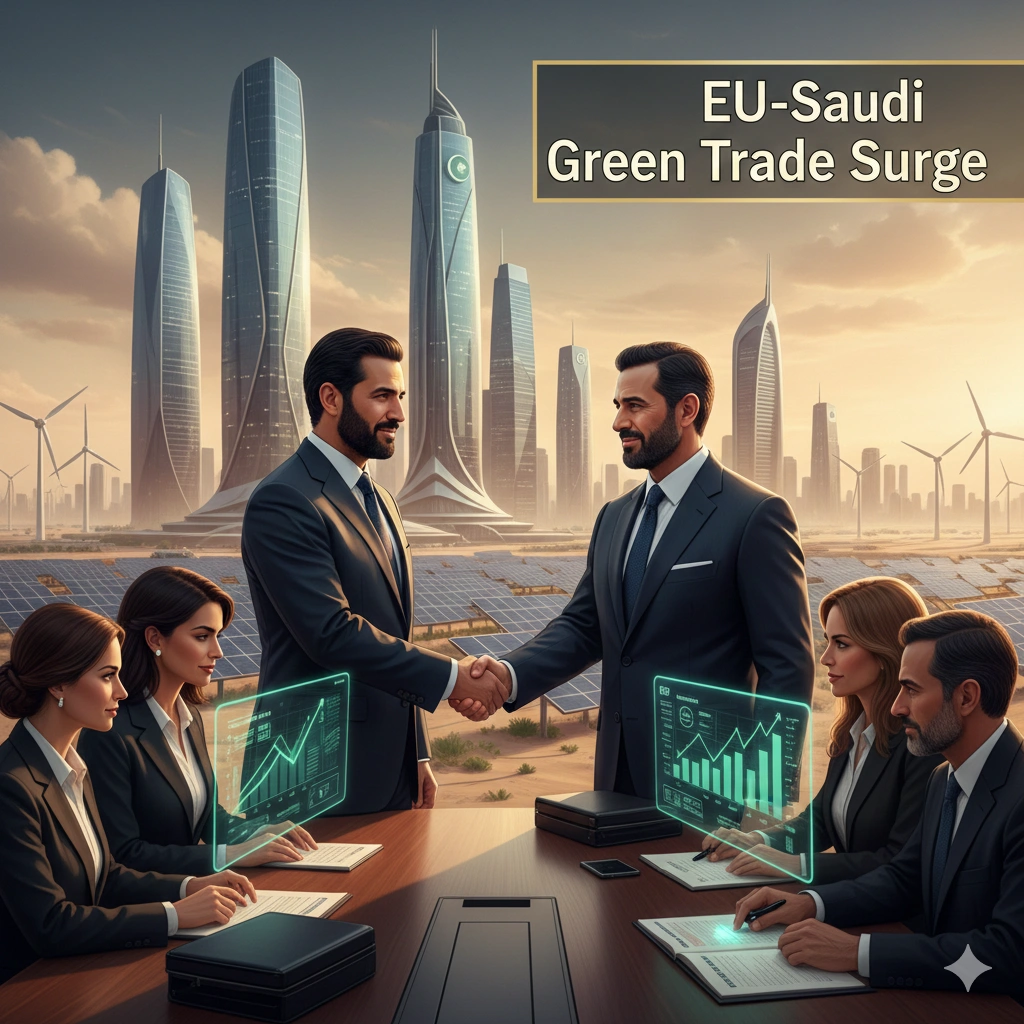
EU-Saudi Green Energy Boom Gains Momentum
The EU-Saudi green energy boom is anchored in Europe’s growing commitment to sustainable energy and Saudi Arabia’s ambition to become a global clean energy hub. According to EU estimates, European companies currently account for 29% of Saudi Arabia’s foreign direct investment, totaling €30.7 billion.
Key focus areas include:
- Green hydrogen production
- Renewable power generation
- High-tech metals and advanced materials
- Digital infrastructure and smart cities
Mega-projects such as NEOM, AlUla, and the Red Sea Project are attracting European expertise in sustainability, clean transport, and next-generation construction technologies.
European Companies Expand Footprint in Saudi Arabia
More than 2,500 European firms are already operating successfully in Saudi Arabia, reflecting a strong foundation for future growth. These companies are no longer limited to energy exports or traditional trade. Instead, they are actively investing in:
- Renewable energy systems
- Transport and logistics
- Tourism and hospitality
- Industrial localization
Global hospitality brands such as Accor and Kempinski are expanding rapidly, aligned with Saudi Arabia’s goal of making tourism contribute 10% of GDP under Vision 2030.
Revival of EU-GCC Free Trade Talks
A major driver behind the EU-Saudi green energy boom is the planned revival of EU-GCC free trade negotiations, which have remained stalled since 2008. The renewed talks aim to create a comprehensive trade framework covering:
- Investment protection
- Intellectual property rights
- Sustainability standards
- Clean energy cooperation
In parallel, discussions are underway for a bilateral strategic agreement between the EU and Saudi Arabia, further strengthening economic, industrial, and environmental cooperation.
Energy MoU and Strategic Cooperation
A forthcoming EU-Saudi energy MoU is expected to accelerate collaboration in renewable energy and hydrogen technologies. This agreement aligns with the EU’s 2022 Gulf Strategy, which prioritizes energy security, decarbonization, and resilient supply chains.
By partnering with Saudi Arabia, the EU aims to secure long-term access to clean energy while supporting the Kingdom’s transition away from oil dependency.
European Chamber of Commerce Strengthens Business Ties
The launch of the European Chamber of Commerce in Saudi Arabia in 2024 marked a pivotal moment in bilateral relations. The chamber serves as a bridge between European investors and Saudi institutions, offering:
- Market access support
- Regulatory guidance
- Investment matchmaking
This institutional backing is expected to play a critical role in scaling up European participation in Saudi Arabia’s green and digital transformation.
A Qualitative Leap in EU-Saudi Relations
Ambassador Farnaud described the evolving partnership as a “qualitative leap”, emphasizing that EU-Saudi ties now extend well beyond commerce. The relationship increasingly reflects shared priorities in:
- Sustainability
- Industrial modernization
- Digital transformation
- Long-term economic resilience
As Saudi Arabia accelerates Vision 2030 reforms, European investors are positioning themselves as long-term partners rather than short-term traders.
What This Means for the Gulf Economy
The EU-Saudi green energy boom is expected to reshape Gulf trade dynamics by:
- Diversifying Saudi Arabia’s economy
- Strengthening Europe’s clean energy supply chains
- Creating new opportunities in green manufacturing
- Boosting cross-border investment flows
If free trade talks succeed, bilateral trade could move well beyond the current €90 billion, turning the partnership into a global model for sustainable economic cooperation.
Conclusion
The accelerating EU-Saudi green energy boom marks a strategic turning point for both regions. With massive investments, revived trade negotiations, and shared sustainability goals, Europe and Saudi Arabia are laying the foundation for a future-ready partnership that extends far beyond energy.
As green hydrogen, clean manufacturing, and tourism investments scale up, the Gulf region is set to become a key pillar of Europe’s long-term economic and energy strategy.
For more details & sources visit: Arab News
For the latest updates from Saudi Arabia, visit our Saudi Arabia page.