
The Dutch Parliament Israeli weapons purchases debate has intensified after lawmakers approved a motion urging the government to reduce reliance on Israeli military equipment. The move reflects rising political, legal, and ethical concerns linked to alleged war crimes in the Gaza conflict and highlights broader European efforts to strengthen defense autonomy.
The resolution, adopted by the Dutch House of Representatives, calls on the government to report regularly on concrete steps taken to limit Israeli defense imports, signaling a potential shift in Dutch procurement policy. While officials suggest the immediate impact may be limited, analysts believe the decision could have significant long-term consequences for defense cooperation between the Netherlands and Israel.
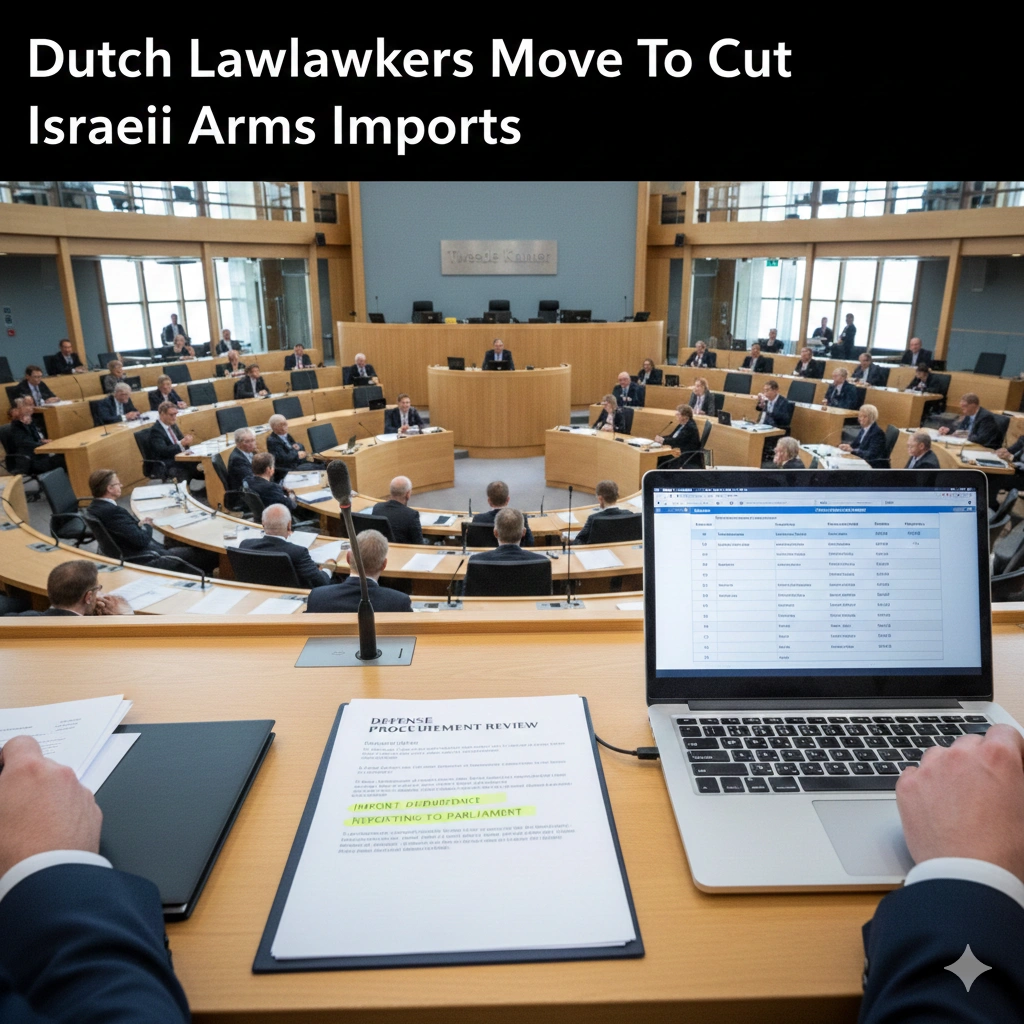
Dutch Parliament Israeli Weapons Purchases Under Scrutiny
The motion passed by Dutch lawmakers is rooted in concerns about ethical procurement and legal liability. Legislators argue that depending on defense suppliers suspected of involvement in war crimes could expose the Netherlands to reputational and legal risks.
According to coverage referencing Israeli newspaper Haaretz, the motion explicitly links defense procurement to international humanitarian law obligations. Lawmakers emphasized that state procurement choices are not morally neutral, particularly when suppliers are connected to controversial military campaigns.
A Dutch official quoted in the report acknowledged that existing contracts will remain in place for now. However, as agreements expire, the government is expected to seek alternative suppliers and reduce strategic dependence on Israel.
Nearly €2 Billion in Israeli Military Imports
The Netherlands has been a long-standing buyer of Israeli defense technology, with nearly €2 billion spent on Israeli military equipment in recent years. These purchases include advanced systems for surveillance, cybersecurity, and battlefield technology.
This deep procurement relationship means any shift will take time. Defense analysts say the unwinding of such partnerships could take years, especially given the complexity of military supply chains and the specialized nature of Israeli defense technology.
Despite this, the Dutch Parliament’s motion signals a political turning point in how the Netherlands approaches military partnerships amid growing international scrutiny of the Gaza conflict.
Political Shift After the Gaza War
The Gaza war has significantly altered political attitudes toward Israel across Europe. Several governments have faced domestic pressure to reconsider military cooperation, trade ties, and diplomatic stances.
In the Netherlands, the parliamentary motion reflects a more cautious political posture toward Israel, even though the government has historically maintained close defense and security ties.
Human rights organizations and international bodies have raised allegations of war crimes and violations of international humanitarian law, increasing pressure on European governments to reassess their military partnerships.
Strategic Autonomy: A Broader European Trend
Beyond moral considerations, the motion also aligns with Europe’s broader push for defense strategic autonomy. European Union policymakers have been working to reduce reliance on external suppliers and build domestic defense capabilities.
Dutch lawmakers framed the decision as part of a strategic shift to diversify defense supply chains, reduce geopolitical vulnerabilities, and strengthen European defense industries.
Experts say this approach could benefit European manufacturers but may also increase procurement costs in the short term.
Short-Term Impact vs Long-Term Consequences
While the immediate effects of the motion are expected to be limited, the medium- and long-term implications could be significant. Existing contracts will likely continue, but future procurement decisions may shift toward European or allied suppliers.
Defense analysts warn that replacing Israeli technology will require substantial investment, testing, and integration, especially for specialized systems such as drones, missile defense components, and cybersecurity platforms.
However, supporters of the motion argue that ethical procurement and strategic independence outweigh potential costs.
What This Means for Israel and Europe
The Dutch Parliament’s move adds to a growing list of European debates over Israel-related defense ties. If other countries follow suit, Israel’s defense exports to Europe could face increased political scrutiny and potential declines.
For Europe, the decision reinforces momentum toward self-reliant defense manufacturing, a long-term strategic goal that has gained urgency amid global conflicts and shifting alliances.
Conclusion
The decision by the Dutch House of Representatives to push for reduced dependence on Israeli military imports marks a notable shift in European defense politics. Driven by ethical concerns, legal risks, and strategic autonomy goals, the motion could reshape procurement policy in the Netherlands and influence broader European debates.
Although the immediate impact will be limited, the long-term consequences could be profound, potentially redefining military partnerships and accelerating Europe’s drive for defense independence.
For more details & sources visit: Haaretz (reported via WAFA summary)
Read more on Netherland news: 360 News Orbit – Netherland