
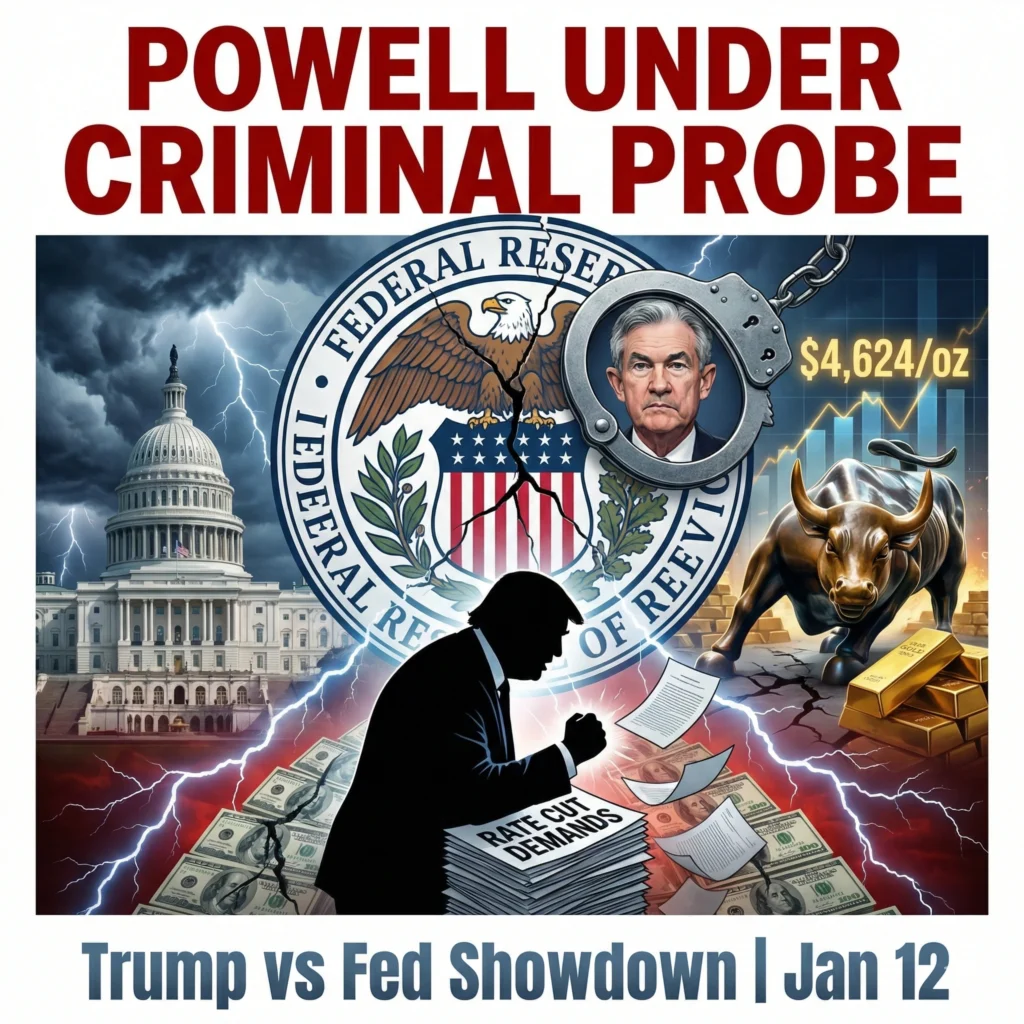
The financial and political world is on edge as a DOJ criminal probe into Fed Chair Powell intensifies tensions between the White House and the Federal Reserve. This unprecedented investigation follows Powell’s Senate testimony on $2.5 billion renovations to the Federal Reserve’s headquarters. Former President Donald Trump publicly slammed the renovations as a $3.1 billion waste, criticizing Powell’s management amid calls for aggressive interest rate cuts in 2025.
Market watchers and policymakers are closely monitoring developments, as the probe raises serious questions about central bank independence, potential political interference in monetary policy, and the long-term credibility of the Fed.
Why the DOJ Criminal Probe Into Fed Chair Powell Matters
Federal prosecutors have issued subpoenas targeting Powell’s congressional statements about renovations to the Eccles Building and 1951 Constitution Avenue, which involved the removal of hazardous materials such as asbestos and lead. Powell warned that this investigation threatens to undermine evidence-based decisions at the Fed, potentially impairing its ability to respond to evolving economic conditions without political pressure.
Former Fed Chair Janet Yellen described the probe as “extremely chilling,” comparing the tactics to “banana republic” practices that could compromise the institution’s independence. Analysts emphasize that a DOJ criminal probe into Fed Chair Powell is virtually unprecedented in U.S. history, highlighting the escalating tension between political forces and monetary policy objectives.
The probe has already prompted speculation about whether future Fed decisions might be subject to political influence, raising concerns among investors and economists about the stability of the U.S. financial system.
Trump-Powell Feud Escalates Political Tensions
The criminal investigation has fueled a broader feud between Trump and Powell. The former president called Powell a “numbskull” for overseeing three interest rate cuts in 2025 and blamed President Joe Biden for inflationary pressures. Trump’s comments have intensified scrutiny over the Fed’s decision-making process, putting additional pressure on policymakers.
Political reactions include:
- GOP Senator Thom Tillis blocking Trump’s Fed nominees until the DOJ investigation concludes.
- Democrat Elizabeth Warren accusing the White House of seeking a “sock puppet” to control monetary policy.
Powell is expected to leave his post in May 2026, which has amplified speculation about his successor and the future direction of U.S. monetary policy.
Market Response to Powell Probe and Political Uncertainty
Despite the high-stakes nature of the investigation, the S&P 500, Dow Jones, and Nasdaq showed muted reactions, remaining largely flat. Investors appear focused on precious metals and global geopolitical risks as safe-haven assets.
Key market movements include:
- Gold surged +2.5%, reaching an all-time high of $4,624/oz.
- Silver climbed +7.3%, reflecting heightened market jitters.
- Iran unrest added further uncertainty, prompting investors to seek stability in commodities rather than equities.
The sharp increase in precious metals underscores investor concern over potential political interference in monetary policy and the broader implications for U.S. economic stability.
Implications for the Federal Reserve
The DOJ criminal probe into Fed Chair Powell is not only a political issue but also an operational one. Analysts warn that this investigation could have long-term consequences for the Fed:
- It may erode public trust in the Fed’s independence.
- Future monetary policy decisions could face increased political scrutiny, limiting flexibility.
- Market participants may reassess risk in U.S. Treasuries and interest-sensitive assets.
With Powell under intense scrutiny, the Fed’s credibility as a neutral, evidence-based policymaking body faces unprecedented pressure.
Historical Context: Fed Autonomy at Risk
The Federal Reserve has historically operated with significant independence to maintain stable economic policy and control inflation. A DOJ criminal probe into Fed Chair Powell threatens this autonomy and is virtually unprecedented in U.S. history. Economists warn that political pressures could override evidence-based decision-making, potentially destabilizing financial markets and weakening the Fed’s ability to manage economic cycles effectively.
Conclusion
The DOJ criminal probe into Fed Chair Powell marks a critical intersection of politics, central banking, and market dynamics. As Powell prepares to exit in May 2026, the eyes of investors, policymakers, and international markets will remain fixed on the investigation’s outcome. With gold and silver reaching record highs and political rhetoric escalating, the probe highlights the fragility of central bank independence in today’s polarized political environment.
The outcome of this investigation may define the future of U.S. monetary policy, influence market confidence, and set precedent for how political forces interact with independent financial institutions.
For more details & sources visit: BBC News
For the latest updates from the United States, visit our U.S. news page.