
The Documentary Credit Insurance Policy signed between the Islamic Corporation for the Insurance of Investment and Export Credit (ICIEC) and Al Baraka Islamic Bank BSC Bahrain marks a milestone in Shariah-compliant trade finance. This strategic partnership is officially active, providing a robust framework to mitigate the various risks associated with international cross-border transactions. By leveraging the multilateral expertise of the ICIEC, Al Baraka is now positioned to offer its clients unprecedented security when engaging in global markets. This collaboration not only protects financial assets but also reinforces the stability of the Islamic banking ecosystem during a period of global economic transition.
The Documentary Credit Insurance Policy serves as a specialized risk-mitigation tool specifically designed to cover the confirmation of Letters of Credit (LCs). For Al Baraka Islamic Bank, this means that their international trade operations are now insulated against both commercial defaults and political instabilities that often disrupt global supply chains. The policy ensures that Shariah-compliant goods and services can move across borders with the backing of an “Aa3” rated multilateral insurer. This level of protection is essential for businesses looking to navigate the complexities of modern trade without compromising their ethical financial principles.
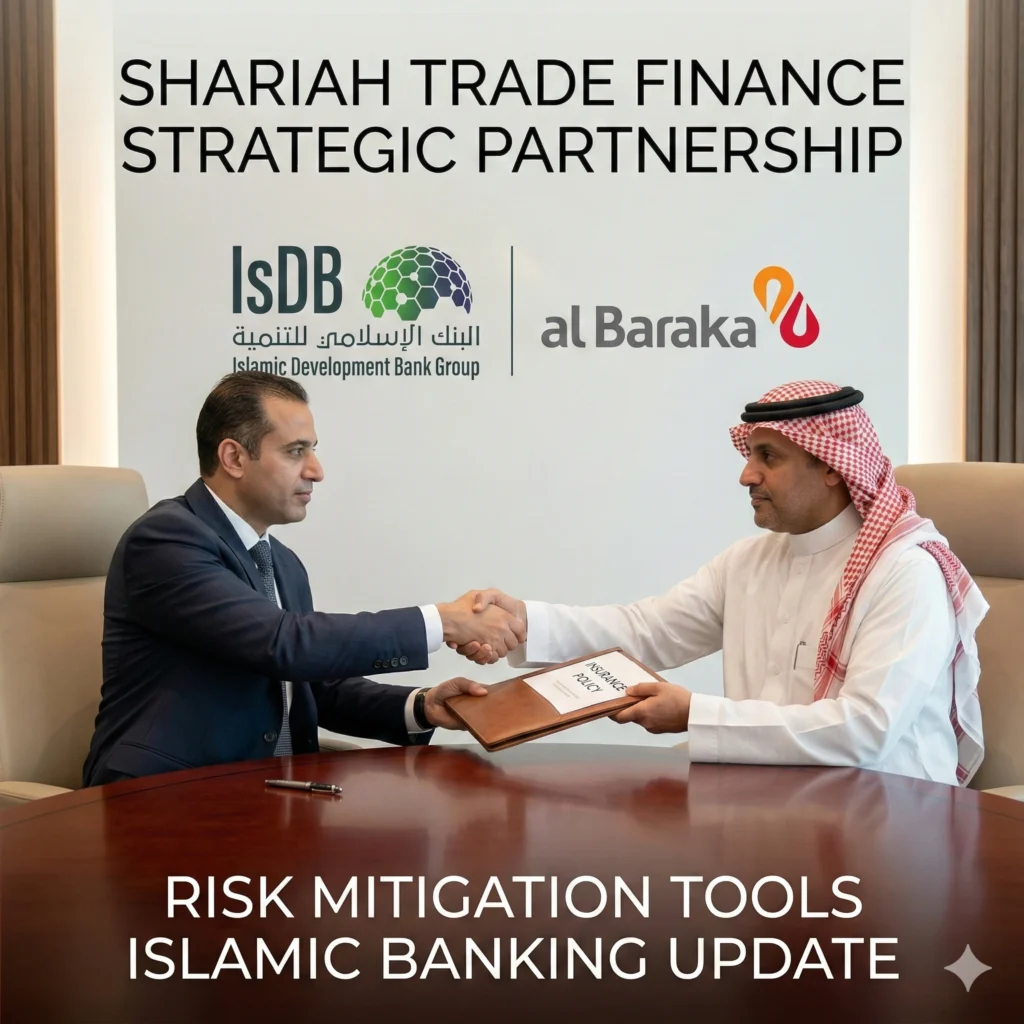
Strengthening Shariah-Compliant Trade Infrastructure
The integration of the Documentary Credit Insurance Policy into Bahrain’s banking sector highlights the country’s ambition to remain a global leader in Islamic finance. Dr. Adel Salem, CEO of Al Baraka Islamic Bank, noted that this agreement empowers the institution to broaden its service offerings to a wider international client base. By reducing the capital weight required for insured transactions, the bank can optimize its balance sheet while simultaneously increasing the volume of trade it facilitates. This strategic efficiency is a key driver for sustainable economic growth within the member states of the Islamic Development Bank Group.
Furthermore, the Documentary Credit Insurance Policy acts as a catalyst for intra-OIC (Organisation of Islamic Cooperation) trade and investment. Historically, high-risk environments have deterred Islamic banks from fully engaging in certain international markets. However, with the ICIEC providing comprehensive coverage against non-payment and currency transfer restrictions, these barriers are effectively lowered. This enables a more fluid exchange of resources between member countries, fostering regional resilience and financial inclusion across the Middle East, Africa, and Southeast Asia.
The technical superiority of the Documentary Credit Insurance Policy lies in its ability to provide up to 90 percent coverage on potential losses. This high indemnification rate gives Al Baraka the confidence to confirm LCs from emerging market banks that might otherwise be deemed too risky. As a result, exporters in Bahrain can access new, lucrative markets with the peace of mind that their payments are secured by a top-tier multilateral institution. This synergy between insurance and banking is what defines the next generation of Shariah-compliant trade logistics.
Documentary Credit Insurance Policy
The core objective of the Documentary Credit Insurance Policy is to de-risk the export of eligible Shariah-compliant products. In an era where global trade is frequently subject to sudden policy shifts and geopolitical tensions, having a dedicated insurance layer is no longer a luxury but a necessity. The ICIEC’s role as a member of the Islamic Development Bank Group provides it with a unique “preferred creditor status,” which further enhances the reliability of the insurance it provides to banks like Al Baraka.
Under the Documentary Credit Insurance Policy, the process of securing international trade is significantly streamlined. When an importer arranges the issuance of an LC, Al Baraka can now apply for ICIEC coverage almost instantaneously through digital trade portals. This digital integration reduces the turnaround time for trade finance approvals, allowing businesses to respond faster to market demands. The result is a more dynamic and responsive trade environment that benefits producers, middle-market enterprises, and consumers alike.
Moreover, the Documentary Credit Insurance Policy provides significant capital relief benefits for Al Baraka Islamic Bank under Basel regulatory frameworks. Because the exposure is covered by a highly-rated multilateral institution, the risk-weighted assets are reduced, freeing up capital for further lending and investment. This fiscal flexibility is crucial for banks looking to expand their footprint during the volatile economic landscape of 2026. It ensures that the bank remains solvent and competitive while supporting the real economy.
Economic Resilience and Global Market Expansion
The ripple effects of the Documentary Credit Insurance Policy extend far beyond the immediate financial transactions. By fostering a more secure trade environment, the policy encourages small and medium enterprises (SMEs) to venture into international markets for the first time. Many of these businesses have the capacity to export high-quality Shariah-compliant goods but lack the risk appetite to face potential payment defaults. The partnership between ICIEC and Al Baraka effectively removes this psychological and financial hurdle.
Dr. Khalid Khalafalla, CEO of the ICIEC, has emphasized that the Documentary Credit Insurance Policy is a pillar of the corporation’s mandate to promote economic resilience. In the event of a commercial insolvency or a political crisis in a buyer’s country, the policy ensures that the Islamic bank is not left with a non-performing asset. This protection of the balance sheet is what allows the Islamic banking sector to remain a stable alternative to conventional finance during times of global stress. It is a proactive approach to risk management that prioritizes long-term stability over short-term gains.
Strategic Benefits for Bahraini Exporters
- Protection against 90 percent of losses due to bank default or political unrest.
- Access to a wider network of confirming banks through ICIEC’s global reach.
- Enhanced competitiveness in international markets due to lower financing costs.
- Streamlined LC confirmation processes through Al Baraka’s specialized trade unit.
The 2026 implementation of the Documentary Credit Insurance Policy is also a testament to the digital transformation of Islamic finance. The policy includes provisions for digital documentation and electronic verification, which are essential for modernizing the “paper-heavy” world of traditional trade finance. By adopting these technologies, Al Baraka and the ICIEC are setting a new standard for efficiency and transparency in the industry. This technological edge is expected to attract more international corporations to the Islamic banking model.
Mitigating Political and Commercial Risks
A major component of the Documentary Credit Insurance Policy is its comprehensive coverage of political risks. This includes currency inconvertibility, expropriation, and even war or civil disturbance in the obligor’s country. In the current 2026 geopolitical climate, these risks are increasingly prevalent, making the ICIEC’s role even more critical. Al Baraka can now facilitate trade with countries that are undergoing political transitions, knowing that their financial interests are protected by a multilateral treaty-based organization.
The commercial risk aspect of the Documentary Credit Insurance Policy is equally vital. It covers the simple insolvency of a buyer or the failure of an issuing bank to honor its payment obligations on the due date. These are the “bread and butter” risks of trade finance that can bankrupt an un-insured business. By transferring these risks to the ICIEC, Al Baraka ensures that its clients’ cash flows remain predictable and their business operations remain sustainable. This stability is the foundation of the bank’s client-centric approach to corporate banking.
Key Risk Areas Covered
- Commercial default by the issuing bank in a foreign country.
- Sovereign risk related to government intervention in trade payments.
- Transfer risks preventing the movement of foreign currency back to Bahrain.
- Specific sector risks for agriculture, energy, and manufactured goods.
As Al Baraka Islamic Bank moves further into 2026, the Documentary Credit Insurance Policy will be a central feature of its marketing to corporate clients. The ability to tell a client that their international sale is “90 percent insured” is a powerful value proposition. This leads to deeper client relationships and a more loyal customer base. It also positions Al Baraka as a sophisticated partner that understands the global challenges faced by modern businesses.
Future of Multilateral Cooperation in Islamic Finance
The success of the Documentary Credit Insurance Policy between Al Baraka and the ICIEC is likely to inspire similar agreements across the Islamic Development Bank’s 57 member countries. As more banks adopt these insurance tools, the collective strength of the Islamic finance network grows. This creates a “network effect” where trade becomes easier and safer as more participants join the insured ecosystem. The 2026 agreement is just the beginning of a larger trend toward institutionalized risk sharing.
Looking toward the end of the year, the impact of the Documentary Credit Insurance Policy will be measured by the total volume of insured trade it facilitates. Early projections suggest a significant uptick in Bahrain’s non-oil exports, particularly in the manufacturing and processed foods sectors. These industries are perfectly suited for the types of LCs covered by the policy. By supporting these high-value sectors, Al Baraka is directly contributing to the nation’s Vision 2030 goals of economic diversification and private-sector-led growth.
The partnership also reinforces the role of “Dhamman” and other regional guarantee corporations in the broader trade finance landscape. By collaborating with multilateral giants like the ICIEC, Al Baraka is building a multi-layered defense against economic volatility. This diversified approach to insurance ensures that no single market shock can derail the bank’s trade operations. It is a masterclass in modern financial engineering tailored for the requirements of Shariah compliance.
Summary of Operational Resilience
In conclusion, the Documentary Credit Insurance Policy is a transformative instrument for Al Baraka Islamic Bank and the wider Bahraini economy. It bridges the gap between the need for global market expansion and the necessity for robust risk management. By providing a safety net for international trade, the ICIEC and Al Baraka are empowering businesses to dream bigger and reach further. This is the essence of Islamic finance: creating a fair, transparent, and secure environment for economic prosperity.
The Documentary Credit Insurance Policy is now a cornerstone of Al Baraka’s 2026 strategy. As the bank continues to navigate the complexities of the global market, this policy will provide the steady hand needed to ensure continued growth. The commitment of both Dr. Adel Salem and Dr. Khalid Khalafalla to this partnership signals a long-term vision of collaboration that will benefit the entire OIC region. For businesses in Bahrain and beyond, the message is clear: the world is open for trade, and your transactions are now more secure than ever.
The 2026 launch of the Documentary Credit Insurance Policy marks a new chapter in the history of Islamic trade finance. It is a story of innovation, cooperation, and resilience. As global trade continues to evolve, tools like this will be the difference between those who simply survive and those who thrive. Al Baraka Islamic Bank has chosen to lead the way, providing its clients with the ultimate tool for international success. The future of Shariah-compliant trade is here, and it is insured.
For more details & sources visit: Saudi Press Agency
Read more about Behrain news on 360 News Orbit-Behrain.