
Antarctica Whiteouts have severely slowed Colin O’Brady’s historic solo expedition, creating a punishing stretch of extreme weather. The explorer, attempting a record-setting journey, has faced soft snow, fresh snowfall, and unusually warm temperatures that make forward progress incredibly difficult.
Despite having ample supplies, O’Brady is falling behind schedule, highlighting the brutal unpredictability of Antarctic travel. Each day has become a grueling test of endurance, with even small advances requiring immense effort in the harsh polar environment.
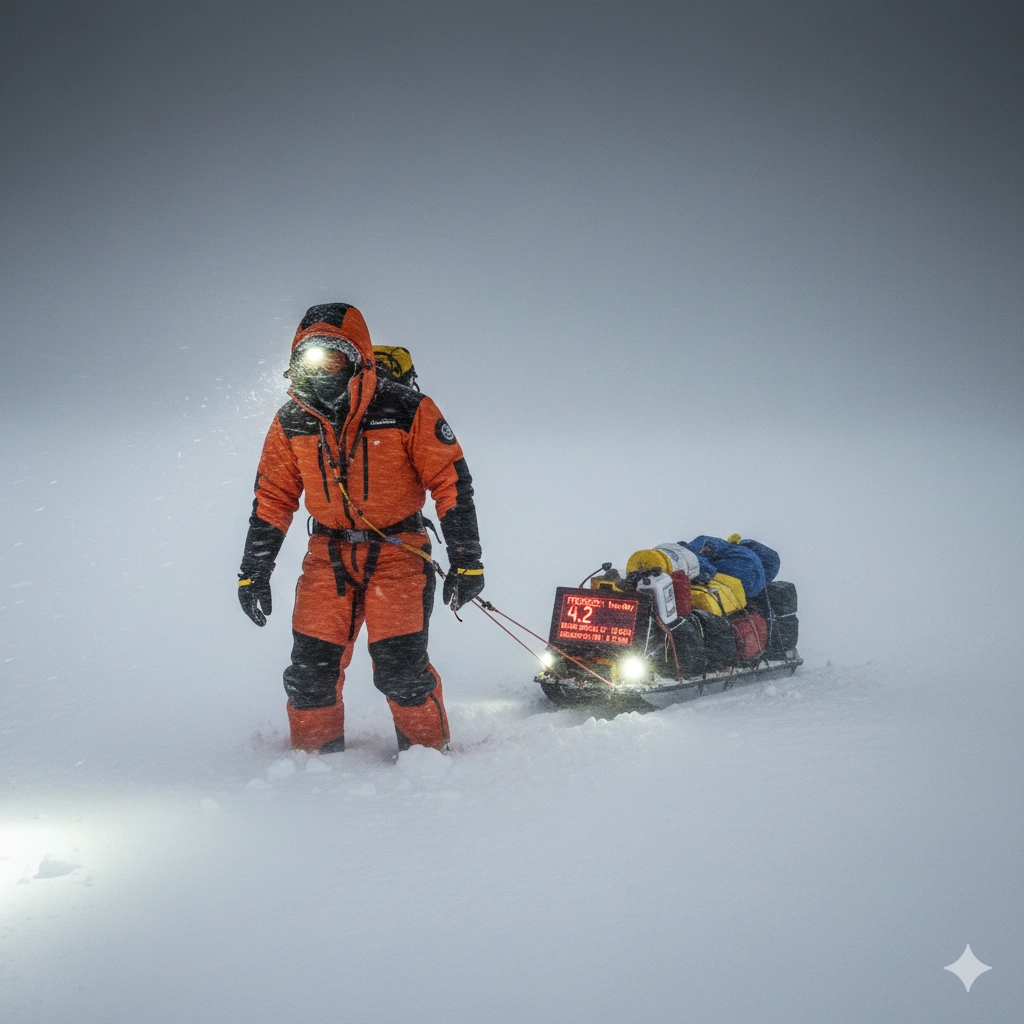
Antarctica Whiteouts and Soft Snow Hamper Progress
Over the past week, O’Brady has advanced only about 80 kilometres, forcing him to double-haul his 180kg sled in conditions that sometimes require three kilometres of travel to gain just one kilometre forward. His tracker places him near 82° south, having completed roughly 320 kilometres out of the full 2,865-kilometre route.
The constant whiteouts and low visibility make navigation extremely challenging. Even brief glimpses of sunlight offer little relief, as the landscape quickly returns to a disorienting white haze. These conditions highlight how unpredictable and punishing Antarctica can be, even for highly experienced explorers.
Supplies and Time Pressure
While O’Brady still has two months of food remaining, the slow pace is raising concerns about staying on schedule. Antarctic expeditions are meticulously planned, with timing crucial for safe passage before winter sets in. Any delay can compound risks, especially in extreme weather conditions that hinder both progress and morale.
The combination of soft snow, unexpected warmth, and near-constant whiteouts underscores the difficulty of polar exploration. Even small setbacks require immense physical effort, forcing O’Brady to continually push his endurance to the limit.
Physical and Mental Challenges of the Solo Expedition
Solo Antarctic crossings demand not only physical strength but extraordinary mental resilience. O’Brady must manage isolation, fatigue, and the constant mental strain of navigating in whiteout conditions. The repetitive effort of dragging a heavily loaded sled over soft snow takes a toll on muscles and joints, while the unpredictability of the weather adds a constant psychological burden.
Maintaining focus under such conditions is critical. Even minor navigation errors can lead to wasted energy and time, making each decision on route, pace, and rest crucial for the success of the expedition.
What This Means for Antarctic Record Attempts
O’Brady’s journey is part of a broader push to set speed records in Antarctica. The harsh weather delays emphasize the extreme difficulty of such feats and why only a handful of explorers attempt them solo. Each day of reduced progress increases the pressure to make up distance later, meaning the next phase of the journey will be even more grueling.
Observers note that these setbacks are common in polar exploration. Success depends on a mix of planning, endurance, and the ability to adapt to conditions that are often beyond human control.
Lessons from Antarctica Whiteouts for Future Explorers
Colin O’Brady’s experience with Antarctica whiteouts offers crucial insights for anyone planning a polar expedition. Key takeaways include:
- Navigation Challenges: Whiteouts reduce visibility to near zero, making route-finding extremely difficult. Future explorers must plan for GPS backup, compass use, and contingency routes.
- Physical Strain: Soft snow and prolonged travel slow progress significantly. Sleds and gear must be designed for heavy loads over unpredictable terrain.
- Mental Endurance: Isolation and monotony during whiteouts test psychological resilience. Maintaining focus is as critical as physical fitness.
- Contingency Planning: Weather delays are inevitable. Extra provisions, flexible schedules, and emergency plans are essential for safety.
- Scientific Insights: Understanding snow and ice behavior during whiteouts can improve safety for all Antarctic missions, from research to adventure.
By studying Antarctica whiteouts, O’Brady’s expedition highlights the need for meticulous preparation, adaptability, and endurance. His journey serves as a blueprint for explorers and researchers, demonstrating why Antarctica remains one of the most challenging environments on Earth.
Updates and Future Outlook
Despite the challenges, O’Brady remains determined to continue his crossing. Tracking updates indicate that he is methodically pushing forward, taking advantage of brief windows of improved weather. The coming days will be crucial in determining whether he can regain lost ground and maintain a pace sufficient to complete the expedition on schedule.
For fans and the polar exploration community, this serves as a reminder of both the allure and danger of Antarctica. Extreme conditions like whiteouts and soft snow highlight the incredible resilience required for anyone attempting such a historic journey.
Source: ExplorersWeb
Read more on Antarctica news: 360 News Orbit – Antarctica