
China trade surplus surged to $1.08 trillion in the first 11 months of 2025, marking a year-on-year increase of more than 22%. The impressive growth reflects the resilience of China’s export-led economy and its continued dominance in global manufacturing, technology, and industrial goods markets.
November alone contributed over $111 billion, underscoring strong shipments in key sectors and the country’s capacity to navigate global economic fluctuations. These figures have renewed debates over the renminbi’s valuation and its impact on trade balances.
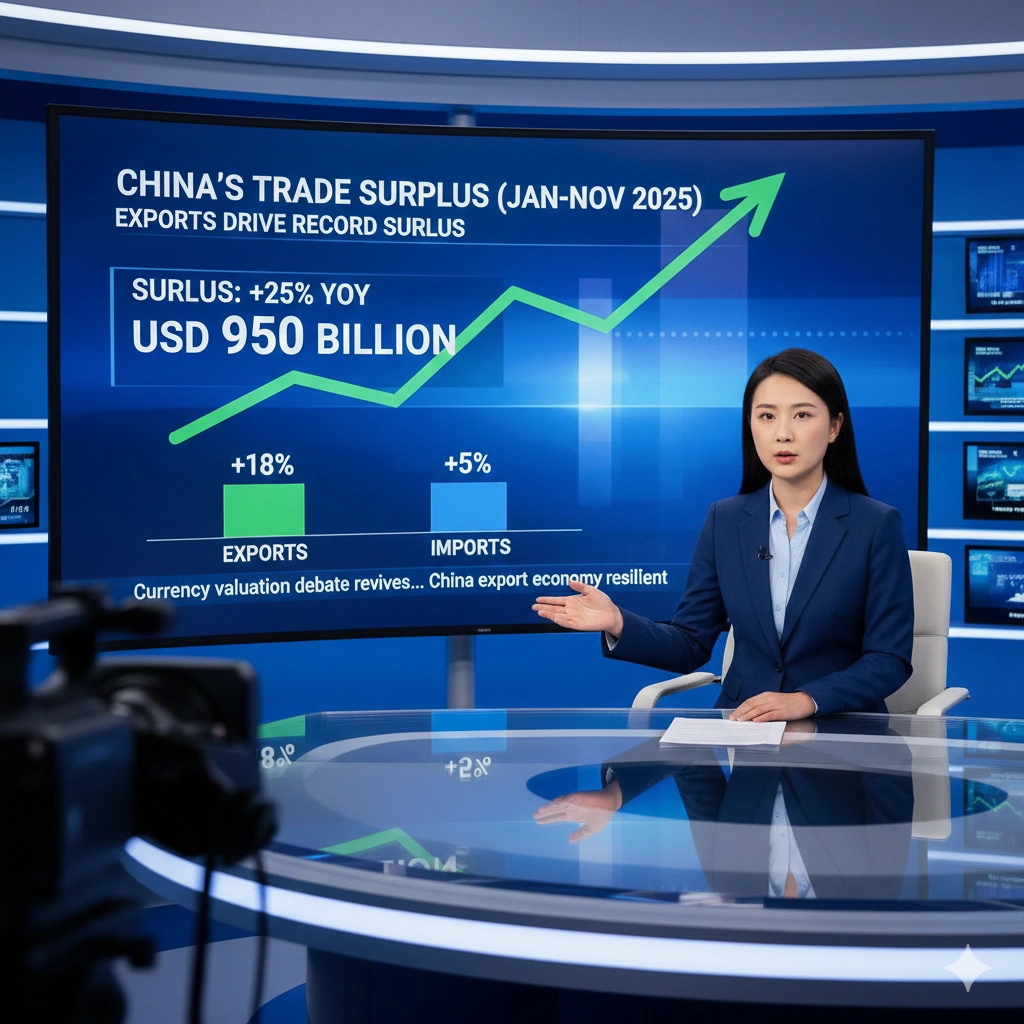
China Trade Surplus Driven by Strong Export Performance
The growth in China trade surplus is primarily driven by sustained demand for Chinese manufactured goods, electronics, and industrial products. Analysts note that despite changing global economic conditions, China’s exporters remain competitive due to:
- Advanced manufacturing capabilities
- Strong supply chain integration
- Strategic positioning in global markets
Economists highlight that this performance reinforces China’s role as a key player in international trade while maintaining economic stability at home.
Currency Dynamics and the Renminbi Debate
China’s expanding surplus has reignited discussions around the renminbi (RMB). Policymakers face the delicate task of balancing currency adjustments with economic stability:
- Gradual renminbi adjustments aligned with global market dynamics
- Monitoring capital flows and foreign investment
- Ensuring trade competitiveness while preventing market volatility
Experts argue that currency strategies will continue to influence both trade balances and financial market trends.
Policy and Economic Implications
The 2025 trade surplus demonstrates China’s ability to maintain economic growth despite external pressures. Government measures aim to:
- Strengthen export performance
- Promote technological advancement
- Support industrial modernization
Financial analysts note that the surplus also reflects how global demand for Chinese goods remains robust, even amid geopolitical tensions and supply chain disruptions.
GImpact on Global Markets and Trading Partners
China’s expanding trade surplus is also influencing global markets and its key trading partners. As Chinese exports remain competitive, many developing economies continue to rely on China for affordable industrial goods, electronics, and manufacturing inputs. At the same time, major economies are closely monitoring trade flows, as persistent surpluses can reshape global supply chains and trade balances. Analysts point out that China’s ability to sustain high export volumes reinforces its role as a stabilizing force in global commerce, especially during periods of economic uncertainty.
International trade experts note that shifts in demand, logistics efficiency, and production costs will continue to affect China’s trade performance. While some countries express concerns over trade imbalances, others see opportunities for deeper cooperation through infrastructure projects, technology exchange, and long-term trade agreements. These dynamics highlight how China’s trade activity remains central to global economic planning.
Long-Term Outlook for China Trade Performance
Looking ahead, China’s trade outlook will depend on its ability to adapt to changing global conditions. Policymakers are expected to focus on diversifying export markets, supporting high-value manufacturing, and encouraging innovation-driven growth. Investments in green technology, digital trade, and advanced production methods are likely to strengthen China’s export base while reducing reliance on traditional manufacturing alone.
Economists suggest that maintaining a balanced approach between export growth and domestic consumption will be crucial for sustainable development. As global trade policies evolve and competition intensifies, China’s trade strategy will play a key role in shaping future economic trends. The continued emphasis on stability, modernization, and market expansion signals that China is positioning itself to remain a major force in international trade beyond 2025.
Conclusion: Sustaining Export Dominance
China’s record trade surplus in 2025 underscores the strength of its export-led economy, the competitiveness of its industries, and the strategic importance of currency management. As policymakers navigate trade, currency, and capital flow dynamics, China remains a central player in shaping the global economic landscape.
Source: The Daily CPEC
For more China-related updates, visit our China News page