
China is accelerating the development of its domestic seed industry as part of a long-term national strategy to ensure food security and agricultural stability. Under the leadership of President Xi Jinping, seed security has been elevated to a matter of national importance, with a strong emphasis on self-reliance, technological independence, and innovation-driven growth.
As global supply chains face increasing uncertainty, China’s renewed focus on seed development reflects a broader effort to protect its food system from external risks while strengthening domestic agricultural capabilities.
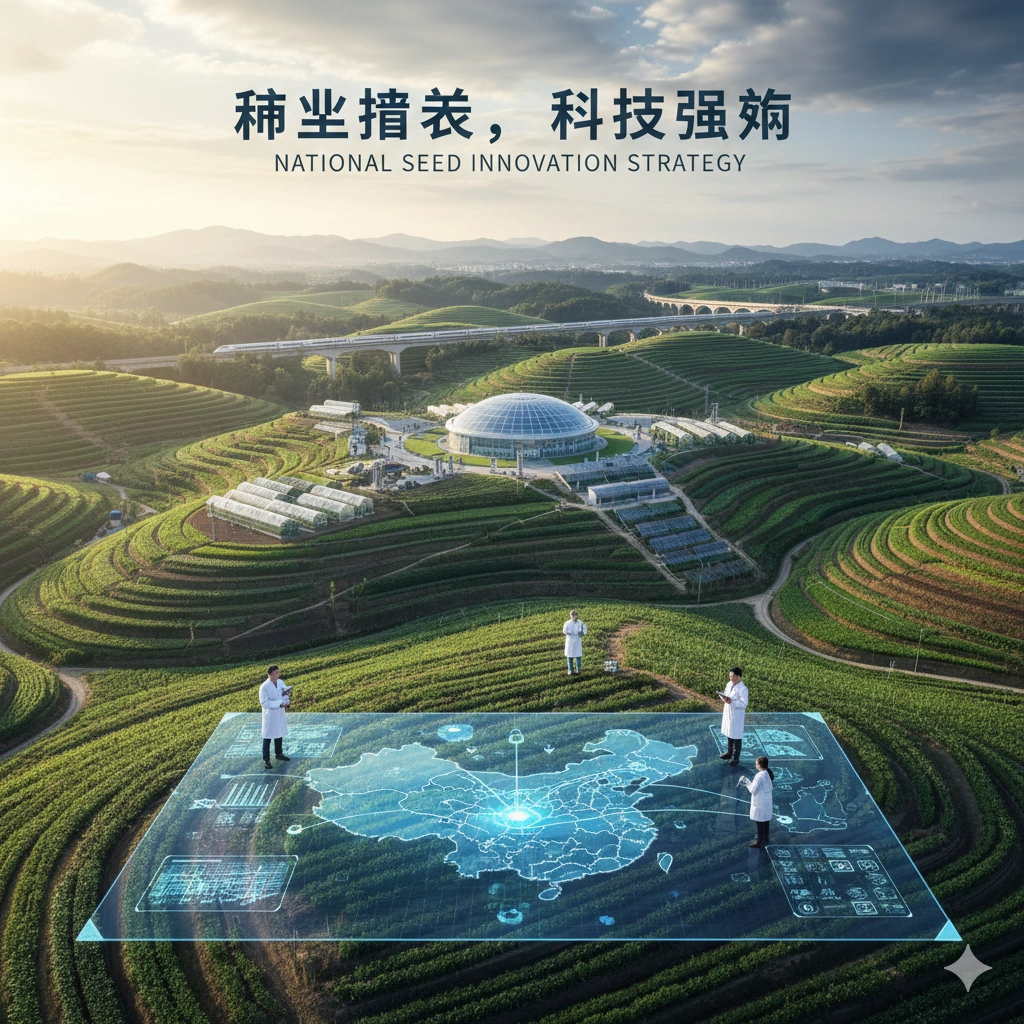
Seed Security as a National Priority
In recent years, Chinese policymakers have identified seed technology as the foundation of agricultural productivity. Seeds are now regarded as the “chip of agriculture,” highlighting their strategic role in ensuring stable crop yields and long-term food supply.
President Xi Jinping has repeatedly stressed the importance of independent control over seed sources, calling for breakthroughs in core breeding technologies. This policy direction has led to coordinated national efforts involving research institutions, universities, and agricultural enterprises working together to overcome long-standing technological bottlenecks.
Over the past five years, these efforts have been aligned with broader rural revitalization and food security goals, making seed industry reform a key pillar of China’s agricultural modernization strategy.
Advancing Research and Innovation in Crop Breeding
A major driver of progress has been China’s investment in advanced research hubs dedicated to seed science. One prominent example is Yazhou Bay Science and Technology City in Hainan, which has emerged as a central base for seed research and innovation.
The region’s favorable climate allows scientists to conduct multiple breeding cycles within a single year, significantly shortening research timelines. This advantage has enabled researchers to accelerate experimentation, testing, and development of new crop varieties.
Research teams have successfully decoded critical genetic networks in key crops and applied molecular breeding technologies to improve yield, quality, and resilience. These scientific advances represent a shift from traditional breeding methods toward more precise, technology-driven approaches.
Breakthroughs in Soybean Development
Among the most notable achievements is progress in soybean breeding, a crop that plays a vital role in China’s food and feed supply. Scientists have developed more than ten high-yield, high-quality soybean varieties, designed to improve productivity while maintaining nutritional standards.
These new varieties are currently being tested and promoted across multiple provinces, ensuring that research outcomes translate into real-world agricultural gains. Early trials suggest improvements in yield stability and adaptability to different growing conditions, reinforcing confidence in domestic seed innovation.
Experts note that soybean development is particularly important for reducing dependence on imports and strengthening China’s agricultural self-sufficiency.
Strengthening Domestic Control and Reducing External Risks
China’s push for seed industry self-reliance is also a response to global challenges, including climate change, geopolitical tensions, and disruptions in international trade. By strengthening domestic seed capabilities, China aims to reduce vulnerability to external supply shocks and ensure stable food production.
Policymakers emphasize that independent innovation does not mean isolation, but rather building a strong domestic foundation while remaining open to international cooperation. The goal is to ensure that core technologies remain firmly under national control.
This approach aligns with China’s broader economic strategy of promoting resilience, sustainability, and long-term stability across key sectors.
From Major Seed Producer to Global Seed Power
China already ranks among the world’s largest seed producers, but officials and experts stress that scale alone is not enough. The current strategy aims to transform China from a major seed producer into a global seed power, defined by innovation, quality, and technological leadership.
By integrating scientific research, industrial application, and policy support, China is creating an ecosystem that supports continuous improvement in seed technology. This includes stronger intellectual property protection, better funding mechanisms, and closer collaboration between public institutions and private enterprises.
Analysts believe these measures will enhance competitiveness while supporting long-term food security goals.
Long-Term Implications for Food Security
The revitalization of China’s seed industry is expected to have lasting effects on agricultural productivity and rural development. Higher-quality seeds can improve crop resilience, reduce resource waste, and support sustainable farming practices.
As climate conditions become more unpredictable, seed innovation will play a crucial role in adapting agriculture to new environmental realities. China’s focus on seed self-reliance positions it to better manage these challenges while safeguarding national food supplies.
Conclusion
China’s renewed push for seed industry self-reliance reflects a strategic commitment to food security under President Xi Jinping’s vision. Through scientific innovation, coordinated national efforts, and long-term planning, the country is strengthening its control over core agricultural technologies.
With continued investment and policy support, China is steadily moving toward its goal of becoming a global leader in seed development, ensuring stable food production and agricultural resilience for years to come.
Source: Sina News
For more China-related updates, visit our China News page