
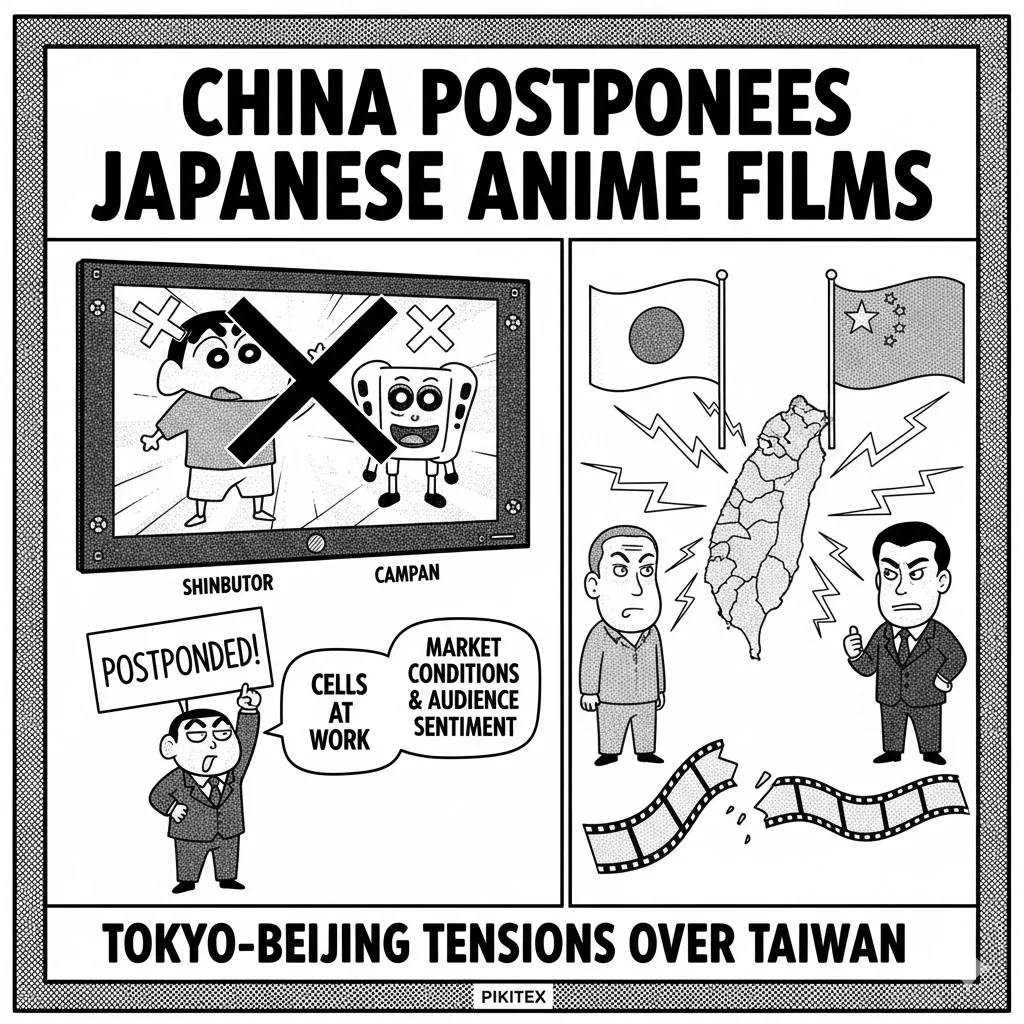
Chinese distributors have postponed the release of two Japanese anime films—Crayon Shin-chan the Movie: Super Hot! The Spicy Kasukabe Dancers and Cells at Work!—citing market conditions and audience sentiment amid escalating Tokyo-Beijing tensions. This decision is part of the broader China Japan anime ban linked to diplomatic strains over Taiwan.
Political Context Behind the Anime Ban
The move follows Japanese Prime Minister Sanae Takaichi’s remarks suggesting possible military intervention if China acted against Taiwan. CCTV noted that these comments could influence Chinese audience perceptions of Japanese cinema, prompting a “prudent” delay in film releases. Experts suggest the ban is part of China’s strategy to apply economic and symbolic pressure on firms tied to countries challenging its red lines.
Broader Diplomatic and Economic Implications
The China Japan anime ban comes alongside other diplomatic measures, including travel advisories and military deployments near disputed waters. Analysts highlight that cultural products like anime can serve as soft power tools, making such bans a subtle but significant component of broader geopolitical strategies.
Japan’s Response and Dialogue Efforts
Japan has signaled a willingness to engage in dialogue. Officials from both countries have met to ease tensions, emphasizing that the ban is specific to audience sentiment and market conditions rather than a permanent cultural embargo. Observers expect that careful diplomatic engagement may help mitigate the impact of the China Japan anime ban on future Japanese film releases.
For more China-related updates, visit our China News page