
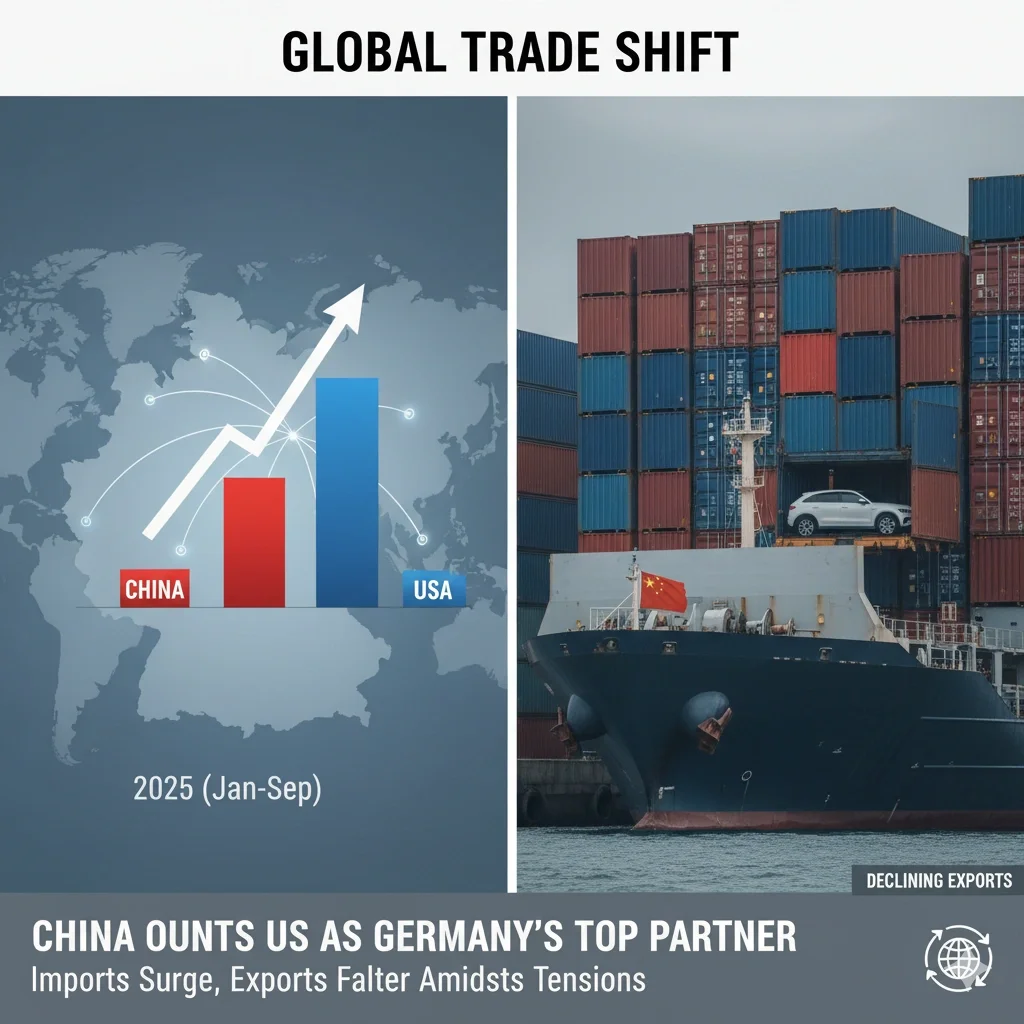
China Germany top trade partner status has returned in 2025, as China surpassed the United States in total trade volume with Germany during the first nine months of the year. Corrected data from Germany’s federal statistics office, Destatis, shows that Germany–China trade reached €185.9 billion from January to September, marking a slight year-on-year increase. Meanwhile, trade with the United States fell to €184.7 billion, a decline of 3.9%, reflecting weakened exports to both nations amid ongoing economic uncertainty.
Imports Drive China’s Lead
The rebound in China’s position as Germany’s largest trading partner is primarily driven by imports. German imports from China jumped 8.5%, significantly outpacing the 2.8% increase in imports from the United States. High demand for Chinese industrial goods, electronics, and consumer products contributed to the growth. In contrast, Germany’s export performance was weaker, with shipments to China declining 12.3% and exports to the US falling 7.8%. The decline in German exports was particularly pronounced in the automotive sector, highlighting ongoing challenges in global car sales.
Despite the volume advantage, the United States continues to remain Germany’s most profitable export market due to higher-value goods and premium product sales. Analysts note that while China leads in trade volume, the US maintains a strategic economic importance for Germany’s high-tech and automotive sectors.
Trade Surplus and Deficit Dynamics
Germany now maintains a trade surplus with the US but a deficit with China, reflecting the structural trade imbalances shaped by import growth and slower export performance. Economists highlight that Germany’s industrial reliance on Chinese components, particularly in electronics and machinery, has contributed to this deficit. Conversely, exports to the US retain a higher profit margin due to premium vehicles, industrial equipment, and specialized technologies.
Geopolitical and Economic Context
The shift comes amid heightened trade tensions with both China and the US. Germany, as Europe’s largest economy, continues to navigate a delicate balance between economic opportunity and political pressure. Trade policy experts suggest that the China-Germany trade resurgence underscores the importance of diversified supply chains, especially given disruptions in global logistics and fluctuating demand in key sectors.
The performance also reflects broader economic trends. While Chinese manufacturing output remains resilient, Germany has experienced softer export demand, impacted by global slowdown and inflationary pressures. The automotive industry, a traditional German export powerhouse, faced particularly weak overseas sales, contributing to overall export decline.
Looking Ahead
As China Germany top trade partner dynamics continue, stakeholders are closely monitoring trade flows, policy adjustments, and industrial production. The German government has emphasized maintaining strategic relations with both China and the US, ensuring supply chain stability while pursuing sustainable trade growth.
Analysts anticipate that Germany will continue to import high volumes from China while seeking opportunities to boost exports in high-tech machinery, green energy solutions, and specialized industrial equipment. Trade observers note that future trends will depend on global economic recovery, geopolitical tensions, and Germany’s domestic manufacturing competitiveness.
Conclusion
China’s reclamation of the top trade partner position highlights the evolving landscape of global commerce in 2025. Rising imports from China, declining German exports to both major economies, and strategic geopolitical considerations demonstrate the delicate balance Germany must strike in international trade. For policymakers and business leaders, the challenge remains managing trade flows, sustaining profitability, and ensuring resilience amid a shifting economic environment.
For the latest news from Germany, visit our Germany news page.