
The United States government has taken a decisive stance against regional instability by imposing strict travel sanctions on high-ranking members of the outgoing South American administration. These Chilean Visa Restrictions represent a significant escalation in diplomatic pressure following a series of infrastructure compromises that threatened hemispheric communications. The State Department confirmed that the measures are a direct response to the sabotage of critical telecommunications networks that occurred earlier this month.
By invoking specific sections of the Immigration and Nationality Act, Washington is sending a clear message that it will not tolerate actions that undermine the economic or national security of the Americas. The Chilean Visa Restrictions apply not only to the three primary suspects but also to their immediate family members, effectively barring them from entering U.S. territory. This move is seen as a final rebuke to the fading Gabriel Boric presidency as the nation prepares for a major political shift.
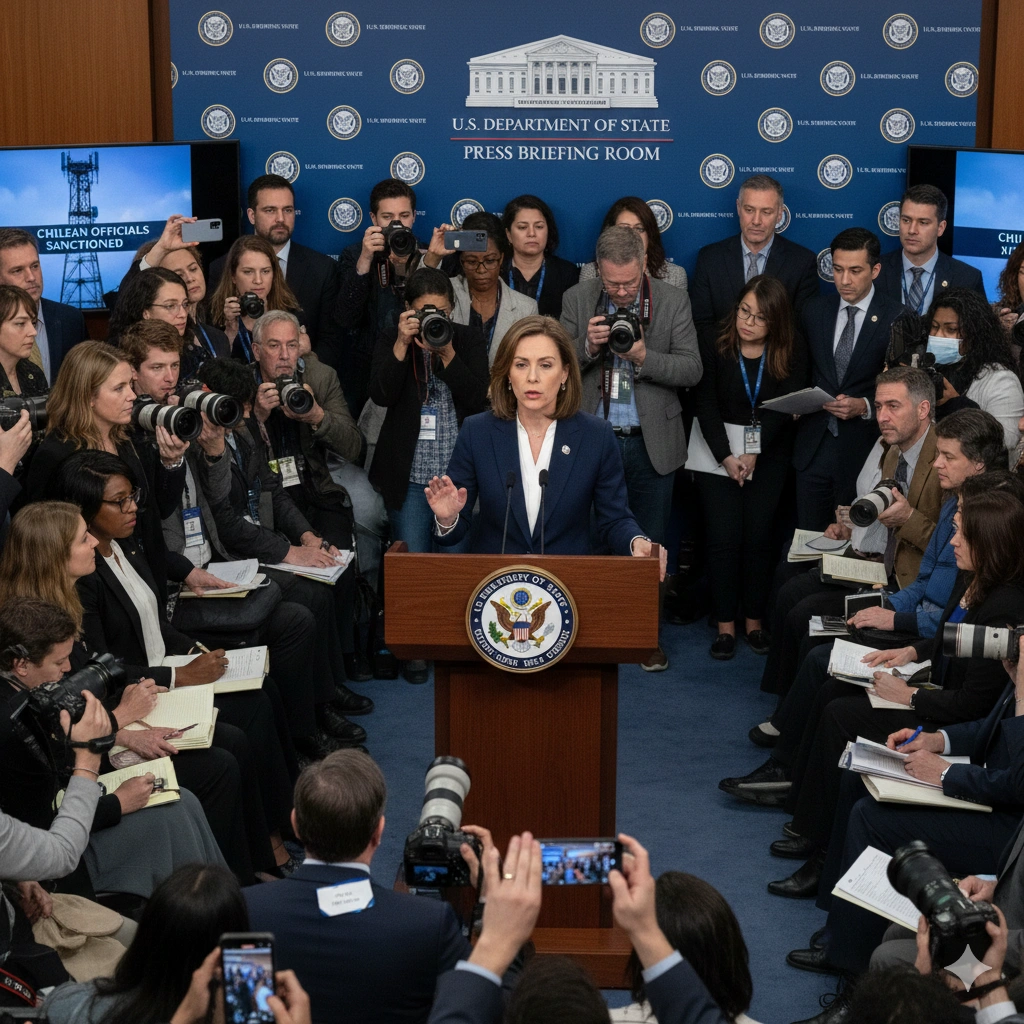
National Security Implications of Telecom Sabotage
The core of the dispute centers on the alleged funding and direction of operations designed to dismantle vital digital infrastructure within the region. According to U.S. officials, these Chilean Visa Restrictions were necessary because the targeted individuals played a direct role in compromising systems that are essential for both civilian safety and international trade. The breach is considered one of the most significant security failures in recent Chilean history.
U.S. intelligence suggests that the sabotage was not merely a technical failure but a calculated effort to create chaos during a sensitive leadership transition. The Chilean Visa Restrictions serve as a preventative measure to ensure that those responsible cannot seek refuge or conduct financial transactions within the United States. This action aligns with the Trump administration’s broader policy of safeguarding critical infrastructure from state-sponsored or state-enabled interference.
Chilean Visa Restrictions
The legal framework for these sanctions is rooted in Sections 212(a)(3)(C) and 221(i) of the Immigration and Nationality Act, which allow for the revocation of visas based on foreign policy consequences. These Chilean Visa Restrictions highlight the gravity of the offenses, as these specific legal citations are typically reserved for individuals who pose a tangible threat to U.S. interests. The State Department has emphasized that these decisions are based on credible evidence of wrongdoing.
While the identities of the three officials remain classified for privacy and operational reasons, their influence within the Boric administration was reportedly substantial. The application of Chilean Visa Restrictions at this level of government suggests that the U.S. has identified a systemic failure in Chilean oversight. This development has sent shockwaves through the diplomatic community in Santiago, prompting calls for internal investigations into the infrastructure breach.
Impact on the Boric-Kast Transition
The timing of these sanctions is particularly notable as Chile prepares to inaugurate President-elect José Antonio Kast. The Chilean Visa Restrictions act as a bridge between two different eras of U.S.-Chile relations, signaling a desire to move away from the perceived instability of the previous years. Washington has expressed a clear preference for the incoming administration’s focus on law and order and traditional security partnerships.
By penalizing figures within the Boric government, the U.S. is clearing the path for a “clean slate” with the Kast administration. The Chilean Visa Restrictions provide the new Chilean leadership with the political capital necessary to purge elements of the old guard that may have been involved in the telecom scandal. This transition is seen as a vital opportunity to restore trust between the two hemispheric partners.
Safeguarding Hemispheric Stability
The State Department’s spokesperson noted that the U.S. will continue to use all available tools, including financial sanctions and Chilean Visa Restrictions, to promote a safe and secure environment in Latin America. The concern is that if infrastructure sabotage goes unpunished in one nation, it could embolden similar bad actors across the continent. Therefore, these measures are intended to have a deterrent effect far beyond the borders of Chile.
U.S. officials believe that the telecommunications sector is a primary target for those looking to destabilize regional economies. Through the Chilean Visa Restrictions, the U.S. is prioritizing the protection of digital borders as much as physical ones. This policy shift reflects the reality of modern warfare, where disabling a fiber-optic network can be just as damaging as a conventional military strike.
Economic Consequences of Infrastructure Breaches
The sabotage of Chilean telecom networks has had a cooling effect on foreign investment, as companies fear for the safety of their data and operations. The Chilean Visa Restrictions are an attempt to restore market confidence by showing that there is international accountability for such disruptions. Analysts suggest that the Kast administration will need to work closely with U.S. tech firms to rebuild the damaged systems.
Investors are keeping a close eye on how the Chilean government responds to the U.S. sanctions. If the Chilean Visa Restrictions lead to a more transparent and secure regulatory environment, it could trigger a rebound in the local tech sector. However, the immediate priority remains identifying any remaining vulnerabilities in the national grid that could be exploited before the formal change of power in March.
Legal Precedents and Immigration Law
The use of the Immigration and Nationality Act in this context is a powerful display of executive authority in foreign policy. These Chilean Visa Restrictions demonstrate how immigration law can be leveraged to achieve national security goals without resorting to military or heavy economic sanctions. It is a targeted approach that punishes the individuals responsible while sparing the general Chilean population from broader economic hardship.
Legal experts note that once a visa is revoked under these specific sections, it is incredibly difficult to regain entry privileges. The Chilean Visa Restrictions are essentially a permanent mark on the diplomatic records of the officials involved. This ensures that even after they leave office, they will remain persona non grata in the United States, effectively ending their ability to participate in international forums held on U.S. soil.
Regional Reactions and Diplomatic Fallout
Other Latin American nations are monitoring the situation closely to see how the U.S. balances its support for democracy with its security requirements. The Chilean Visa Restrictions have been met with a mix of support from conservative regional leaders and criticism from those who view the move as an interference in sovereign Chilean affairs. Nevertheless, the U.S. remains firm in its position that security breaches of this magnitude require a strong response.
The diplomatic fallout has already resulted in the cancellation of several bilateral meetings between outgoing Chilean ministers and their U.S. counterparts. The Chilean Visa Restrictions have created a wall of separation that will likely remain until the Kast administration is fully seated. This period of “diplomatic cooling” is seen as a necessary phase to reset the expectations of the bilateral relationship.
Future of U.S.-Chile Security Cooperation
Looking ahead, the collaboration between the FBI, the State Department, and the incoming Chilean security forces is expected to intensify. The Chilean Visa Restrictions are just the first step in a broader strategy to harden Chilean infrastructure against future attacks. There are already talks of a joint cybersecurity task force that would help prevent the kind of sabotage that led to these sanctions.
- Enhanced monitoring of telecom hubs in the Santiago metropolitan area.
- New vetting processes for government officials with access to sensitive data.
- Implementation of advanced U.S.-led encryption standards for regional networks.
The Chilean Visa Restrictions serve as a catalyst for these necessary reforms. By identifying the human element behind the security breach, the U.S. has provided a roadmap for the Kast administration to follow. The goal is to ensure that Chile remains a stable and reliable partner in the southern cone of the Americas.
Conclusion on Regional Security Tools
The imposition of Chilean Visa Restrictions in February 2026 marks a turning point in how the U.S. handles digital sabotage in the Western Hemisphere. It proves that the “soft power” of visa control can be a “hard power” tool when it comes to national security. The three officials now face a future of international isolation, serving as a warning to others who might consider compromising vital infrastructure.
The Chilean Visa Restrictions have successfully highlighted the vulnerabilities of the Boric administration while setting the stage for a more robust security partnership with President-elect Kast. As the world becomes increasingly interconnected, the protection of telecommunications will remain a top priority for U.S. foreign policy. The Chilean Visa Restrictions are a testament to that enduring commitment to safety and stability.
Ultimately, the success of these measures will be measured by the resilience of the Chilean networks in the years to come. The Chilean Visa Restrictions are not just a punishment for the past, but a safeguard for the future. Through these actions, the United States reaffirms its role as a guardian of regional security and a supporter of those who uphold the rule of law.
- The U.S. utilized Sections 212(a)(3)(C) and 221(i) for these bans.
- The sabotage targeted essential regional telecommunications infrastructure.
- Family members of the three officials are also included in the restrictions.
- The move signals a shift in focus toward the incoming Kast administration.
The Chilean Visa Restrictions have effectively neutralized the influence of the accused officials on the international stage. The Chilean Visa Restrictions also reflect the broader Trump administration goals of economic protectionism. As a result, the Chilean Visa Restrictions will remain a core component of the 2026 diplomatic strategy in Latin America.
- U.S. officials link the telecom breach to regional instability.
- The Chilean Visa Restrictions were implemented after a thorough intelligence review.
- Washington expects the new Chilean government to investigate the funding of these operations.
The Chilean Visa Restrictions are a clear indicator that infrastructure security is non-negotiable. The Chilean Visa Restrictions will likely be followed by similar actions if other regional players fail to protect shared networks. Thus, the Chilean Visa Restrictions represent a proactive approach to modern diplomacy.
For more details & sources visit: US Department of State
For the latest updates from the United States, visit our U.S. news page.