
Canadian PM Mark Carney visits China in a landmark diplomatic move aimed at repairing strained bilateral relations and reshaping Canada’s global trade strategy. The five-day visit, the first by a Canadian prime minister in nearly a decade, signals a clear shift in Ottawa’s foreign policy priorities as tensions with the United States continue to rise.
Arriving in Beijing on Wednesday, Prime Minister Mark Carney began high-level talks focused on reviving Canada–China economic cooperation, easing trade barriers, and reducing Canada’s heavy dependence on the U.S. market. The visit comes at a critical moment, with global supply chains under pressure and Canada facing renewed tariffs and political friction from Washington.
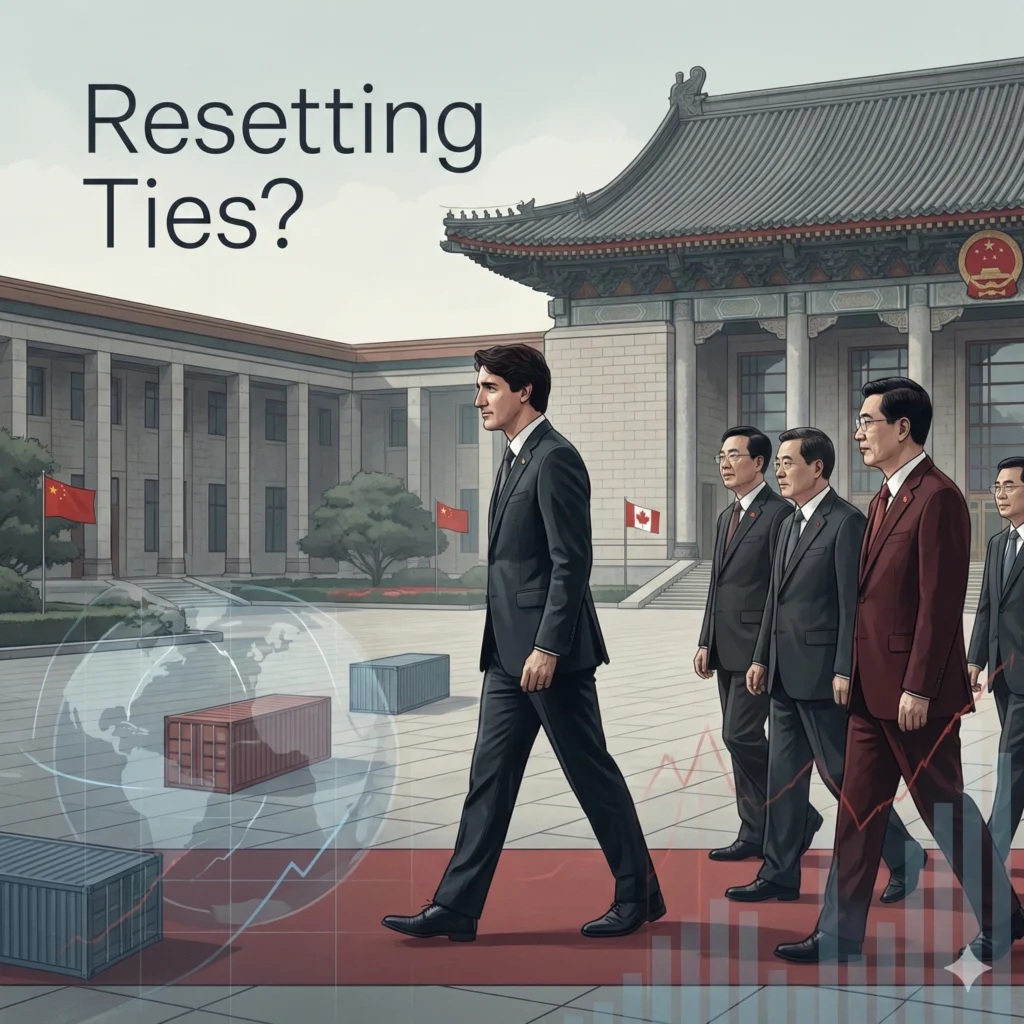
Why Canadian PM Mark Carney Visits China Now
The timing of Canadian PM Mark Carney’s visit is no coincidence. Relations between Ottawa and Washington have cooled sharply following new U.S. tariffs and controversial remarks from President Donald Trump suggesting Canada could become the “51st state.” These developments have raised concerns in Canada about overreliance on its southern neighbor.
By choosing Beijing as a key diplomatic destination, Canadian PM Mark Carney is signaling that Canada is actively diversifying its economic and political partnerships. China remains one of the world’s largest consumer markets and a critical player in global trade, making renewed engagement strategically important for Ottawa.
High-Stakes Meeting With President Xi Jinping
A central highlight of the trip is Carney’s scheduled meeting with Chinese President Xi Jinping on Friday. The talks are expected to focus on restoring a strategic partnership that has deteriorated over the past several years due to political disputes, trade restrictions, and diplomatic freezes.
Canadian officials say discussions will include:
- Reducing bilateral trade barriers
- Improving market access for Canadian exporters
- Rebuilding political trust between the two governments
While a full reset will take time, both sides appear open to gradual progress.
Trade Tensions and the Electric Vehicle Dispute
Trade remains a sensitive issue during the visit. China has hinted it may relax restrictions on Canadian agricultural and natural resource exports if Ottawa agrees to reconsider its 100 percent duty on Chinese electric vehicles. This tariff has been a major sticking point in recent years.
Although officials caution that a complete rollback of tariffs is unlikely in the short term, even partial concessions could benefit Canadian exporters struggling to access Asian markets. Any movement on this front would mark a significant step toward stabilizing economic ties.
Reducing Dependence on the United States
One of the clearest messages from the visit is Canada’s determination to reduce its economic dependence on the United States. Nearly three-quarters of Canadian exports currently go to the U.S., leaving the economy vulnerable to policy shifts in Washington.
Carney’s China visit fits into a broader strategy to rebalance Canada’s trade portfolio by strengthening ties with Asia, the Middle East, and Europe. According to analysts, this approach could improve Canada’s long-term economic resilience and negotiating power.
Part of a Broader Global Diplomatic Tour
China is only one stop in Canadian PM Mark Carney’s wider diplomatic push. Following Beijing, the prime minister is set to travel to Qatar and Davos, where he will meet global leaders, investors, and policymakers.
These stops underline Ottawa’s renewed focus on:
- Expanding foreign investment
- Securing alternative energy partnerships
- Strengthening Canada’s voice in global economic forums
Together, the tour reflects a more assertive and diversified Canadian foreign policy.
What This Means for Canada Going Forward
While expectations for immediate breakthroughs remain cautious, the visit itself marks a turning point. Diplomatic engagement had been largely frozen for years, and reopening dialogue creates space for progress on trade, climate cooperation, and regional security.
If successful, Carney’s approach could help Canada:
- Regain access to key Chinese markets
- Reduce vulnerability to U.S. trade pressure
- Reposition itself as a flexible, globally connected economy
As global alliances continue to shift, Canadian PM Mark Carney visiting China may prove to be one of the most consequential foreign policy moves of his tenure.
For more details & sources visit: Politics Today (via The Associated Press)
For more updates and related stories, visit our Canada News page.