
The Brazilian government is pursuing enhanced Brazil U.S. cooperation to tackle money laundering and illegal arms exports. Finance Minister Fernando Haddad announced the initiative in Brasília following investigations revealing that U.S.-registered entities were being used to launder funds and obscure foreign investments in Brazil, particularly within the fuel sector.
Recent probes have identified firms incorporated in Delaware that facilitated illicit financial flows, enabling foreign capital to enter Brazil under opaque structures. Haddad emphasized that bilateral collaboration with U.S. authorities is essential to prevent such activities and ensure transparency in cross-border investments.
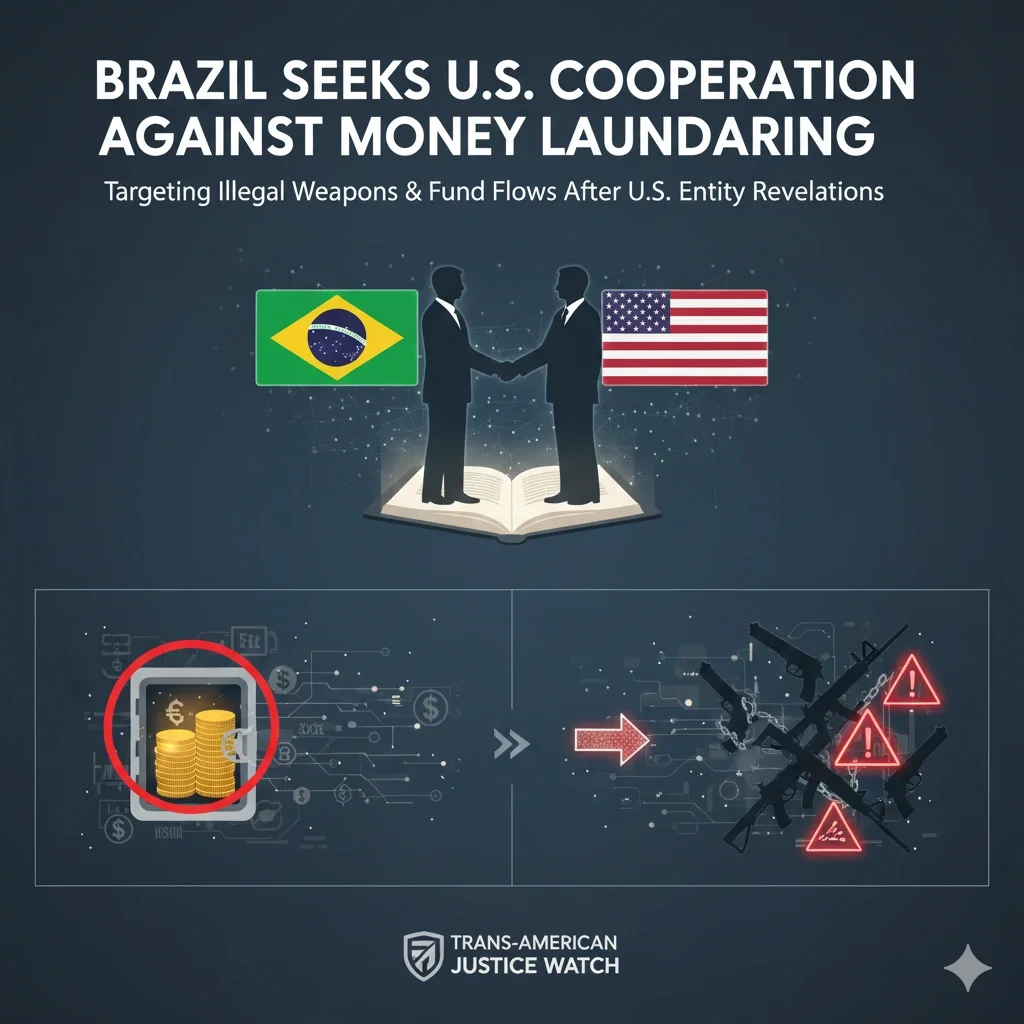
Focus on Financial Transparency and Intelligence Sharing
The proposed agreement between Brazil and the United States will emphasize intelligence sharing, monitoring suspicious transactions, and strengthening oversight of investment channels. By aligning regulatory frameworks and enforcement measures, both nations aim to close loopholes exploited by individuals and entities engaged in money laundering.
Authorities also plan to target illegal arms trafficking, leveraging combined investigative resources to disrupt networks facilitating weapons transfers across borders. This dual approach seeks to enhance security while fostering legal, accountable financial and trade practices.
Implications for Brazil’s Regulatory Landscape
The initiative reflects a growing priority for Brazil to enforce compliance and prevent financial crimes involving foreign entities. Strengthened Brazil U.S. cooperation could deter misuse of corporate registration laws and encourage responsible foreign investment, reinforcing the country’s commitment to maintaining a transparent and secure economic environment.
Experts note that such bilateral efforts not only improve domestic enforcement but also set a precedent for global collaboration in combating financial crime and illicit trade. By coordinating policies and operations, Brazil and the U.S. can more effectively safeguard financial systems and international commerce.
Next Steps
The Brazilian and U.S. governments are expected to negotiate the framework of the agreement, including mechanisms for real-time intelligence sharing, transaction monitoring, and coordinated enforcement actions. Once finalized, the cooperation could significantly curb money laundering and arms trafficking while strengthening bilateral trust and economic oversight.
Source: Northland News Radio
For more regional updates and industry insights, visit our Brazil News Page.