
The Brazil Supreme Court faces continued political uncertainty as Senate leader Davi Alcolumbre postponed the hearing of nominee Jorge Messias, escalating tensions between President Luiz Inácio Lula da Silva’s administration and Congress. The delay underscores ongoing disputes over judicial appointments and the balance of power between Brazil’s executive and legislative branches.
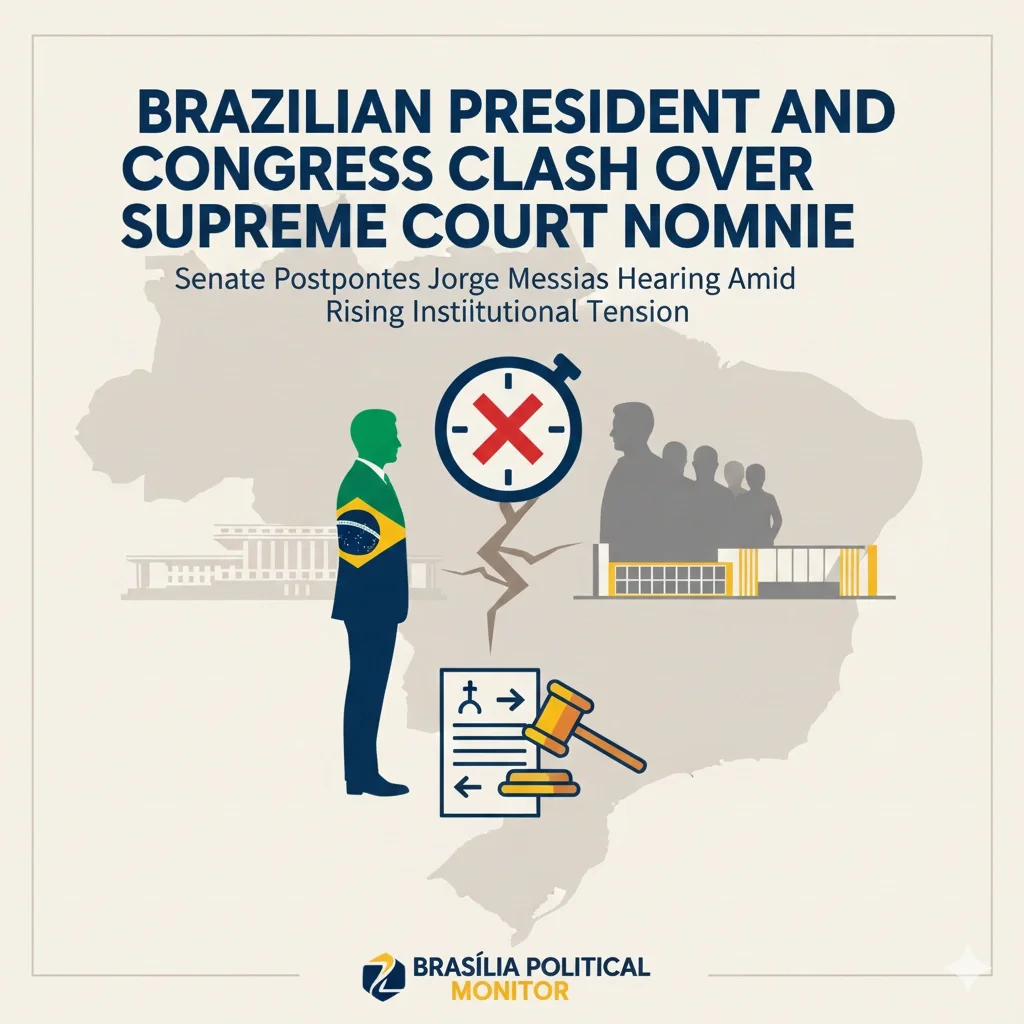
Originally scheduled for December 10, the hearing was canceled because the government had not formally submitted Messias’s nomination. Messias, currently serving as Brazil’s attorney general, was expected to fill a Supreme Court vacancy, but the postponement reflects Senate dissatisfaction with the executive’s handling of the nomination process.
Legislative-Executive Tensions
Alcolumbre stated that the delay serves as a signal of the Senate’s discontent with Lula’s choice, highlighting broader frictions between the branches of government. Government Senate leader Jaques Wagner described the rescheduling as an opportunity for Messias to engage in dialogue with legislators before the hearing is reconvened. However, allies of Alcolumbre expressed skepticism, indicating that negotiations with the president may not resolve the underlying disagreements.
The postponement also raises concerns about the potential politicization of judicial appointments in Brazil. Analysts note that conflicts over Supreme Court nominations can affect the perception of judicial independence and may influence broader political dynamics in the country.
Implications for Brazil’s Judicial Landscape
Jorge Messias’s appointment is seen as pivotal for the Brazil Supreme Court, which plays a central role in interpreting the law and ensuring constitutional compliance. The delay may stall pending court decisions and has attracted attention from both domestic and international observers monitoring Brazil’s governance and rule-of-law practices.
Experts emphasize that this political standoff highlights the delicate balance between executive ambition and legislative oversight. The outcome of the rescheduled hearing could set a precedent for how future judicial appointments are handled under the Lula administration.
Next Steps
As dialogue continues between Messias, lawmakers, and the executive branch, the Senate will determine a new date for the hearing. Both government officials and opposition members are closely watching the situation, aware that the resolution—or lack thereof—may have lasting implications for Brazil’s legal and political systems.
The Brazil Supreme Court nomination process remains a flashpoint, reflecting broader tensions in Brazilian politics and demonstrating the challenges of appointing top judicial officials amid competing interests.
Source: Bloomberg
For more regional updates and industry insights, visit our Brazil News Page.