
The Brazil-Sudan Global South Partnership is being highlighted as a potential flagship model for cooperation among developing nations, particularly in addressing food security, post-war reconstruction, and institutional reform. Sudan’s ambassador has argued that deeper collaboration with Brazil could provide a blueprint for equitable South–South partnerships in a shifting multipolar world.
As global power dynamics evolve and traditional North–South hierarchies weaken, Sudan is exploring new strategic alliances built on mutual benefit rather than conditionality. Brazil, with its long-standing ties to Africa and growing engagement with the Global South, is positioned as a key partner in Sudan’s recovery efforts.
Shifting Global Order and South–South Cooperation
The Brazil-Sudan Global South Partnership is framed within the broader transformation of global governance structures, where emerging economies and platforms such as BRICS are gaining influence. As multipolarity strengthens, developing nations are seeking partnerships that prioritize sovereignty, shared development goals, and pragmatic cooperation.
Sudan’s leadership sees this partnership as a chance to reset external relations on balanced and pragmatic terms, moving away from traditional donor-recipient frameworks that often involve asymmetrical power relations.
Brazil’s renewed engagement with Africa under President Luiz Inácio Lula da Silva underscores a foreign policy shift that treats African nations as strategic counterparts rather than aid recipients. This approach aligns closely with Sudan’s aspirations for autonomy and inclusive development.
Agriculture at the Core of Cooperation
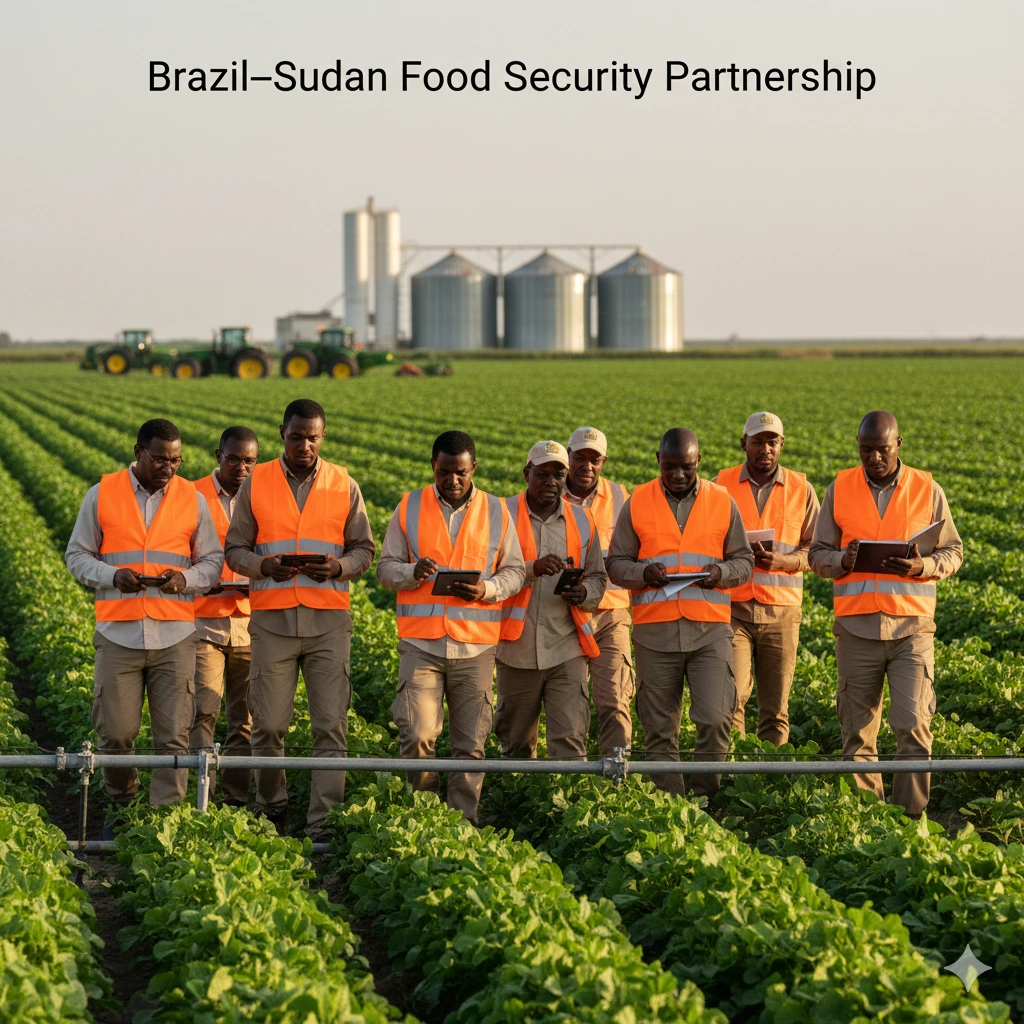
Agriculture is described as the central pillar of the Brazil–Sudan partnership. Sudan possesses vast underutilized arable land and abundant water resources, making it a potential agricultural powerhouse in Africa and the Middle East.
Brazil, on the other hand, brings world-class expertise in tropical agriculture, agribusiness technology, and value-chain development. Through technology transfer, training, and joint investment, Brazil could help Sudan modernize its agricultural sector and become a regional food supplier, particularly amid climate change and global supply-chain disruptions.
Experts believe this cooperation could significantly enhance Sudan’s food production capacity, reduce reliance on imports, and strengthen regional food security.
Leveraging Brazil’s Social and Economic Policy Experience
Beyond agriculture, the Brazil-Sudan Global South Partnership is seen as valuable in addressing inequality, institutional reform, and inclusive growth. Brazil’s experience in social programs, poverty reduction, and public sector reform offers practical lessons for Sudan’s post-war reconstruction.
Sudan’s reconstruction phase requires rebuilding institutions, improving governance, and ensuring that economic recovery benefits all segments of society. Brazil’s policy frameworks, developed over decades of tackling inequality and economic disparities, could provide a roadmap for Sudan’s development strategy.
Cooperation in Health and Education
Health and education are identified as additional areas of collaboration within the Brazil–Sudan partnership. Brazil’s achievements in universal healthcare coverage and affordable generic medicines could help Sudan strengthen its public health system, particularly in post-conflict regions with limited medical infrastructure.
Education and capacity-building initiatives are also proposed, including academic exchanges, training programs, and public administration reforms. These efforts aim to strengthen Sudanese institutions and develop human capital, which is essential for sustainable development and long-term stability.
Shared Political and Strategic Alignment
Politically, Brazil and Sudan share positions on sovereignty, dialogue-based conflict resolution, and reform of global governance institutions. This alignment gives their partnership broader strategic significance, especially within international platforms like BRICS and other Global South forums.
The partnership is portrayed as contributing not only to Sudan’s national recovery but also to the evolving economic and political architecture of the Global South. By working together, both countries can amplify their voices in global decision-making and advocate for fairer international systems.
A Strategic Alternative to Traditional North–South Models
The Brazil-Sudan Global South Partnership is positioned as a strategic alternative to traditional North–South cooperation models, which have often been criticized for conditionality, dependency, and unequal power dynamics.
By emphasizing mutual learning, shared development goals, and equitable cooperation, the partnership reflects a growing trend among developing nations to pursue South–South development frameworks.
Sudan’s ambassador argues that such partnerships can deliver more sustainable and locally driven outcomes compared to conventional aid models.
Implications for Sudan’s Post-War Reconstruction
Sudan’s post-war reconstruction presents both challenges and opportunities. The country must rebuild infrastructure, restore agricultural production, and strengthen governance structures. The Brazil–Sudan partnership offers a comprehensive framework that combines technical expertise, policy experience, and strategic alignment.
If successfully implemented, this collaboration could accelerate Sudan’s recovery, improve food security, and foster inclusive economic growth.
Broader Significance for the Global South
The Brazil-Sudan partnership is seen as a symbol of the Global South’s rising agency in shaping its own development trajectory. As emerging economies deepen cooperation, they are redefining global development models and reducing reliance on traditional Western-led frameworks.
Analysts suggest that this partnership could inspire similar collaborations among developing nations, strengthening South–South networks and promoting a more balanced global economic order.
For more details & sources visit: ANBA – Arab Brazilian News Agency
Read more on Sudan news: 360 News Orbit – Sudan.