
Benki Piyãko Awarded 43rd Niwano Peace Prize during a historic ceremony that recognizes the profound intersection of Indigenous spirituality and global environmental stewardship. This prestigious accolade, bestowed by the Tokyo-based Niwano Peace Foundation, highlights the tireless efforts of the Ashaninka spiritual leader in defending the Brazilian Amazon. As the world faces an escalating climate crisis, the recognition of Piyãko serves as a powerful testament to the necessity of traditional wisdom in modern peace-building. The international community has responded with overwhelming support, noting that his leadership offers a blueprint for harmony between humanity and the natural world.
The Benki Piyãko Awarded 43rd Niwano Peace Prize announcement comes at a time when Indigenous land rights are at the forefront of global political discourse. For over fifteen years, Piyãko has been a steadfast guardian of the rainforest, pioneering reforestation projects that have restored thousands of hectares of degraded land. His work transcends simple activism, as it is rooted deeply in the ancestral spirituality of the Ashaninka people. By bridging the gap between ancient traditions and contemporary ecological needs, Piyãko has created a sustainable model for conservation that resonates far beyond the borders of Brazil.
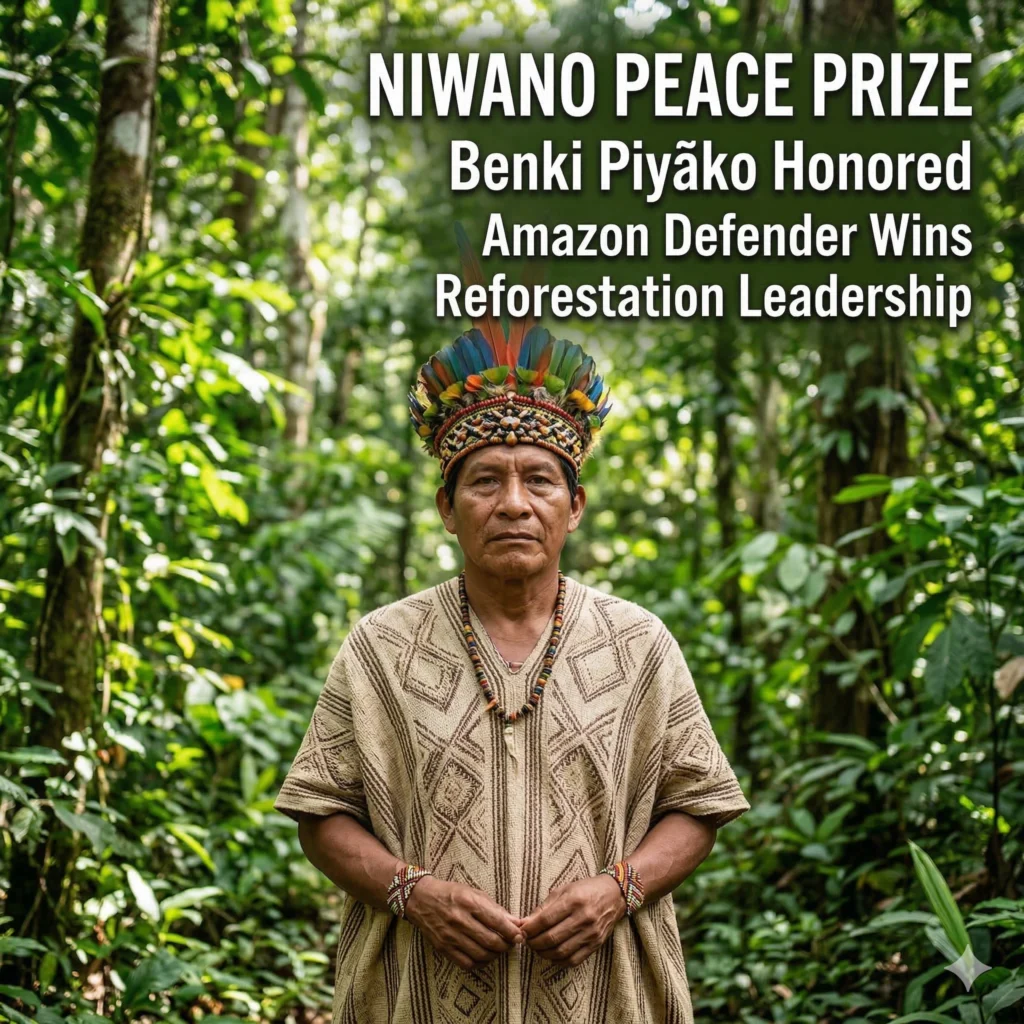
Benki Piyãko Awarded 43rd Niwano Peace Prize
The selection process for this honor is notoriously rigorous, involving an international search for individuals who foster inter-religious understanding. Benki Piyãko Awarded 43rd Niwano Peace Prize status was achieved because of his unique ability to mobilize diverse groups toward a common goal of planetary healing. His leadership at the Yorenka Tasorentsi Institute has been instrumental in educating both Indigenous youth and non-Indigenous allies about the sanctity of the biosphere. Through this institute, he has successfully transmitted traditional environmental knowledge to a new generation of forest guardians.
One of the most remarkable aspects of his work is the establishment of the Indigenous Ayahuasca Conference, which serves as a platform for cultural preservation. This initiative has been vital in Benki Piyãko Awarded 43rd Niwano Peace Prize recognition, as it leverages spiritual practices to drive large-scale biodiversity conservation. By engaging youth in reforestation, Piyãko ensures that the fight for the Amazon is not just a temporary effort but a multi-generational mission. His holistic approach demonstrates that spiritual health and ecological health are two sides of the same coin in the Ashaninka worldview.
The impact of his reforestation efforts is visible in the lush canopies that now cover previously barren lands in the Amazon basin. These projects have not only restored local ecosystems but have also provided sustainable livelihoods for his people, proving that conservation and economic stability can coexist. The Benki Piyãko Awarded 43rd Niwano Peace Prize celebrates these tangible results that offer hope in the face of global deforestation. His work stands as a living example of how traditional land management can effectively mitigate the impacts of a changing climate.
Global Significance of Indigenous Leadership in Peace Building
The international community views the Benki Piyãko Awarded 43rd Niwano Peace Prize as a significant shift in how we define global peace-building efforts. In the past, peace prizes often focused on political or diplomatic negotiations between warring nations, but today, the focus has expanded to include environmental security. Without a healthy planet, lasting peace is impossible, a reality that the Niwano Peace Foundation has clearly acknowledged by honoring Piyãko. This award validates the idea that protecting the Earth is a fundamental act of peace that benefits all of humanity.
- Indigenous leaders protect 80 percent of the world’s remaining biodiversity.
- The Niwano Peace Prize has been awarded annually since 1983 for world peace.
- Traditional ecological knowledge is now recognized by major scientific bodies.
- Inter-religious dialogue is essential for solving the global climate crisis.
Furthermore, the Benki Piyãko Awarded 43rd Niwano Peace Prize highlights the importance of intercultural dialogue in the modern era. Piyãko has spent years building bridges between the Ashaninka people and Western scientists, policymakers, and spiritual leaders. This collaborative spirit is essential for creating the comprehensive solutions required to address the environmental challenges of 2026. By bringing Indigenous wisdom to the global stage, he is helping to reshape the narrative around what it means to be a leader in the twenty-first century.
The Role of the Yorenka Tasorentsi Institute in Education
The Yorenka Tasorentsi Institute, founded by Piyãko, is a cornerstone of his legacy and a major factor in him being the Benki Piyãko Awarded 43rd Niwano Peace Prize recipient. This center serves as a hub for community-based education, where the focus is on the transmission of traditional environmental knowledge. Students at the institute learn not just from books, but from the land itself, guided by the wisdom of their elders. This immersive educational model is vital for maintaining the cultural identity of the Ashaninka people while preparing them for modern challenges.
Through the institute, Piyãko has promoted a philosophy of “living in harmony with the Earth,” which challenges the extractive mindset of industrial society. This message has gained significant traction globally, contributing to the Benki Piyãko Awarded 43rd Niwano Peace Prize nomination. The institute also hosts international workshops, allowing people from all over the world to experience the Ashaninka way of life. These exchanges foster a deeper understanding of the interdependence between all living beings and the importance of preserving the Amazon.
In addition to ecological training, the institute provides a space for spiritual reflection and healing, which Piyãko believes is necessary for effective activism. He teaches that a peaceful heart is the foundation for a peaceful world, an idea that aligns perfectly with the mission of the Niwano Peace Foundation. The Benki Piyãko Awarded 43rd Niwano Peace Prize is a recognition of this integrated approach to leadership. By nurturing the spirit and the soil simultaneously, Piyãko is creating a resilient community capable of defending its rights and its environment.
Indigenous Land Rights as a Foundation for Environmental Protection
A central theme of Piyãko’s career has been the struggle for the legal recognition of Indigenous territories in Brazil. The Benki Piyãko Awarded 43rd Niwano Peace Prize underscores the fact that Indigenous land rights are the most effective tool for forest conservation. When Indigenous peoples have secure title to their lands, deforestation rates drop significantly compared to non-protected areas. Piyãko has been at the forefront of this legal and physical defense, often facing great personal risk to protect the Ashaninka domain.
His success in securing these rights has provided a safe haven for countless species of flora and fauna that might otherwise have been lost. The Benki Piyãko Awarded 43rd Niwano Peace Prize is an acknowledgment of the bravery required to stand against powerful commercial interests. By championing land rights, he has ensured that the “lungs of the planet” continue to function for the benefit of the entire global population. This work is a clear demonstration of how local action can have a profound and lasting global impact.
The award also brings much-needed attention to the ongoing threats faced by Indigenous leaders in the Amazon and elsewhere. Despite the Benki Piyãko Awarded 43rd Niwano Peace Prize celebration, the reality on the ground remains dangerous for those who speak out against illegal logging and mining. It is hoped that this international recognition will provide a layer of protection for Piyãko and his colleagues as they continue their vital work. The Niwano Peace Foundation has sent a clear message that the world is watching and values the lives of forest defenders.
Spiritual Stewardship and the 43rd Niwano Peace Prize
The spiritual dimension of Piyãko’s work is perhaps what sets him apart most distinctly as a candidate for this honor. For the Ashaninka, the forest is not just a resource but a living entity with which they share a sacred bond. This perspective was a key consideration in the Benki Piyãko Awarded 43rd Niwano Peace Prize selection, as it promotes a different way of relating to the natural world. In a time of materialist consumption, Piyãko’s message of spiritual stewardship offers a refreshing and necessary alternative.
- Spiritual leadership is key to mobilizing communities for environmental action.
- The Ashaninka people view the rainforest as a sacred, sentient space.
- Ayahuasca is used as a tool for ecological and personal transformation.
- Piyãko’s work fosters a deep sense of global cooperation and unity.
This spiritual framework allows for a more profound commitment to reforestation than simple government mandates ever could. When people plant trees as an act of worship or ancestral duty, the results are much more likely to be sustained over the long term. The Benki Piyãko Awarded 43rd Niwano Peace Prize recognizes this deep-seated motivation as a powerful force for positive change. It highlights the potential for religious and spiritual groups to be the leading edge of the environmental movement in the coming years.
Future Legacy of the Niwano Peace Prize for the Amazon
Looking forward, the legacy of the Benki Piyãko Awarded 43rd Niwano Peace Prize will be felt in the continued growth of the Yorenka Tasorentsi Institute. The prize money will likely be reinvested into expanding reforestation efforts and providing more educational opportunities for Indigenous youth. This financial boost is critical for scaling up the successful models that Piyãko has developed over the last fifteen years. The award ensures that his vision for a green and peaceful Amazon will have the resources it needs to flourish.
Moreover, the Benki Piyãko Awarded 43rd Niwano Peace Prize sets a precedent for other international awards to recognize the contributions of Indigenous leaders. It elevates the status of traditional knowledge within the global academic and political spheres, encouraging more collaboration between different ways of knowing. This cross-pollination of ideas is exactly what is needed to navigate the complex environmental crises of the 21st century. The ripples from this award will be felt for generations as more people are inspired by Piyãko’s example.
Ultimately, the story of Benki Piyãko is one of resilience, hope, and the power of a single individual to inspire a global movement. The Benki Piyãko Awarded 43rd Niwano Peace Prize is a well-deserved tribute to a man who has dedicated his life to the service of his people and the planet. As we celebrate his achievement, we are also reminded of our own responsibility to care for the Earth and each other. The Ashaninka leader has shown us that peace is not a passive state, but an active pursuit of balance and harmony.
Global Cooperation and Intercultural Dialogue
The ceremony in Tokyo will be a significant gathering of spiritual and cultural leaders from around the world to celebrate the Benki Piyãko Awarded 43rd Niwano Peace Prize. This event will provide a platform for Piyãko to share the Ashaninka message with a global audience, further promoting the need for international cooperation. The challenges facing the Amazon cannot be solved by one nation alone; they require a unified global response. By receiving this prize, Piyãko becomes a central figure in the international effort to protect our shared home.
- The Niwano Peace Foundation facilitates dialogue between diverse religions.
- Piyãko’s prize includes a commemorative trophy and 20 million yen.
- Global cooperation is essential for meaningful environmental protection.
- Intercultural dialogue helps break down barriers to climate action.
His presence in Tokyo also symbolizes the connection between the Global South and the Global North in the fight for climate justice. The Benki Piyãko Awarded 43rd Niwano Peace Prize bridge-building aspect is perhaps its most vital contribution to world peace. When we listen to the voices of those who live most closely with the land, we gain insights that are often lost in urbanized, industrial societies. Piyãko’s leadership invites us all to reconnect with the natural world and recognize our shared destiny as inhabitants of this planet.
Conclusion of the 2026 Niwano Peace Prize Selection
As the 43rd recipient, Benki Piyãko joins a prestigious list of individuals and organizations that have changed the course of history through their commitment to peace. The Benki Piyãko Awarded 43rd Niwano Peace Prize is a milestone in the recognition of Indigenous rights as a fundamental component of global stability. This award serves as a beacon of hope for all those who are working to protect the environment and promote social justice in their own communities. The legacy of Benki Piyãko is a testament to the fact that ancient wisdom is more relevant today than ever before.
In these challenging times, the Benki Piyãko Awarded 43rd Niwano Peace Prize reminds us that we have the tools to create a better future. Through education, reforestation, and spiritual stewardship, we can begin to heal the wounds we have inflicted on the Earth. The Ashaninka leader’s life work is a call to action for every person to find their own way of contributing to a more peaceful and sustainable world. As we look toward the presentation ceremony in May, let us reflect on how we can all be better guardians of the world we share.
For more details & sources visit: Vatican News
For more regional updates and industry insights, visit our Brazil News Page.