
Summary
The Bank of Canada is expected to announce another interest rate cut this week, responding to slow growth and renewed trade turmoil. Despite stronger job numbers and moderate inflation, policymakers remain cautious as global uncertainty continues to pressure exports and investment.
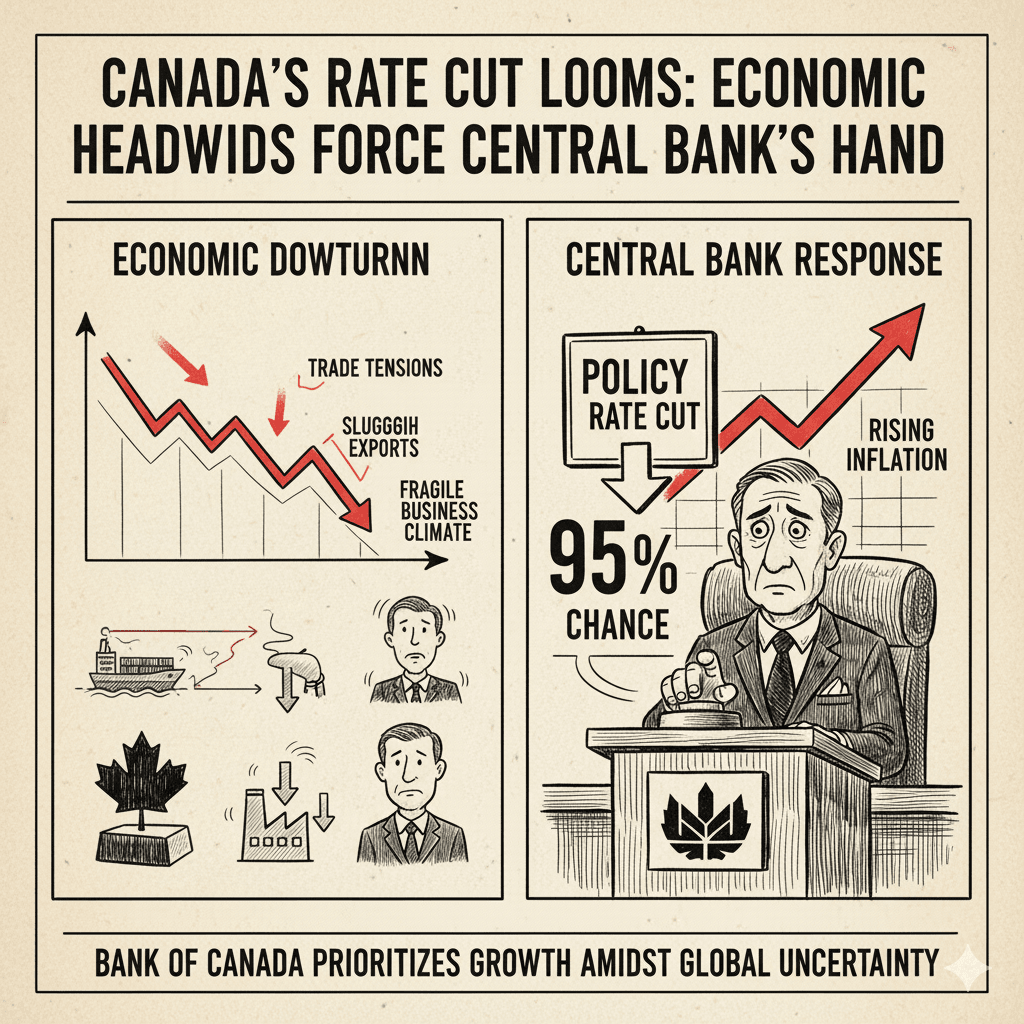
Bank of Canada interest rate cut speculation is intensifying as the central bank is expected to lower its policy rate again this week. Trade tensions, sluggish exports, and a fragile business climate continue to overshadow concerns about rising inflation. Financial markets are betting on a 95 percent chance of another quarter-point cut.
The Bank of Canada is set to announce another interest rate reduction, likely bringing the benchmark rate down to 2.25 percent. The move comes as the Canadian economy grapples with slow growth, weak exports, and ongoing trade tensions with the United States. Despite a rebound in employment and an uptick in inflation to 2.4 percent, central bank officials remain cautious, warning that the overall outlook remains tepid.
Governor Tiff Macklem indicated that the bank would not overemphasize September’s stronger job numbers, noting that growth will stay “soft” and insufficient to close the country’s output gap. Economists widely expect a quarter-point cut, with some predicting further easing ahead if the trade environment continues to deteriorate.
Recent threats from U.S. President Donald Trump to impose new tariffs on Canadian goods have added to the economic uncertainty. Analysts say the central bank’s decision reflects an effort to cushion the economy from the fallout of disrupted trade flows and faltering business confidence.
Meanwhile, Prime Minister Mark Carney’s upcoming federal budget is anticipated to feature increased spending on infrastructure and defence, aiming to stimulate growth. Economists stress that while monetary easing may help stabilize financial conditions, Canada’s recovery will ultimately depend on broader fiscal policies and improved investor confidence.