
Baghdad’s “Iraq First” billboards lining the road from Baghdad International Airport have become more than political advertising — they are a vivid symbol of Iraq’s deepening geopolitical dilemma. Towering images praising Prime Minister Mohammed Shia al-Sudani under the nationalist slogan sit uncomfortably close to memorial posters honoring Qassem Soleimani and Abu Mahdi al-Muhandis, two figures closely associated with Iran’s regional influence.
This striking contrast captures Iraq’s current reality: a country attempting to assert sovereignty while caught between U.S. pressure under President Donald Trump and Iran’s entrenched political leverage. As Iraq approaches a crucial government formation deadline, Sudani’s balancing act is becoming increasingly precarious.
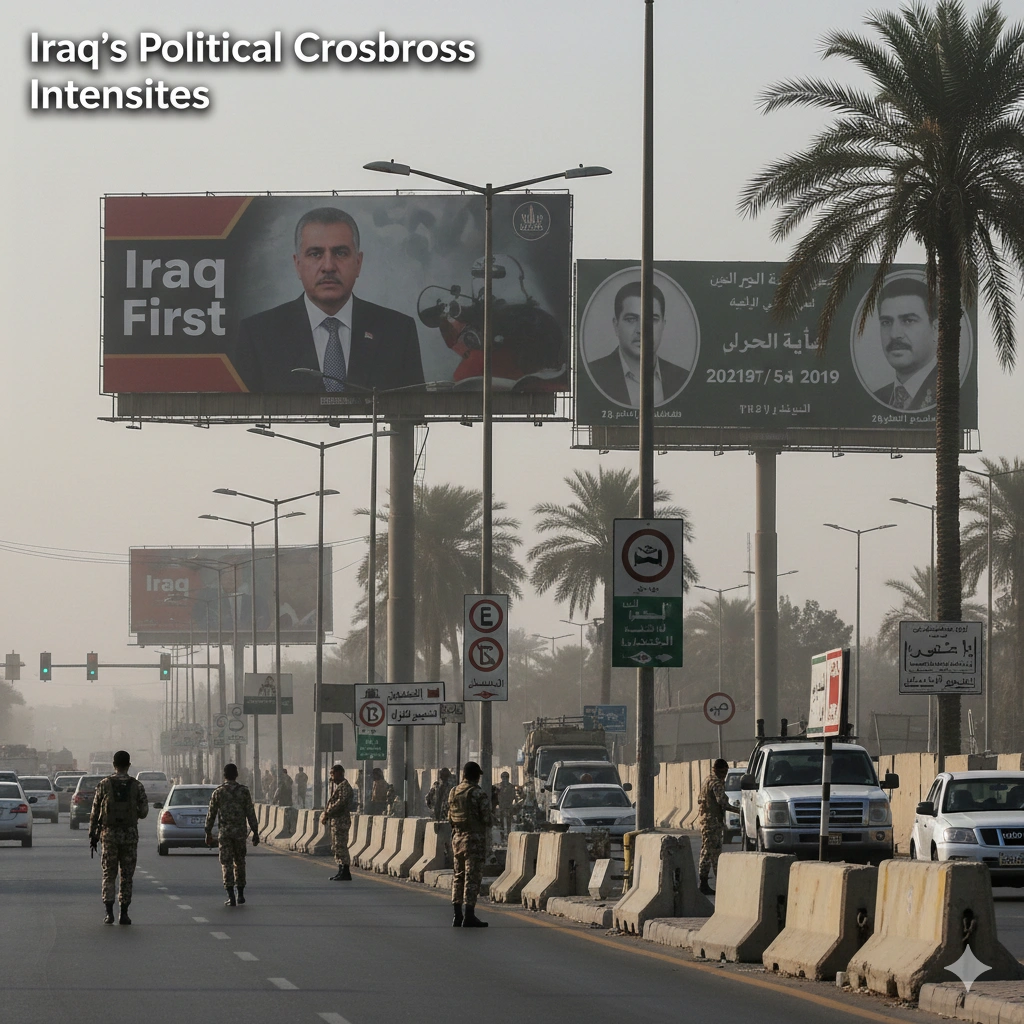
Baghdad’s “Iraq First” Billboards and Their Political Message
The “Iraq First” campaign is designed to project stability, nationalism, and leadership at a moment of uncertainty. Positioned along one of Baghdad’s most visible routes, the billboards suggest a deliberate effort to reassure both domestic audiences and international observers that Iraq intends to prioritize its own interests.
Yet their proximity to Iran-linked memorials tells another story — one of unresolved influence and competing allegiances. The imagery reflects how Iraq’s political space remains contested between Washington and Tehran, with Shiite factions internally divided over the country’s strategic direction.
Sudani’s Tightrope Between Washington and Tehran
Prime Minister Sudani has worked to strengthen ties with the United States, Gulf Arab states, and Turkey, while avoiding an outright break with Iran-aligned factions. Bloomberg reports that his government has actively courted American energy giants such as Chevron and Exxon Mobil, signaling openness to deeper U.S. commercial involvement.
This outreach aligns with President Trump’s business-first Middle East strategy, which emphasizes energy investment and economic leverage over traditional diplomacy. Increased U.S. oil-sector participation could provide Iraq with capital, technology, and political goodwill — but it risks provoking backlash from Iran-backed groups that view Washington’s influence with suspicion.
Oil, Economics, and Growing Financial Pressure
Iraq currently produces around 4.4 million barrels of oil per day, making it OPEC’s second-largest producer. However, Bloomberg Economics warns that a roughly 20% drop in oil prices over the past year, bringing crude close to $65 per barrel, is pushing Iraq toward fiscal stress.
Oil revenues fund public-sector salaries for millions of Iraqis. Any sustained price weakness could strain government finances, heighten public discontent, and increase the risk of unrest — particularly if political paralysis delays decisive action.
Government Formation Deadlines Raise the Stakes
Iraq’s political timeline adds urgency to the situation. Parliament is expected to vote on a president, who must then task the largest Shiite bloc with nominating a prime minister within 15 days.
In a surprising move, Sudani reportedly withdrew his own nomination in favor of former Prime Minister Nouri al-Maliki, an Iran-aligned figure, in an attempt to break the deadlock. However, sources cited by Bloomberg suggest Maliki may struggle to regain office due to lingering political baggage and strained relations with the Trump administration and Gulf states.
This uncertainty underscores how fragile consensus remains within Iraq’s Shiite political landscape.
Trump Envoy Visit and Regional Turbulence
Adding another layer of complexity, developments around Baghdad’s “Iraq First” billboards coincide with an expected visit by Trump’s special envoy, Mark Savaya, underscoring Washington’s close monitoring of Iraq’s political maneuvering as regional instability intensifies.
Unrest inside Iran, the ongoing fallout from the Gaza war, and wider Middle East volatility are shaping the choices reflected in Baghdad’s “Iraq First” billboards, with Iraqi leaders wary that any misstep could draw the country deeper into regional conflict or economic distress.
What Baghdad’s “Iraq First” Billboards Ultimately Reveal
The symbolism of Baghdad’s “Iraq First” billboards lies in their contradiction. They project independence and national unity, yet coexist with reminders of foreign influence and unresolved loyalties.
For Sudani, the challenge is existential: maintain domestic stability, keep Shiite factions aligned, reassure international partners, and prevent Iraq from becoming collateral damage in a renewed U.S.–Iran power struggle. The coming weeks — and the formation of the next government — will determine whether Iraq can truly put itself first.
For more details & sources visit: Bloomberg News