
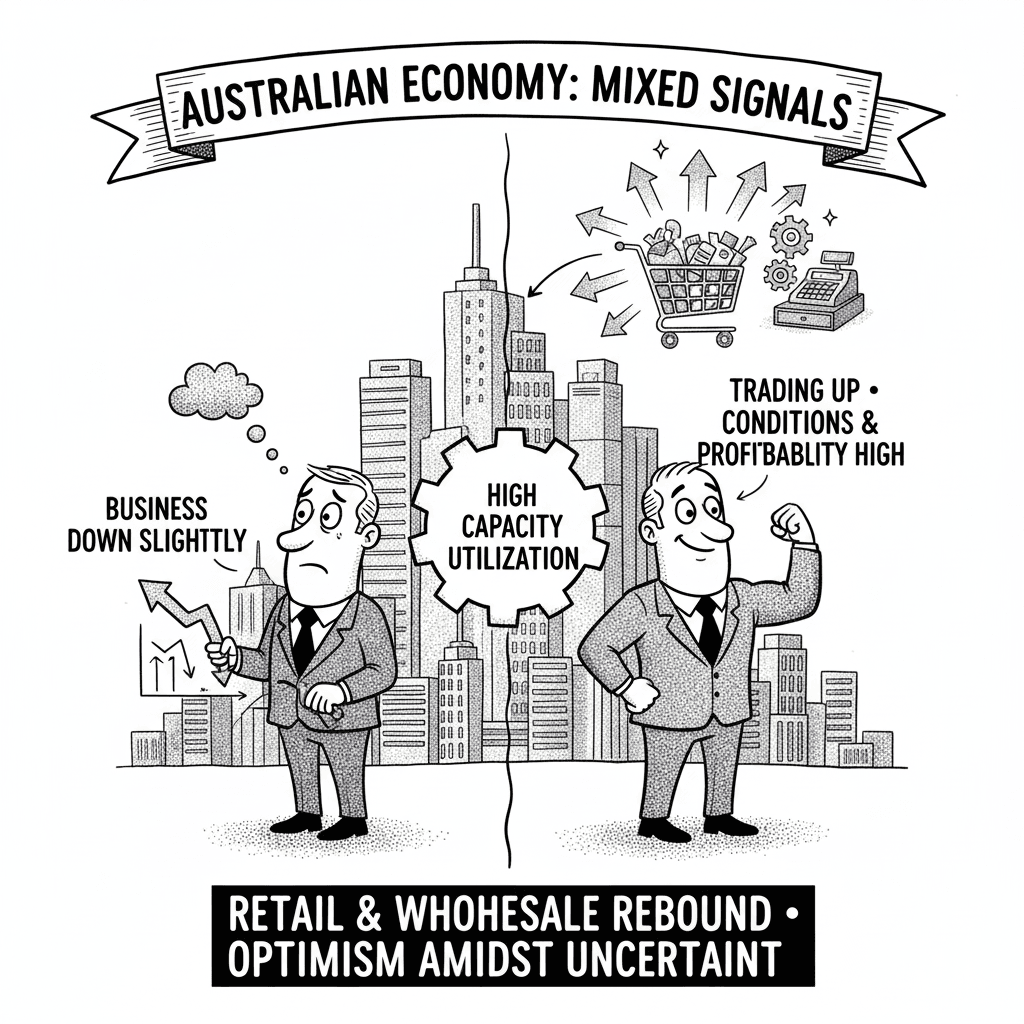
Australian business confidence slipped slightly in October, even as overall trading conditions, profitability, and capacity utilization continued to strengthen across major sectors. The latest data from the National Australia Bank (NAB) highlights a mixed yet resilient outlook for firms as the economy navigates high costs, persistent inflation pressures, and improving industry activity.
Business Confidence Falls but Remains Above Long-Term Average
According to the latest NAB Monthly Business Survey, business confidence fell by 2 points in October. Despite the dip, confidence remains above the long-term average, indicating that most businesses still expect favorable conditions ahead.
Economists note that confidence fluctuations are typical amid shifting global and domestic economic signals, including interest rate expectations, consumer spending patterns, and supply chain adjustments. Even so, the overall sentiment appears stable, with no signs of a widespread downturn.
Trading Conditions and Profitability Strengthen
In contrast to the drop in sentiment, business conditions improved, rising 2 points to +9 in October. This improvement reflects stronger:
- Trading conditions
- Profitability
- Employment indicators
Much of the improvement stems from retail and wholesale, two sectors that have struggled in previous months but have recently shown signs of renewed momentum.
Retailers reported a rebound in customer activity, while wholesalers benefited from improved supply chain flows and steady demand from domestic industries.
High Capacity Utilization Signals Robust Activity
A key highlight of the October survey is the rise in capacity utilization, which hit 83.4% — a level above historical norms. This metric suggests businesses are operating at strong output levels and may soon require additional investment in machinery, labor, or infrastructure to keep up with demand.
High capacity utilization often precedes:
- New hiring
- Capital expenditure (CapEx)
- Productivity improvements
It may also increase pressure on prices if supply struggles to keep pace with demand.
Most Major Industries at or Above Trend
NAB’s data shows that the majority of major industries are performing at or above trend, continuing the steady recovery that began in late 2024. Sectors driving the trend include:
- Retail & Wholesale
- Professional Services
- Transport & Utilities
- Manufacturing (select segments)
Mining remains stable, while construction continues to recover gradually from supply and labor constraints.
Cost Pressures Remain a Concern
Despite improved operating conditions, businesses continue to face elevated costs and high input prices, still well above pre-pandemic levels. These include:
- Wage pressures
- Rising supply costs
- Energy and logistics expenses
- Persistent inflation in key materials
Economists warn that if input costs continue to rise at the current pace, firms may face profit margin compression, even with robust trading conditions.
Inflation Risks and Policy Challenges Ahead
While stronger activity typically supports employment and economic stability, it also carries inflation risks. If demand continues to expand and capacity remains stretched, businesses may raise prices to cover rising costs — adding pressure to the Reserve Bank of Australia’s policy outlook.
Analysts note that policymakers will need to balance:
- Sustained economic momentum
- Employment growth
- Inflation control
- Business sector resilience
The October results show that the Australian economy remains on stable footing, albeit with challenges that require careful monitoring.
Outlook
Overall, Australia’s business sector enters the end of the year with mixed but largely positive indicators. Australian business confidence may have slipped, but rising conditions, stronger trading performance, improving profitability, and high capacity utilization point to an economy that remains active and resilient.
For more Australia-related updates, visit our Australia News page.