
Australia Visitor Ban is now the leading headline across international migration news as the Albanese government takes a firm stance on regional security. This significant policy shift, announced, involves a temporary six-month suspension of entry for Iranian passport holders. Home Affairs Minister Tony Burke defended the move, stating it is a necessary measure to protect the national interest during the height of the U.S.-Israel-Iran conflict. The global community is reacting with a mix of shock and understanding as Australia navigates the complex intersection of humanitarian needs and border integrity. This proactive approach aims to prevent a situation where temporary visitors become stranded due to the lack of safe return routes to Tehran.
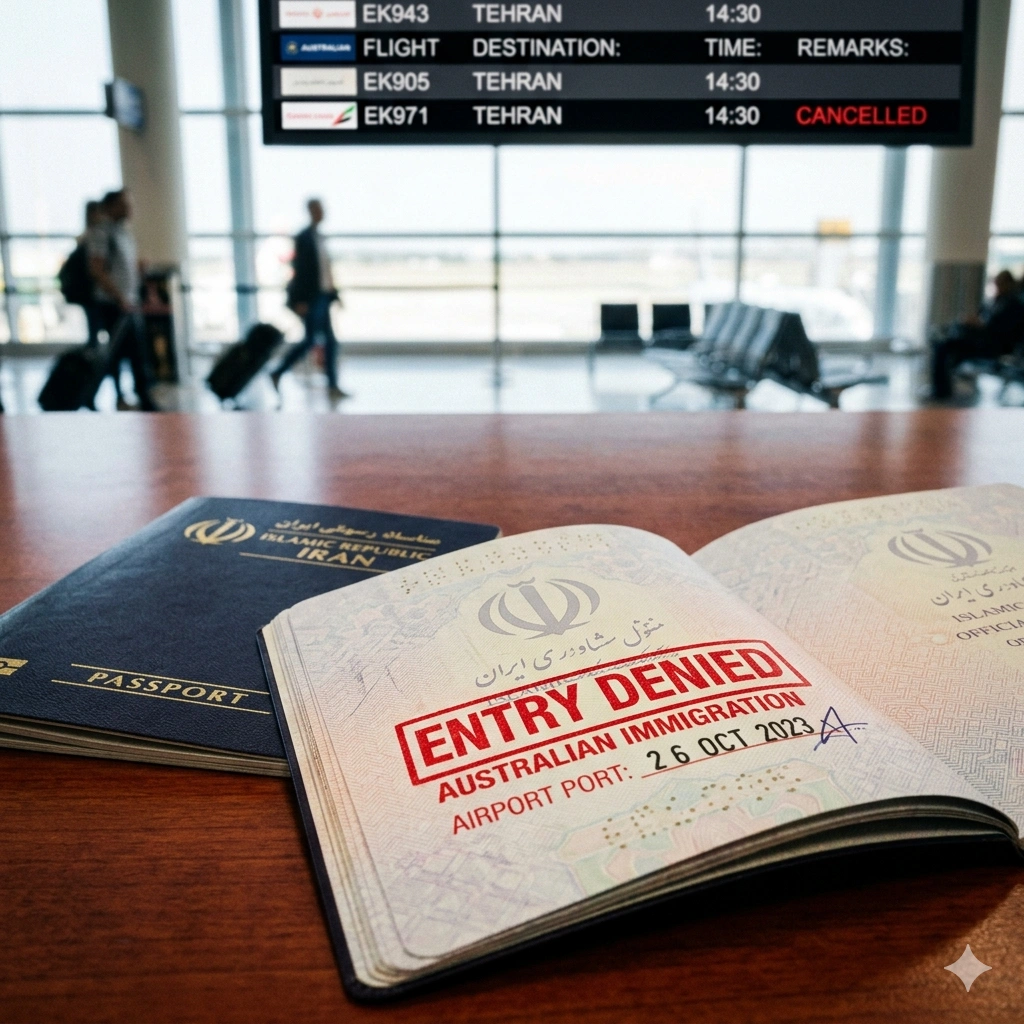
Australia Visitor Ban
The Australia Visitor Ban was officially implemented following a rapid assessment of the escalating violence in the Middle East. Under this new directive, the Department of Home Affairs has suspended the entry of all Iranian citizens currently located outside of Australia. This includes individuals who may have already secured valid visitor visas for the purposes of tourism, business, or short-term work. The government’s logic is centered on the “intent to return” criteria, which officials argue cannot be met while Iranian airspace remains a high-risk zone. By halting arrivals now, Canberra hopes to avoid a long-term administrative crisis involving thousands of expired visas.
While the Australia Visitor Ban is broad in its application, the government has carved out specific exceptions to maintain humanitarian standards. These exceptions apply to Iranian citizens who are already physically present within Australian borders and those who were already in transit when the announcement was made. Furthermore, immediate family members of Australian citizens, specifically spouses and dependent children, are still permitted to enter provided they meet health and security checks. Permanent residency holders also remain unaffected by this temporary suspension, ensuring that those with established lives in Australia are not separated from their homes.
The enforcement of the Australia Visitor Ban reflects a shift in how the Department of Home Affairs views security in the wake of the February 2026 war outbreak. Minister Tony Burke emphasized that visas granted prior to the conflict were issued under vastly different global conditions. As the regional situation has deteriorated, the risk of visitors being unable to fly back to Iran has become a primary concern for border force officials. The government is adamant that permanent residency should not be an accidental or “random consequence” of global instability, signaling a desire to keep migration pathways strictly regulated.
Critics of the Australia Visitor Ban argue that the policy unfairly targets civilians who are seeking to escape the horrors of war. Human rights advocates have pointed out that many of those affected are students or professionals who have no involvement in the geopolitical struggle. However, the government maintains that the suspension is a temporary administrative necessity rather than a permanent ideological shift. By setting a six-month window, Australia is allowing itself time to monitor the conflict and adjust its migration settings as the safety of international travel evolves in the coming months.
National Interest Drives Australia Travel Restrictions
Minister Tony Burke has been the primary spokesperson for the Australia Visitor Ban, consistently linking the decision to the broader concept of national interest. During a press conference in Canberra, Burke explained that the government has a responsibility to ensure that the visa system is not overwhelmed by the fallout of international conflicts. He noted that allowing a large influx of visitors who cannot return home would create a massive backlog in the domestic tribunal system. This pragmatic approach is designed to keep the migration system functional and fair for all applicants, regardless of their country of origin.
The rhetoric surrounding the Australia Visitor Ban suggests that the government is wary of setting a precedent where conflict automatically grants permanent stay. Burke was clear that while Australia remains a compassionate nation, the visitor visa program is specifically for those with a temporary purpose. If a visitor cannot demonstrate a clear and safe path back to their country of residence, their visa no longer fulfills its legal requirements. This strict adherence to the law is intended to send a clear message to the international community about the limits of temporary entry during times of global upheaval.
Security agencies have also played a role in advising on the Australia Visitor Ban. With the Middle East in a state of flux, intelligence reports suggest that traditional background checks on visitors from the region have become increasingly difficult to verify. The suspension provides a cooling-off period, allowing Australian security services to update their protocols and ensure that no high-risk individuals are entering under the guise of tourism. This focus on border security is a hallmark of the current administration’s approach to the 2026 crisis, prioritizing domestic safety over unrestricted travel.
Public reaction to the Australia Visitor Ban has been polarized, reflecting the deep divisions within the Australian electorate. Some citizens praise the government for taking a tough stance on border control and preventing a potential surge in asylum claims. Others see the move as a betrayal of Australia’s values as a multicultural and welcoming society. As the six-month deadline approaches, the government will face intense pressure to justify either the lifting or the extension of the ban. The political stakes are high, as the decision will likely influence voter sentiment in the upcoming federal elections.
Impact of the Conflict on Iranian Migration Trends
The Australia Visitor Ban is a direct byproduct of the intense regional violence that erupted in early 2026. As Iranian ballistic missiles target various locations and Israeli retaliatory strikes continue, the safety of civilian aviation has reached a critical low point. International airlines have cancelled a majority of flights to and from Tehran, making the logistics of returning home nearly impossible for many travelers. This physical barrier to repatriation is the primary reason the Australian government felt compelled to act, fearing a humanitarian bottleneck on Australian soil.
In the months leading up to the Australia Visitor Ban, there was a noticeable spike in visa applications from Iranian citizens. Many were looking for a safe haven as the threat of war became a reality. While many of these applicants were legitimate tourists or family members, the sheer volume of requests put a strain on the Department of Home Affairs. The government’s decision to suspend entries effectively hits the pause button on this trend, allowing officials to process the existing backlog without the pressure of new arrivals who may never leave.
The broader implications of the Australia Visitor Ban extend beyond just those with visitor visas. International students from Iran, many of whom contribute significantly to the Australian economy and research sector, are watching the situation with great anxiety. While those already in the country are safe, the ban complicates the plans of those who were set to start their studies in the mid-year intake. Universities are calling for clarity on how the ban will affect student visas, as the education sector remains one of Australia’s most important exports.
Furthermore, the Australia Visitor Ban highlights the challenges of “intent to return” in the modern age of warfare. In the past, temporary visitors were often given the benefit of the doubt, but the intensity of the 2026 conflict has changed the risk profile. If a home country is in the midst of a full-scale war, the assumption that a visitor will willingly return to a combat zone is naturally brought into question. This change in perspective is likely to influence Australian migration policy for years to come, as the government seeks to balance its international obligations with its domestic legal frameworks.
Legal and Ethical Debates Over Entry Suspensions
The Australia Visitor Ban has sparked a heated legal debate among constitutional and migration lawyers. Some experts argue that the broad nature of the ban may be subject to legal challenge, particularly regarding its application to those who already hold valid visas. Under Australian law, a visa is a grant of permission to enter, and canceling that permission without specific individual cause can be legally contentious. However, the Home Affairs Minister has broad powers under the Migration Act to act in the national interest, which usually overrides individual visa status in times of crisis.
Ethically, the Australia Visitor Ban poses a difficult question: does a nation have a moral obligation to host people who are fleeing a war zone, even if they arrive on a temporary visa? Proponents of the ban argue that the asylum system is the proper channel for those seeking protection, not the visitor visa program. They suggest that using a tourist visa as a backdoor to residency undermines the integrity of the entire system. On the other hand, humanitarian groups argue that during a global crisis, rigid legal definitions should be secondary to the preservation of human life and family unity.
- The ban affects over 5,000 potential visitors who were expected to arrive in the first half of 2026.
- Families of Iranian-Australians have organized protests in Melbourne and Sydney, calling for “compassion over bureaucracy.”
- Legal aid organizations are preparing test cases to challenge the “national interest” definition used by Minister Burke.
- International bodies like the UNHCR have expressed concern that such bans could lead to a “domino effect” of other nations closing their borders to those in need.
The Australia Visitor Ban also raises questions about the consistency of Australian foreign policy. Critics point out that visitors from other conflict-prone regions have not faced similar blanket bans in the past. This has led to accusations that the current policy is specifically targeted based on the geopolitical tensions involving Iran. The government denies any discriminatory intent, insisting that the specific logistical challenges of returning to Iran—such as the total closure of specific air corridors—make this situation unique compared to other ongoing conflicts.
The resolution of these legal and ethical conflicts will likely play out in the Australian courts and the halls of Parliament over the next six months. As lawyers argue the finer points of administrative law, the human stories of those caught in the Australia Visitor Ban continue to emerge. For many Iranian families, the ban represents a painful separation at a time of extreme stress. Whether the government will soften its stance or double down on its “national interest” narrative remains one of the most significant political questions of the 2026 calendar year.
Economic Consequences of the Travel Suspension
The Australia Visitor Ban is not just a social and political issue; it also carries significant economic weight. Iran has historically been a source of skilled professionals and entrepreneurs who contribute to various sectors of the Australian economy. By cutting off this flow of people, even temporarily, the government risks losing out on valuable human capital. Small businesses owned by Iranian-Australians, particularly in the hospitality and retail sectors, are already reporting a drop in patronage and difficulty in bringing over specialized staff for short-term projects.
Tourism is another sector feeling the ripple effects of the Australia Visitor Ban. While Iranian tourists do not make up the largest percentage of international visitors, they represent a high-spending demographic that often visits for extended periods. The loss of this revenue, combined with the general downturn in travel from the Middle East due to the war, adds another layer of pressure to Australia’s post-pandemic recovery. Tourism operators in major cities are voicing their concerns about the long-term impact on Australia’s reputation as a top-tier destination for international travelers.
- Estimated loss of $45 million in tourism and education-related revenue over the six-month period.
- Disruption to research partnerships between Australian universities and Iranian academic institutions.
- Increased administrative costs for the Department of Home Affairs to manage the suspension and process exceptions.
- Potential retaliatory measures from Tehran that could affect Australian businesses operating in the Middle East.
The Australia Visitor Ban also impacts the skilled migration pipeline. Many individuals who enter on temporary visas eventually transition to skilled work visas, helping to fill gaps in the Australian labor market. By halting this entry point, the government may be inadvertently exacerbating labor shortages in key areas like healthcare and engineering. While the ban is currently set for only six months, the uncertainty it creates could lead prospective migrants to look toward other countries like Canada or the UK, where migration policies might be seen as more predictable during times of crisis.
In response to these economic concerns, some business groups are calling for a more nuanced version of the Australia Visitor Ban. They suggest that instead of a blanket suspension, the government should implement a more rigorous “bond” system where visitors must post a financial guarantee that they will leave at the end of their stay. This would allow the government to maintain border security while still facilitating the economic and social benefits of international travel. However, for now, the Albanese government appears committed to the simplicity and decisiveness of the total suspension.
Humanitarian Exceptions and Family Reunification
One of the most sensitive aspects of the Australia Visitor Ban is how it handles family reunification. The government has been quick to highlight that immediate family members of Australian citizens and permanent residents are exempt from the ban. This includes spouses and dependent children, who are still allowed to apply for and travel on visitor visas. This exception is designed to mitigate the most severe personal impacts of the policy and ensure that Australian families are not permanently separated by the conflict in the Middle East.
However, the definition of “immediate family” under the Australia Visitor Ban is relatively narrow. It does not include parents, siblings, or adult children, many of whom were planning to visit their relatives in Australia during the upcoming holiday season. This has left many Iranian-Australians in a state of distress, as they are unable to bring their elderly parents to safety or reunite with their extended families. Community leaders are lobbying the government to expand the definition of family to include these vulnerable groups, arguing that the “national interest” should also include the mental health and well-being of Australian citizens.
The process for applying for an exception under the Australia Visitor Ban is also reportedly quite rigorous. Applicants must provide extensive documentation to prove their relationship and demonstrate that their travel is essential. Even then, the final decision rests with the Department of Home Affairs, leading to a sense of uncertainty for many families. This bureaucratic hurdle is seen by some as a “soft ban” even for those who are technically exempt, as the time and cost required to navigate the system can be prohibitive for those living in a war-stressed environment like Tehran.
Despite these challenges, the existence of exceptions shows that the Australia Visitor Ban is not a complete shutdown of all connections between the two nations. The government is attempting to walk a fine line between maintaining border control and honoring its humanitarian commitments. As the situation in the Middle East evolves, there is hope among the community that these exceptions will be broadened. For now, the focus remains on the “national interest,” with the government urging patience as they manage what they describe as an unprecedented global security crisis.
Regional Security and the Australia Visitor Ban
The Australia Visitor Ban must be viewed through the lens of regional security and Australia’s alliance with the United States. As the U.S. and Israel engage in direct military action against Iranian interests, Australia finds itself in a delicate position. By suspending Iranian visitor entries, Canberra is aligning its border policy with its strategic interests, ensuring that the domestic environment remains stable even as the international situation becomes more volatile. This move is a clear signal of where Australia stands in the current geopolitical landscape of 2026.
Security experts suggest that the Australia Visitor Ban is also a preventative measure against foreign interference and domestic unrest. During times of war, the risk of agents or provocateurs entering a country on temporary visas increases significantly. By limiting entry from the primary adversary in the conflict, Australia is reducing the surface area for potential security breaches. While the vast majority of visitors are innocent civilians, the government has decided that the risk of even a few bad actors is too high to ignore during this critical period of global tension.
- Australian intelligence agencies have increased monitoring of regional transit hubs.
- The ban is part of a broader “enhanced border security” package announced in the March budget.
- Collaboration with Five Eyes partners has influenced the decision to tighten visa requirements for Iranian nationals.
- The Australian Federal Police have been granted additional resources to manage potential protests related to the ban.
The Australia Visitor Ban also has implications for Australia’s diplomatic relations with other Middle Eastern nations. Countries like Turkey and Qatar, which serve as major transit hubs for Iranian travelers, have expressed concerns about the logistical impact of the ban on their own aviation sectors. Australia has been engaging in “quiet diplomacy” to explain the rationale behind the suspension and minimize any friction with its regional partners. The goal is to ensure that the ban is seen as a specific response to the Iran conflict rather than a general retreat from engagement with the Middle East.
Ultimately, the Australia Visitor Ban is a reflection of a world that has become increasingly fragmented and suspicious. In the 2020s, the ease of international travel was a given, but the 2026 war has brought back the era of hard borders and strategic travel restrictions. Australia’s decision is a pragmatic—if painful—response to a world where the lines between civilian travel and national security have become dangerously blurred. The next six months will be a test of whether such measures can actually enhance security or if they merely add to the global sense of isolation and conflict.
The Future of Australia-Iran Travel Post-Ban
As the world looks toward the expiration of the Australia Visitor Ban in late 2026, many are wondering what the “new normal” for travel between the two nations will look like. It is unlikely that the system will simply return to the way it was before February 28. Instead, the Department of Home Affairs is expected to introduce more permanent changes to the visa vetting process for applicants from high-risk regions. This could include mandatory biometric data collection, more frequent security interviews, and stricter requirements for demonstrating financial ties to the home country.
The Australia Visitor Ban has set a precedent that the government can and will act swiftly to shut down travel corridors if the “intent to return” is called into question. This means that for Iranian citizens, the path to a visitor visa may remain difficult even after the official ban is lifted. The onus will be on the applicant to prove that they have a compelling reason to return to a country that may still be dealing with the aftermath of a major war. This shift toward a “guilty until proven innocent” approach to visa issuance is a sobering reality for many in the international community.
- Possible introduction of a “Conflict-Zone Visa” category with shorter stay periods and higher fees.
- Increased reliance on digital tracking of visitors to ensure they depart Australia on time.
- Potential for a “phased reopening” where business travelers are prioritized over tourists.
- Ongoing review of the ban every 90 days to determine if conditions have improved enough to lift it early.
The long-term impact of the Australia Visitor Ban on the Iranian-Australian community will also be a major factor in future policy. If the ban leads to a significant decline in community trust or creates long-term social divisions, the government may be forced to reconsider its approach. Conversely, if the ban is perceived as successful in maintaining order and security, it could become a standard template for how Australia responds to future international crises. The 2026 travel suspension is more than just a temporary rule; it is a laboratory for the future of border management in an unstable world.
For now, the Australia Visitor Ban remains a stark reminder of the far-reaching consequences of war. A conflict that started thousands of kilometers away has effectively closed the door to one of the world’s most welcoming nations for an entire population. As the people of Iran and Australia wait for the six-month period to pass, the hope is that the “national interest” will eventually align with the global interest of peace and open exchange. Until then, the ban stands as a significant barrier in the landscape of 2026 international relations.
Administrative Logistics of the Australia Visitor Ban
Implementing a policy as significant as the Australia Visitor Ban requires a massive administrative effort from the Department of Home Affairs. Thousands of existing visa records had to be flagged, and automated systems were updated to prevent Iranian passport holders from checking in to flights bound for Australia. This technological wall was put in place within hours of Minister Burke’s announcement, demonstrating the efficiency of Australia’s modern border systems. However, this automation also led to some initial confusion, with several exempt individuals being caught in the net during the first 48 hours of the ban.
The Department has established a dedicated task force to manage the fallout from the Australia Visitor Ban. This team is responsible for processing exemption requests, communicating with airlines, and providing updates to affected travelers. The workload is immense, as every request requires a manual review to ensure it meets the strict criteria for family reunification or humanitarian need. The government has acknowledged that processing times for other visa categories may be delayed as resources are diverted to manage the Iran suspension, adding to the general frustration within the migration system.
- Airlines are required to verify the residency status of all Iranian passengers before boarding.
- A 24/7 hotline has been set up to assist those caught in transit during the ban’s rollout.
- Internal audits are being conducted to ensure that the ban is being applied consistently across all entry points.
- Collaboration with the Department of Foreign Affairs and Trade (DFAT) ensures that travel advice for Australians in Iran is aligned with the new ban.
Despite the logistical challenges, the government views the Australia Visitor Ban as a necessary investment in the country’s long-term stability. By taking the administrative hit now, they believe they are avoiding a much larger crisis in the future. The data gathered during this six-month period will also be used to improve future border responses, providing valuable insights into how to manage large-scale travel disruptions. For the bureaucrats in Canberra, the Iran ban is a test of the system’s resilience and its ability to adapt to a world where the rules of engagement are constantly changing.
As the Australia Visitor Ban continues, the focus will shift to the review process. Every three months, the government will assess the security situation in the Middle East and the status of international flights to Tehran. If the war risks subside, there is a possibility that the ban could be lifted early, though most analysts believe the full six-month term is more likely. The administrative machinery of the Australian state is now fully geared toward managing this “new reality,” ensuring that the border remains secure while the world watches the conflict unfold in the Middle East.
For more details & sources visit: Al Jazeera
Read more about Australia news on 360 News Orbit – Australia.