
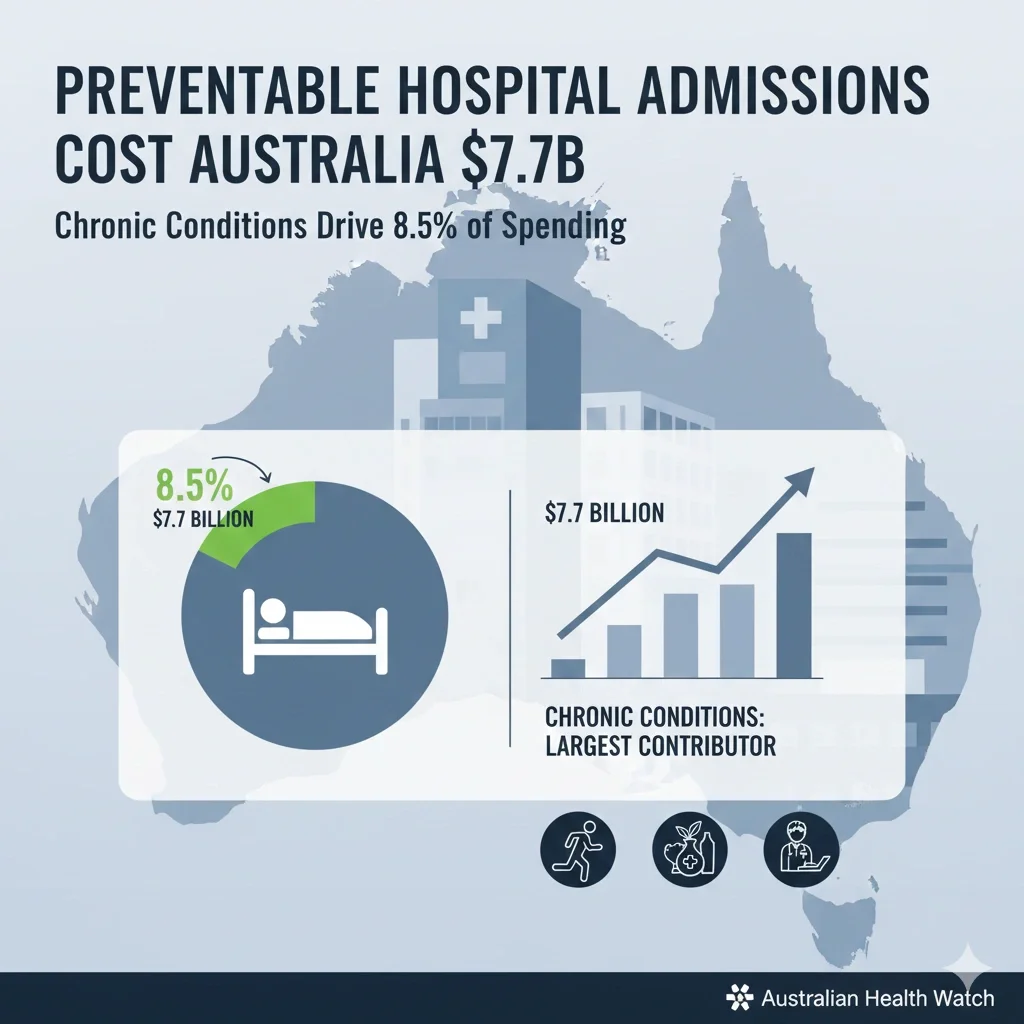
Australia recorded $7.7 billion in potentially preventable hospitalisations in 2023–24, according to a new report released by the Australian Institute of Health and Welfare (AIHW). The figure represents 8.5% of all national hospital spending, highlighting the immense financial and health burden driven by chronic and acute conditions that could have been avoided with earlier intervention and stronger preventive care strategies.
The AIHW report categorises preventable hospital admissions into chronic, acute, and vaccine-preventable conditions. Chronic illnesses accounted for the largest proportion of admissions at 45.2%, followed by acute conditions at 37.5%, showing that long-term health challenges remain a dominant pressure on the healthcare system.
Major Cost Drivers
The report identified several conditions responsible for the highest hospital expenditure:
- Diabetes complications — $962 million
- Congestive cardiac failure — $861 million
- Chronic obstructive pulmonary disease (COPD) — $797 million
These conditions are widely considered manageable through improved primary care, community support, medication adherence, early screening, and lifestyle-focused interventions.
A Decade of Persistent Trends
Tracking data from 2014–15 to 2023–24, the report found that rates of chronic preventable hospitalisations have remained consistently high, despite mounting evidence that earlier investment in prevention can significantly reduce both medical complications and financial strain.
Experts note that preventable admissions place additional pressure on an already stretched hospital network while contributing to poorer long-term health outcomes for patients.
Calls for Better Prevention Funding
Public Health Association of Australia CEO Terry Slevin emphasised that Australia’s health system continues to over-invest in acute hospital care while underfunding preventive health measures that would reduce the need for such expensive interventions.
Slevin argued that decades of policy decisions have prioritised treating illness after it occurs rather than preventing it in the first place — a pattern that carries significant economic and human costs.
“We need a fundamental shift towards prevention,” Slevin said. “By investing earlier in community health, screening, and chronic disease management, we can reduce suffering and cut billions from the healthcare budget.”
A Hidden Economic and Social Cost
Preventable hospitalisations not only strain budgets but also lead to lost productivity, increased disability, and prolonged financial pressure on families. Health advocates say addressing these issues requires coordinated national policies, better access to primary care, community-led programs, and long-term investment in prevention.
For more Australia-related updates, visit our Australia News page.