
Australia Indonesia Green Powerhouse is the ambitious new label for a strategic alliance aimed at dominating the global electric vehicle (EV) supply chain. As of February 25, 2026, both Canberra and Jakarta are intensifying efforts to merge Australia’s vast lithium reserves with Indonesia’s massive nickel processing capabilities. This synergy is designed to create a regional manufacturing hub that can compete with established global players while navigating the complex geopolitical shifts of the Indo-Pacific.
The economic logic behind the Australia Indonesia Green Powerhouse is undeniably strong, given that two-way trade reached a record 34.8 billion dollars in the 2024–25 fiscal period. Indonesia has officially climbed to become Australia’s ninth-largest trading partner, signaling a shift in regional economic gravity. However, this “green” transition faces significant friction as both nations grapple with the reality of coal-dependent processing plants and stringent downstreaming regulations that complicate cross-border investment.
To succeed, the partnership must move beyond high-level diplomatic statements and deliver concrete business-to-business outcomes. The current framework relies heavily on the 2018 Comprehensive Strategic Partnership and the subsequent economic agreements signed in 2019. While the political will is evident, the speed of implementation remains a point of concern for private investors who are wary of shifting regulatory landscapes and the environmental impact of traditional smelting methods currently used in the region.
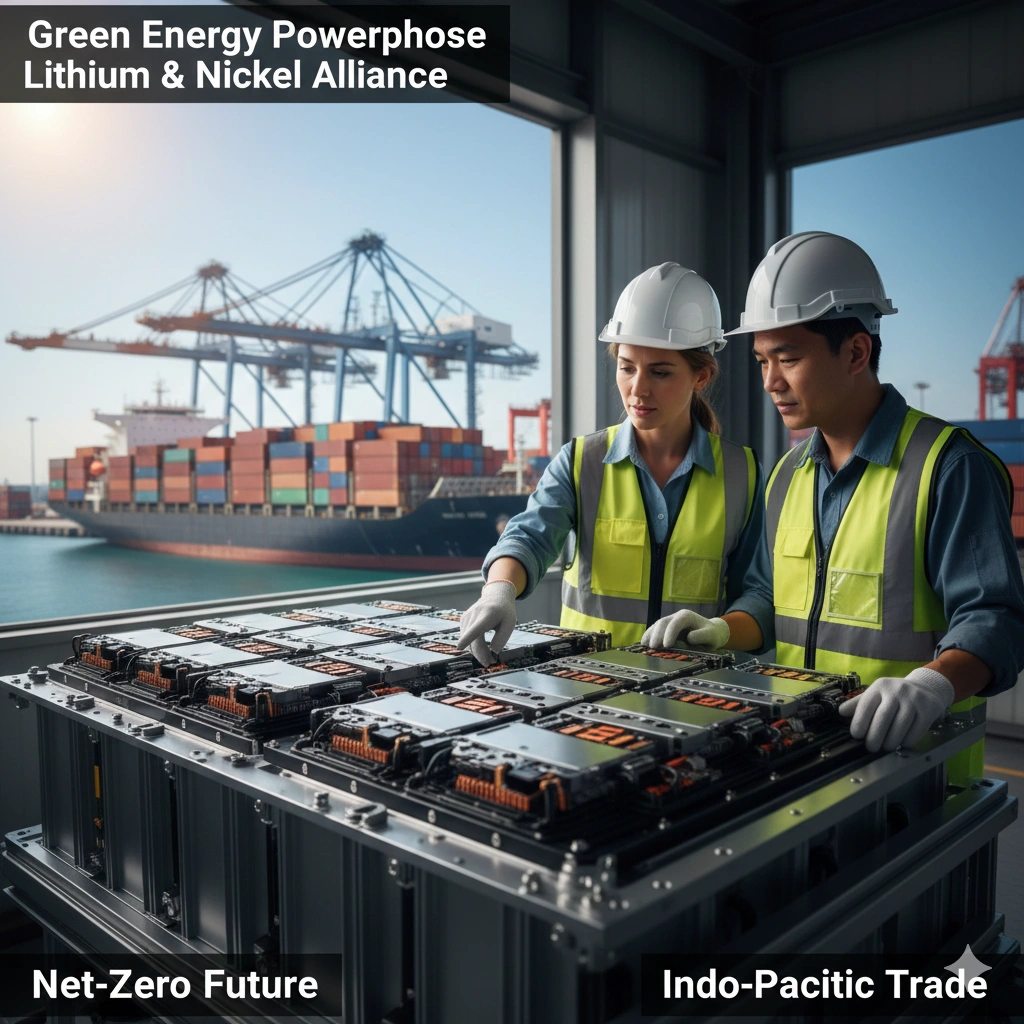
Australia Indonesia Green Powerhouse and Critical Minerals
The Australia Indonesia Green Powerhouse relies on a “perfect match” of natural resources that are essential for the modern energy transition. Australia is currently the world’s leading producer of lithium, while Indonesia holds the largest proven reserves of nickel globally. By combining these two elements, the nations aim to produce high-performance EV batteries that can power the next generation of transportation across Asia and beyond.
Government officials in both capitals are working to harmonize their mining standards to ensure that the “green” label is backed by sustainable practices. This is a critical step because international buyers, particularly in Europe and North America, are increasingly demanding transparency in the sourcing of battery materials. If the Australia Indonesia Green Powerhouse can establish a “clean” supply chain, it will command a significant premium in the global marketplace.
However, the road to a fully integrated supply chain is blocked by Indonesia’s reliance on coal-fired power for its nickel smelters. Australia has expressed concerns that using carbon-intensive energy to produce “green” minerals contradicts the core mission of the partnership. Negotiators are currently discussing the potential for Australian renewable energy technology and capital to help decarbonize Indonesian industrial zones, creating a secondary market for green tech exports.
Economic Integration and GDP Projections for 2030
The Australia Indonesia Green Powerhouse is being developed against a backdrop of shifting economic power, with Indonesia projected to overtake Australia’s nominal GDP before 2030. This shift is driving Canberra to seek deeper integration now, ensuring that Australian businesses are well-positioned within the Indonesian domestic market. The trade relationship is no longer just about selling raw materials; it is about co-investment and shared industrial growth.
Recent economic data confirms that the Indonesia-Australia Comprehensive Economic Partnership Agreement (IA-CEPA) has been successful in lowering tariffs across a wide range of goods. Since its commencement in July 2020, the agreement has allowed for a more fluid exchange of services and professional labor. This human capital exchange is vital for the Australia Indonesia Green Powerhouse, as it requires a highly skilled workforce capable of managing complex chemical processing and battery assembly lines.
Furthermore, the rise of Indonesia as a top-ten trading partner for Australia underscores the importance of the ASEAN region in Australia’s future economic planning. For Jakarta, the partnership provides access to sophisticated mining technology and stable capital markets. This mutual dependence is the strongest guarantee that the green powerhouse initiative will remain a priority for both governments regardless of domestic political changes.
Overcoming Historical Friction and Security Scandals
The Australia Indonesia Green Powerhouse represents a significant departure from the historical diplomatic friction that once defined the relationship. Older tensions, such as the 2013 surveillance scandal, stalled trade negotiations for several years and created a climate of mutual suspicion. Today, the focus has shifted toward pragmatic cooperation, recognizing that regional stability and economic prosperity are inextricably linked.
The 2018 Comprehensive Strategic Partnership was the first major step in rebuilding trust, committing both nations to deep coordination in the maritime and security sectors. This security umbrella provides the necessary confidence for long-term economic projects like the battery supply chain. By aligning their strategic interests, Australia and Indonesia are creating a buffer against regional volatility and ensuring that their economic corridors remain open and safe.
Despite this progress, “complex regional geopolitical factors” continue to test the strength of the bond. Both nations must balance their relationship with major powers like China and the United States while pursuing their own bilateral interests. The Australia Indonesia Green Powerhouse is viewed by many analysts as a way for both countries to assert their “strategic autonomy,” reducing their dependence on external superpowers for critical energy technology.
The Five Pillars of the Comprehensive Strategic Partnership
The Australia Indonesia Green Powerhouse is built upon the five key pillars established in the 2018 agreement. These pillars provide the legal and diplomatic scaffolding required to manage such a complex international project. Each pillar addresses a specific area of cooperation, ensuring that the relationship is balanced and multi-dimensional rather than purely transactional.
- Economic and Trade Partnership: Focusing on IA-CEPA implementation and investment.
- People-to-People Links: Enhancing education, tourism, and cultural exchange programs.
- Maritime Cooperation: Ensuring secure and open sea lanes for trade and resources.
- Stability and Prosperity: Collaborating on regional governance and crisis management.
- Security Cooperation: Defense training and counter-terrorism initiatives.
These pillars are not just theoretical; they are actively managed by joint committees that meet regularly to resolve disputes and identify new opportunities. For the Australia Indonesia Green Powerhouse to function, the maritime and security pillars are especially crucial, as they protect the physical shipment of minerals between Western Australian ports and Indonesian processing hubs.
The “Stability and Prosperity” pillar is currently the focus of intense discussion as both nations look to support a stable regional order. In an era of increasing competition, a strong Australia-Indonesia axis acts as a stabilizing force in the Indo-Pacific. This geopolitical alignment makes the economic partnership even more attractive to international investors looking for a secure alternative to existing supply chains.
Challenges in Downstreaming and Investment Viability
A major hurdle for the Australia Indonesia Green Powerhouse is Indonesia’s aggressive “downstreaming” policy, which bans the export of raw ores to force domestic processing. While this has successfully attracted investment into Indonesian smelters, it has also created challenges for Australian companies accustomed to different regulatory environments. Bridging these two different economic models requires constant diplomatic maneuvering.
Investment viability is also strained by the high costs associated with transitioning away from coal-fired processing. Many Indonesian nickel mines are located in remote areas where coal is currently the only affordable and reliable power source. For the Australia Indonesia Green Powerhouse to be truly sustainable, there must be a massive infusion of capital into solar, wind, and perhaps even green hydrogen infrastructure within these industrial zones.
- Developing hybrid power plants that combine solar with existing grids.
- Creating “green industrial parks” with dedicated environmental regulations.
- Streamlining the permit process for Australian tech firms entering Indonesia.
- Establishing a joint green investment fund to de-risk battery projects.
These steps are essential to convince global EV manufacturers like Tesla or BYD to set up assembly plants in the region. Without a clear path to decarbonization, the “green” part of the Australia Indonesia Green Powerhouse remains an aspirational goal rather than a reality. Both governments are now prioritizing these technical challenges in their bilateral talks scheduled for the second half of 2026.
Regional Geopolitics and the Indo-Pacific Strategy
The Australia Indonesia Green Powerhouse is more than just a trade deal; it is a central component of the broader Indo-Pacific strategy for both nations. In a world where supply chain resilience is synonymous with national security, controlling the production of EV batteries provides significant leverage. Both Canberra and Jakarta are keen to ensure that the region remains competitive against Northern Hemisphere industrial giants.
The partnership also serves as a model for how middle powers can collaborate to solve global challenges like climate change while pursuing economic growth. By focusing on the Australia Indonesia Green Powerhouse, the two nations are demonstrating that environmental responsibility and industrial development are not mutually exclusive. This approach is gaining traction among other ASEAN nations who are looking to upgrade their own manufacturing bases.
However, the “complex regional geopolitical factors” mentioned in recent reports refer to the delicate balancing act both nations must perform. While they cooperate on green energy, they also have different perspectives on various security alliances. Maintaining the focus on the Australia Indonesia Green Powerhouse requires a high level of diplomatic maturity to ensure that disagreements in other areas do not derail the economic momentum.
Future Projections for the Battery Supply Chain
The long-term success of the Australia Indonesia Green Powerhouse will be measured by the number of batteries actually produced and sold to the global market. Analysts predict that if current investment trends continue, the partnership could account for up to 15 percent of the global EV battery market by the early 2030s. This would represent a massive shift in the global energy landscape and a significant boost to both nations’ GDP.
The next few years will be a “testing phase” where the first major joint ventures will go from the planning stage to active production. The Australian government has already signaled its willingness to provide export credit guarantees for companies participating in the Australia Indonesia Green Powerhouse. Similarly, the Indonesian government is offering tax holidays and other incentives for “green” downstreaming projects that involve Australian partners.
As technology evolves, the partnership may also expand into other areas of the green economy, such as green steel or sustainable aviation fuels. The “green powerhouse” concept is flexible enough to accommodate various technologies, provided the core commitment to sustainability remains. This future-proofing is what makes the Australia-Indonesia relationship one of the most exciting economic stories of the current decade.
The Role of IA-CEPA in Facilitating Green Trade
The Indonesia-Australia Comprehensive Economic Partnership Agreement (IA-CEPA) remains the primary tool for managing the Australia Indonesia Green Powerhouse. By providing a clear legal framework, it reduces the risks for businesses operating in a foreign environment. The agreement includes specific provisions for the protection of intellectual property, which is vital for the high-tech components of battery manufacturing.
Under IA-CEPA, the two nations have also established “Powering the Future” workshops that bring together engineers, scientists, and business leaders. these workshops are the “engine room” of the Australia Indonesia Green Powerhouse, where technical problems are solved and new innovations are shared. This collaborative environment is essential for staying ahead in the fast-moving world of green energy technology.
Moreover, the agreement facilitates the movement of skilled workers, allowing Australian mining experts to work in Indonesia and Indonesian engineers to train in Australia. This cross-pollination of talent is the “secret sauce” that will make the Australia Indonesia Green Powerhouse a global leader. Without the IA-CEPA scaffolding, the ambitious goals of the green partnership would be much harder to achieve.
Environmental Regulations and Global Standards
For the Australia Indonesia Green Powerhouse to thrive, it must adhere to the highest international environmental, social, and governance (ESG) standards. The global market is increasingly intolerant of “dirty” minerals, regardless of their necessity for the energy transition. Both nations are currently working on a joint ESG framework that will certify all products coming out of the green powerhouse partnership.
This certification process will involve independent third-party audits to ensure that mining and processing activities do not harm local ecosystems or communities. For Indonesia, this is a significant challenge given the historical environmental issues associated with nickel mining. However, with Australian technical assistance, there is a clear path toward more responsible resource management that can satisfy global investors.
The Australia Indonesia Green Powerhouse is therefore a catalyst for regulatory reform in both countries. It is pushing both nations to adopt more modern and transparent environmental laws that reflect 21st-century values. This regulatory evolution is a hidden benefit of the partnership, leading to better outcomes for the environment and for the people living in mining regions.
Conclusion: A High-Stakes Economic Gamble
The Australia Indonesia Green Powerhouse is a bold vision that seeks to turn two neighboring nations into a global energy titan. While the challenges of coal-fired processing and geopolitical friction are real, the potential rewards are too large to ignore. By combining their unique strengths, Australia and Indonesia are betting that they can lead the world into a cleaner, more sustainable future.
The success of this partnership will depend on the continued political will of the leadership in Canberra and Jakarta. As the 2030 GDP projections loom closer, the urgency to finalize the Australia Indonesia Green Powerhouse will only increase. If they succeed, they will not only transform their own economies but also provide a blueprint for international cooperation in the face of the climate crisis.
The world is watching as these two regional powers attempt to build a new kind of economic alliance. The Australia Indonesia Green Powerhouse is not just about batteries; it is about rewriting the rules of trade and industry for a green world. It is a high-stakes gamble, but it is one that both nations believe they have the resources and the resolve to win.
For more details & sources visit: Independent Australia
For the latest updates from Indonesia, visit our Indonesia news page.