
Asda job cuts are set to impact more than 150 managers and warehouse workers after the supermarket chain recorded its weakest Christmas performance in years. The retailer has confirmed it has entered redundancy consultations following a sharp 4.2 percent drop in festive sales, a decline that pushed its UK market share down to 11.4 percent, the lowest level seen in recent times.
The move makes Asda the only major UK supermarket to suffer falling sales over the crucial Christmas trading period, while rivals such as Tesco and Sainsbury’s gained shoppers and strengthened their positions.
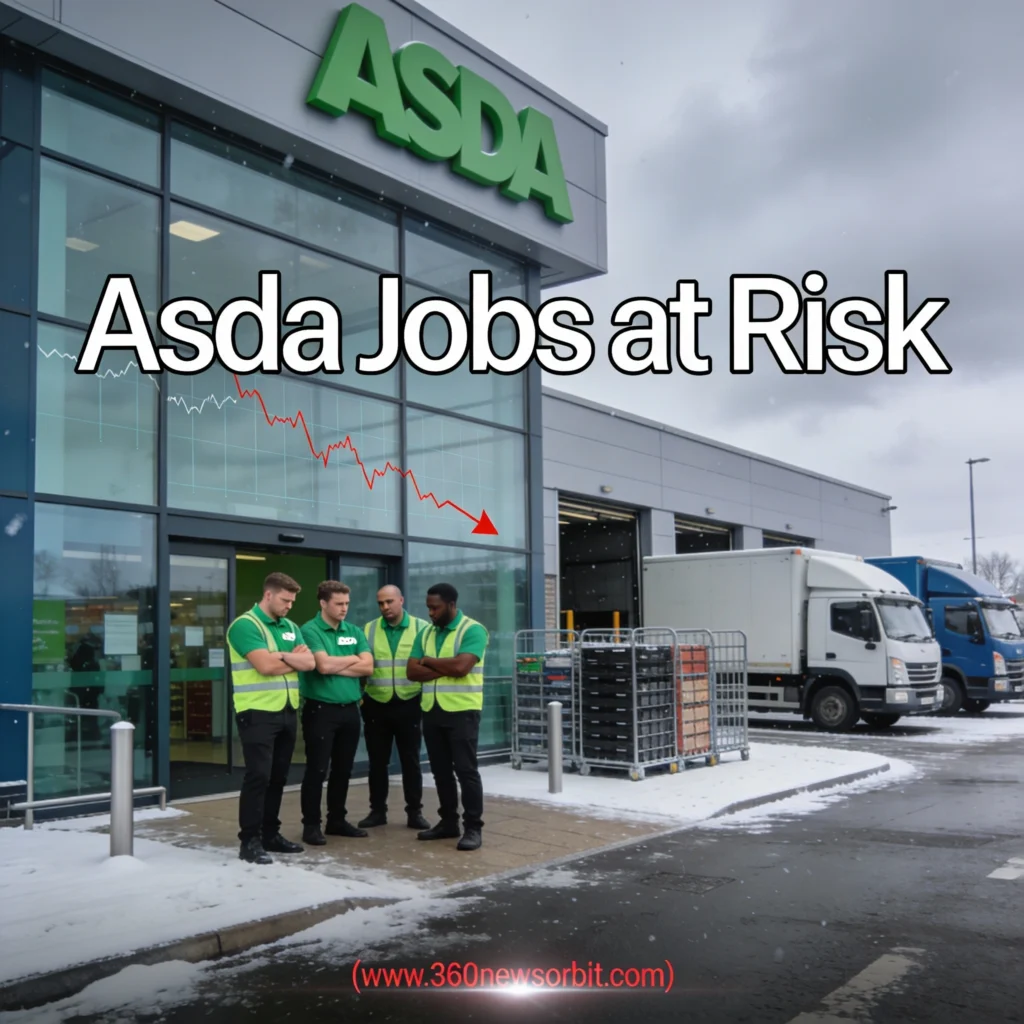
Why Asda Job Cuts Are Happening in 2026
According to the company, Asda job cuts are part of a wider strategy to simplify operations and bring costs under control after months of weak performance. Two nationwide reviews are currently underway, putting more than 80 management roles and a significant number of warehouse and distribution jobs at risk across Asda’s 21 UK depots.
Distribution workers in Yorkshire are believed to be among the most exposed, adding to growing concern in regions where logistics roles are already under pressure from automation, outsourcing, and structural change.
While Asda insists the job reductions are necessary to improve efficiency and competitiveness, unions warn that the human impact of the Asda job cuts could be substantial, particularly for long-serving staff who have already experienced repeated restructures.
Major Overhaul Behind Asda Job Cuts
A central driver of the Asda job cuts is a proposed overhaul of the retailer’s transport and distribution network. The company plans to replace its current depot-by-depot transport model with a more centralized structure.
Under the proposal, Asda would:
- Shift to eight regional transport hubs
- Create national coordinating offices to manage logistics
- Reduce reliance on agency drivers and external haulage firms
Asda says this approach will cut duplication, standardize processes, and deliver long-term cost savings. However, critics argue that increased centralization often leads to fewer local management roles and reduced job security, particularly in warehouse and transport operations.
Unions have warned that, without safeguards, the restructuring could deepen uncertainty for staff already affected by earlier rounds of Asda job cuts.
Parcel Operations Set to Move to Evri
A second consultation focuses on Asda’s parcel-handling business, which currently processes around 28 million parcels a year.
Under the proposal, Asda would hand the entire operation to Evri, allowing all 1,200 stores to offer:
- Next-day parcel collection
- Returns services
At present, more than half of Asda’s stores do not provide these services. While the shift could improve customer convenience, it also places warehouse and parcel-handling jobs at risk as operations move outside the business.
Union Response and Staff Concerns
The GMB union, which represents many Asda workers, says staff were left shocked by the scale of the proposed changes.
Union officials report that many employees feel blindsided, particularly those who have already lived through repeated restructures since Asda was taken over in 2021 by TDR Capital and the Issa brothers.
GMB has pledged to:
- Challenge job losses where possible
- Support members through collective consultations
- Offer one-to-one meetings as redundancy numbers are finalized
The union insists it will fight to protect jobs and secure fair terms for those affected.
A Pattern of Restructuring Since the Takeover
These latest Asda job cuts follow several rounds of restructuring over the past few years. Since the 2021 takeover, the supermarket has:
- Reduced management layers
- Cut head office roles
- Trimmed IT and support teams
Despite these efforts, Asda has struggled to halt declining performance and falling market share in an increasingly competitive grocery sector.
Industry analysts say sustained pressure from discounters and stronger loyalty schemes at rival chains have made recovery harder.
What This Means for Asda’s Future
Asda’s leadership maintains that the changes are essential to stabilise the business and restore competitiveness. However, the combination of falling sales, shrinking market share, and repeated job cuts has raised questions about the long-term direction of the brand.
With consumer spending still under strain and competition intensifying, 2026 may prove to be a defining year for the supermarket.
For more details & sources visit: GB News
For more updates about the United Kingdom, visit our UK news page.