
A newly released report has revealed that the China-linked hacking group APT31 carried out a long-term cyber-espionage campaign targeting Russian technology companies, particularly those with links to government systems. According to Moscow-based Positive Technologies, the operation lasted for years, remaining largely undetected thanks to sophisticated planning and stealthy execution.
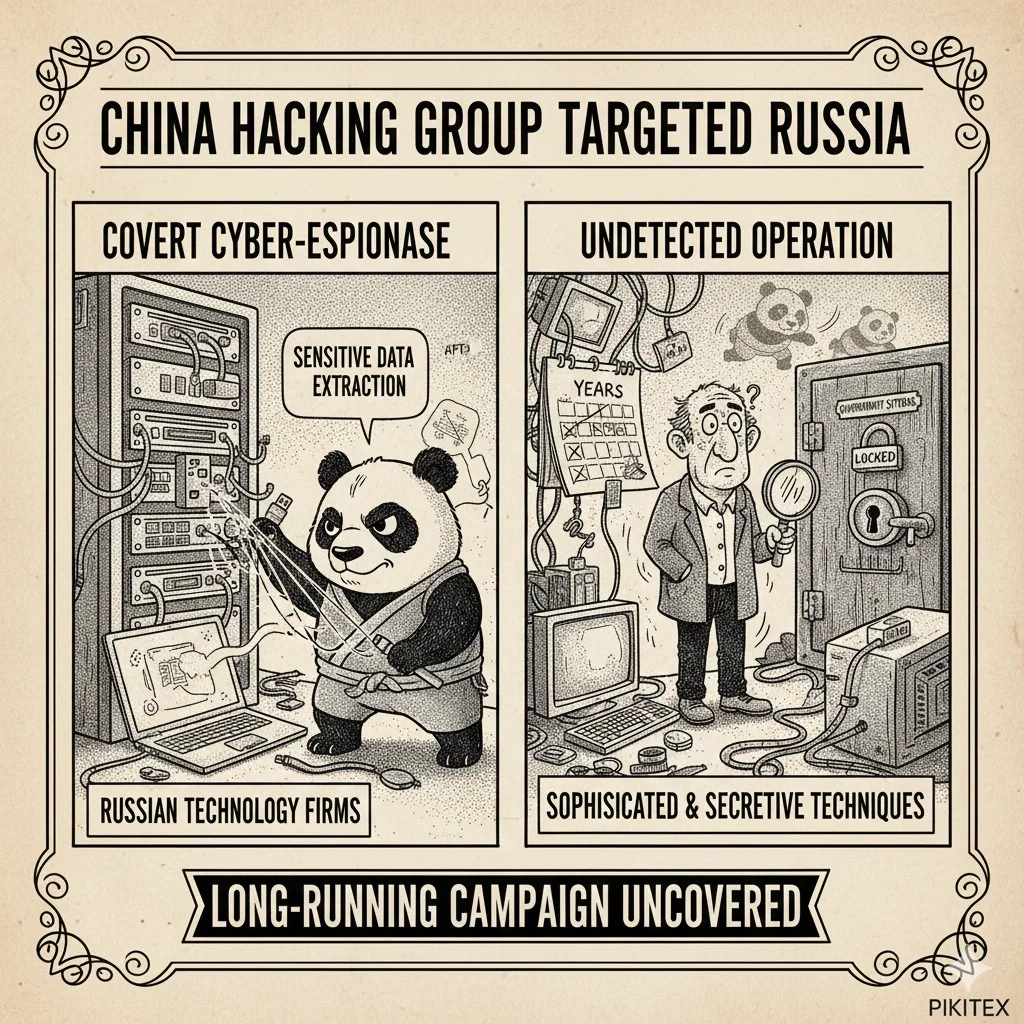
Infiltration of Russian Tech Firms
The analysis found that APT31 Russia hacking activity focused on IT and systems-integration companies providing services to government-related projects. The attackers used advanced techniques to avoid detection, often exploiting common online platforms to disguise data exfiltration traffic. The campaign’s timing was carefully calculated, with major breaches frequently executed during holidays when staffing was low.
In multiple cases, the hackers maintained long-term access for over a year. One particularly notable incident occurred during the 2023 New Year period, when APT31 renewed access to previously compromised systems, underscoring their persistence and operational patience.
Sophisticated Techniques and Malware Deployment
The investigation highlighted APT31’s use of a combination of publicly available tools and custom-developed backdoors. In December 2024, the group deployed a phishing email disguised as a procurement request. The malicious email contained custom malware, which successfully stole sensitive data through Yandex Cloud, further demonstrating the group’s ability to target critical infrastructure and cloud platforms.
APT31’s approach exemplifies state-level cyber-espionage capabilities. By blending off-the-shelf and novel tools, the hackers maintained operational flexibility and avoided standard cybersecurity defenses for extended periods.
Historical Context and Global Implications
While publicly reported cases of Chinese-linked espionage targeting Russia remain rare, this campaign aligns with findings from cybersecurity firms such as Kaspersky and Symantec, which previously documented incidents of China-affiliated hacking groups operating against Russian entities.
Western intelligence agencies have also linked APT31 to state-sponsored espionage efforts. Past operations include a high-profile attack on the U.K. Electoral Commission, which affected millions of records and drew international attention. The recent Positive Technologies report indicates that APT31’s campaigns are not only persistent but also strategically global in scope, targeting high-value sectors to support potential geopolitical objectives.
Impact on Russian Technology Sector
The revelations underscore significant vulnerabilities within Russian technology firms, particularly those involved in government projects. By infiltrating these companies, APT31 was able to gain access to sensitive information, including trade secrets, strategic project plans, and proprietary systems data. Such breaches highlight the growing threat posed by advanced persistent threats (APT) in an increasingly digital and interconnected global economy.
Analysts warn that the ongoing sophistication of groups like APT31 presents challenges for national cybersecurity teams. Traditional defense mechanisms are often insufficient to detect campaigns that employ long-term persistence, subtle malware, and carefully disguised communication channels.
Looking Ahead
As cybersecurity concerns escalate, firms and governments worldwide are expected to enhance monitoring and defensive measures. Positive Technologies’ findings serve as a stark reminder of the potential consequences of inadequate cybersecurity vigilance and the importance of international collaboration in countering state-sponsored cyber threats.
The APT31 Russia hacking campaign represents a significant escalation in cyber-espionage activity, illustrating how advanced threat actors exploit both technical and operational vulnerabilities to achieve strategic objectives. With activity continuing into 2025, Russian authorities and global cybersecurity stakeholders must remain vigilant against evolving threats that blur the line between criminal hacking and state-sponsored espionage.
For more updates, visit the Russia News Section