
Antarctic Peninsula rainfall trends present a significant challenge for the global climate system as temperatures continue to rise. Recent scientific modeling indicates that the frozen landscape is undergoing a fundamental transition that could alter the continent forever. As the region warms at a rate nearly three times the global average, the traditional snowfall is being replaced by liquid precipitation. This shift represents more than just a change in weather patterns; it is a structural transformation of the polar environment.
The implications for ice stability, local wildlife, and human infrastructure are profound and require immediate international attention. Researchers emphasize that the pace of these Antarctic Peninsula rainfall trends will depend heavily on our collective ability to manage greenhouse gas emissions over the coming decades. Understanding these changes is essential for predicting future sea-level rise and protecting vulnerable ecosystems.
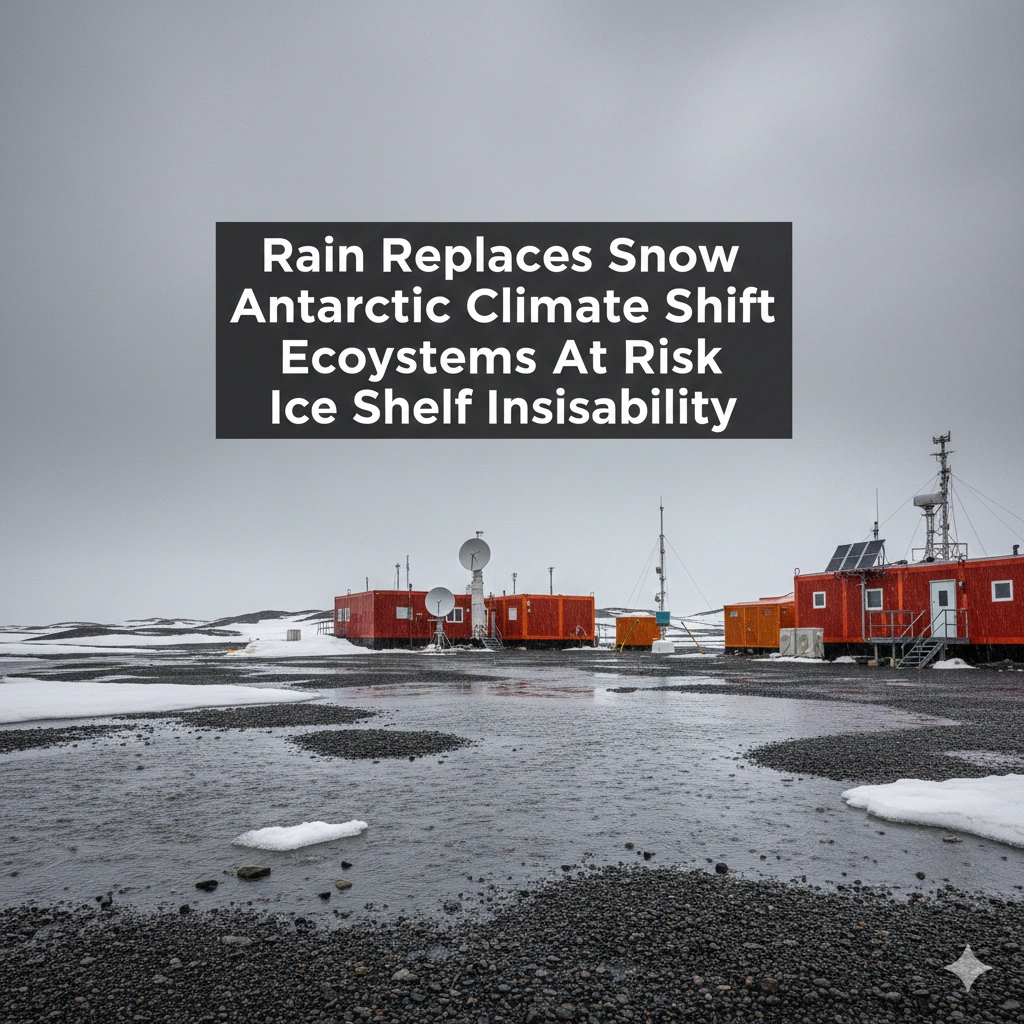
Science Behind Antarctic Peninsula Rainfall Trends
The primary driver behind the shift in precipitation is the rapid warming of the Southern Ocean and the surrounding atmosphere. As the air becomes warmer, it gains the capacity to hold significantly more moisture, which eventually falls as rain rather than snow. This process is further accelerated by the increasing frequency of atmospheric rivers that transport heat from the tropics toward the pole.
Atmospheric rivers are narrow corridors of concentrated moisture that can deliver massive amounts of liquid water to the frozen continent. When these systems interact with the high topography of the peninsula, they trigger record-breaking surface melt even during the dark winter months. These events are becoming more frequent, leading to a noticeable increase in the observed Antarctic Peninsula rainfall trends across multiple research stations.
Scientific models utilizing various emission scenarios suggest that days above the freezing point will become a regular occurrence by the end of the century. This transition from a cryospheric system dominated by ice to one influenced by liquid water will have cascading effects on the entire Antarctic ecosystem. The data shows that even modest temperature increases can trigger a disproportionate amount of rainfall in these sensitive polar regions.
Antarctic Peninsula Rainfall Trends
The structural integrity of the massive ice shelves surrounding the peninsula is under direct threat from liquid water. When rain falls on a floating ice shelf, it does not simply sit on the surface; it often collects in deep crevasses and forms large meltwater ponds. These ponds act as dark heat sinks, absorbing solar radiation and further warming the ice from the top down.
Hydrofracturing is a specific concern for glaciologists monitoring the Antarctic Peninsula rainfall trends in recent years. This process occurs when the weight of rainwater forces open cracks in the ice, leading to rapid shelf collapse and the subsequent acceleration of land-based glaciers. Without the protective buffer of these shelves, glaciers flow much faster into the ocean, contributing directly to global sea-level rise.
Furthermore, rainwater acts as a lubricant at the base of glaciers that are grounded on the bedrock. As water trickles down through the ice, it reduces the friction between the glacier and the land, allowing the ice to slide more easily toward the sea. This lubrication effect is a critical component of the accelerating ice loss observed across the western portions of the continent.
Impact on Penguin Colonies and Wildlife
Local wildlife, particularly the iconic Adélie and Gentoo penguins, are facing an existential crisis due to the changing precipitation patterns. Penguin chicks are born with downy feathers that provide excellent insulation against the cold but are not waterproof. When heavy rain hits a colony, the chicks become soaked, leading to fatal hypothermia as the moisture evaporates in the wind.
The Antarctic Peninsula rainfall trends also result in the flooding of nesting sites, which are typically located on rocky outcrops. Rainwater can pool in these areas, drowning eggs or preventing parents from successfully incubating their young. This disruption of the breeding cycle has already led to significant population declines in several key colonies along the western coast.
- Rainwater causes fatal hypothermia in non-waterproof penguin chicks during the breeding season.
- Flooded nesting sites lead to high mortality rates for eggs and newly hatched birds.
- Changes in sea ice density affect the availability of krill, the primary food source for many species.
- Increased moisture encourages the growth of invasive plant species that compete with native mosses.
The shift toward a wetter climate is also altering the distribution of prey species in the Southern Ocean. As the sea ice thins and retreats due to warmer rain, the krill populations that depend on ice for shelter are moving further south. This forces predators to travel longer distances to find food, placing additional stress on already vulnerable populations.
Destruction of Historic Research Infrastructure
Human presence on the continent is also being tested by the increasing moisture levels and unstable ground conditions. Many of the historic wooden huts and early scientific installations were designed to withstand extreme cold and dry snow, not liquid rain and high humidity. These structures are now deteriorating at an accelerated rate as rot and mold take hold in the damp environment.
Modern research stations are not immune to the effects of the Antarctic Peninsula rainfall trends either. Buildings constructed on permafrost are becoming unstable as the ground thaws and turns into slushy mud. This instability leads to structural damage, shifting foundations, and the failure of critical utilities such as water and power systems.
Maintaining a continuous scientific record is vital for climate research, but frequent weather-related disruptions are making this difficult. Some long-term research sites have had to be evacuated or scaled back because the local environment has become too hazardous for seasonal operations. The loss of this data creates significant gaps in our understanding of long-term polar trends.
Challenges for Future Scientific Installations
Designing future infrastructure in Antarctica will require a complete rethink of traditional polar engineering principles. Engineers must now account for the drainage of liquid water and the protection of sensitive electronics from high humidity. This increases the cost and complexity of maintaining a permanent human presence on the most remote continent on Earth.
The transition to a rain-dominated regime also complicates logistics and transportation across the peninsula. Traditional snowmobile routes are becoming impassable as the snow turns to deep slush, and landing strips for aircraft are frequently closed due to surface melting. These logistical hurdles limit the ability of scientists to reach remote field sites for data collection.
- Slushy surface conditions prevent the safe landing of cargo aircraft on traditional ice runways.
- Increased humidity levels require advanced climate control systems to protect sensitive laboratory equipment.
- Foundation designs must transition from ice-anchored systems to deep-pile structures that reach stable bedrock.
Despite these challenges, the need for high-quality data has never been greater. New monitoring technologies, including autonomous underwater vehicles and satellite-based sensors, are being deployed to supplement ground-based observations. These tools allow researchers to track the Antarctic Peninsula rainfall trends in real-time without putting personnel at unnecessary risk.
Global Consequences of Polar Warming
The changes occurring on the Antarctic Peninsula are not isolated events; they are early warning signs for the rest of the planet. As the southern ice sheets lose mass, the resulting sea-level rise will threaten coastal cities and low-lying islands across the globe. The melting of Antarctic ice is one of the most significant variables in future climate projections.
Moreover, the influx of fresh rainwater into the Southern Ocean can disrupt the global thermohaline circulation. This “ocean conveyor belt” is responsible for moving heat and nutrients around the world’s oceans. A significant increase in freshwater from Antarctic Peninsula rainfall trends could weaken these currents, leading to unpredictable weather changes in the Northern Hemisphere.
International cooperation is essential to mitigate these risks and protect the unique polar environment. The Antarctic Treaty System provides a framework for scientific collaboration, but broader global action on carbon emissions is required to stabilize the climate. Reducing our reliance on fossil fuels is the only way to prevent the most catastrophic outcomes predicted by current scientific models.
Future Outlook for the Frozen Continent
The future of the Antarctic Peninsula remains uncertain and depends largely on the path of global temperatures. If warming is limited to 1.5 degrees Celsius, there is a chance that some of the ice shelves can be preserved. However, if temperatures continue to climb, the transition to a rain-dominated climate may become irreversible, leading to the total loss of the peninsula’s current ecosystem.
Education and public awareness are critical components of the strategy to protect Antarctica. By highlighting the reality of the Antarctic Peninsula rainfall trends, scientists hope to inspire more ambitious climate policies. The continent serves as a mirror reflecting the health of our planet, and currently, that reflection shows a system in distress.
Ongoing research continues to refine our understanding of these complex processes. By combining field observations with advanced computer simulations, scientists are gaining a clearer picture of how the continent will respond to future warming. This knowledge is vital for developing adaptation strategies and for making the case for urgent climate action on a global scale.
Mitigating Environmental Damage Through Policy
Effective policy interventions must be grounded in the latest scientific findings regarding polar changes. Governments around the world are being urged to accelerate their transition to renewable energy sources to slow the rate of warming. Every fraction of a degree in temperature rise correlates to a significant increase in the frequency of extreme rain events in the Antarctic.
In addition to global emission cuts, localized conservation efforts can help protect vulnerable species. Establishing marine protected areas around the peninsula can give penguin populations a better chance of survival by reducing competition for food. Protecting these habitats ensures that the wildlife has the resilience needed to face a rapidly changing environment.
- Global carbon neutrality by 2050 is necessary to prevent the total collapse of Antarctic ice shelves.
- Marine protected areas can provide a safe haven for species displaced by changing ice conditions.
- Investment in green technology reduces the overall thermal stress on the global climate system.
- International treaties must be strengthened to ensure continued scientific cooperation in the polar regions.
The scientific community remains committed to monitoring the Antarctic Peninsula rainfall trends despite the growing physical challenges. Their work provides the evidentiary basis for international negotiations and helps the world understand the true cost of inaction. The story of Antarctica is the story of our shared future, and its preservation is a responsibility that belongs to all of humanity.
Transitioning Toward Sustainable Polar Research
As the environment changes, the way we conduct research in the Antarctic must also evolve. Sustainable station design, including the use of wind and solar power, can reduce the environmental footprint of scientific operations. This not only protects the local surroundings but also serves as a model for sustainable living in extreme environments.
The use of remote sensing and artificial intelligence is also transforming the field of glaciology. These technologies allow for the continuous monitoring of ice shelves and rainfall events without the need for constant human presence. By leveraging these tools, we can gather more data than ever before, providing a more detailed view of the Antarctic Peninsula rainfall trends.
Ultimately, the goal is to create a resilient research network that can withstand the impacts of a changing climate while continuing to provide critical insights. The lessons learned on the peninsula will be invaluable as other parts of the world face their own climate-related transitions. Through innovation and cooperation, we can navigate this period of unprecedented change and work toward a more stable future.
Final Thoughts on Polar Transformation
The transformation of the Antarctic Peninsula from a land of snow to a land of rain is a stark reminder of the power of climate change. The Antarctic Peninsula rainfall trends we are witnessing today are the result of decades of global warming, and their effects will be felt for centuries to come. It is a call to action for everyone to consider their impact on the environment and to support policies that prioritize the health of our planet.
While the situation is dire, it is not yet hopeless. We still have the opportunity to influence the final outcome by making bold choices today. Protecting the Antarctic Peninsula is about more than just saving a remote wilderness; it is about preserving the stability of the global climate system for future generations. The time to act is now, before the rain washes away the last remnants of the frozen world we once knew.
As we move forward, the focus must remain on the integration of science, policy, and public will. By working together, we can ensure that the Antarctic continues to be a place of discovery and a vital component of the Earth’s natural balance. The Antarctic Peninsula rainfall trends are a signal that the world is changing, and we must change with it to ensure a sustainable future for all.
For more details & sources visit: The Conversation
Read more on Antarctica news: 360 News Orbit – Antarctica.