
Amazon data centers became the latest high-profile targets in the intensifying regional conflict, marking a historic and chilling shift in modern warfare. This week, the Islamic Revolutionary Guard Corps (IRGC) claimed responsibility for coordinated drone strikes hitting critical cloud infrastructure in the United Arab Emirates and Bahrain. The attacks have sent shockwaves through the global tech industry, proving that the digital backbone of the world is no longer safe from physical kinetic strikes.
The precision of these attacks suggests a sophisticated understanding of infrastructure vulnerabilities. As smoke cleared from the sites, the broader implications for international business and data sovereignty became the primary focus of emergency boardrooms. Companies that previously viewed cloud migration as a safety net are now forced to confront the reality of physical destruction.
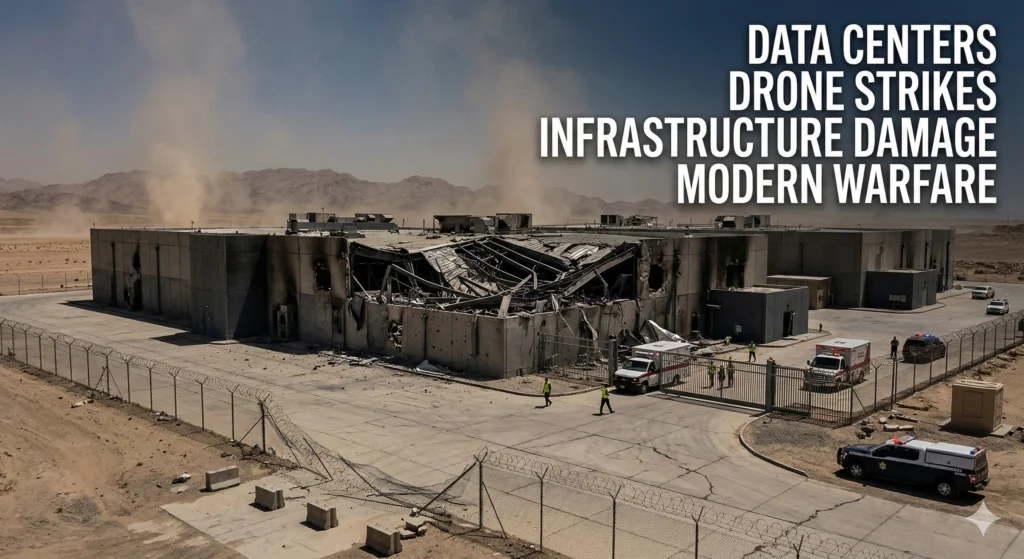
The Unprecedented Physical Damage to AWS Facilities
Reports indicate that two Amazon data centers in the United Arab Emirates took direct hits from loitering munitions. A third facility in Bahrain suffered secondary damage from a nearby explosion, leading to immediate structural concerns and internal flooding. Amazon Web Services (AWS) moved swiftly to evacuate personnel, but the damage to hardware and cooling systems remains substantial.
Engineers are currently assessing whether the data stored on local servers has been physically compromised. While cloud architecture is designed for redundancy, the simultaneous loss of multiple regional nodes creates a bottleneck that affects latency across the entire Middle East. This disruption serves as a stark warning to the tech sector about the fragile nature of hardware in contested territories.
Strategic Motivations Behind Targeted Infrastructure Strikes
The IRGC officially stated that the Amazon data centers were targeted specifically because of the company’s collaborative efforts with the United States military. By labeling tech infrastructure as a legitimate military target, the conflict has entered a dangerous new phase where corporate assets are treated as combatant extensions. This shift places civilian tech workers on the front lines of a geopolitical crisis.
Military analysts believe these strikes were intended to degrade the communication and processing power available to allied forces in the region. By hitting the “brain” of digital operations, the attackers aimed to create a ripple effect of confusion and technical failure. The success of these strikes may encourage similar tactics in other global flashpoints, threatening the sanctity of global data hubs.
Amazon Data Centers
The strike on Amazon data centers represents a turning point in how global corporations must calculate geographical risk for their server farms. For years, the Gulf region was seen as a stable, high-growth environment for tech expansion, leading to massive investments in local infrastructure. That narrative has been shattered by the recent drone incursions, leaving many to wonder if these regions are still viable for long-term data storage.
Amazon has been forced to redirect traffic to European and Asian nodes to maintain service for its regional clients. However, the physical recovery of the damaged sites will likely take months, if not longer, due to the complexity of the specialized equipment required. The financial cost of rebuilding, combined with the loss of operational continuity, marks this as a record-shaking event for the world’s largest cloud provider.
The Vulnerability of Global Cloud Infrastructure in War Zones
The recent events highlight a critical vulnerability that many tech giants have overlooked: the physical concentration of power and data. Most cloud providers cluster their facilities in “Availability Zones,” which makes them easier to manage but also easier to target in a coordinated strike. The Amazon data centers attack proves that geographical proximity can become a liability when one facility is compromised.
- Physical security perimeters are often designed for intruders, not high-altitude drone strikes.
- Backup power systems like diesel generators and cooling towers are highly exposed to aerial munitions.
- Undersea cables connecting these centers are the next logical step for infrastructure sabotage.
- The reliance on local power grids makes these facilities secondary victims of wider utility strikes.
Tech and Military Integration Under Global Scrutiny
The strike on Amazon data centers has reignited a fierce debate at the Pentagon regarding the ethics and risks of integrating commercial AI into military operations. As tech companies compete for lucrative defense contracts, they are inadvertently painting targets on their own civilian infrastructure. This blurring of lines between “Big Tech” and the “Military-Industrial Complex” has reached a crisis point.
Critics argue that companies like Amazon must be more transparent about the extent of their military support to help employees and stakeholders understand the risks. Conversely, proponents of these partnerships argue that tech superiority is the only way to deter future aggression. For now, the physical ruins in the UAE and Bahrain serve as a somber reminder of the price of this integration.
Economic Impact on Regional Digital Transformation
The digital transformation of the Middle East, a cornerstone of several “Vision” programs in the Gulf, is facing a major crisis of confidence. Businesses that were encouraged to move their entire operations to the cloud are now reconsidering their strategies. The Amazon data centers disruption has caused localized outages for banking, logistics, and government services that rely on AWS.
Investors who previously poured capital into regional tech startups are now demanding rigorous contingency plans that include off-shore data mirroring. This shift could lead to a capital flight toward more stable regions, slowing the technological progress of the Middle East by several years. The cost of cyber insurance and physical asset protection for tech firms in the region is expected to skyrocket immediately.
Modern Warfare Tactics and the Shift to Infrastructure Sabotage
Modern warfare is no longer confined to trenches and airfields; it has moved into the server racks that power our daily lives. The Amazon data centers strikes demonstrate that data is as valuable as oil or gold in the 21st century. Sabotaging a data center can be more effective than bombing a bridge, as it halts the flow of information and commerce instantly.
- Cyber warfare and physical sabotage are now being used in tandem to maximize disruption.
- Drones provide a low-cost, high-precision method for non-state actors to hit hardened targets.
- The attribution of these strikes remains a complex diplomatic hurdle for international observers.
- Future data center designs may need to go underground to protect against aerial threats.
Amazon’s Response and Emergency Recovery Protocols
In the wake of the attacks, Amazon has triggered its highest level of disaster recovery protocols to protect client data and restore services. The company is working closely with local authorities in the UAE and Bahrain to secure the perimeters of the damaged sites. While automated systems handled the initial traffic failover, manual intervention is required to repair the physical structural damage.
The company has remained relatively tight-lipped about the specifics of the hardware lost, citing security concerns. However, internal communications suggest that the flooding in the Bahrain facility was particularly devastating for the lower-level server racks. This event will likely lead to a total overhaul of how Amazon designs and protects its high-risk regional zones.
The Role of AI in Defending and Attacking Data Hubs
Ironically, the same AI technologies that the IRGC cited as a reason for the attack are being used to defend remaining infrastructure. Automated drone defense systems are being deployed around other Amazon data centers to intercept potential threats before they reach the facility. These “AI vs. AI” battles are becoming a standard feature of modern site security.
However, the use of AI in drone navigation also makes these munitions harder to jam or intercept. By using visual recognition instead of GPS, modern drones can find their targets even in electronic warfare environments. This escalating arms race between tech companies and regional actors shows no signs of slowing down as 2026 progresses.
Implications for International Law and Data Sovereignty
The destruction of Amazon data centers raises significant legal questions regarding data sovereignty and international law. If a server containing a country’s private citizen data is destroyed by a foreign power, does that constitute an act of war against that country? The legal framework for protecting international data in a physical conflict is currently non-existent.
Diplomats are now racing to draft new treaties that would classify civilian data centers as protected infrastructure, similar to hospitals or power plants. However, as long as these facilities are used for military processing, they will remain in a legal gray area. This lack of clear international protection makes every data center in a conflict zone a potential target.
Future Outlook: Hardening the Cloud for a Violent Era
The tech industry must now adapt to a world where “The Cloud” has a very real and very vulnerable physical location. We are likely to see a trend toward “Hardened Clouds,” where data centers are built with military-grade fortifications. The Amazon data centers incident will be studied for years as the moment the tech industry lost its innocence regarding physical safety.
- We may see the rise of floating or underwater data centers to hide physical locations.
- Decentralized data storage models like IPFS may gain traction to avoid single-point-of-failure risks.
- Tech companies may begin employing their own private security forces with anti-drone capabilities.
- Regional data residency laws may be relaxed to allow for easier mirroring in safer jurisdictions.
How Businesses Can Mitigate Cloud-Related Risks
For businesses currently using cloud services in high-risk areas, the Amazon data centers attack is a wake-up call to diversify their infrastructure. Relying on a single provider or a single geographical region is no longer a viable strategy for 2026. Resilience must be built into every layer of the digital stack, from the application code to the physical server location.
- Implement multi-cloud strategies to ensure continuity if one provider is targeted.
- Regularly test data restoration from backups located in completely different continents.
- Evaluate the physical location of your provider’s data centers as part of your risk assessment.
- Encrypt all data at rest so that even if hardware is stolen or accessed, the info remains secure.
The Human Element: Protecting Tech Workers in Conflict Zones
Amid the talk of servers and satellites, we must not forget the human cost of the Amazon data centers strikes. Thousands of technicians and support staff work in these facilities, and their lives were put at risk by this escalation. Ensuring the safety of these workers is the primary responsibility of any global corporation operating in a volatile region.
Amazon’s decision to evacuate was the correct humanitarian move, but the trauma of such an event can have long-lasting effects on staff morale and retention. Moving forward, tech companies will need to provide better security and hazard pay for those working in “Digital Frontline” locations. The safety of the people is just as important as the integrity of the packets they manage.
Global Reaction to the IRGC Claim of Responsibility
The international community has reacted with a mix of condemnation and concern following the IRGC’s statement. The United States has vowed to hold those responsible for the Amazon data centers attacks accountable, suggesting that a retaliatory strike could be on the horizon. This cycle of violence threatens to drag the tech sector even deeper into the conflict.
Allies in Europe and Asia are also tightening security at their own domestic data hubs, fearing a “contagion” of infrastructure attacks. The global economy is so interconnected that a major failure in one region can have a cascading effect on global markets. For now, the world watches the skies over the Gulf, hoping that this was an isolated incident rather than the start of a new trend in global warfare.
Summary of the Tech Security Crisis in 2026
The destruction of Amazon data centers in the Middle East is a landmark event that will redefine the intersection of technology and war. As we move further into 2026, the lessons learned from this disaster will shape the future of cloud architecture and international security. The digital world is no longer a separate realm; it is firmly rooted in a physical world that is increasingly prone to violence.
For more details & sources visit: Business Insider
Read more about Behrain news on 360 News Orbit-Behrain.