
Alsat-3B satellite has officially entered orbit, marking a major step in Algeria’s growing space capabilities and its deepening aerospace partnership with China. The launch comes shortly after the deployment of Alsat-3A, making it the country’s second Earth-observation satellite placed in orbit within weeks.
This twin-satellite milestone highlights Algeria’s push to strengthen high-resolution imaging, improve national planning, and expand its strategic geospatial intelligence capacity.
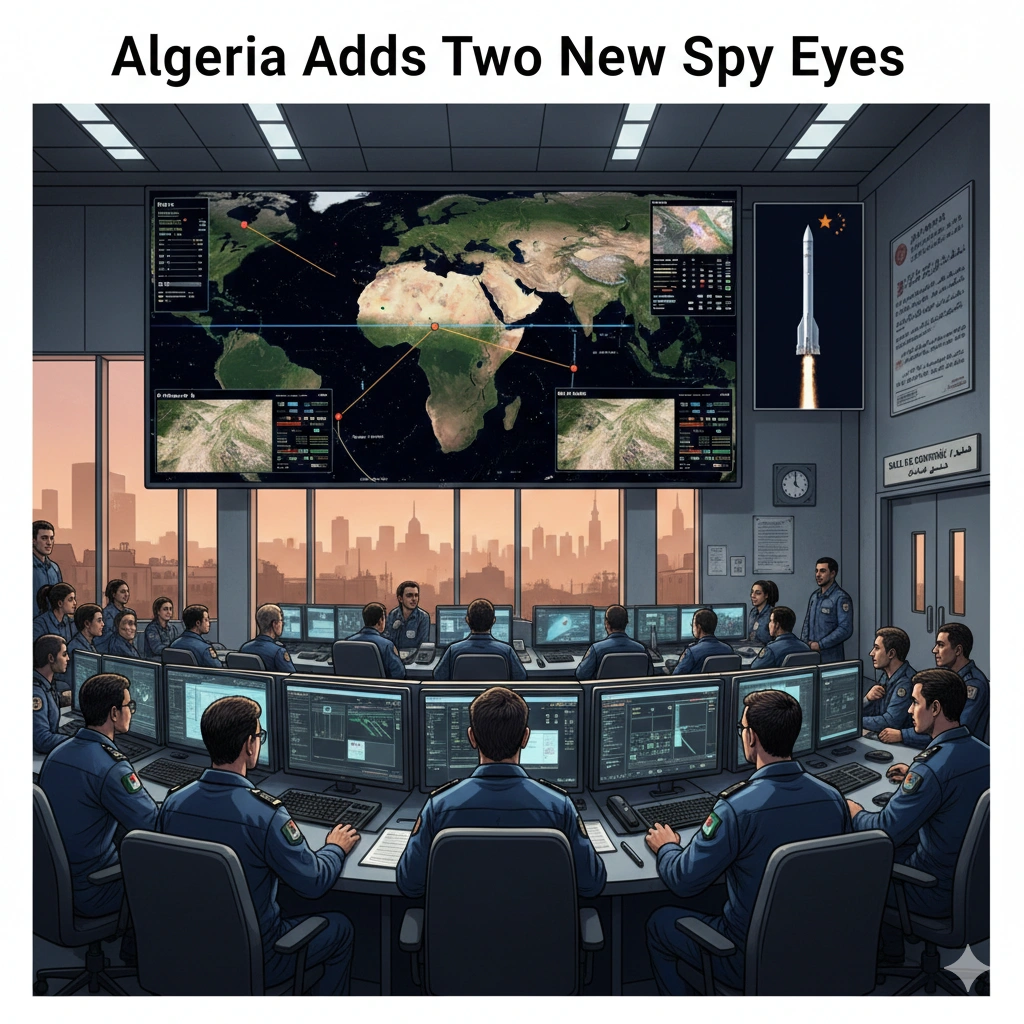
What Is the Alsat-3B Satellite?
The Alsat-3B satellite is an optical Earth-observation satellite developed through cooperation between Algeria and China. It was launched from the Jiuquan Satellite Launch Center aboard a Long March-2C rocket, successfully reaching its designated orbit.
Built by the China Academy of Space Technology, the spacecraft is designed to collect detailed imagery that supports land management, environmental monitoring, and disaster prevention.
Although officially described as a civilian remote-sensing tool, such satellites often have broader security and strategic value because high-resolution imagery can also support intelligence analysis.
Alsat-3B Satellite Launch Timeline
Algeria’s recent progress in space development is notable because the country launched two satellites in rapid succession:
- Alsat-3A was launched on January 15, 2026.
- Alsat-3B followed in late January 2026 from the same Chinese launch site.
The launches were carried out under a July 2023 Algeria–China agreement covering two optical remote-sensing satellites along with ground infrastructure, training, and technical support.
Together, the two spacecraft form part of Algeria’s broader remote sensing satellite system program.
How the Alsat-3B Satellite Will Be Used
The new satellite is expected to deliver practical benefits across multiple civilian sectors. Key applications include:
Land-Use Planning and Resource Management
High-resolution imagery helps authorities map terrain, monitor agricultural zones, and manage natural resources more efficiently.
Disaster Prevention and Risk Monitoring
Remote-sensing data supports early detection of floods, wildfires, and environmental threats, improving national disaster response.
Environmental and Geological Mapping
The Alsat-3A and Alsat-3B satellite pair will gather data for environmental monitoring and geological analysis across Algeria’s territory.
These capabilities strengthen Algeria’s ability to make data-driven decisions in infrastructure planning, agriculture, and climate risk management.
Strategic and Security Implications
While the program is presented as civilian, Earth-observation satellites often have dual-use potential. Imagery collected from orbit can assist with border monitoring, surveillance, and intelligence assessments.
Regional analysts see the launches as part of Algeria’s effort to improve its geospatial intelligence capacity and maintain situational awareness in North Africa.
At the same time, the program signals Algeria’s intention to build more independent technological capabilities rather than relying solely on foreign imagery providers.
China–Algeria Space Cooperation Deepens
The Alsat-3B satellite project reflects expanding technological cooperation between Beijing and Algiers. The 2023 contract tasked Chinese aerospace organizations with delivering satellites, ground systems, training, and operational support.
The partnership builds on earlier collaboration, including the launch of the Alcomsat-1 communications satellite in 2017.
Following the successful deployment, official messages of congratulations were exchanged between the leadership of both countries, underscoring the political significance of the mission.
Many analysts view the project as part of a broader pattern of China–Africa space and technology partnerships aimed at expanding satellite infrastructure across the continent.
A Milestone for Algeria’s Expanding Space Program
Launching two satellites within weeks represents a significant achievement for Algeria’s national space ambitions. The Alsat-3A and Alsat-3B satellites will operate together to provide more frequent imaging coverage and improved data reliability.
By strengthening its remote-sensing capabilities, Algeria can enhance economic planning, environmental protection, and national security awareness. The twin launches also position the country as an emerging player in Africa’s growing space technology landscape.
As more nations invest in Earth-observation systems, Algeria’s new satellites highlight how space-based data is becoming essential for modern governance, risk management, and strategic decision-making.
For more details & sources visit: Space in Africa
For more updates about Algeria, visit the Algeria News Section.