
Summary
Algeria has introduced the 2026 Finance Bill, a sweeping reform package aimed at modernizing the national tax system, expanding the formal economy, and balancing fiscal stability with social welfare.
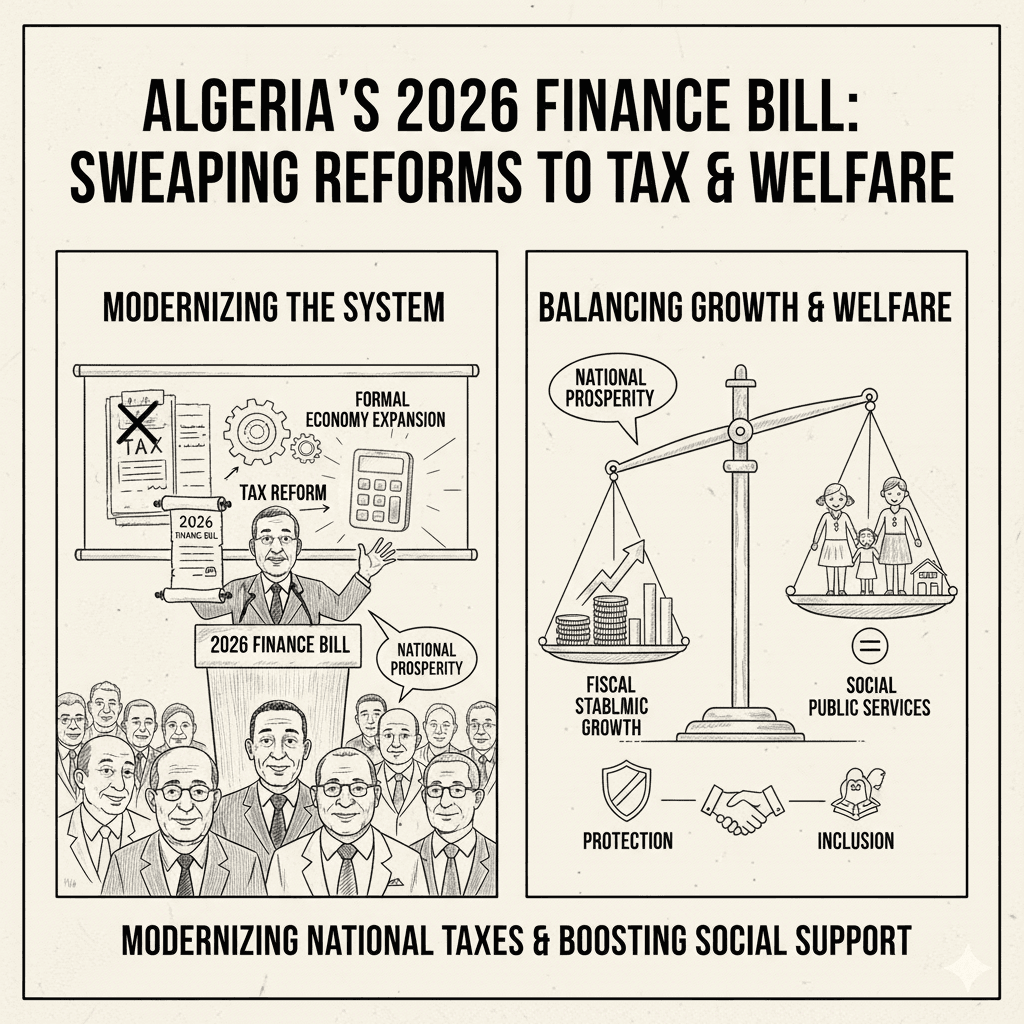
In a bid to enhance financial transparency and stimulate economic growth, Algeria’s government has presented the 2026 Finance Bill — a comprehensive set of measures designed to broaden the tax base without burdening compliant taxpayers. The bill prioritizes integrating undeclared economic activities into the formal sector while safeguarding citizens’ purchasing power.
A key feature of the legislation is the creation of a voluntary tax settlement program, allowing individuals and businesses to declare previously unreported income by December 31. Participants will benefit from a reduced flat tax rate of 10% on declared assets and full exemption from late-payment penalties. This initiative aims to encourage trust between taxpayers and the state, fostering formalization of the informal economy through incentives rather than sanctions.
The bill also mandates the adoption of digital tax control systems starting January 1, 2027, particularly targeting companies using electronic cash registers. This modernization effort seeks to combat tax evasion and strengthen transparency through digital governance.
To ease financial pressure on households, the government introduced additional relief measures, including:
Tax exemptions on live sheep imports for Eid al-Adha 2026 to ensure meat affordability.
A reduced VAT rate of 9% for renovating and rehabilitating old residential properties to support urban renewal and housing availability.
Officials emphasized that the bill’s success will depend on effective field implementation to ensure equitable enforcement and measurable results.
Overall, the 2026 Finance Bill marks a significant milestone in Algeria’s fiscal modernization, aligning economic efficiency with social responsibility and setting the foundation for a transparent, resilient tax system.