
British-Egyptian activist Alaa Abd El Fattah returns UK after more than a decade in Egyptian prisons, reuniting with his family and stirring a mix of praise and controversy. Human rights organizations had long condemned his detention as politically motivated, framing his release as a victory for global human rights advocacy. The activist’s return has prompted both emotional reunions and intense scrutiny over past statements on social media.
UK Prime Minister publicly welcomed Abd El Fattah on social media, emphasizing support for the activist and highlighting his years of unjust imprisonment. However, the celebration was quickly tempered when old posts resurfaced in which Abd El Fattah made controversial remarks, including calls for violence against police officers and Zionists. The revelation led to public debate and political responses across the UK.
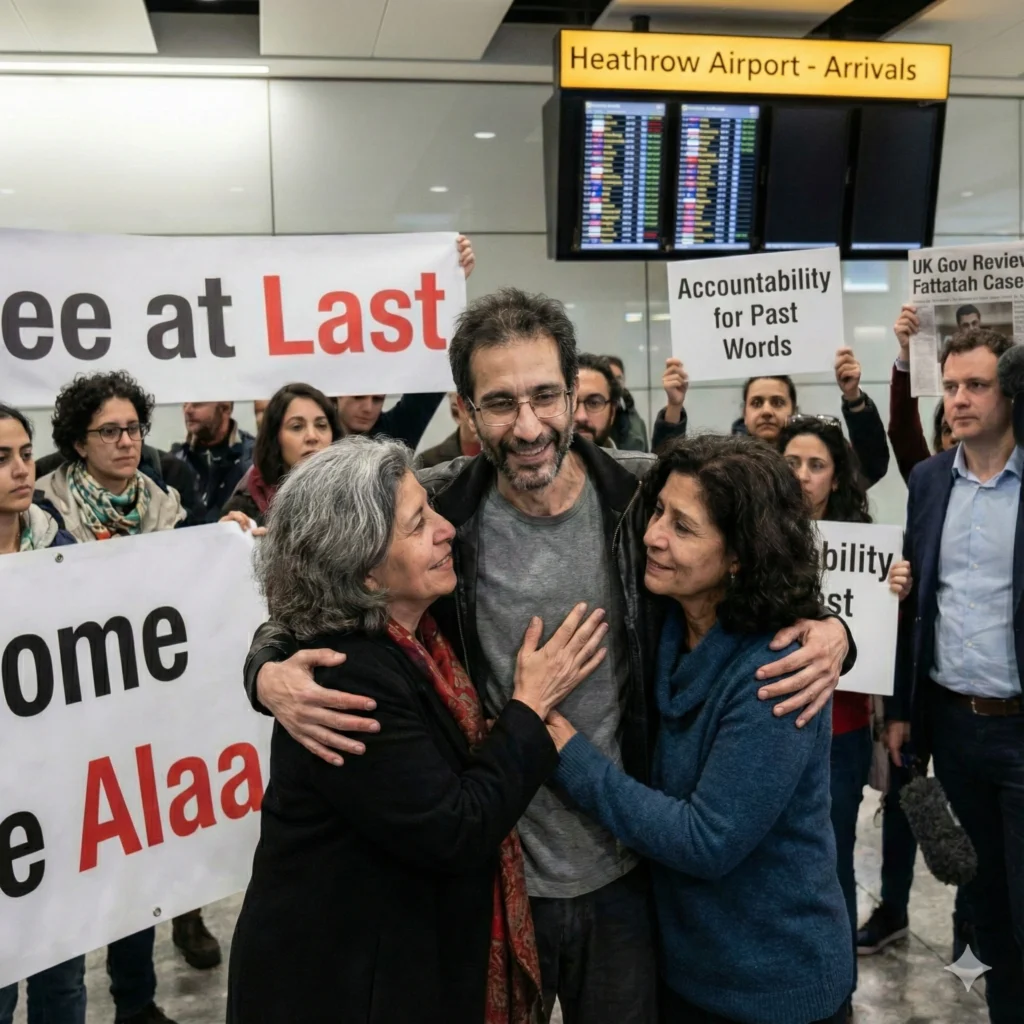
Background: 12 Years in Egyptian Prison
Alaa Abd El Fattah, 42, is a prominent figure in Egyptian political activism and digital rights campaigns. He became widely known during the 2011 Egyptian Revolution for organizing protests and advocating for democratic reforms. Despite international support, he spent 12 years in Egyptian jails under various charges, which human rights groups described as unjust and politically motivated.
During his imprisonment, global campaigns called for his release, emphasizing freedom of expression and the protection of activists. His case became a symbol of ongoing struggles for civil liberties in Egypt, drawing attention from governments, NGOs, and international media.
Controversy Over Social Media Posts
Following his return, scrutiny intensified when old social media posts resurfaced. Abd El Fattah had previously made statements that included violent rhetoric targeting specific groups and law enforcement officials. In response, the activist issued a public apology, acknowledging the inappropriateness of the posts and emphasizing his commitment to non-violence moving forward.
The UK government has confirmed a review of procedural oversights that allowed prior praise without full vetting. Labour leader Sir Keir Starmer stated that he was unaware of the controversial posts and described the content as “absolutely abhorrent,” reflecting the broader political sensitivity surrounding the activist’s reintegration into UK society.
Reactions from the Public and Political Circles
Public reaction to Alaa Abd El Fattah returns UK has been mixed. Supporters have celebrated his freedom and welcomed the reunification with his family, viewing it as a triumph for human rights. Critics, however, question the UK government’s initial praise and call for accountability regarding the resurfaced posts.
Political analysts note that the situation underscores the challenges governments face when reconciling human rights advocacy with national security and public opinion. The controversy has prompted debates over the vetting process for public statements and the responsibilities of officials when endorsing figures with complex pasts.
Future Implications for Alaa Abd El Fattah
Looking forward, Abd El Fattah’s reintegration into the UK may influence both activism and policy discussions. His case has already sparked calls for reviewing how the UK supports returning activists and how it manages sensitive historical information. Analysts suggest that Abd El Fattah’s experience could contribute to broader discussions on digital rights, freedom of speech, and rehabilitation of politically persecuted individuals.
Additionally, his return highlights ongoing international human rights concerns in Egypt, potentially shaping UK-Egypt diplomatic dialogue. Observers expect careful navigation of public statements, media engagement, and advocacy campaigns to balance recognition of past suffering with accountability for prior controversial remarks.
Ensuring Safe Advocacy and Public Awareness
Alaa Abd El Fattah’s case serves as a reminder of the importance of responsible activism and the evolving nature of social media influence. The activist’s apology demonstrates an effort to reconcile past statements with present values, emphasizing non-violence and constructive engagement.
For citizens and policymakers, the episode underscores the need for transparent review processes, public awareness, and critical assessment of online behavior, especially for individuals in high-profile advocacy roles. By learning from this case, governments can better balance support for human rights with vigilance over controversial rhetoric.
Future Outlook for Alaa Abd El Fattah
Looking ahead, Alaa Abd El Fattah returns UK marks the beginning of a new chapter in his activism and public engagement. Analysts expect him to focus on promoting human rights, digital freedoms, and political reform while navigating the challenges of public scrutiny. His experience may influence UK policies on supporting returning activists and addressing the legacy of politically persecuted individuals.
Internationally, Abd El Fattah’s return could reignite discussions on human rights conditions in Egypt and encourage greater diplomatic dialogue between the UK and Cairo. Observers also anticipate careful management of media presence and public statements to maintain credibility while advocating for reform. This period represents a critical opportunity for Abd El Fattah to contribute meaningfully to social justice causes while ensuring accountability for past controversies.
For more details & sources visit: BBC News
For the latest updates from Egypt, visit our Egypt news page.