
The ongoing Afghanistan Pakistan Trade Standoff has deepened as the Taliban-led government in Kabul accelerates efforts to reduce dependence on Pakistani trade routes. Following weeks of border closures and unresolved disputes, Afghan officials are now redirecting commerce toward alternative markets, particularly Iran’s increasingly strategic Chabahar port.
This shift marks one of the most significant realignments in Afghanistan–Pakistan economic relations in decades, placing mounting pressure on Pakistan’s border industries and national export revenues.
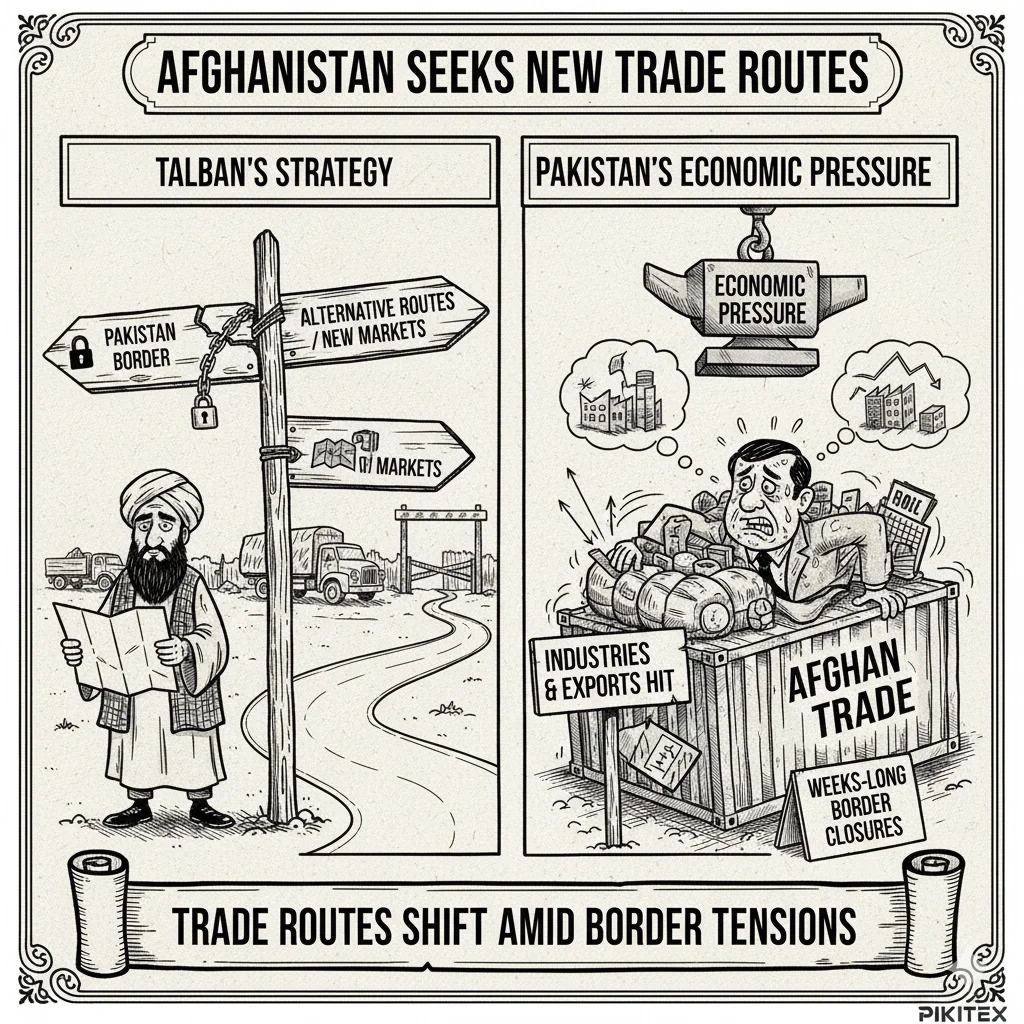
Kabul Signals Readiness to Sever Economic Ties Without Trade Guarantees
Afghanistan’s Deputy Prime Minister for Economic Affairs, Mulla Abdul Ghani Baradar, has issued strong directives to Afghan traders: finalize existing contracts within three months and begin shifting business elsewhere unless Pakistan provides firm guarantees of uninterrupted border trade.
These comments signal Kabul’s growing frustration with persistent border blockages at key crossings such as Torkham and Chaman, which have halted the movement of thousands of trucks. Afghan authorities argue that repeated closures—often sparked by political disputes, visa issues or security checks—have created unacceptable instability for their commerce-dependent economy.
Baradar’s remarks underscore Kabul’s willingness to fundamentally restructure its trade dependencies, even if it means ending decades of reliance on Pakistan as its primary transit partner.
Chabahar Port Emerges as Afghanistan’s Preferred Alternative Trade Route
As the Afghanistan Pakistan Trade Standoff continues, Iran’s Chabahar port has rapidly become Afghanistan’s most attractive alternative. Supported by tariff concessions and expanded facilities, Chabahar has drawn significant Afghan commercial activity. Over the last six months alone, the port has handled $1.6 billion in Afghan trade, surpassing volumes moving through Pakistan.
Afghan traders cite multiple advantages:
- Fewer political disruptions
- Predictable customs processes
- Improved storage and shipping infrastructure
- Lower tariffs compared to Pakistani border routes
This pivot toward Chabahar signals a longer-term strategic realignment in regional trade flows, reducing Pakistan’s influence over Afghan import and export channels.
Pakistan’s Border Economy Faces Major Risks Amid Prolonged Closures
While Kabul diversifies its trade options, Islamabad faces growing economic pressure. Pakistani officials warn that continuing border disruptions could devastate industries reliant on Afghan markets—particularly in Khyber Pakhtunkhwa (KP).
Industry leaders report:
- Up to 90% of factories and workshops in KP could halt operations
- Thousands of workers risk immediate unemployment
- Transportation and logistics businesses face major financial collapse
Much of KP’s industrial output—especially processed foods, construction materials, textiles and small manufacturing—depends on Afghan buyers. With trade volumes shifting to Iran, Pakistan’s export-dependent sectors may face prolonged downturns.
Nationally, experts estimate the economic impact at $1.2–1.3 billion annually if Afghanistan maintains its reduced reliance on Pakistan. These losses stem from declining exports, disrupted trucking operations, lower customs revenues and reduced cross-border services.
A Turning Point in Afghanistan–Pakistan Economic Relations
For decades, Pakistan served as Afghanistan’s primary trade gateway to global markets, benefiting from transit fees, trucking contracts and steady demand from Afghan importers. But the current Afghanistan Pakistan Trade Standoff is accelerating structural changes that may permanently alter this economic interdependence.
Analysts note several long-term implications:
- Iran rises as a major regional trade hub, diminishing Pakistan’s transit role.
- Afghanistan gains leverage, having diversified trade routes beyond a single dependency.
- Pakistan’s export sectors weaken, especially those linked to KP’s border economy.
- Future diplomatic tensions may escalate, as economic grievances add pressure to political disputes.
Unless Islamabad and Kabul negotiate a stable mechanism for continuous border operations, the economic relationship may continue its downward trajectory.
The Afghanistan Pakistan Trade Standoff has evolved from a temporary border dispute into a major regional realignment with lasting consequences. Afghanistan’s shift toward Iran’s Chabahar port, combined with its willingness to sever unstable trade links, places significant economic strain on Pakistan while reshaping South Asia’s commercial landscape.