
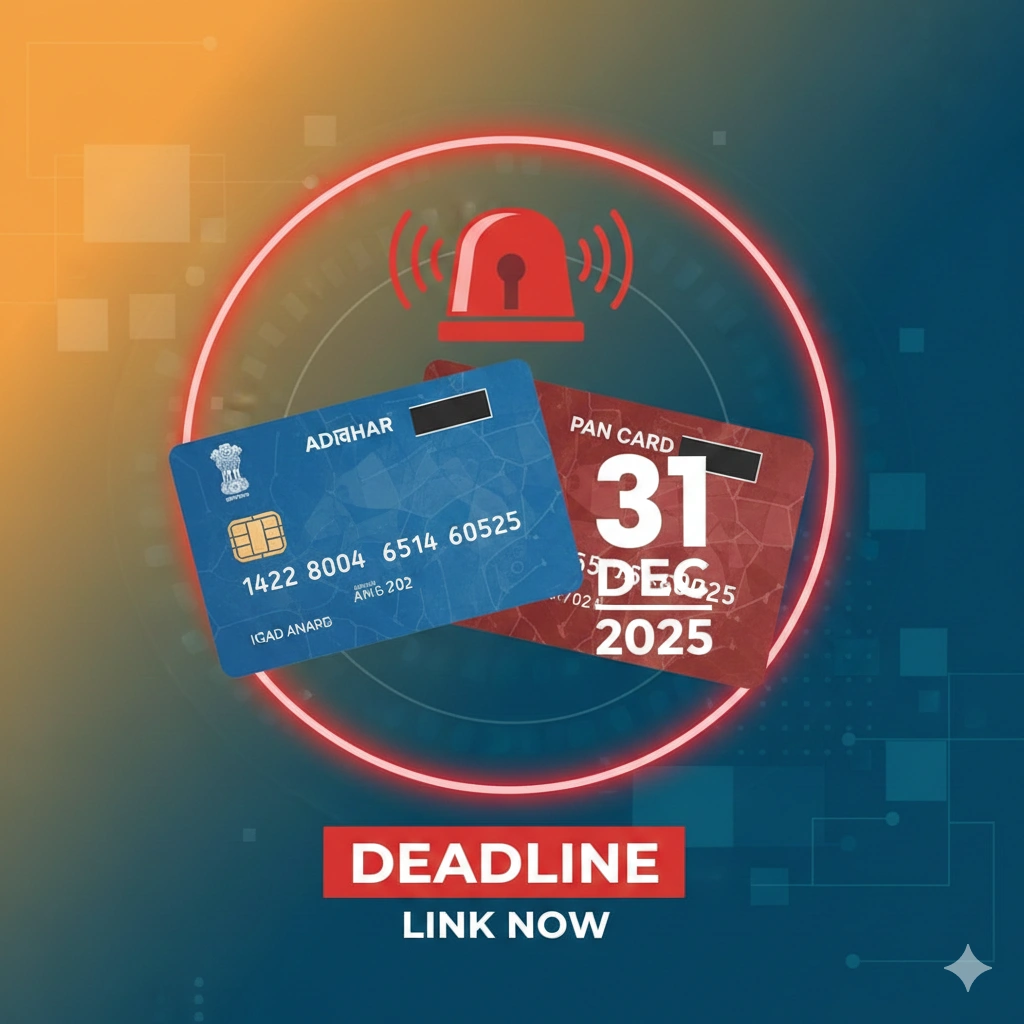
The Indian government has made Aadhaar PAN linking mandatory, setting December 31, 2025, as the final deadline for compliance. Authorities have warned that PAN cards not linked with Aadhaar by this date will be deactivated from January 2026, affecting tax filings, refunds, and banking services. This step aims to strengthen tax compliance, reduce discrepancies in the system, and streamline India’s income tax administration.
The government has emphasized that individuals should check their linking status online through the Income Tax e-filing portal to avoid last-minute disruptions. Citizens failing to link their PAN with Aadhaar may face higher TDS or TCS deductions, delays in tax refunds, and even a penalty of ₹1,000 for late linking.
What is Aadhaar PAN Linking and Why It Matters
Aadhaar PAN linking connects an individual’s tax account to their Aadhaar identity, helping streamline the income tax process. Linking ensures transparency in financial transactions, reduces tax evasion, and prevents duplication of PAN cards.
The process is straightforward: taxpayers log in to the Income Tax e-filing portal, enter their PAN and Aadhaar numbers, and verify the details. The system confirms successful linking instantly, ensuring smooth continuation of tax filings and banking services.
Exemptions apply to certain groups, including NRIs, non-citizens, senior citizens aged 80 and above, and residents of Assam, Meghalaya, and Jammu & Kashmir. Acting early is crucial, as last-minute submissions may face technical issues due to high traffic.
How the Aadhaar PAN Linking Works
Linking PAN with Aadhaar is a straightforward process designed to integrate tax and identity systems. Taxpayers can log in to the Income Tax e-filing portal, enter their PAN and Aadhaar numbers, and complete the verification process. Upon successful linking, the PAN remains active, allowing seamless tax filing and banking operations.
Exemptions have been specified for certain categories. NRIs, non-citizens, senior citizens aged 80 or above, and residents of Assam, Meghalaya, and Jammu & Kashmir are not required to link their PAN with Aadhaar. The government encourages citizens to act early, as last-minute filings may cause website congestion and delays.
Consequences of Not Linking PAN and Aadhaar
From January 2026, any unlinked PAN card will become inactive. This means:
- Taxpayers will face difficulties in filing income tax returns.
- Refunds may be delayed or withheld until linking is completed.
- Financial transactions such as salary credits, bank account operations, and loan processing could be interrupted.
- Higher TDS (Tax Deducted at Source) and TCS (Tax Collected at Source) may apply, affecting overall cash flow.
Officials have stressed that non-compliance could also trigger penalties under the Income Tax Act. These measures aim to improve tax transparency and prevent misuse of PAN cards for fraudulent activities.
Steps to Check Linking Status
Taxpayers can verify whether their PAN is linked with Aadhaar through the Income Tax Department portal:
- Visit the official Income Tax e-filing portal.
- Select the “Link Aadhaar” option.
- Enter your PAN, Aadhaar number, and name as per Aadhaar records.
- Submit the details and check the confirmation status.
Prompt verification ensures taxpayers avoid service interruptions and last-minute penalties.
Importance of Aadhaar PAN Linking
The move is part of a broader strategy to enhance tax compliance in India. By linking PAN with Aadhaar, the government can:
- Prevent duplication of PAN cards.
- Reduce tax evasion and fraudulent transactions.
- Improve tracking of financial transactions across banking and investment platforms.
- Simplify tax filing procedures for citizens, ensuring faster processing of refunds and claims.
Experts note that early compliance will save taxpayers time, money, and avoid unnecessary stress in the busy financial period ahead of 2026.
Tips for Smooth Aadhaar PAN Linking
- Complete the linking process before the December 31, 2025 deadline.
- Ensure Aadhaar and PAN details match exactly to avoid rejection.
- Only use official portals to prevent fraud.
- Keep confirmation receipts for future reference.
- Regularly check email and SMS alerts from the Income Tax Department for updates.
Looking Ahead: 2026 and Beyond
The Aadhaar PAN linking mandate represents a key step in strengthening India’s tax infrastructure. Early linking ensures uninterrupted access to tax and banking services in 2026. Citizens should act now to avoid last-minute complications, ensure compliance, and benefit from smooth financial operations.
In addition, linking PAN with Aadhaar helps authorities identify discrepancies in financial transactions, making it easier to prevent fraudulent activities and tax evasion. It also allows for more efficient processing of refunds and credits, reducing delays that many taxpayers face during peak filing periods.
Furthermore, this integration encourages digital compliance and aligns with India’s broader push toward a paperless, transparent tax ecosystem. By acting proactively, taxpayers can avoid disruptions in banking, investments, and other financial activities, ensuring a smoother start to the new fiscal year.
For more details & sources visit: Pragativadi
For the latest updates from India, visit our India news page.