
The Sri Lanka-Nepal Business Council was officially inaugurated at the Cinnamon Lakeside Hotel to enhance economic cooperation and sustainable trade between the two nations. This monumental step marks a significant shift in regional diplomacy, focusing specifically on how these two South Asian partners can leverage their unique resources to create a more integrated economic landscape. As global markets face increasing volatility, the establishment of the Sri Lanka-Nepal Business Council provides a structured framework for businesses to navigate cross-border complexities with greater ease and institutional support.
By fostering public-private partnerships, the council serves as a dynamic platform for promoting tourism, investment, and knowledge exchange. Consequently, this initiative is expected to bridge the gap between Colombo and Kathmandu, ensuring that bilateral trade expansion becomes a measurable reality rather than just a diplomatic aspiration for the future.
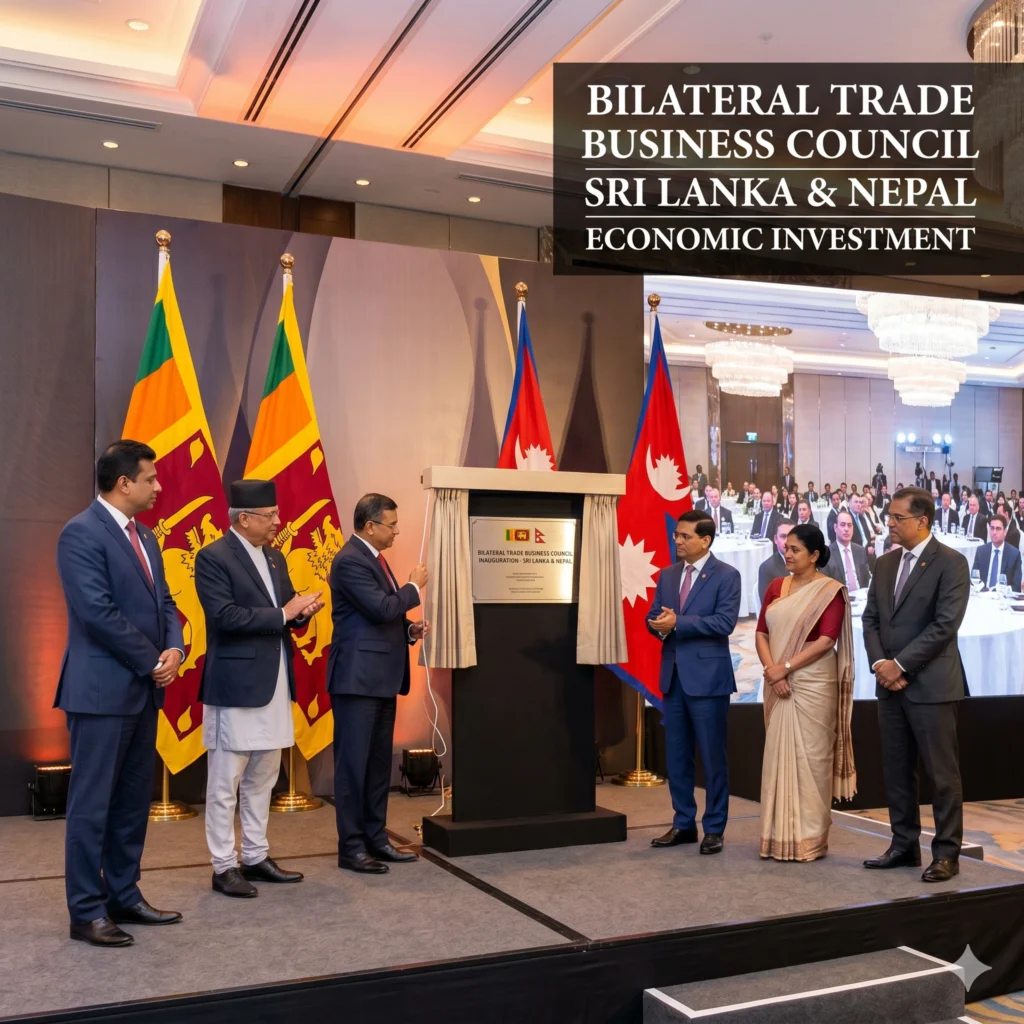
Strategic Importance of the Sri Lanka-Nepal Business Council
The launch of this council signifies a renewed commitment to unlocking the untapped economic potential that exists within the South Asian region. Ambassador Dr. Purna Bahadur stated during the ceremony that the council reflects a strategic vision to diversify trade portfolios beyond traditional commodities. Because both nations share historical and cultural ties, the foundation for commercial trust is already established.
Furthermore, the council aims to act as a primary intermediary between government bodies and private sector entities to ensure policy alignment. By providing a unified voice for exporters and importers, the Sri Lanka-Nepal Business Council will advocate for reforms that simplify the movement of goods. This proactive approach is essential for addressing the logistical challenges that have previously hindered large-scale commercial interactions.
The presence of high-profile diplomats and trade leaders at the inauguration underscores the high expectations placed on this new body. Leaders believe that by formalizing these relationships, they can create a more predictable environment for long-term capital investments. This predictability is the cornerstone of any successful international business relationship in the modern era.
Bilateral Trade Expansion
The primary objective of the Sri Lanka-Nepal Business Council is to facilitate bilateral trade expansion through targeted sector interventions and policy advocacy. Experts have identified that while the current trade volume is modest, the potential for growth in tea, spices, and construction materials is exceptionally high. By focusing on these specific niches, the council can achieve quick wins while building the infrastructure for more complex industrial partnerships.
To achieve this growth, the council is prioritizing the reduction of non-tariff barriers that often stall the progress of small and medium enterprises. Systematic dialogues are being scheduled to address customs procedures and quality standards synchronization between the two countries. This focus on Bilateral Trade Expansion ensures that both large corporations and local entrepreneurs can benefit from the newly opened economic corridors.
Investment in digital infrastructure is also a key component of this expansion strategy, allowing for more efficient communication. The council’s new digital platform will serve as a repository for market research and regulatory updates, providing real-time data to prospective investors. This transparency is vital for encouraging businesses to venture into unfamiliar market territories with confidence and security.
Priority Sectors for Immediate Growth
- Development of a unified tourism circuit focusing on Buddhist pilgrimage sites in both nations.
- Expansion of the agricultural value chain through the export of high-quality Sri Lankan tea and Nepalese herbs.
- Promotion of the garment and textile industry by sharing manufacturing expertise and raw material sourcing.
Enhancing Regional Connectivity and Logistics
Improving the physical links between Sri Lanka and Nepal is a top priority for the newly formed executive committee. Vice President Ajith D. Perera highlighted that without direct and frequent air connectivity, the cost of doing business remains prohibitively high. Therefore, the council is working closely with national carriers to explore more viable flight paths and cargo arrangements.
Logistical efficiency is not just about moving goods but also about the seamless movement of people and ideas across borders. The council plans to host regular trade delegations that will allow business owners to conduct on-site inspections and face-to-face negotiations. These interactions are fundamental to building the personal relationships that define South Asian business culture.
Additionally, the council is looking into the possibility of using third-party ports and regional hubs more effectively to streamline shipping routes. By optimizing the supply chain, the Sri Lanka-Nepal Business Council can significantly reduce the lead time for product delivery. This efficiency will make goods from both nations more competitive in the broader Asian market.
Tourism and Cultural Diplomacy Initiatives
President Indhra Kaushal Rajapaksa emphasized that tourism remains one of the most promising sectors for immediate collaboration. Both countries possess UNESCO World Heritage sites and deep religious connections that attract millions of global travelers annually. By creating joint marketing campaigns, the council hopes to position Sri Lanka and Nepal as a combined travel destination.
Cultural diplomacy plays a vital role in this strategy, as it builds an emotional connection between the two populations. One creative proposal involves blending Sri Lankan batik artistry with traditional Nepalese thangka traditions to create high-value artisan products. Such initiatives not only preserve traditional crafts but also open new revenue streams for local communities.
Culinary diplomacy is another avenue the council is exploring to increase brand awareness of each nation’s products. Food festivals and trade fairs showcasing Sri Lankan seafood and Nepalese mountain delicacies can spark interest in specialized food exports. This grassroots approach helps in building a consumer base that appreciates the unique offerings of each partner nation.
Key Cultural Exchange Goals
- Organizing annual cultural festivals in Colombo and Kathmandu to showcase local arts and crafts.
- Establishing student exchange programs to foster a new generation of business leaders with cross-border experience.
- Collaborating on documentary projects that highlight the shared history and future potential of both nations.
Role of Small and Medium Enterprises (SMEs)
The backbone of both the Sri Lankan and Nepalese economies is the SME sector, which requires specialized support. The council has pledged to provide direct business-to-business engagement opportunities for smaller players who lack the resources for international expansion. Through these efforts, the Sri Lanka-Nepal Business Council aims to democratize the benefits of international trade.
Capacity building workshops are being planned to help SMEs understand the legal and financial requirements of exporting. These sessions will cover everything from international contract law to digital marketing strategies tailored for the South Asian audience. By empowering small business owners, the council ensures that economic growth is inclusive and reaches various segments of society.
Access to credit remains a significant hurdle for many SMEs looking to engage in bilateral trade expansion. The council is currently in discussions with financial institutions to create specialized loan products for businesses involved in this specific trade corridor. Such financial backing is crucial for scaling operations and meeting the demands of a larger international market.
Strengthening Institutional Frameworks
A stable and transparent institutional framework is necessary for any long-term economic partnership to thrive. Deputy Minister Chathuranga Abeysinghe noted that the government is fully committed to creating an enabling environment for the council’s initiatives. This includes updating bilateral investment treaties to reflect the modern economic realities of 2026.
The council will also serve as a policy advocacy body, providing feedback to governments on how to improve the business climate. By identifying specific bottlenecks in the current regulatory system, the council can help enact changes that benefit all stakeholders. This collaborative approach between the council and the state is a model for effective economic governance.
Moreover, the official debut of the council’s website marks a significant milestone in its digital transformation journey. The site will serve as a central hub for business matchmaking, allowing companies to find reliable partners without the need for expensive intermediaries. This technological leap is essential for keeping pace with the rapid digitalization of global trade.
Benefits of Improved Frameworks
- Increased transparency in customs and excise duties for smoother cross-border transactions.
- Enhanced legal protection for foreign investors, leading to higher levels of direct investment.
- Standardized certification processes for agricultural and industrial products to ensure quality control.
Leveraging Industrial Synergies
Nirvana Chaudhary of the Confederation of Nepalese Industries has been a vocal supporter of finding industrial synergies. Nepal’s rich natural resources and Sri Lanka’s advanced manufacturing capabilities present a perfect opportunity for complementary growth. For example, Sri Lankan expertise in renewable energy can help Nepal harness its vast hydropower potential.
In return, Nepal can provide raw materials and niche agricultural products that are in high demand in the Sri Lankan market. This symbiotic relationship is the core of what the Sri Lanka-Nepal Business Council seeks to promote. By focusing on mutual strengths, both nations can achieve a level of industrial sophistication that would be difficult to reach independently.
The council is also looking at the tech sector, specifically fintech and edtech, as areas for potential collaboration. Sri Lanka’s growing IT services sector can find a large and eager market in Nepal’s expanding digital landscape. Joint ventures in software development and digital service delivery are already being discussed by the council’s executive committee members.
Long-term Vision for Regional Growth
The long-term goals of the council extend beyond mere trade figures; they encompass the development of a resilient regional framework. As the Sri Lanka-Nepal Business Council matures, it hopes to influence broader South Asian trade policies to favor more open and integrated markets. This vision is aligned with the global trend toward regionalism as a buffer against global economic shocks.
Sustainability is at the heart of this long-term vision, with a focus on green energy and eco-friendly manufacturing. The council encourages businesses to adopt sustainable practices that not only protect the environment but also appeal to the modern, conscious consumer. This commitment to ethics ensures that the growth achieved is both durable and responsible.
Ultimately, the success of the council will be measured by the prosperity it brings to the people of both nations. By creating jobs, fostering innovation, and building lasting friendships, the council is laying the groundwork for a brighter future. The journey has just begun, but the foundation laid at the Cinnamon Lakeside Hotel is solid and full of promise.
Future Milestones for the Council
- The establishment of a permanent trade center in both capital cities to facilitate ongoing commercial activities.
- The launch of a bilateral investment fund to support high-impact projects in energy and infrastructure.
- Hosting an annual bilateral economic summit to review progress and set new targets for the coming year.
- Development of a shared digital marketplace specifically for Sri Lankan and Nepalese goods and services.
Enhancing Investment Confidence
Building investor confidence is a primary mandate for the council, as it directly impacts the flow of capital into both nations. Through the Sri Lanka-Nepal Business Council, investors gain access to a network of vetted professionals and government liaisons. This network reduces the perceived risks associated with entering a new market and encourages larger capital commitments.
Regular briefings on economic indicators and political developments will be provided to the council’s members to keep them informed. Knowledge is power in the world of investment, and the council aims to be the most reliable source of information for this corridor. This proactive communication strategy helps in mitigating concerns and highlighting the numerous opportunities available.
The council is also working on a dispute resolution mechanism to provide businesses with a fair and efficient way to settle commercial disagreements. Having a clear process for conflict resolution is a major factor in attracting foreign direct investment. This legal security is what distinguishes a mature trade relationship from a speculative one.
Empowering the Next Generation of Entrepreneurs
The future of bilateral trade expansion depends on the energy and innovation of young entrepreneurs in both countries. The council is launching a mentorship program that connects seasoned business leaders with ambitious startups. This transfer of knowledge is essential for building a sustainable business ecosystem that can adapt to future challenges.
Innovation hubs and incubators are also part of the council’s broader strategy to encourage creative problem-solving. By providing a platform for young minds to collaborate, the council is fostering an environment where new industries can emerge. Whether it is in biotechnology or renewable energy, the next big breakthrough could come from a Sri Lankan-Nepalese partnership.
Furthermore, the council plans to offer scholarships and internships to students interested in international trade and diplomacy. By investing in education, the council ensures a steady pipeline of talent to manage and grow the bilateral relationship for decades to come. This focus on human capital is perhaps the most significant investment the council can make.
Collaborative Research and Development
Research and development (R&D) are critical for maintaining a competitive edge in the global market. The Sri Lanka-Nepal Business Council is encouraging universities and research institutions in both countries to collaborate on joint projects. These partnerships can lead to innovations in agriculture, medicine, and engineering that benefit the entire region.
For instance, joint research into climate-resilient crops can help farmers in both Sri Lanka and Nepal mitigate the impacts of global warming. By sharing data and expertise, the two nations can develop solutions that are specifically tailored to their unique geographical and climatic conditions. This scientific collaboration adds a deeper layer to the bilateral relationship.
The council also intends to facilitate technology transfers between industries, allowing for more rapid modernization. If a Sri Lankan firm has developed a more efficient way to process food, the council can help license that technology to a Nepalese partner. This flow of intellectual property is a powerful catalyst for economic transformation across the corridor.
Strengthening the Executive Committee’s Role
The executive committee of the council is poised to play a pivotal role in driving the organization’s agenda forward. Comprising leaders from diverse industries, the committee brings a wealth of experience and a broad perspective to the table. Their leadership is essential for maintaining the momentum generated by the high-profile launch event.
One of the committee’s first tasks is to finalize a three-year strategic roadmap that outlines specific KPIs for the council. This roadmap will provide a clear direction for all activities and ensure that resources are allocated effectively. Transparency and accountability are the guiding principles for the committee as they represent the interests of their members.
Sub-committees have also been formed to focus on specific areas such as tourism, trade, and investment. These smaller groups can delve deeper into the challenges and opportunities within their respective sectors, providing more granular insights. This structured approach allows the Sri Lanka-Nepal Business Council to be both strategic and agile in its operations.
Fostering Grassroots Economic Impact
While high-level trade deals are important, the council is equally focused on ensuring that the benefits of trade reach the grassroots level. By supporting the handicrafts and cottage industries, the council is helping to preserve traditional livelihoods. Direct business-to-business engagement for these artisans can significantly increase their income and standard of living.
Bilateral trade expansion should not just be about numbers on a balance sheet; it should be about improving lives. The council’s focus on ethical sourcing and fair trade practices ensures that growth is not achieved at the expense of workers or the environment. This social responsibility is a key pillar of the council’s organizational identity.
Community-based tourism initiatives are another way the council is driving grassroots impact. By encouraging travelers to visit rural areas and engage with local cultures, the council is spreading the economic benefits of tourism beyond the major cities. This inclusive approach builds a more resilient and diverse economy for both nations.
Navigating Global Economic Challenges
In an era of shifting global alliances and economic uncertainty, the partnership between Sri Lanka and Nepal provides a measure of stability. By strengthening regional ties, both nations can reduce their dependence on distant markets and volatile global supply chains. The council is a strategic response to the need for more localized and reliable economic partnerships.
The council also monitors global trade trends to provide its members with timely advice on how to navigate changing conditions. Whether it is a shift in maritime regulations or a change in international trade agreements, the council keeps its members ahead of the curve. This foresight is invaluable for businesses looking to protect their interests in a complex global environment.
Resilience is the ultimate goal, and the Sri Lanka-Nepal Business Council is the primary tool for building that resilience. Through collaboration, innovation, and a shared vision, Sri Lanka and Nepal are proving that smaller nations can achieve great things when they work together. The future of this partnership is bright, and the council is leading the way.
Achieving Sustainable Growth Together
Sustainable growth is the final piece of the puzzle for the council’s long-term strategy. This involves balancing economic objectives with environmental protection and social equity. The council promotes green investments and encourages businesses to adopt ESG (Environmental, Social, and Governance) standards.
By prioritizing sustainability, the Sri Lanka-Nepal Business Council is ensuring that the growth achieved today does not compromise the needs of future generations. This forward-thinking approach is what will make the Sri Lanka-Nepal partnership a model for others to follow. The commitment to a better, greener, and more equitable future is what truly defines this initiative.
As the council moves forward, it will continue to adapt and evolve to meet the changing needs of its members and the global economy. The journey of bilateral trade expansion is an ongoing process of learning and growth. With the Sri Lanka-Nepal Business Council at the helm, both nations are well-positioned to navigate the challenges and seize the opportunities of the 21st century.
For more details & sources visit: Daily FT
Read more on global developments: 360 News Orbit – Extended Orbit