
Kuwait oil production is set to undergo a significant transformation as the Ministry of Oil prepares for a strategic shift in its monthly output targets. Following an official declaration from Oil Minister Imad al-Atiqi, the nation anticipates reaching a daily production level of 2.628 million barrels starting next month. This development signals a proactive response to the shifting landscape of global energy demands and the collaborative frameworks established by international oil-producing cartels. As the market looks toward June, the logistical and economic implications of this increase are becoming the central focus for analysts worldwide.
The decision to elevate Kuwait oil production is not an isolated event but rather a synchronized move within the broader Opec+ alliance structure. During a recent high-level digital summit, member nations agreed to a collective output hike that reflects a shared optimism regarding future energy consumption patterns. For Kuwait, this means an increase to 2.628 million barrels per day, representing a vital contribution to the group’s total monthly adjustment of 188,000 barrels. This strategic increment marks the third consecutive period of growth, suggesting a steady trend toward normalized supply levels after a period of intense regional volatility.
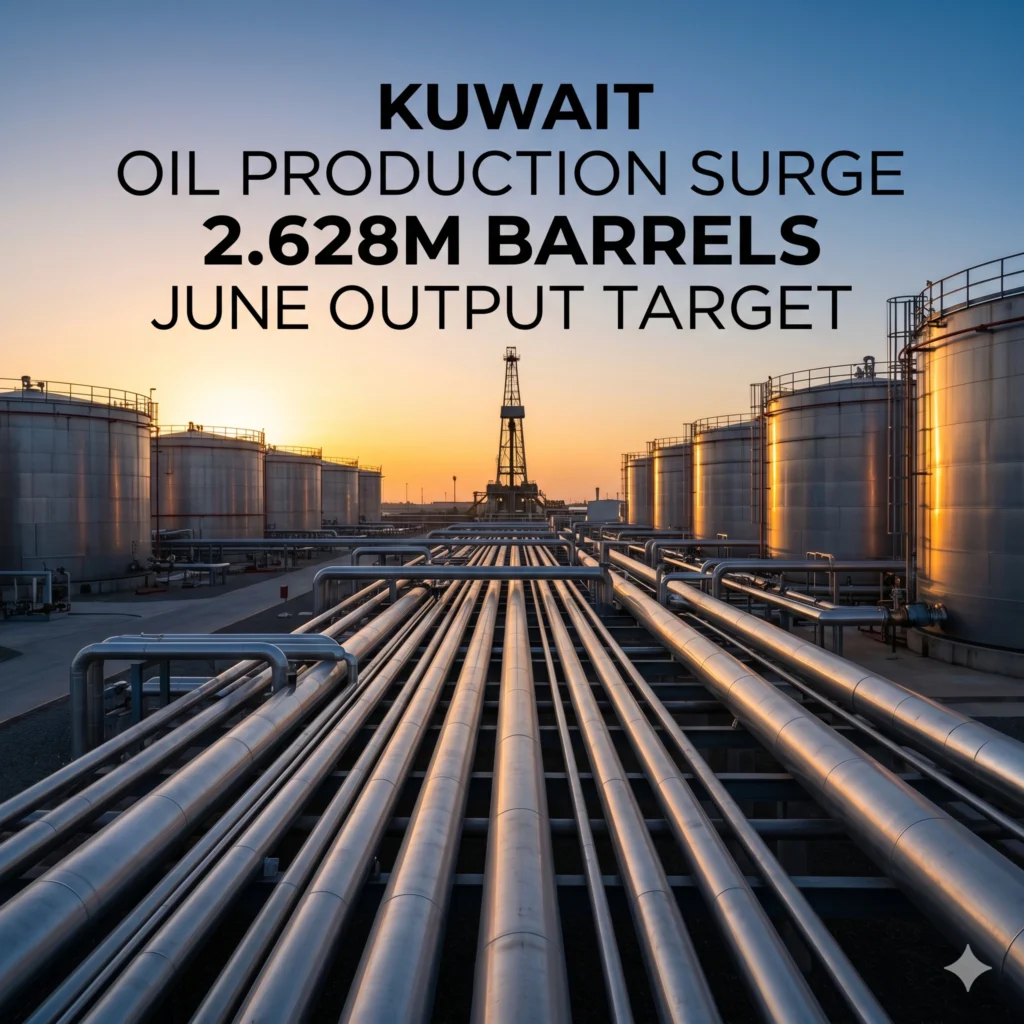
Kuwait Oil Production
The technical capacity to sustain Kuwait oil production at these elevated levels has been a primary objective for the Kuwait Petroleum Corporation over the last fiscal year. Engineers and field operators have worked tirelessly to ensure that the infrastructure can handle the increased flow while maintaining rigorous safety standards. This upcoming June surge is designed to demonstrate Kuwait’s reliability as a primary global energy supplier during a time of significant market transition. By hitting the 2.628 million barrel mark, the nation reaffirms its commitment to the production quotas set by international governing bodies.
The operational success of Kuwait oil production depends heavily on the integration of advanced extraction technologies that maximize efficiency at the Burgan and northern fields. These technological investments allow the ministry to scale output rapidly without compromising the long-term integrity of the reservoirs. Consequently, the minister’s announcement is backed by robust data indicating that the national infrastructure is ready for this significant jump. This readiness is crucial because the global market requires predictable and steady supply increases to maintain price stability throughout the summer months.
Global Impact of Rising Kuwaiti Output
The ripple effects of increased Kuwait oil production will be felt across international commodity exchanges as supply chains adjust to the new volume. With an additional 188,000 barrels per day entering the collective Opec+ market, the pressure on global energy prices may see a slight cooling effect. Investors are currently weighing this supply boost against the backdrop of rising demand in emerging economies that are currently undergoing rapid industrialization. Therefore, Kuwait’s role in balancing the global scales is becoming increasingly vital as we move further into 2026.
Market analysts suggest that the rise in Kuwait oil production is a direct answer to the supply gaps created by unexpected outages in other regions. By filling these voids, Kuwait ensures that the global economy does not face energy shocks that could lead to inflationary pressures. The ministry’s transparency regarding the June targets has provided a much-needed sense of clarity for shipping companies and refineries. As a result, the logistics of transporting this extra crude are already being planned with precision across various maritime routes.
Geopolitical Context of the June Adjustment
While the target for Kuwait oil production is clearly defined, the geopolitical landscape introduces a layer of complexity to the actual delivery of these barrels. The ongoing tensions in the region have historically influenced how much oil can physically move from the wellhead to the international buyer. Despite these challenges, the commitment to a higher production quota shows a desire to maintain economic momentum regardless of external friction. This resilience is a hallmark of the Kuwaiti energy strategy, which prioritizes long-term contract fulfillment and market trust.
The closure of specific maritime corridors has necessitated a flexible approach to Kuwait oil production and its subsequent export logistics. While the production targets are officially set, the actual flow remains contingent on the safety and accessibility of vital shipping lanes like the Strait of Hormuz. Authorities are working in tandem with international maritime security forces to ensure that the increased June output reaches its destination safely. This collaboration is essential for the nation to realize the full economic potential of its increased daily output.
Economic Diversification and Energy Revenue
The revenue generated from the expanded Kuwait oil production is expected to be funneled into the nation’s ambitious Vision 2035 development projects. These funds are critical for building new infrastructure, enhancing education, and creating a more diversified economic base that is less dependent on fossil fuels. Ironically, the increase in crude output is the very engine that will drive the country toward a greener and more technologically advanced future. Each extra barrel produced in June contributes directly to the sovereign wealth fund’s ability to invest in renewable energy initiatives.
Furthermore, the surge in Kuwait oil production supports the domestic labor market by creating high-skilled jobs within the petroleum engineering and logistics sectors. As production facilities ramp up to meet the 2.628 million barrel target, additional manpower is required to monitor operations and maintain equipment. This employment boost provides a secondary economic benefit that strengthens the local economy during a period of global financial uncertainty. The ministry has emphasized that these operational expansions are being handled by a highly trained workforce dedicated to excellence.
Technical Milestones in the Oil Sector
Achieving the new goals for Kuwait oil production requires a meticulous approach to reservoir management and pressure maintenance across all active fields. The ministry has implemented new digital monitoring systems that provide real-time data on the health of each well, ensuring that the increase is sustainable. These systems allow operators to make instantaneous adjustments to flow rates, preventing any potential damage to the underlying geological structures. This high level of technical oversight is why Kuwait remains one of the most efficient producers in the Middle East.
In addition to extraction, the refining capacity associated with Kuwait oil production has also seen significant upgrades to handle the heavier crude grades. The Clean Fuels Project has modernized local refineries, allowing them to process the increased output into high-value products that meet international environmental standards. This means that Kuwait is not just exporting more raw crude, but is also capable of supplying refined fuels that command higher prices. This integrated approach maximizes the profit margins for every barrel that leaves the country’s shores.
The Role of Opec+ Coordination
The collaborative nature of Kuwait oil production increases cannot be overstated, as they are part of a delicately balanced agreement between multiple nations. By adhering to the group’s collective strategy, Kuwait helps prevent market oversupply while still meeting the necessary growth targets for the global economy. The Sunday meeting highlighted the unity between the seven participating Opec+ members, who all agreed that a moderate increase was the best path forward. This consensus-based model provides a level of predictability that is highly valued by global energy traders.
As Kuwait oil production moves toward the June target, the Opec+ monitoring committee will continue to evaluate market conditions to ensure the hike remains appropriate. If global demand shifts unexpectedly, the group has shown a willingness to adjust targets in real-time to prevent price collapses. Kuwait’s role as a stable and cooperative member of this alliance enhances its diplomatic standing on the world stage. The minister’s commitment to the 2.628 million barrel figure reflects Kuwait’s reliability as a partner in global energy governance.
Logistics and Shipping Infrastructure
The physical movement of the increased Kuwait oil production requires a massive mobilization of tankers and port facilities at Mina Al-Ahmadi. Port authorities have already cleared schedules to accommodate the higher frequency of large crude carriers expected in June and July. Advanced loading systems have been tested to ensure that the extra volume does not lead to bottlenecks at the terminal. Efficient shipping is the final link in the chain that converts underground reserves into national wealth and global energy stability.
To safeguard the transport of Kuwait oil production, the nation has invested in its own fleet of modern tankers through the Kuwait Oil Tanker Company. Having a sovereign shipping capability reduces the reliance on third-party carriers and provides more control over delivery timelines. This is particularly important when navigating regions where insurance costs and security risks can fluctuate rapidly. By controlling both the production and the transport, Kuwait ensures a seamless transition of energy from its desert fields to the global marketplace.
Future Projections for Kuwaiti Energy
Looking beyond June, the trajectory for Kuwait oil production appears to be on a steady upward climb as new fields in the neutral zone come back online. The long-term goal is to reach an even higher daily capacity that can support the world’s growing population and industrial needs. Ongoing exploration efforts in offshore areas also suggest that Kuwait has significant untapped reserves that could bolster production for decades to come. This future-proof strategy ensures that the nation remains at the heart of the energy conversation for the foreseeable future.
The current focus on Kuwait oil production is a testament to the nation’s ability to adapt to a changing world while maintaining its core economic strengths. As the June deadline approaches, all eyes will be on the pumping stations and export terminals to see how this increase unfolds. The success of this move will likely set the tone for the second half of 2026, influencing everything from local government budgets to global petrol prices. Kuwait stands ready to meet the challenge, proving once again that it is a cornerstone of the global energy architecture.
For more details & sources visit: Middle East Eye
Read more about Kuwait news on 360 News Orbit – Kuwait.