
Tebessa Court rent rulings have sent a clear message to residents as the judiciary intensifies its crackdown on delinquent tenants this April. The legal system recently issued eight significant judgments targeting individuals who failed to honor their monthly financial obligations and contractual agreements. This move aims to restore order within the housing sector and ensure that public resources remain sustainable for all citizens. Because the authorities are prioritizing the collection of arrears, many families now face immediate pressure to settle their outstanding debts.
The context surrounding these Tebessa Court rent rulings suggests a broader national trend toward stricter housing enforcement across Algeria. According to reports, the General Directorate of Real Estate Management provided the necessary evidence to confirm long-term non-payment by the defendants. Consequently, the court had no choice but to mandate full payment of all financial arrears accrued over the past several months. This decisive action is intended to discourage others from neglecting their rental responsibilities in the future.
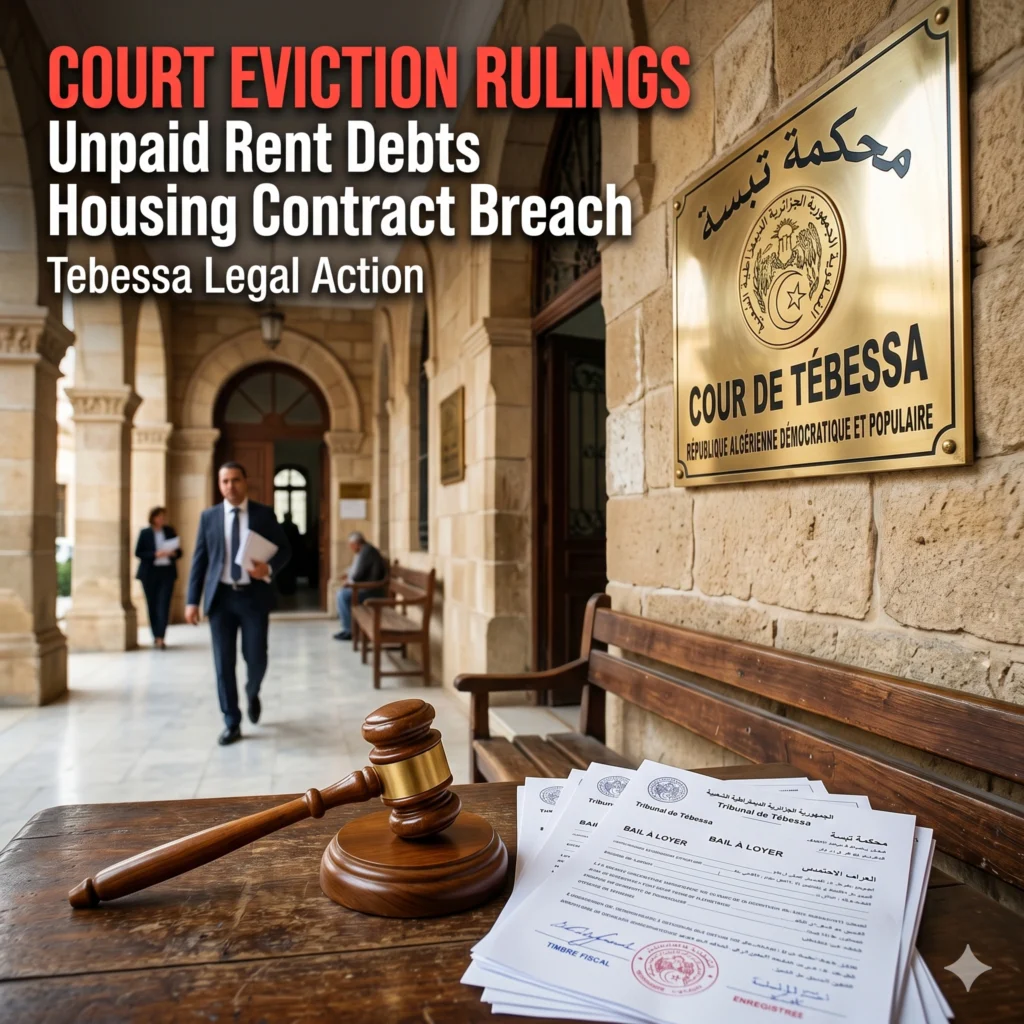
Enforcing Contractual Financial Arrears
Achieving these Tebessa Court rent rulings required a meticulous review of rental contracts and payment histories by judicial officials. The court emphasized that the defendants had repeatedly ignored informal requests to settle their balances before the matter escalated to a legal hearing. Furthermore, the rulings require tenants to pay additional financial compensation for the damage caused by their contractual breaches. By adding these penalties, the court is highlighting the serious economic consequences of failing to respect a signed lease agreement.
The specific nature of the Tebessa Court rent rulings involves both the recovery of funds and the protection of management rights. Since the housing projects are funded by public entities, the loss of revenue directly impacts the maintenance and development of future residential sites. As a result, the judiciary is acting as a safeguard for the national housing budget during a period of economic adjustment. This alignment between the courts and the housing directorates ensures a unified front against non-compliance.
Tebessa Court Rent Rulings
The most severe aspect of the Tebessa Court rent rulings involves the three specific eviction orders issued to the most delinquent residents. These individuals had persistent histories of non-payment for both basic rent and the associated service charges required for building maintenance. Therefore, the court determined that the only viable solution was to terminate their occupancy rights immediately to allow for new, responsible tenants. This process follows a strict legal timeline to ensure that human rights and local laws are both respected.
Authorities confirmed that the Tebessa Court rent rulings were enforced only after all formal summonses were delivered to the defendants’ doors. This transparency in the legal procedure prevents tenants from claiming they were unaware of the pending actions against them. Because the law requires multiple notifications, the final eviction order represents the culmination of a long process of failed negotiations. Consequently, the transition from residency to eviction is legally sound and fully documented by the bailiffs.
Broadening Regional Housing Enforcement
Beyond the local district, the Tebessa Court rent rulings mirror recent judicial activities in the neighboring region of Batna. In that area, the court issued six rulings targeting residents of a massive one thousand unit AADL housing development at Parc Aforage. These defendants were ordered to cover not only their rent arrears but also the court costs associated with the litigation. This indicates that the push for financial accountability is a nationwide initiative involving multiple high-profile housing projects.
Maintaining the momentum of these Tebessa Court rent rulings, the court in Bordj Bou Arreridj has also taken drastic steps. In that jurisdiction, several lease-purchase contracts were terminated entirely due to recurring contractual breaches by the occupants. Tenants in those specific cases are now legally obligated to vacate their premises and return their keys to the management directorate. This loss of a permanent housing pathway is a stark reminder of the risks associated with chronic financial delinquency.
Managing Encroachments and Sustainability
Officials stated that the Tebessa Court rent rulings are necessary to manage illegal encroachments and ensure the long-term sustainability of projects. Public housing depends on a circular economy where current rents fund the upkeep of the buildings and the construction of new units. Because a small percentage of tenants were hoarding units without paying, the entire system was being placed under unnecessary financial strain. These rulings effectively remove the “bottleneck” of non-paying occupants to refresh the housing pool.
- Legal actions ensure that the AADL program remains financially viable for future applicants.
- Mandatory compensation serves as a deterrent against future contractual negligence.
- The return of keys allows management to perform necessary renovations on older units.
- Consistent enforcement helps maintain the structural integrity of the residential buildings.
The Role of the Real Estate Management Directorate
The evidence used to secure the Tebessa Court rent rulings was meticulously compiled by the General Directorate of Real Estate Management. This body tracks every payment and service charge across the regional housing network to identify patterns of delinquency. Furthermore, the directorate works with legal teams to ensure that all summonses meet the rigorous standards required by the Algerian court system. By maintaining accurate records, they enable the judiciary to act swiftly and fairly when cases reach the courtroom.
The long-term impact of the Tebessa Court rent rulings will likely lead to a higher rate of voluntary compliance among other tenants. When the community sees that evictions are being carried out, the incentive to prioritize rent payments increases significantly. Because the management directorate has proven it will pursue legal action, the culture of “free housing” is being systematically dismantled. This shift is vital for the modernization of the Algerian residential sector and its financial independence.
Judicial Moves and Public Policy
The Tebessa Court rent rulings are part of a broader effort to enforce respect for the rule of law within the domestic housing sector. For many years, the state has provided subsidized housing with the expectation that citizens would contribute their fair share through modest monthly fees. When these expectations are not met, the social contract is weakened, necessitating a firm judicial response. Consequently, these rulings are as much about social policy as they are about the recovery of lost currency.
- Courts are now prioritizing housing disputes to clear the backlog of delinquency cases.
- Legal notifications are being digitized to ensure faster delivery and proof of receipt.
- Compensation amounts are being calculated based on the total duration of the breach.
Protecting the Rights of Committed Tenants
While the Tebessa Court rent rulings focus on punishment for the delinquent, they also serve to protect the rights of paying residents. Those who pay on time deserve to live in well-maintained buildings where service charges contribute to the common good. Because non-payers drain resources, the quality of life for the entire building often suffers when management lacks the funds for repairs. By removing non-compliant individuals, the court is effectively improving the living conditions of the law-abiding majority.
The ripple effect of the Tebessa Court rent rulings is being felt in local cafes and community centers where housing is a primary topic of conversation. Many residents are now seeking payment plans to avoid a similar fate in the coming months. Management has expressed a willingness to negotiate with those who show a genuine effort to settle their debts before a court date is set. This proactive engagement is a direct result of the firm stance taken by the judiciary in recent weeks.
Analyzing the AADL Project Impacts
The Tebessa Court rent rulings have a direct impact on the reputation of the AADL (National Agency for Housing Improvement and Development) program. As one of the most significant housing initiatives in the country, its success relies on a high level of tenant cooperation. When courts intervene to enforce payments, it strengthens the agency’s ability to borrow and invest in new land. Therefore, the legal system is acting as an essential partner in the national infrastructure development plan.
- The Batna rulings at Parc Aforage specifically targeted the largest housing units.
- Evicted tenants in Bordj Bou Arreridj have lost their equity in the lease-purchase scheme.
- Future applicants are being screened more thoroughly for financial reliability.
- Public awareness campaigns are highlighting the legal consequences of rent evasion.
Accountability in the Housing Sector
The primary theme of the Tebessa Court rent rulings is the restoration of individual accountability for government-provided services. In a modern economy, the provision of housing is a partnership between the state and the citizen, requiring both to fulfill their roles. By issuing these eight rulings, the Tebessa Court has reaffirmed that “public housing” does not mean “free housing.” This distinction is critical for the evolution of the national real estate market as it moves toward greater transparency.
Looking ahead, the Tebessa Court rent rulings will likely serve as a precedent for other regions facing similar delinquency issues. Judges in smaller districts are watching the outcomes in Tebessa and Batna to refine their own sentencing and compensation models. Because the legal procedures have been validated by higher authorities, the path to eviction for non-payment is now clearer and more efficient. This consistency across the judicial branch is a major step forward for the country’s legal maturity.
Technical Details of Legal Summonses
A key factor in the success of the Tebessa Court rent rulings was the strict adherence to the formal summons process. Each tenant was served with multiple notices over a period of several months, giving them ample opportunity to contest the claims or pay the balance. Furthermore, the bailiffs recorded every attempt at contact to prevent any legal loopholes from being exploited during the trial. This level of technical precision ensures that the rulings are final and cannot be easily overturned on appeal.
- Summonses were delivered by hand and via registered mail to ensure receipt.
- Legal notifications included a detailed breakdown of the total debt and penalties.
- Defendants were given a final ten-day window to vacate before the eviction was enforced.
Economic Implications for Real Estate Management
The financial recovery initiated by the Tebessa Court rent rulings will provide an immediate boost to the regional management budget. These funds are slated for the repair of elevators, water systems, and common lighting in the affected housing blocks. Because the court also ordered compensation for breaches, the directorate can recoup the administrative costs of the litigation itself. This ensures that the burden of legal fees does not fall on the shoulders of the taxpayers or the paying tenants.
Strategic planning for the next fiscal year will incorporate the lessons learned from the Tebessa Court rent rulings. Management is looking at implementing more automated payment systems to reduce the chance of human error or intentional delay. By making it easier for tenants to pay their rent through mobile apps or local post offices, the agency hopes to reduce the need for future court interventions. However, for those who remain defiant, the precedent of the Tebessa Court remains a powerful tool for enforcement.
Community Reaction and Social Media
The news of the Tebessa Court rent rulings has sparked intense debate on social media platforms across the Tebessa region. Some users express relief that the rules are being applied fairly, while others worry about the social impact on families who are evicted. Because the housing crisis remains a sensitive topic, the government is carefully balancing its need for revenue with its social responsibilities. However, the prevailing sentiment in the rulings is that personal responsibility must accompany the privilege of public housing.
- Online forums are discussing the “fairness” of compensation versus simple debt repayment.
- Local influencers are encouraging residents to check their payment status immediately.
- Video clips of the court proceedings have been shared as a warning to others.
Ensuring Sustainable Public Projects
The ultimate goal of the Tebessa Court rent rulings is to ensure that the “one thousand unit” projects and other large-scale developments remain habitable. Without a steady stream of income from residents, these buildings would quickly fall into disrepair, becoming a blight on the urban landscape. By enforcing the law, the court is protecting the physical environment and the safety of all residents. The sustainability of the public housing project is inextricably linked to the financial discipline of its occupants.
As we conclude the analysis of the Tebessa Court rent rulings, it is clear that a new era of housing management has begun. The era of ignoring rent bills without consequence is ending, replaced by a system that values contractual integrity and financial transparency. The judiciary has proven its ability to handle complex housing disputes with speed and precision, providing a model for other sectors of the economy. The message to the tenants of Tebessa is simple: honor your contract or face the legal consequences.
Conclusion and Future Outlook
In summary, the Tebessa Court rent rulings represent a significant milestone in the regulation of the Algerian housing market. By combining financial penalties with the threat of eviction, the court has created a comprehensive framework for addressing delinquency. The collaboration between the General Directorate of Real Estate Management and the judiciary has never been stronger. As these eight rulings are enforced, the city moves closer to a more equitable and functional housing system for everyone.
The long-term legacy of the Tebessa Court rent rulings will be a more disciplined and accountable tenant population. While the process of eviction is difficult for all involved, it is a necessary step to protect the integrity of the national housing program. With the support of the community and the persistence of the law, the housing sector will continue to thrive and expand. The Tebessa Court has set the standard, and the rest of the nation is surely watching the results with great interest.
For more details & sources visit: Ennahar Online
Read more about Algeria news on 360 News Orbit – Algeria.