
The Palestinian prisoner crisis has reached a critical boiling point as international observers monitor the deteriorating conditions within the Israeli detention infrastructure. Recent data confirms that over 9,600 individuals are currently held in custody, a figure that represents a staggering increase in the total incarcerated population over the last several months. This surge in detainees has placed immense pressure on existing facilities, leading to widespread reports of overcrowding and a significant decline in the basic standard of living for those inside.
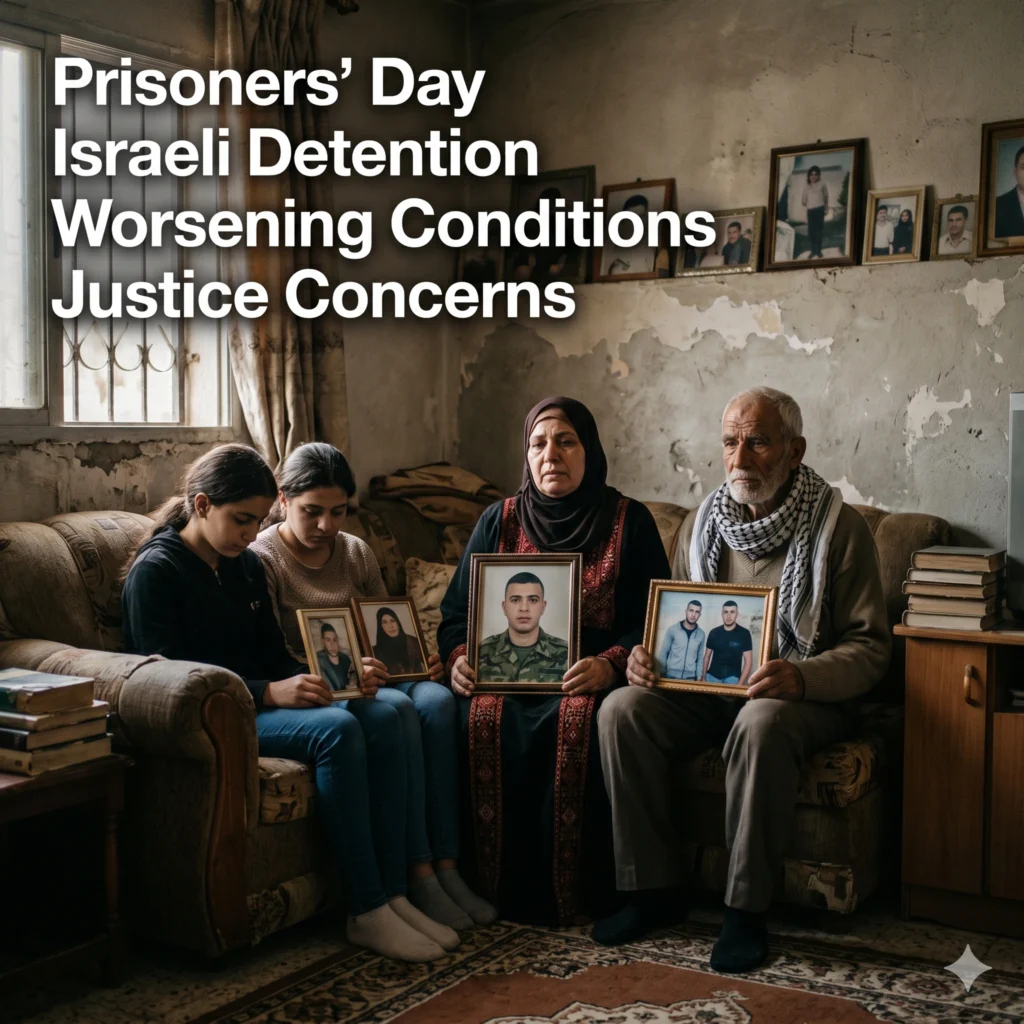
As the international community observes Prisoners’ Day, the focus remains sharply on the legal and humanitarian implications of these mass detentions. Many of these individuals are held without formal charges, creating a legal vacuum that complicates their path to justice. The growing number of reported deaths in custody has further fueled global concern regarding the safety and well-being of the Palestinian population currently behind bars.
Historical Context of the Palestinian Prisoner Crisis
The roots of the current situation are deeply embedded in decades of legal and political friction within the region. For years, the detention system has served as a central point of contention, with thousands of families affected by the arrest of relatives. This ongoing cycle of incarceration has created a multi-generational impact on Palestinian society, where imprisonment is often seen as a common byproduct of the political landscape.
Understanding the historical trajectory is essential for grasping why the current numbers are so alarming to human rights advocates. While detention has always been a factor, the sheer scale of the recent arrests has no modern precedent, stretching the limits of the administrative and judicial systems involved. This historical weight adds a layer of complexity to the modern crisis, making it more than just a temporary spike in statistics.
The evolution of detention policies over the decades shows a consistent reliance on measures that circumvent standard trial procedures. These policies have been refined over time, leading to the current framework where thousands find themselves in a state of legal limbo. This persistent approach has long been criticized by international bodies, yet it remains a core component of the security apparatus used in the region today.
Administrative Detention and Legal Ambiguity
A primary driver of the high numbers in the Palestinian prisoner crisis is the extensive use of administrative detention. This practice allows for the holding of individuals for indefinite periods without the filing of formal charges or the commencement of a trial. It is a tool that has faced intense scrutiny from legal experts who argue it violates the basic right to due process.
Under this system, detainees and their legal counsel are often denied access to the evidence used against them, cited as classified security information. This lack of transparency makes it nearly impossible for individuals to mount an effective legal defense or challenge the validity of their incarceration. The psychological toll of not knowing when, or if, one will be released is a significant factor in the worsening mental health of the prisoner population.
Human rights organizations have repeatedly called for an end to this practice, suggesting that it serves as a form of arbitrary punishment rather than a legitimate security measure. The frequency with which administrative orders are renewed suggests a systemic reliance on detention as a first resort. Consequently, the legal ambiguity surrounding these cases continues to be a major hurdle for international human rights advocacy groups.
Reporting on Deteriorating Prison Conditions
Reports emerging from within the facilities suggest that the Palestinian prisoner crisis is being exacerbated by a sharp decline in living conditions. Detainees have reported severe overcrowding, where cells designed for a few individuals are now housing double or triple their intended capacity. This lack of space contributes to heightened tension and a breakdown in basic hygiene and sanitation standards.
In addition to the physical space constraints, there are growing complaints regarding the quality and quantity of food provided to the incarcerated population. Many advocacy groups have documented instances of medical neglect, where prisoners with chronic conditions or acute injuries are denied timely access to professional healthcare. This systemic failure to provide basic necessities is viewed by many as a direct violation of international standards for the treatment of prisoners.
- Inadequate access to clean drinking water and basic hygiene supplies for thousands of detainees.
- Severe restrictions on family visits, leaving many prisoners isolated from their support networks.
- Reports of limited access to outdoor exercise or sunlight for extended periods of time.
- A notable decrease in the availability of educational or recreational materials within the prison wings.
The Human Rights Implications of Rising Deaths
The most alarming aspect of the Palestinian prisoner crisis is the reported increase in fatalities occurring within the detention centers. Each death in custody raises serious questions about the level of care and supervision provided by the authorities. Independent investigations are frequently called for, but access to these facilities for neutral third-party observers remains strictly limited.
Families often receive news of a loved one’s passing with little to no explanation regarding the specific circumstances of the death. This lack of accountability creates a climate of fear and distrust, as the community feels that their relatives are not being protected while in state custody. The rising death toll has become a rallying point for activists seeking to bring the situation to the forefront of the global human rights agenda.
Legal experts warn that without a significant shift in policy, the number of casualties will likely continue to climb. The combination of medical neglect, psychological stress, and physical hardship creates a lethal environment for those with underlying health vulnerabilities. Addressing these fatalities requires a transparent and honest assessment of the internal practices governing the treatment of all detainees regardless of their legal status.
Impact of the New Death Penalty Legislation
The introduction of new legislation regarding the death penalty has added a volatile new element to the Palestinian prisoner crisis. This legal shift is seen by many as a move that will further escalate tensions and potentially lead to irreversible consequences for those convicted of certain offenses. Critics argue that such a law is inconsistent with modern human rights trends and will only serve to deepen the divide.
Observers are concerned that the application of the death penalty could be influenced by the same lack of due process seen in administrative detention cases. If the legal standard for conviction is perceived as being lowered, the risk of judicial errors increases exponentially. This development has drawn sharp rebukes from international legal bodies and diplomatic missions who advocate for the abolition of capital punishment.
The potential for this law to be used as a deterrent is also a subject of intense debate among security analysts. While some proponents argue it is a necessary measure, opponents believe it will only radicalize the population further and lead to more violence. The legislative change represents a significant hardening of the judicial stance, making the resolution of the prisoner issue even more difficult to achieve.
Palestinian Prisoner Crisis
The central focus of international monitoring remains the Palestinian prisoner crisis and its impact on regional stability. This crisis is not merely a logistical challenge of housing 9,600 people, but a profound humanitarian issue that touches every aspect of the local community. The sheer volume of people affected means that almost every Palestinian family has some connection to the prison system.
Efforts to mitigate the crisis have so far been met with significant political hurdles, as the security narrative often overrides humanitarian concerns. However, the persistence of advocacy groups ensures that the stories of the detainees are not forgotten by the world at large. The documented worsening of conditions serves as a call to action for those who believe in the universal application of human rights and the rule of law.
Maintaining a spotlight on the Palestinian prisoner crisis is essential for pressuring authorities to adhere to international conventions. Without external oversight and constant reporting, the conditions inside the prisons could continue to deteriorate without consequence. The goal for many is to see a return to legal frameworks that prioritize human dignity and the right to a fair and transparent trial for all individuals held in custody.
Challenges Faced by Families of Detainees
The ripple effects of the Palestinian prisoner crisis extend far beyond the prison walls, deeply impacting the families left behind. Mothers, fathers, and children often spend months without receiving a single update on the health or location of their incarcerated relatives. This forced silence acts as a form of collective punishment, causing immense emotional and psychological distress to the community.
Financial stability is also a major concern, as many of those detained were the primary breadwinners for their households. The loss of income, combined with the legal fees associated with challenging detentions, has pushed many families toward poverty. Support networks within the community are stretched thin as they try to provide for the thousands of households affected by the mass arrests.
- Families often wait for hours at checkpoints only to be denied the right to visit their relatives.
- Communication via mail or telephone is frequently intercepted or outright banned by prison authorities.
- Legal representatives face significant barriers when trying to meet with their clients to prepare for hearings.
- The social stigma and trauma associated with imprisonment create long-term mental health challenges for children.
International Legal Standards and Criticism
Global bodies have been vocal in their assessment that the Palestinian prisoner crisis involves several breaches of international law. The Geneva Conventions provide specific protections for individuals in occupied territories, including the right to fair trials and humane treatment. Critics argue that the current detention practices frequently fall short of these mandatory global standards.
The United Nations and various human rights commissions have published reports detailing the systemic issues within the Israeli prison system. These documents highlight the use of isolation, the lack of adequate nutrition, and the detention of minors as areas of particular concern. Such criticisms are intended to hold the state accountable and encourage reforms that align with international expectations.
Despite these formal criticisms, the implementation of changes on the ground has been slow and often met with resistance. The tension between national security claims and international legal obligations remains the primary obstacle to improving the situation. As long as these two perspectives are at odds, the detainees will continue to bear the brunt of the legal friction.
Medical Neglect as a Tool of Control
Advocacy groups focusing on the Palestinian prisoner crisis have highlighted medical neglect as one of the most pressing issues. There are numerous accounts of prisoners being denied basic medications for conditions like diabetes, hypertension, or heart disease. In many cases, the only treatment offered is basic painkillers, regardless of the severity of the ailment reported by the detainant.
This lack of care is often perceived not just as a failure of the system, but as a deliberate tool used to exert control over the prisoner population. By withholding necessary medical interventions, authorities can break the spirit and health of those who are most vocal or active. This practice has led to several high-profile cases where prisoners have succumbed to illnesses that were entirely treatable.
The situation is further complicated by the refusal to allow independent medical professionals to enter the prisons and conduct examinations. Without an objective assessment of the health of the 9,600 prisoners, the true extent of the medical crisis remains unknown. Improving healthcare access is a top priority for humanitarian organizations working to prevent more deaths in custody.
Future Outlook for the Detention System
The trajectory of the Palestinian prisoner crisis remains uncertain as political tensions in the region continue to fluctuate. If the current rate of arrests continues, the prison system will face an even greater capacity crisis, potentially leading to further civil unrest. The international community is watching closely to see if any diplomatic efforts will lead to a reduction in the number of administrative detainees.
Some experts suggest that a major policy overhaul is needed to de-escalate the situation and restore some level of faith in the legal process. This would involve a significant reduction in the use of administrative detention and a commitment to providing transparent trials for all accused individuals. However, such changes require a level of political will that has been absent in recent years.
- Potential for increased international sanctions or diplomatic pressure on detention policies.
- The role of non-governmental organizations in documenting and publicizing prison abuses.
- Possibility of prisoner exchange negotiations as a means to reduce the total number of detainees.
- Long-term social rehabilitation needs for thousands of individuals once they are eventually released.
The Role of International Advocacy
The persistence of the Palestinian prisoner crisis has galvanized a global network of activists and legal professionals. These groups work tirelessly to bring the stories of individual prisoners to the world stage, ensuring that they are seen as human beings rather than just statistics. Their work is vital in documenting the worsening conditions and providing a voice for those who have been silenced by incarceration.
Social media and digital journalism have played a significant role in bypassing traditional media gatekeepers to share real-time updates on the situation. This immediate flow of information makes it harder for abuses to go unnoticed by the global public. Advocacy is not just about highlighting the negative; it is also about proposing concrete legal solutions and policy shifts to resolve the crisis.
Ultimately, the resolution of the Palestinian prisoner crisis will depend on a combination of local legal reform and sustained international pressure. The 9,600 individuals currently held are part of a larger narrative of struggle and survival that continues to define the region. As the world watches, the demand for justice, transparency, and humane treatment grows louder every day.
Summary of the Current State of Affairs
As we reflect on the current state of the Palestinian prisoner crisis, it is clear that the situation is more precarious than ever. The combination of record-high detention numbers, deteriorating physical conditions, and new, harsher legislation creates a perfect storm of humanitarian concern. The 9,600 people in custody represent a cross-section of a society that is under immense strain.
The international community’s focus on Prisoners’ Day serves as a reminder that the world is aware of these conditions. However, awareness must be followed by action if there is to be any meaningful change in the lives of the detainees. The reports of deaths in custody and medical neglect cannot be ignored if a lasting peace or even basic stability is to be achieved in the region.
Every day that the Palestinian prisoner crisis continues without reform is a day that the legal and moral standing of the detention system is further eroded. The path forward requires an honest confrontation with the facts of the situation and a commitment to the fundamental rights of every individual, regardless of the political context. The eyes of history are on the systems that manage these 9,600 lives.
Conclusion and Call for Transparency
The conclusion of any analysis of the Palestinian prisoner crisis must emphasize the urgent need for transparency and independent oversight. Without the ability for international observers to verify the conditions inside Israeli prisons, the cycle of abuse and neglect is likely to persist. The families of the 9,600 detainees deserve to know that their loved ones are being treated according to the law.
Ending the reliance on administrative detention and ensuring that every individual has access to a fair trial is the only way to resolve the legal crisis. While security concerns are often cited as the justification for these measures, they cannot be used to permanently suspend the human rights of an entire population. The global community must remain steadfast in its demand for a more just and humane approach to incarceration.
In the final analysis, the Palestinian prisoner crisis is a barometer for the health of human rights in the modern era. How these 9,600 individuals are treated will be a lasting testament to the values of the institutions involved. As reports continue to surface of worsening conditions, the urgency for a comprehensive and compassionate resolution becomes more apparent to everyone involved in the monitoring of this ongoing situation.
For more details & sources visit: Al Jazeera
Read more about Palestine news on 360 News Orbit – Palestine.