
Algeria Economic Growth 2026 is currently reshaping the financial landscape of the African continent as new data suggests a massive surge in productivity. The International Monetary Fund has recently released updated projections indicating that the nation is on track to secure its position among the top four largest economies in Africa. This development highlights a period of intense industrial diversification and fiscal resilience that has caught the attention of global investors. By focusing on internal production and stabilizing local markets, the government has successfully shielded the nation from various global shocks.
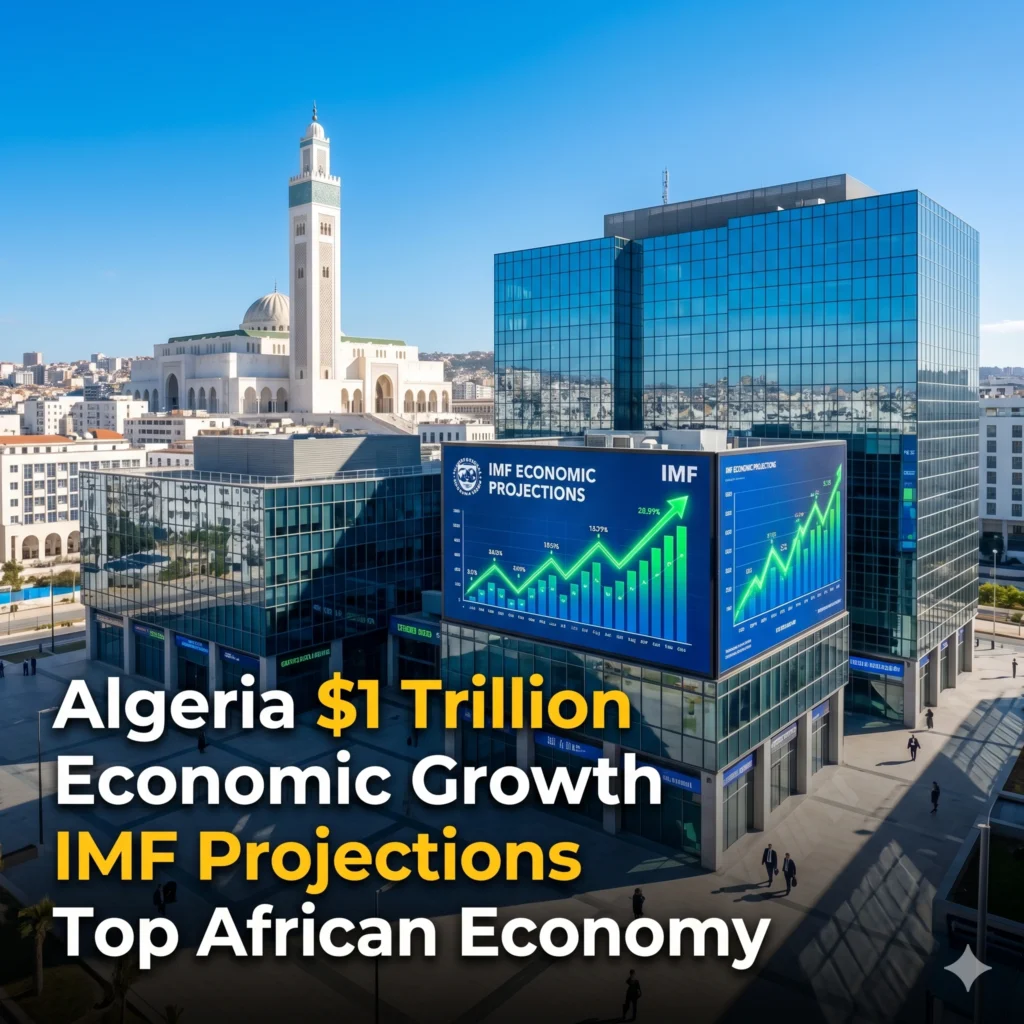
The recent IMF report emphasizes that Algeria Economic Growth 2026 will likely reach a valuation of $915 billion when measured by purchasing power parity. This specific metric is vital because it accounts for the actual buying power of the local currency rather than just nominal exchange rates. Consequently, the standard of living for the average citizen is projected to improve significantly as the cost of essential goods remains relatively stable. Experts believe that this trend will continue well into the end of the decade as infrastructure projects begin to yield tangible results.
The Rising Trajectory of Algeria Economic Growth 2026
The structural reforms implemented over the last five years have served as the primary engine behind the Algeria Economic Growth 2026 phenomenon. These reforms were designed to reduce the historical dependence on crude oil exports by incentivizing private entrepreneurship and foreign direct investment. As a result, the manufacturing sector has seen a double-digit increase in output, contributing to a more balanced and resilient national balance sheet. Investors are increasingly viewing the region as a hub for industrial excellence.
Moreover, the digital transformation occurring within the banking sector has facilitated smoother transactions for international business partners. This modernization is a key component of the Algeria Economic Growth 2026 strategy, allowing for better transparency and faster capital movement. By embracing financial technology, the government has managed to capture a larger share of the informal economy, bringing it into the regulated fold. This transition has provided the state with more data to refine its long-term fiscal policies.
The agricultural sector has also played a crucial role in maintaining the Algeria Economic Growth 2026 momentum by ensuring food security. Large-scale irrigation projects in the southern regions have turned formerly arid lands into productive agricultural hubs. These advancements have not only reduced the import bill but have also created thousands of jobs for the youth population. Such holistic development across multiple sectors ensures that the economic expansion is felt by all levels of society.
Impact of Purchasing Power Parity on National Wealth
When analyzing the Algeria Economic Growth 2026 data, the use of purchasing power parity reveals a much more accurate picture of the nation’s true wealth. Unlike nominal GDP, which can be heavily influenced by currency fluctuations, PPP focuses on the volume of goods and services produced. This approach demonstrates that the Algerian economy is actually much larger and more influential than traditional metrics might suggest. It places the country in a competitive position against other emerging markets.
The IMF’s decision to use PPP for the Algeria Economic Growth 2026 assessment reflects the growing complexity of the global financial system. By adjusting for price differences, the report highlights the efficiency of the local supply chain and the effectiveness of government subsidies on essential items. This stability allows businesses to plan for the long term without the fear of sudden hyperinflation. Stability is a cornerstone of the current administration’s economic philosophy.
Additionally, the PPP figures suggest that the internal market is expanding at a rate that can support large-scale domestic industries. The Algeria Economic Growth 2026 projections indicate that the middle class is growing, which leads to higher consumer spending and a more vibrant retail sector. As domestic demand increases, local companies are finding more opportunities to scale their operations without relying solely on international buyers. This internal strength is a major buffer against global economic volatility.
Algeria Economic Growth 2026
The specific milestone of the Algeria Economic Growth 2026 target is rooted in the successful execution of the National Development Plan. This plan prioritized the completion of major transport corridors, including the Trans-Saharan Highway, which facilitates trade with sub-Saharan neighbors. By improving logistics, the cost of doing business has dropped, making Algerian products more competitive in the regional market. This connectivity is a vital aspect of the nation’s rising GDP.
In the current fiscal year, the Algeria Economic Growth 2026 statistics show a significant rise in the export of minerals and processed chemicals. The mining sector, particularly phosphate and iron ore, has seen renewed interest from international mining conglomerates. These partnerships are structured to ensure that a significant portion of the value remains within the country. This strategy has led to the creation of specialized industrial zones that serve as catalysts for regional development.
- The expansion of the El Hamdania Port project will drastically increase the nation’s maritime shipping capacity.
- New incentives for renewable energy startups are positioning the country as a future green hydrogen exporter.
- Investments in vocational training centers are bridging the skills gap in the modern industrial workforce.
- The deregulation of certain sectors has encouraged a new wave of local small and medium-sized enterprises.
Education and human capital development remain at the heart of the Algeria Economic Growth 2026 success story. By aligning university curricula with the needs of the job market, the government is ensuring that the next generation is ready for high-tech roles. This focus on human capital ensures that the economic gains are not just temporary but are built on a foundation of knowledge. A skilled workforce is the ultimate guarantee of long-term prosperity and innovation.
Strategic Partnerships and International Trade Relations
The Algeria Economic Growth 2026 outlook is further bolstered by a series of new trade agreements with major global players. The nation has recently strengthened its ties with both Eastern and Western economic blocs, ensuring a diversified portfolio of trading partners. This balanced approach to diplomacy allows the country to navigate geopolitical tensions while maintaining steady commercial flows. Diversification of partners is a key pillar of the current foreign policy.
Furthermore, the African Continental Free Trade Area (AfCFTA) provides a massive platform for the Algeria Economic Growth 2026 objectives to be realized. By removing tariffs and barriers to trade within Africa, Algerian manufacturers can now access a market of over one billion people. This integration is expected to drive significant volume in the automotive and pharmaceutical sectors. Local brands are already starting to establish a presence in neighboring capitals.
The role of international organizations like the IMF and World Bank in validating the Algeria Economic Growth 2026 data cannot be overstated. Their positive assessments provide a “seal of approval” that lowers the perceived risk for foreign institutional investors. This influx of capital is being directed toward capital-intensive projects such as desalination plants and high-speed rail networks. These projects are essential for supporting the infrastructure needs of a trillion-dollar economy.
Diversification Beyond the Hydrocarbon Sector
A critical component of the Algeria Economic Growth 2026 success is the deliberate shift away from a mono-export economy. For decades, the nation relied on gas and oil, but today, the non-hydrocarbon sector accounts for an increasing percentage of the total GDP. This transition is being led by the construction and textile industries, which have seen a resurgence in recent years. The government provides tax breaks for companies that focus on export-oriented manufacturing.
The pharmaceutical industry has also emerged as a bright spot in the Algeria Economic Growth 2026 narrative. The country now produces a significant portion of its own medical supplies and is beginning to export vaccines and generic drugs to the wider region. This self-sufficiency has saved the state billions in foreign exchange and has fostered a domestic ecosystem of research and development. Innovation in health sciences is now a national priority.
- The tourism sector is being revitalized with new luxury developments along the Mediterranean coastline.
- Agricultural exports to Europe have increased due to the high quality and organic nature of the produce.
- The telecommunications infrastructure has been upgraded to support the growing digital economy.
Environmental sustainability is also integrated into the Algeria Economic Growth 2026 framework. The “Green Dam” project, aimed at combating desertification, is not only an ecological necessity but also a source of employment. By protecting arable land, the country is securing its future agricultural output and protecting the livelihoods of millions of rural citizens. This commitment to the environment is attracting “green” investment from around the world.
Future Projections and the Path to One Trillion Dollars
Looking beyond the Algeria Economic Growth 2026 timeline, the projections for 2029 suggest that the economy will exceed the $1 trillion threshold. This milestone would place the nation in an elite group of global economies, further increasing its influence in international forums. The path to this goal involves continued fiscal discipline and the further opening of the economy to private competition. Analysts remain optimistic about the long-term potential of the region.
The government’s focus on technological sovereignty is another factor that will drive post-2026 prosperity. By investing in local data centers and software development hubs, the nation is reducing its reliance on foreign technology providers. This digital independence is crucial for national security and for fostering a culture of local innovation. The Algeria Economic Growth 2026 figures are just the beginning of a much larger transformation.
Finally, the social impact of the Algeria Economic Growth 2026 cannot be ignored, as it has led to a significant reduction in poverty levels. Increased tax revenues are being reinvested into the public healthcare system and social housing projects. This ensures that the benefits of macroeconomic success are distributed fairly among the population. A stable and prosperous society is the best defense against regional instability and the surest way to guarantee continued growth.
For more details & sources visit: AL24 News
Read more about Algeria news on 360 News Orbit – Algeria.