
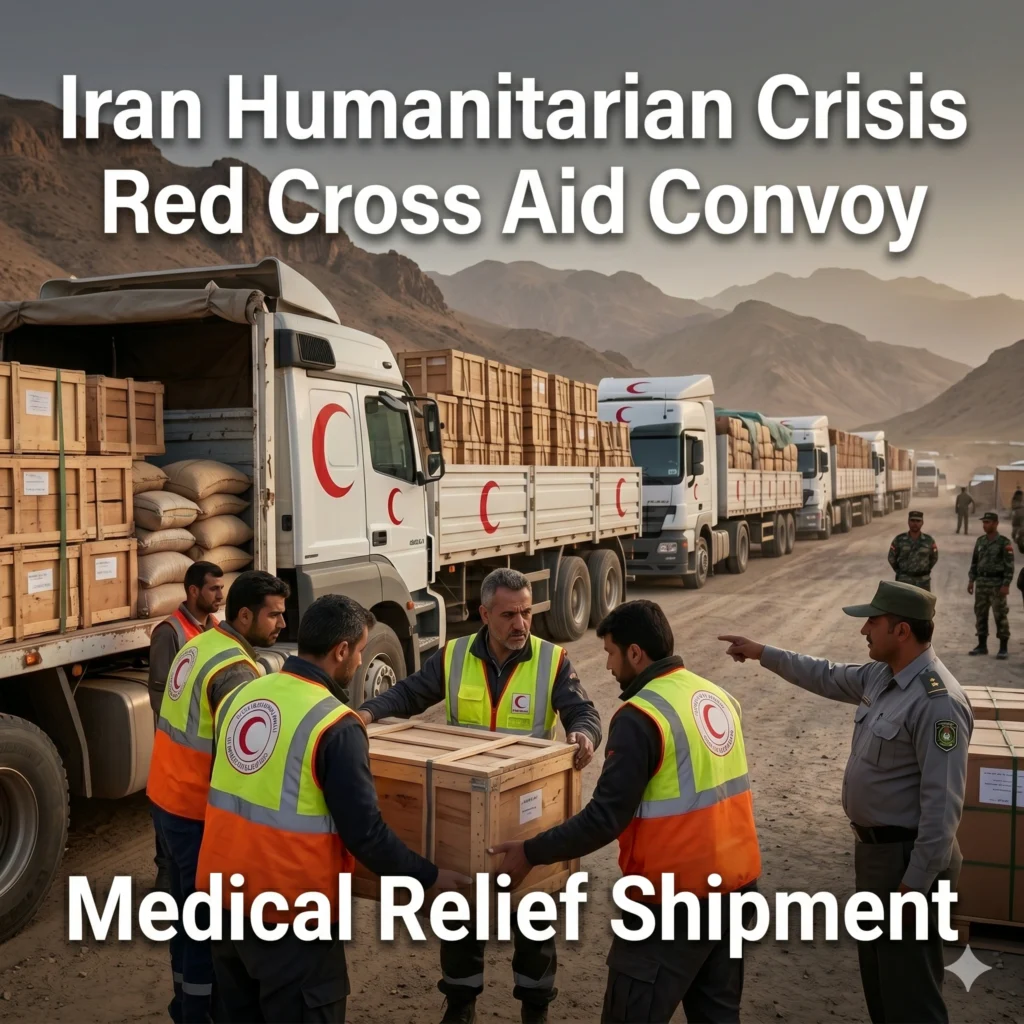
International aid organizations are currently scrambling to scale up humanitarian relief shipments into Iran as the regional conflict reaches a devastating six-week milestone. The International Federation of Red Cross and Red Crescent Societies (IFRC) successfully facilitated a major convoy through Turkiye this past Sunday. This mission represents a critical turning point in addressing the massive supply chain disruptions that have plagued the region since the outbreak of hostilities.
The situation on the ground remains dire, with infrastructure damage making traditional logistics nearly impossible for many NGOs. By utilizing the Ankara-to-Tehran corridor, the IFRC has demonstrated that despite the geopolitical tension, humanitarian corridors can still be established. These efforts are vital for the survival of millions of civilians caught in the crossfire of the ongoing military operations.
Furthermore, the coordination between the Turkish government and international relief agencies has been instrumental in this breakthrough. The safe passage of these trucks offers a glimmer of hope for a population currently facing acute shortages of food and water. As the scale of the displacement grows, the frequency of these humanitarian relief shipments into Iran must increase to match the rising demand.
Escalating Crisis and Displacement Statistics
The human cost of the conflict has reached staggering proportions, necessitating a rapid increase in humanitarian relief shipments into Iran. Latest reports from the Iranian authorities indicate that over three thousand lives have been lost since the start of the United States-Israeli conflict. These fatalities include a significant number of non-combatants, further emphasizing the need for immediate medical intervention.
Internal displacement has become a defining characteristic of this crisis, with approximately 3.2 million people forced to flee their homes. These displaced families are often living in makeshift camps or overcrowded public buildings with limited access to basic sanitation. Without a steady flow of humanitarian relief shipments into Iran, the risk of disease outbreaks within these populations remains dangerously high.
The IFRC and other global partners are prioritizing the delivery of shelter materials and hygiene kits to these displaced communities. Every successful convoy helps to stabilize the living conditions of thousands who have lost everything in the violence. Continued international support is the only way to manage the sheer volume of the current displacement crisis.
Essential Medical Supplies and Trauma Care
A primary component of the recent humanitarian relief shipments into Iran was the delivery of specialized medical equipment. The IFRC shipment included two hundred trauma kits, which are specifically designed to treat severe injuries in active war zones. These kits are being distributed to hospitals that have been overwhelmed by the sudden influx of wounded civilians.
Doctors in major urban centers have reported a critical shortage of basic surgical supplies, including anesthetics and sterile bandages. The arrival of these international shipments provides a temporary reprieve for medical staff working under extreme pressure. Maintaining the medical integrity of the region’s healthcare system is a top priority for all aid groups involved.
In addition to trauma care, the humanitarian relief shipments into Iran also carry medications for chronic illnesses like diabetes and heart disease. Many patients have been unable to refill their prescriptions due to the closure of pharmacies and the destruction of local distribution networks. Ensuring the continuity of care for these vulnerable individuals is a secondary, yet equally vital, mission.
Humanitarian relief shipments into Iran
The logistics of organizing humanitarian relief shipments into Iran are currently among the most complex in the world. Spokesman Tommaso Della Longa noted that the recent convoy from Ankara was one of the first successful large-scale operations since the war’s inception. Navigating active combat zones requires constant communication with all warring parties to ensure the safety of aid workers.
The high cost of fuel and the risk of vehicle seizure have deterred many private transport companies from participating in the relief effort. This has placed the burden of transport directly on international organizations and their specialized logistics teams. Every successful entry of humanitarian relief shipments into Iran serves as a blueprint for future missions.
To increase the volume of aid, organizations are calling for the formalization of permanent “green corridors” that are exempt from military targeting. Such an agreement would allow for a more predictable and efficient flow of life-saving goods. Until such corridors are established, humanitarian relief shipments into Iran will remain a high-risk, high-reward endeavor.
Shelter and Winterization Efforts
With millions of people displaced, providing adequate shelter has become a race against time and the elements. The recent humanitarian relief shipments into Iran included thousands of specialized tents and heavy-duty blankets. These items are crucial for families sleeping in open areas or unheated structures as the conflict persists.
The IFRC has highlighted that the psychological comfort of having a private, secure space cannot be underestimated for traumatized children. Beyond just physical protection, these shelter materials offer a sense of dignity to those who have been uprooted by war. Each tent represents a temporary home for a family struggling to survive the chaos.
- Distribution of 5,000 all-weather tents to the most affected provinces.
- Delivery of thermal blankets to protect against fluctuating nighttime temperatures.
- Provision of portable cooking stoves for displaced families in camp settings.
These winterization efforts are being integrated into the broader strategy for humanitarian relief shipments into Iran. As the conflict moves into its second month, the focus is shifting from immediate survival to maintaining some semblance of daily life. The international community’s response must remain flexible to meet these evolving needs.
Impact of Conflict on Local Supply Chains
The ongoing war has effectively paralyzed the domestic economy, making humanitarian relief shipments into Iran the only reliable source of food and medicine. Local markets in many cities have been shuttered due to supply chain breaks and the physical destruction of retail infrastructure. This has created a total dependency on international aid for a large segment of the population.
Even in areas not directly hit by strikes, the economic shock of the conflict has caused prices to skyrocket. Basic staples like flour and oil are now beyond the reach of the average family, leading to widespread food insecurity. The humanitarian relief shipments into Iran are attempting to fill this gap by providing bulk food rations to local community centers.
Restoring the local supply chain will likely take years of reconstruction and investment. In the interim, the global community must commit to a sustained aid program that goes beyond emergency interventions. The long-term stability of the region depends on the consistent arrival of these essential humanitarian relief shipments into Iran.
Negotiating Safer Aid Corridors
The success of future humanitarian relief shipments into Iran depends entirely on the outcome of ongoing diplomatic negotiations. Aid groups are currently in talks with military leaders to secure guarantees of safe passage for neutral convoys. These negotiations are delicate and often subject to the shifting dynamics of the battlefield.
The IFRC and the Red Crescent are utilizing their status as neutral actors to bridge the gap between conflicting parties. Their presence on the ground serves as a silent witness to the humanitarian needs of the civilian population. Securing these corridors is not just a logistical necessity but a moral imperative under international humanitarian law.
- Daily coordination meetings between IFRC and local military commanders.
- Implementation of GPS tracking for all aid vehicles entering the country.
- Establishment of clearly marked “No-Fire” zones around distribution centers.
If these negotiations fail, the cost of delivering humanitarian relief shipments into Iran will become prohibitively expensive. The international community is urging all parties to respect the sanctity of aid operations. Protecting the lives of those delivering the aid is just as important as protecting the lives of those receiving it.
The Role of Turkiye as a Logistics Hub
Turkiye has emerged as the primary staging ground for humanitarian relief shipments into Iran due to its strategic location. The city of Ankara serves as the central coordination point where international supplies are gathered and prepared for transport. This partnership has been essential for the rapid deployment of resources during the early stages of the crisis.
The Turkish Red Crescent has worked tirelessly to facilitate the movement of goods across the border. Their local knowledge and logistical expertise have allowed the IFRC to navigate the complex border protocols with relative ease. Without this cooperation, the volume of humanitarian relief shipments into Iran would be significantly lower.
Moreover, the border crossings between the two nations have become lifelines for the Iranian people. While commercial trade has slowed to a crawl, the movement of aid trucks remains a constant presence. The role of Turkiye as a humanitarian gateway is likely to expand as the conflict continues and more aid is pledged.
Challenges of Medical Distribution in War Zones
Once the humanitarian relief shipments into Iran cross the border, the challenge of internal distribution begins. Moving supplies from the border to urban centers like Tehran or Isfahan requires navigating damaged roads and numerous military checkpoints. Each delay increases the risk that perishable medicines will lose their effectiveness.
Local volunteers from the Iranian Red Crescent are often the ones who take the final risks to deliver the kits to hospitals. These brave individuals operate in environments where the threat of aerial bombardment is a constant reality. Their dedication ensures that the contents of the humanitarian relief shipments into Iran actually reach those in need.
The IFRC is also working to establish satellite clinics in remote areas to provide basic care to those who cannot reach a major hospital. These mobile units are stocked with supplies from the international convoys, extending the reach of the aid. This decentralized approach is the most effective way to manage a crisis of this magnitude.
Global Response and Funding Requirements
The international community has begun to pledge significant funds to support the ongoing humanitarian relief shipments into Iran. However, the scale of the need is consistently outpacing the available resources. Aid organizations are calling for a massive increase in donations to sustain the relief effort throughout the coming year.
A coordinated global response is necessary to ensure that aid is not only delivered but also effectively managed. This includes avoiding the duplication of efforts and ensuring that the most critical needs are prioritized. The humanitarian relief shipments into Iran are just one part of a larger multi-national effort to stabilize the region.
- Pledges of financial support from the European Union and UN agencies.
- Technical assistance from global logistics firms to optimize aid routes.
- Public awareness campaigns to highlight the plight of Iranian civilians.
As the conflict lingers, the risk of “donor fatigue” becomes a real concern for aid groups. It is essential to keep the humanitarian crisis in the global spotlight to ensure a steady flow of support. The humanitarian relief shipments into Iran must remain a top priority for global policymakers and the public alike.
Future Projections for the Humanitarian Crisis
If the conflict does not reach a peaceful resolution soon, the humanitarian situation is projected to worsen significantly. Aid groups are already planning for a scenario where the number of displaced persons doubles by the end of the year. This would require an unprecedented surge in the number of humanitarian relief shipments into Iran.
The long-term health impacts of the war, including malnutrition and chronic stress, will require years of specialized care. International organizations are already looking for ways to integrate mental health support into their future relief packages. The goal is to provide a holistic response that addresses both the physical and emotional scars of the conflict.
The IFRC remains committed to staying in the region for as long as it takes to stabilize the situation. Their presence provides a sense of continuity in a world that has been turned upside down for millions of people. The ongoing humanitarian relief shipments into Iran are a testament to the resilience of the human spirit in the face of adversity.
Cybersecurity and Information Integrity
In the modern era of conflict, protecting the digital infrastructure of aid organizations is as important as protecting their physical convoys. The IFRC must ensure that the data of its staff and the people it serves remains secure. Cyberattacks can disrupt the scheduling of humanitarian relief shipments into Iran, leading to life-threatening delays.
Information integrity is also a major concern, as misinformation can lead to panic or the targeting of aid workers. Organizations are working to provide clear, transparent updates about their operations to the local population. This builds trust and ensures that people know where and when they can access the help provided by the humanitarian relief shipments into Iran.
- Implementation of secure communication channels for field teams.
- Regular monitoring of social media for harmful rumors about aid distribution.
- Training for staff on how to identify and mitigate digital threats in war zones.
By securing their digital and physical operations, aid groups can maximize the impact of every dollar spent. This comprehensive approach to security is now a standard part of the logistics behind humanitarian relief shipments into Iran. It reflects the complex reality of providing aid in the 21st century.
Environmental Considerations in Relief Work
Even in the midst of a war, international aid groups are trying to minimize the environmental footprint of their operations. The humanitarian relief shipments into Iran are increasingly utilizing recyclable materials for packaging and shelter. This is a small but important step toward ensuring that the relief effort does not contribute to long-term ecological damage.
Solar-powered equipment is also being introduced for use in displaced persons’ camps. These tools provide light and energy without the need for fossil fuels, which are both scarce and polluting. Integrating sustainable technology into the humanitarian relief shipments into Iran is part of a broader trend toward “green” aid.
This focus on the environment also helps to protect the health of the local population. By reducing waste and pollution in camp settings, aid groups can prevent secondary health crises like respiratory infections. It is a holistic approach that recognizes the interconnectedness of human health and the environment.
Strengthening Local Partnerships
The long-term success of the humanitarian relief shipments into Iran depends on the strength of local partnerships. The IFRC works hand-in-hand with the Iranian Red Crescent to ensure that aid is culturally appropriate and reaches the right people. This local-led approach is the most effective way to build resilience within the community.
Training programs for local volunteers are a key part of the international mission. By equipping Iranians with the skills to manage emergency response, the IFRC is helping to prepare the country for future challenges. The humanitarian relief shipments into Iran provide the tools, but it is the local people who do the hard work of rebuilding.
- Joint training exercises on trauma care and disaster management.
- Collaborative planning for the distribution of bulk food and water.
- Sharing of best practices for the management of large displaced populations.
These partnerships create a sense of solidarity that transcends national borders. They remind us that even in the darkest times, people are willing to work together for the common good. The humanitarian relief shipments into Iran are a physical manifestation of this global partnership.
Final Summary of Relief Progress
As we look back at the first six weeks of the conflict, the progress made in delivering aid is significant but insufficient. The arrival of the recent IFRC convoy is a major victory, but it is only the beginning. The world must not look away as the need for humanitarian relief shipments into Iran continues to grow.
Every trauma kit, every blanket, and every tent delivered is a life saved or a family protected. The dedication of the aid workers on the ground is an inspiration to us all. They continue to brave the dangers of war to ensure that the cross-border flow of aid does not stop.
For more details & sources visit: Al Jazeera
Read more on Iran news: 360 News Orbit – Iran.