
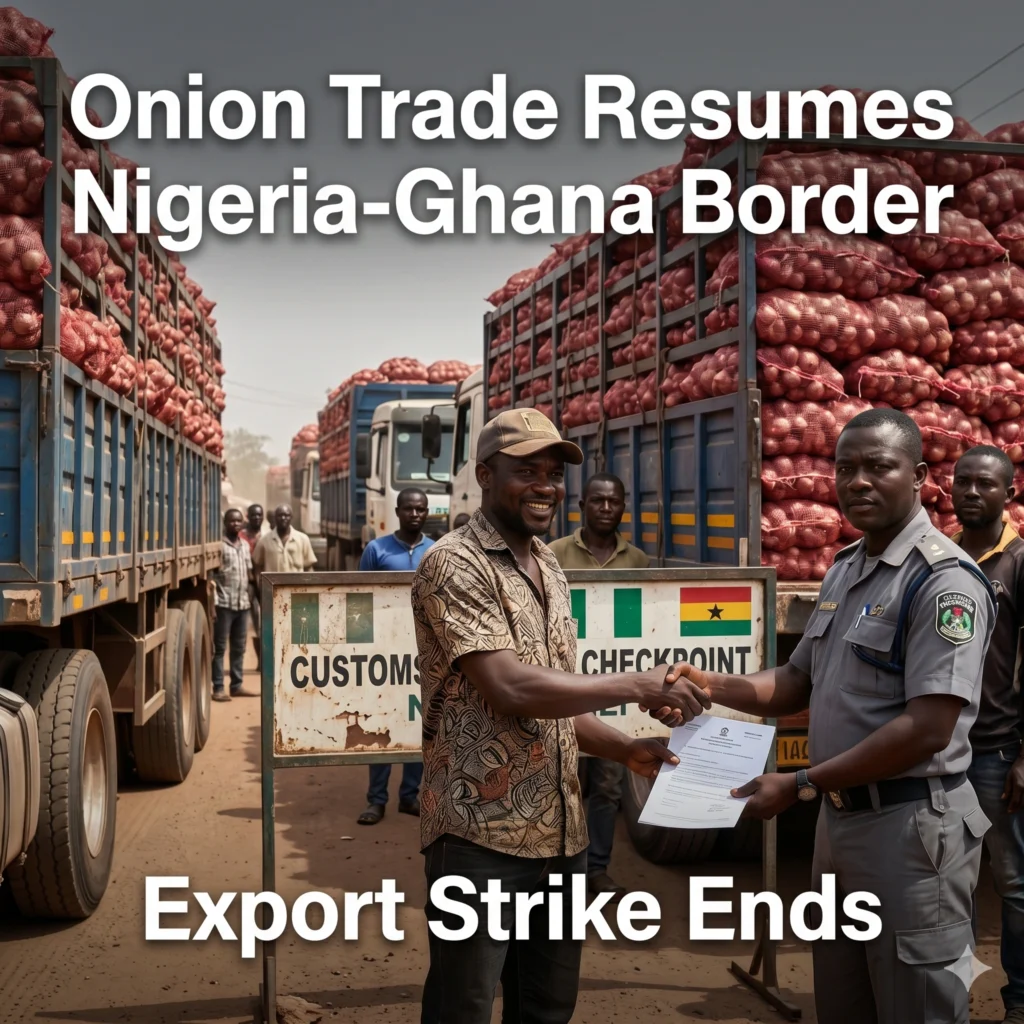
Nigerian onion exporters have officially resumed trade operations with Ghana after ending a five-day strike triggered by harassment and truck seizures. The resolution followed high-level diplomatic engagement between Nigeria’s High Commissioner and Ghana’s Minister of Trade to restore regional agricultural supply chains. Cross-border onion trade between Nigeria and Ghana has officially restarted following the suspension of a five-day strike by Nigerian exporters. Aliyu Maitasamu Isah, President of the National Onion Producers, Processors and Marketers Association of Nigeria, confirmed the resumption of normal operations.
The strike ended after successful diplomatic negotiations involving Nigeria’s High Commissioner to Ghana and the Ghanaian Minister of Trade. Traders have now returned to their activities across the primary Ghana corridor and other essential regional export routes. The dispute originally began when Nigerian traders reported facing harassment and intimidation from local groups at the Kotoku Market in Accra. Several trucks belonging to Nigerian exporters were previously seized and detained during the period of heightened tension between the groups. Authorities in Ghana have reportedly taken legal action by arresting individuals linked to a shooting incident at the market.
Diplomatic Success Boosts Trade
The swift resolution of the recent strike highlights the power of diplomatic engagement between neighboring African nations. When the cross-border onion trade was initially halted, many feared a long-term disruption of food security in the region. Fortunately, the intervention of high-ranking officials ensured that the economic interests of both Nigeria and Ghana remained protected.
Recent reports suggest that the Nigerian High Commission played a pivotal role in these discussions. By engaging directly with the Ghanaian Ministry of Trade, they managed to address the root causes of the exporter’s frustrations. This collaborative effort serves as a model for resolving future commercial disputes within the ECOWAS framework.
Furthermore, the resumption of activities is expected to stabilize market prices in Accra and other major Ghanaian cities. Consumers had been braced for a sharp increase in the cost of vegetables due to the supply vacuum. Now, the arrival of new shipments promises to alleviate the immediate pressure on local food markets.
Cross-border onion trade
The central focus of the recent negotiations was the restoration of the cross-border onion trade to its full capacity. Stakeholders from the National Onion Producers, Processors and Marketers Association of Nigeria expressed relief at the outcome. They emphasized that their primary goal was always the safety and fair treatment of their members.
During the five-day hiatus, the absence of Nigerian onions was felt acutely across various supply chains. This specific trade route is considered a cornerstone of the agricultural economy in West Africa. Therefore, the return of trucks to the highways signifies more than just a business restart; it represents regional stability.
To ensure the longevity of this peace, both governments have committed to regular monitoring of trade corridors. This includes implementing better security measures at major offloading points like the Kotoku Market. Such steps are essential to prevent a recurrence of the harassment that triggered the strike.
Resolving Market Harassment Issues
One of the primary triggers for the recent strike was the reported intimidation of Nigerian traders in Accra. Specifically, incidents at the Kotoku Market had reached a boiling point, leading to the temporary seizure of several trucks. These actions were viewed as a direct threat to the integrity of the cross-border onion trade.
Ghanaian authorities responded by arresting the individuals allegedly responsible for the disruptions. This firm stance against illegal harassment has been welcomed by the international trading community. It demonstrates a clear commitment to upholding the rule of law within the commercial sector.
In addition to arrests, the Ghanaian government has promised to enhance the security presence at key trading hubs. This move is designed to provide a safe environment for all ECOWAS traders, regardless of their country of origin. Creating such a secure atmosphere is vital for the continued growth of regional commerce.
Impact on Regional Food Security
The importance of the cross-border onion trade extends far beyond the profits of individual exporters and importers. Onions are a fundamental ingredient in West African cuisine, making them a critical component of daily nutrition. Any disruption in their supply can lead to significant social and economic anxiety for the population.
By ending the strike, exporters have effectively neutralized a looming food security crisis. The consistent movement of agricultural goods ensures that rural farmers in Nigeria have access to larger markets. Simultaneously, it provides Ghanaian consumers with affordable access to high-quality produce.
Strategic food reserves often rely on the steady influx of goods from neighboring countries to maintain balance. This interdependence fosters a sense of shared responsibility among West African nations. The successful resolution of this strike reinforces the idea that economic cooperation is the best path forward for the region.
Future Logistics and Trade Agreements
While the immediate crisis has passed, discussions are ongoing to refine the logistical framework of the cross-border onion trade. Both nations recognize that the current system needs modernization to handle increasing volumes. Improving road infrastructure and streamlining customs procedures are high on the agenda for future talks.
- Streamlining border documentation to reduce transit times.
- Implementing digital tracking systems for agricultural shipments.
- Establishing a joint committee to handle trade disputes in real-time.
- Standardizing weight and quality regulations across the ECOWAS region.
These proposed changes aim to make the supply chain more resilient against future shocks. By investing in better infrastructure, Nigeria and Ghana can reduce the overhead costs for small-scale exporters. Ultimately, these efficiencies will benefit the end consumer through lower prices and fresher products.
Moreover, the role of trade associations will be strengthened in the coming months. These organizations provide a vital link between the government and the individual traders on the ground. Empowering them will ensure that the voices of those in the cross-border onion trade are always heard.
Economic Benefits for Nigerian Producers
For Nigerian onion farmers, the resumption of the cross-border onion trade is a major financial relief. The export market provides a much-needed outlet for the massive harvests produced in northern Nigeria. Without this channel, local markets would be flooded, leading to a collapse in prices and farmer income.
The revenue generated from these exports supports thousands of households across the Nigerian agricultural belt. This income is often reinvested into better seeds, fertilizers, and irrigation technologies. Consequently, the trade route acts as a catalyst for agricultural innovation and rural development.
Furthermore, the foreign exchange earned through these transactions contributes to the national economy. As Nigeria seeks to diversify its export base away from oil, the agricultural sector becomes increasingly important. Sustaining the cross-border onion trade is therefore a strategic priority for national economic planners.
Ghanaian Market Dynamics and Consumer Relief
In Ghana, the return of Nigerian onions has been greeted with enthusiasm by wholesalers and retailers alike. The market had begun to show signs of strain during the five-day strike, with stocks dwindling rapidly. The cross-border onion trade is the primary source of supply for many of Ghana’s largest vegetable markets.
Local vendors often prefer Nigerian onions for their quality and shelf life, which makes them a staple product. When the supply was cut off, many small businesses faced the prospect of empty stalls and lost revenue. The resolution of the strike ensures that these micro-enterprises can continue to operate profitably.
- Improved availability of diverse onion varieties for local chefs.
- Stability in wholesale pricing for bulk buyers in Accra and Kumasi.
- Reduction in the reliance on more expensive imports from outside the continent.
The psychological impact of seeing the trucks return should also not be underestimated. It restores confidence among investors and traders who rely on the predictability of regional trade. Maintaining the cross-border onion trade is essential for maintaining the vibrant commercial spirit of Ghana’s marketplaces.
Legal Actions and Accountability
The arrest of the mastermind behind the market disruptions marks a significant turning point in this dispute. It sends a clear message that illegal interference in the cross-border onion trade will not be tolerated. Accountability is a cornerstone of any successful international trading partnership.
Ghanaian law enforcement worked closely with market leaders to identify the perpetrators of the violence. By taking decisive action, they have restored a sense of order and safety for all participants. This proactive approach has been instrumental in convincing the Nigerian exporters to call off their strike.
Legal proceedings are expected to continue as the authorities build a comprehensive case against the disruptors. This process is being closely watched by trade observers across West Africa. The outcome will likely set a precedent for how similar incidents are handled in the future within the cross-border onion trade.
Strengthening ECOWAS Trade Protocols
The recent events have highlighted the need for a more robust application of ECOWAS trade protocols. While the cross-border onion trade is technically protected under regional agreements, the reality on the ground can be different. Strengthening these protocols will provide a more predictable environment for all cross-border businesses.
Discussions are now shifting toward how to better enforce the free movement of goods and services. This includes training border officials on the specific rights of agricultural exporters. Such education is crucial for reducing the “bottlenecks” that often lead to delays and opportunities for harassment.
By aligning national laws more closely with regional treaties, Nigeria and Ghana can lead by example. A transparent and efficient cross-border onion trade benefits every country involved in the supply chain. It creates a larger, more integrated market that can compete on a global scale.
Lessons Learned from the Export Strike
Every crisis offers an opportunity for learning, and the recent strike in the cross-border onion trade is no exception. One major lesson is the importance of early warning systems for trade disputes. If the grievances had been addressed sooner, the strike might have been avoided entirely.
Communication between the various trade associations and government agencies must be improved. Establishing direct lines of contact can help resolve minor issues before they escalate into full-blown strikes. This proactive management is essential for the smooth operation of the cross-border onion trade.
- Better communication between the National Onion Association and Ghana’s Trade Ministry.
- Enhanced monitoring of security at transit points and final destinations.
- Development of a formal grievance procedure for international traders.
Another key takeaway is the resilience of the agricultural community. Despite the challenges, the exporters remained organized and focused on their goals. This unity was a major factor in the successful outcome of the negotiations regarding the cross-border onion trade.
The Role of Infrastructure in Trade
The physical state of the roads used in the cross-border onion trade remains a significant concern for all parties. Poor infrastructure leads to higher maintenance costs for trucks and increased spoilage of perishable goods. Investing in the Lagos-Abidjan corridor would have a transformative effect on regional commerce.
Modernizing the road network would allow for faster transit times, ensuring that onions reach the market in peak condition. It would also reduce the vulnerability of trucks to roadside breakdowns and potential harassment. A robust infrastructure is the backbone of a successful cross-border onion trade.
In addition to roads, the development of cold storage facilities at border crossings could be a game-changer. These facilities would allow traders to preserve their products during unavoidable delays. Such technological investments are necessary to take the cross-border onion trade into the next decade.
Environmental and Seasonal Factors
The cross-border onion trade is also heavily influenced by seasonal weather patterns and climate change. Nigerian production cycles are tied to the rainy and dry seasons, which dictates the timing of exports. Understanding these cycles is crucial for maintaining a steady supply throughout the year.
Extreme weather events can disrupt harvests and damage the roads used for transport. This adds a layer of complexity to the cross-border onion trade that requires careful planning. Traders must be increasingly adaptable to changing environmental conditions to remain successful.
Sustainable farming practices are also becoming a topic of discussion among producers. By using water more efficiently and reducing chemical inputs, farmers can ensure the long-term viability of their land. This, in turn, secures the future of the cross-border onion trade for the next generation.
Media Coverage and Public Perception
The way the media handled the reporting of the strike had a notable impact on the cross-border onion trade negotiations. Accurate reporting helped to clarify the issues and prevent the spread of misinformation. It kept the public informed about the reasons behind the potential price increases.
Social media also played a role, allowing traders to share their experiences and organize their efforts. However, it also required careful management to ensure that tensions were not unnecessarily inflamed. The transparency provided by the media ultimately supported the resolution of the cross-border onion trade dispute.
Public perception of the trade relationship between Nigeria and Ghana remains generally positive. Most citizens recognize the mutual benefits of economic cooperation and the exchange of goods. This popular support provides a strong foundation for the continued growth of the cross-border onion trade.
Collaborative Efforts for Long-term Peace
The resolution of the strike is just the beginning of a new chapter in the cross-border onion trade. Both nations are committed to maintaining the peace and fostering a spirit of collaboration. This includes joint trade fairs and cultural exchange programs for market leaders.
By building personal relationships between traders in Nigeria and Ghana, a sense of community is established. This community-based approach can be more effective than official regulations in preventing local conflicts. The human element of the cross-border onion trade is what truly drives its success.
- Organizing annual trade summits for West African agricultural leaders.
- Encouraging joint ventures between Nigerian producers and Ghanaian distributors.
- Developing scholarship programs for the children of cross-border traders.
These initiatives help to weave the economic interests of the two nations together. When everyone has a stake in the success of the cross-border onion trade, the incentive for conflict is greatly reduced. The future looks bright for this vital agricultural partnership.
Monitoring the Resumption of Logistics
As the first trucks cross the border today, officials are closely monitoring the flow of the cross-border onion trade. This oversight is necessary to ensure that the agreed-upon security measures are being implemented. It also allows for the quick resolution of any minor logistical hiccups that may occur.
Reports from the border suggest that the transition has been smooth so far. Traders are expressing a sense of cautious optimism as they return to their routines. The successful restart of the cross-border onion trade is a testament to the hard work of everyone involved in the negotiations.
Regular updates will be provided to the public as the volume of trade returns to normal levels. This transparency helps to maintain confidence in the regional supply chain. The cross-border onion trade is back on track, promising a period of renewed growth and stability.
Final Thoughts on Regional Integration
The successful resolution of the exporter strike is a victory for regional integration in West Africa. It proves that even complex disputes in the cross-border onion trade can be settled through dialogue. This outcome strengthens the economic ties between Nigeria and Ghana.
As the region moves forward, the lessons learned from this incident will be invaluable. They will inform future policies and help to create a more resilient trading environment. The cross-border onion trade remains a shining example of what can be achieved through cooperation.
For more details & sources visit: FreshPlaza
Read more on Nigeria news: 360 News Orbit – Nigeria.