
Sudan Economic Controls 2026 is the central theme of the latest government directive aimed at shielding the national economy from further external shocks. The Sudanese Cabinet officially announced a series of strategic import regulations designed to address the persistent volatility of the Sudanese Pound. This comprehensive package focuses on prioritizing essential goods while placing strict limitations on luxury imports.
Prime Minister Dr. Kamil Idris emphasized that these measures are essential for maintaining the nation’s foreign exchange reserves. By curbing the outflow of hard currency, the government intends to create a more predictable environment for domestic business owners. This shift represents a significant move toward economic self-reliance and long-term fiscal health for the country.
The new policy framework is expected to harmonize trade activities and reduce the trade deficit significantly over the next fiscal year. Authorities are working closely with the Higher Economic Committee to ensure that the implementation phase does not disrupt the supply of food or medicine. Consequently, the government is inviting private sector leaders to participate in this national economic revitalization project.
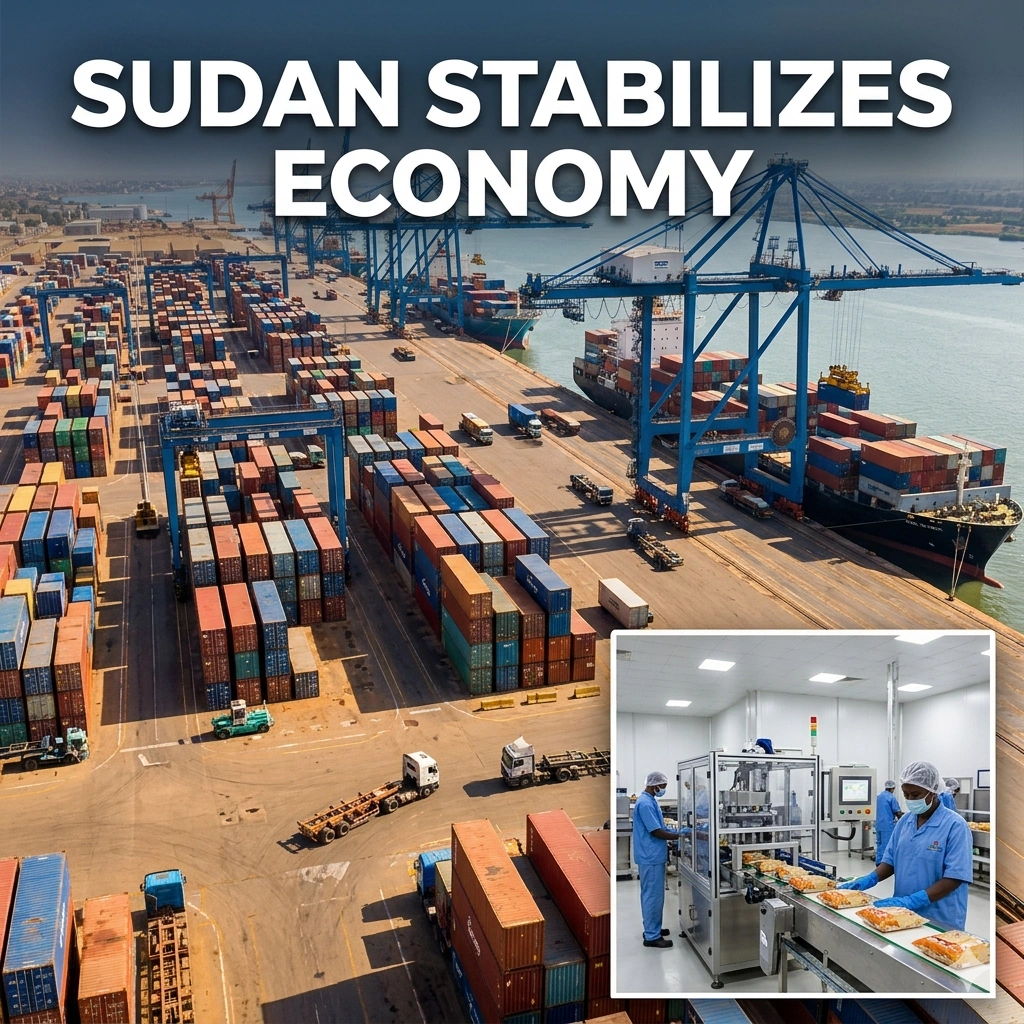
Strategic Shift Toward Sudan Economic Controls 2026
The implementation of Sudan Economic Controls 2026 marks a turning point for the nation’s industrial policy. By restricting non-essential imports, the government is effectively creating a protected space for local manufacturers to flourish. This strategy is designed to boost the “Made in Sudan” initiative, encouraging citizens to support home-grown products.
Investors are looking closely at how these regulations will impact the manufacturing sector in Khartoum and beyond. The Cabinet has promised to provide technical support and tax incentives to factories that successfully substitute foreign goods with local alternatives. This approach is intended to diversify the economy and reduce its historical dependence on volatile global commodity markets.
Transitioning to a more regulated trade environment requires careful coordination between the central bank and various customs agencies. The government has modernized its digital tracking systems to monitor the flow of goods more effectively across all borders. Such transparency is vital for preventing smuggling and ensuring that the new import quotas are strictly followed by all trading entities.
Government Priorities Under Sudan Economic Controls 2026
Under the directive of Sudan Economic Controls 2026, the flow of medicine and fuel remains the top priority for the Sudanese Cabinet. Specialized committees have been formed to oversee the procurement of these life-saving resources to prevent shortages in rural areas. This ensures that while the economy tightens, the basic needs of the population are consistently met.
The Sudanese government is also focusing on the energy sector to power the planned industrial expansion. New investments in renewable energy and traditional power plants are being fast-tracked to support the increased production capacity of local factories. Without a stable power supply, the goal of import substitution would be difficult to achieve in the long term.
Furthermore, the Ministry of Trade is launching an educational campaign for local businesses to understand the new compliance standards. Officials believe that clear communication is the key to preventing market panic and ensuring a smooth transition. These efforts are expected to stabilize prices for essential commodities, providing relief to households across the nation.
Sudan Economic Controls 2026
The core objective of Sudan Economic Controls 2026 is the stabilization of the national exchange rate through disciplined fiscal management. Excessive demand for foreign currency to fund luxury imports has historically weakened the Sudanese Pound, leading to high inflation. By managing this demand, the Cabinet hopes to restore purchasing power to the average citizen.
Economists suggest that a stable currency is the bedrock of any successful recovery plan for a developing nation. When the exchange rate fluctuates wildly, it becomes nearly impossible for businesses to plan for the future or price their goods accurately. The new controls aim to eliminate this uncertainty, fostering a climate where long-term investment becomes viable again.
Moreover, the government is tightening the oversight of commercial banks to ensure that foreign currency is allocated according to national priorities. This prevents the hoarding of dollars and ensures that importers of wheat and medical supplies have the funds they need. These structural changes are being viewed by international observers as a necessary, albeit difficult, step toward financial maturity.
Enhancing Local Production Through Sudan Economic Controls 2026
The roadmap for Sudan Economic Controls 2026 includes significant subsidies for the agricultural sector to ensure food security. Sudan possesses vast amounts of arable land that remain underutilized due to a lack of modern machinery and high-quality seeds. The government is now diverting funds saved from import restrictions toward these vital agricultural inputs.
- Providing low-interest loans to small-scale farmers in the Gezira scheme.
- Distributing drought-resistant crop varieties to combat climate-related challenges.
- Building new storage facilities to reduce post-harvest losses and waste.
- Improving the transport infrastructure to connect farms directly to urban markets.
By empowering the agricultural sector, Sudan can reduce its reliance on imported grains and sugar. This not only saves foreign exchange but also creates thousands of jobs in rural communities, slowing down the rate of urban migration. The cabinet believes that a strong agricultural base is the most effective way to insulate the country from global food price spikes.
Managing the Impact of Sudan Economic Controls 2026
While the long-term benefits of Sudan Economic Controls 2026 are clear, the government is also managing the short-term market adjustments. Some traders have expressed concern over the availability of certain consumer electronics and specialized industrial parts. In response, the Ministry of Finance has created a flexible licensing system for items that cannot yet be produced locally.
This balanced approach prevents the market from experiencing total shortages while still pushing for local alternatives. The government is encouraging partnerships between international tech firms and local start-ups to facilitate technology transfer. Such collaborations are essential for building a modern workforce capable of sustaining a complex industrial economy.
Public sentiment remains cautiously optimistic as the first signs of currency stabilization begin to emerge in the informal markets. The cabinet has requested patience from the public, noting that structural economic shifts take time to yield full results. Continuous monitoring and periodic adjustments will be made to ensure that the policy remains fair and effective for all stakeholders.
Technical Infrastructure Supporting Sudan Economic Controls 2026
The success of Sudan Economic Controls 2026 relies heavily on the new electronic portal for import and export registration. This digital system minimizes human error and reduces the opportunities for corruption within the trade bureaucracy. Importers must now provide detailed documentation regarding the necessity and origin of their shipments before approval is granted.
This level of scrutiny ensures that the limited foreign reserves are used exclusively for items that contribute to national development. The system also provides the government with real-time data on trade patterns, allowing for more accurate economic forecasting. Data-driven decision-making is a hallmark of the current administration’s approach to governance and fiscal responsibility.
- Automated verification of shipping documents to speed up port clearance.
- Integration with central bank databases to track currency allocations.
- Direct communication channels between merchants and the Ministry of Trade.
- Real-time reporting of market prices to detect and prevent price gouging.
These technical upgrades are part of a broader effort to modernize the Sudanese civil service. By leveraging technology, the state can enforce its policies more consistently and fairly across all regions. This builds trust with both local citizens and international trading partners who value transparency and efficiency.
International Cooperation and Sudan Economic Controls 2026
Engagement with regional neighbors is a critical component of the Sudan Economic Controls 2026 strategy. Sudan is working to harmonize its trade policies with its partners in the African Union to facilitate smoother cross-border commerce. Strengthening regional trade ties allows Sudan to access larger markets while maintaining its sovereign economic goals.
The Sudanese Cabinet has also been in talks with international financial institutions to explain the rationale behind these temporary trade restrictions. Many experts agree that stabilizing the exchange rate is a prerequisite for any meaningful debt relief or future development loans. Sudan is positioning itself as a responsible actor committed to disciplined economic reform.
Foreign direct investment is still welcomed, particularly in sectors that align with the goal of import substitution. The government is offering long-term leases on land and reduced utility rates for foreign firms that set up manufacturing plants within the country. This strategy aims to bring in foreign expertise while ensuring that the production of goods stays within Sudanese borders.
Future Projections for Sudan Economic Controls 2026
Looking ahead, the success of Sudan Economic Controls 2026 will be measured by the growth of the domestic manufacturing sector. If local factories can meet the demand previously satisfied by imports, the country will achieve a state of economic resilience. The government plans to review the list of restricted items every six months to adapt to changing market conditions.
As the industrial base expands, Sudan hopes to transition from being a primary commodity exporter to a producer of value-added goods. Exporting finished textiles or processed food products brings in more revenue than exporting raw cotton or grain. This shift is the ultimate goal of the current economic reforms being spearheaded by the Sudanese Cabinet.
- Reduction of the inflation rate to single digits within the next three years.
- Achievement of a positive trade balance for the first time in a decade.
- Creation of over 500,000 new jobs in the manufacturing and agriculture sectors.
- Significant increase in the national GDP through diversified industrial output.
The journey toward a stable and prosperous economy is complex, but the current administration remains committed to its vision. Through a combination of strict import controls and support for local industry, Sudan is carving out a new path for its future. The coming months will be crucial in determining the lasting impact of these ambitious economic measures.
The Role of Small Businesses in Sudan Economic Controls 2026
Small and medium-sized enterprises (SMEs) are the backbone of the Sudan Economic Controls 2026 initiative. These businesses are often the most agile and capable of pivoting to meet the needs of the local market when imports are restricted. The government has set aside specific credit lines to help these smaller players scale up their operations.
By supporting SMEs, the government is ensuring that wealth is distributed more broadly across the population. This prevents the concentration of economic power in the hands of a few large importers and fosters a more competitive market environment. Training programs in management and accounting are also being offered to help these entrepreneurs succeed in the long term.
Local craftspeople and artisans are also finding new opportunities as the demand for home-grown furniture and clothing rises. The Sudan Economic Controls 2026 policy is effectively reviving traditional industries that were once pushed out by cheap, mass-produced foreign goods. This cultural and economic revival is a source of pride for many Sudanese communities.
Logistical Challenges Facing Sudan Economic Controls 2026
One of the primary hurdles for Sudan Economic Controls 2026 is the current state of the nation’s transport and logistics network. Moving goods from the manufacturing centers in the heart of the country to the various states requires a reliable rail and road system. The government is prioritizing the repair of key transport corridors to ensure that local products can reach all citizens.
Investments in the Port of Sudan are also being accelerated to improve the efficiency of both exports and necessary imports. Faster turnaround times at the port reduce the cost of doing business and make local products more competitive. The cabinet is considering private-public partnerships to modernize the port’s infrastructure and cargo handling capabilities.
- Expansion of the national rail network to connect major agricultural zones.
- Upgrading the highway system between Khartoum and Port Sudan.
- Reducing bureaucratic hurdles at internal checkpoints to speed up trade.
- Implementing cold-chain logistics for the transport of perishable food items.
Addressing these logistical bottlenecks is just as important as the trade policies themselves. Without a functioning delivery system, the benefits of local production cannot be fully realized. The government is committed to a holistic approach that includes both policy reform and infrastructure development to ensure the success of its economic vision.
Environmental Sustainability and Sudan Economic Controls 2026
A hidden benefit of the Sudan Economic Controls 2026 framework is the potential for a more sustainable and green economy. By reducing the reliance on long-distance shipping, the country is effectively lowering its carbon footprint. Local production inherently involves shorter supply chains, which are more environmentally friendly and easier to manage.
The Cabinet is also encouraging factories to adopt energy-efficient technologies as part of their modernization efforts. Incentives are being offered for plants that utilize solar power or implement water-recycling systems. This ensures that Sudan’s industrial growth does not come at the expense of its natural resources or the health of its citizens.
Furthermore, the focus on organic farming practices in the agricultural sector is helping to preserve the quality of the soil. By reducing the use of imported chemical fertilizers, Sudanese farmers can produce healthier food while protecting the local ecosystem. This forward-thinking approach aligns Sudan with global trends toward sustainable development and climate resilience.
Monitoring and Evaluating Sudan Economic Controls 2026
Transparency and accountability are vital for the continued support of Sudan Economic Controls 2026. The government has established an independent oversight committee to monitor the impact of the regulations on market prices and consumer welfare. Regular reports are being published to keep the public informed about the progress of the economic reforms.
If the committee identifies that a specific restriction is causing undue hardship or market distortion, the Cabinet has the authority to make immediate adjustments. This feedback loop is essential for maintaining a balance between economic discipline and social stability. The goal is to create a policy that is firm in its objectives but flexible in its execution.
The involvement of civil society organizations and academic experts provides another layer of scrutiny. By inviting diverse perspectives into the policy discussion, the government can identify potential pitfalls before they become major problems. This collaborative approach to governance is strengthening the democratic fabric of the nation while stabilizing the economy.
Economic Resilience Through Sudan Economic Controls 2026
The ultimate test for Sudan Economic Controls 2026 will be the nation’s ability to withstand future global economic crises. By building a diversified and self-sufficient economy, Sudan is creating a buffer against external shocks. Whether it is a spike in global oil prices or a disruption in international shipping, a strong local economy is the best defense.
The cabinet’s focus on essential goods and local production is creating a solid foundation for future generations. Young Sudanese entrepreneurs are being encouraged to see the current challenges as opportunities for innovation and growth. The sense of national purpose surrounding these economic measures is palpable in the business districts and market squares.
As the implementation of Sudan Economic Controls 2026 continues, the government remains steadfast in its commitment to the people. The path to economic stability is rarely easy, but the current strategy offers a clear and viable way forward. With the cooperation of the private sector and the support of the public, Sudan is poised to emerge stronger and more prosperous than ever before.
Conclusion of the Sudan Economic Controls 2026 Strategy
The comprehensive package of Sudan Economic Controls 2026 represents a bold and necessary intervention by the Sudanese Cabinet. By prioritizing the regulation of imports and the stabilization of the exchange rate, the government is taking decisive action to protect the national interest. The focus on local industry and agricultural development is a long-term investment in the country’s sovereignty.
Success will require sustained effort, transparent governance, and the willingness of all citizens to support local products. While challenges remain, the initial results of these measures are promising. Sudan is moving away from the era of economic uncertainty and toward a future defined by productivity, stability, and growth.
For more details & sources visit: Sudan Horizon
Read more on Sudan news: 360 News Orbit – Sudan.