
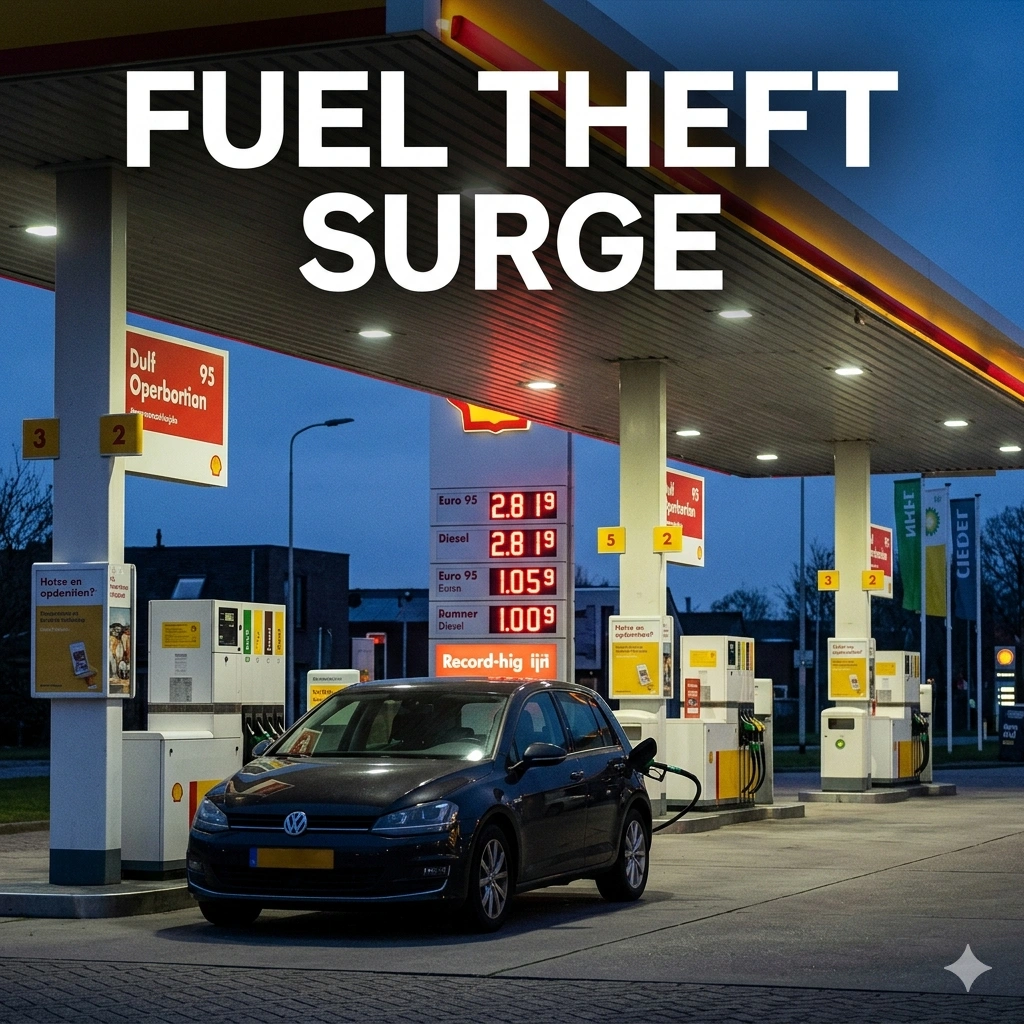
Fuel theft surges in the Netherlands as the nation grapples with an unprecedented economic crisis involving record-breaking energy costs at every pump. This alarming trend highlights the growing desperation of many citizens who find themselves unable to afford the essential costs of daily transportation. Recent data suggests that the financial pressure on households has reached a breaking point, leading to a significant increase in criminal activities related to refueling.
The current situation in the Netherlands is particularly dire because the rise in fuel theft surges in the Netherlands correlates directly with the skyrocketing prices of petrol and diesel. While the authorities are attempting to monitor the situation closely, the sheer volume of incidents makes it difficult to enforce the law effectively at every station. Retailers are now calling for more robust measures to protect their businesses from the rising tide of unpaid refueling.
The Financial Impact of Fuel Prices on Dutch Drivers
The dramatic increase in the cost of living has placed a heavy burden on the average Dutch commuter, and consequently, fuel theft surges in the Netherlands have become a daily occurrence. Many individuals who previously had no criminal record are now engaging in risky behaviors simply to maintain their mobility. This shift in social behavior indicates a deep-rooted economic anxiety that transcends simple opportunistic theft.
Government officials are increasingly concerned that the fuel theft surges in the Netherlands reflect a larger systemic failure to provide affordable energy alternatives. While there have been pushes toward electric vehicles, the transition is not fast enough to mitigate the immediate crisis facing those with internal combustion engines. This delay creates a vacuum where illegal activities flourish as a perceived means of survival.
Furthermore, the logistical strain on the police force due to fuel theft surges in the Netherlands cannot be overstated. Officers are being diverted from other critical duties to handle hundreds of reports involving drivers fleeing gas stations without paying. This creates a secondary risk to public safety as law enforcement resources are stretched thin across the various provinces of the country.
Global Conflict and the Energy Crisis
The root of the problem lies far beyond the Dutch borders, yet fuel theft surges in the Netherlands are the visible symptoms of international instability. Global supply chains have been throttled by ongoing conflicts in the Middle East, leading to a scarcity that drives prices up. This volatility makes it impossible for local retailers to offer competitive pricing, leaving consumers to bear the brunt.
As energy markets remain unstable, fuel theft surges in the Netherlands are expected to persist or even worsen in the coming months. Analysts suggest that without a significant de-escalation of global tensions, the price at the pump will remain at record highs. This environment fosters a sense of lawlessness among those who feel the system is no longer working in their favor.
Industry leaders argue that the fuel theft surges in the Netherlands could be mitigated if there were more significant subsidies for energy. However, the government is also facing budget constraints, making it difficult to provide the necessary relief to the public. This stalemate leaves both the consumer and the retailer in a vulnerable position as the crisis evolves.
Retailers Respond to the Surge in Crime
Gas station owners are currently investing heavily in new surveillance technologies to combat how fuel theft surges in the Netherlands affect their bottom line. High-definition cameras and automated license plate recognition systems are becoming standard equipment at most locations. Despite these technological advances, criminals are finding ways to obscure their identities and escape before help arrives.
Some retailers have reported that fuel theft surges in the Netherlands are forcing them to change their business models entirely. For instance, many stations are now requiring pre-payment for all fuel purchases to ensure that the transaction is secured before any petrol is dispensed. While this protects the owner, it can be an inconvenience for honest customers who prefer the traditional pay-after-filling method.
The psychological toll on station employees due to fuel theft surges in the Netherlands is another often overlooked aspect of this crisis. Staff members are frequently placed in confrontational situations where they must decide whether to intervene or allow a thief to drive away. Many companies are now providing additional safety training to help workers manage these high-stress encounters effectively.
Fuel Theft Surges in the Netherlands
The official statistics released this month confirm that fuel theft surges in the Netherlands have reached a critical level that requires immediate national attention. Data from SODA indicates a thirty-five percent increase in reported incidents compared to the previous year. This statistic is a clear indicator that the economic pressures are translating into tangible criminal actions across the Dutch landscape.
Law enforcement agencies are working to create a centralized database to track repeat offenders involved in fuel theft surges in the Netherlands. By sharing information between different regions, the police hope to identify patterns and apprehend the individuals responsible for multiple thefts. This collaborative approach is essential in a country where mobility between cities is high and easy.
Despite these efforts, the frequency of fuel theft surges in the Netherlands remains high because the potential reward often outweighs the perceived risk of being caught. For many, the cost of a full tank of petrol is now so high that it represents a significant portion of their weekly income. This economic reality drives the persistent nature of the problem regardless of the security measures in place.
Regional Variations in Fuel Crime
Interestingly, the data shows that fuel theft surges in the Netherlands are not uniform across all provinces, with urban areas seeing the highest concentrations. Cities like Amsterdam and Rotterdam have become hotspots for these activities due to the high density of traffic and the ease of disappearing into urban congestion. Rural areas, while still affected, show slightly lower rates of increase.
Proximity to the borders also influences how fuel theft surges in the Netherlands manifest in different regions. In provinces bordering Germany or Belgium, some residents choose to drive across the border to find cheaper prices rather than resorting to theft. This behavior provides a slight relief for border-town retailers but does nothing to solve the underlying national crisis.
Local municipalities are trying to address fuel theft surges in the Netherlands by increasing patrol presence near major highways and transit hubs. However, the transient nature of fuel theft makes it a difficult crime to prevent in real-time. Most arrests occur after the fact, once the surveillance footage has been reviewed and the vehicle has been identified by authorities.
The Role of SODA in Prevention
SODA has been at the forefront of tackling the issues surrounding fuel theft surges in the Netherlands by providing a streamlined reporting process for retailers. Their system allows gas station owners to recover damages without necessarily going through a lengthy court process. This efficiency is vital for small business owners who cannot afford to lose the revenue from a single tank of fuel.
By working closely with the police, SODA helps to ensure that fuel theft surges in the Netherlands do not go unpunished. Their work involves sending formal notices to vehicle owners whose cars were identified at the scene of a crime. This direct approach has proven effective in recovering funds from those who may have forgotten to pay or were testing the system.
The organization also advocates for policy changes that would make fuel theft surges in the Netherlands less likely to occur in the future. This includes suggestions for mandatory pre-payment at all pumps across the country, regardless of the time of day. While controversial, such measures are increasingly seen as the only definitive way to stop the financial bleeding for retailers.
Comparing Petrol and Diesel Trends
The rise in petrol prices has been a major driver behind the fuel theft surges in the Netherlands, but diesel users are also feeling the pinch. Diesel is essential for many commercial vehicles and logistics companies, making its theft a significant concern for the national economy. When transport costs rise, the price of goods in supermarkets also increases, creating a vicious cycle of inflation.
Statistical analysis shows that fuel theft surges in the Netherlands involve a wide variety of vehicle types, from luxury cars to older transit vans. This diversity suggests that the economic strain is hitting a broad cross-section of the population. It is no longer just the marginalized who are involved; even middle-class families are finding it hard to cope with the costs.
The government is monitoring the situation to see if fuel theft surges in the Netherlands will eventually plateau as the market stabilizes. However, current trends suggest that as long as the price per litre remains above two euros, the incentive for theft will remain high. This long-term outlook is causing significant concern for the Dutch energy sector and law enforcement alike.
Technological Solutions for Gas Stations
In response to the current crisis, many tech companies are pitching AI-driven solutions to curb fuel theft surges in the Netherlands. These systems use facial recognition and behavior analysis to identify suspicious individuals before they even begin to refuel. While promising, these technologies raise questions about privacy and data protection under European regulations.
The implementation of these tools is seen as a necessary evil by many who are tired of the fuel theft surges in the Netherlands. Retailers are desperate for any solution that will lower their insurance premiums and protect their daily earnings. If technology can provide a deterrent, many are willing to invest the capital required to install these high-tech systems.
However, the cost of such technology might be prohibitive for smaller, independent stations already struggling with fuel theft surges in the Netherlands. This could lead to a divide where only large corporate chains can afford to stay secure, while small businesses remain targets. The social and economic implications of this trend are currently being debated by industry analysts and policymakers.
Public Perception and Social Media
Social media has played an interesting role in how the public views fuel theft surges in the Netherlands. In some online forums, there is a surprising amount of sympathy for those who steal fuel, with users citing the “impossible” prices as a justification. This shift in public sentiment is worrying for authorities who rely on social cooperation to maintain order.
On the other hand, many citizens are vocal in their condemnation of fuel theft surges in the Netherlands, arguing that it only drives prices higher for everyone else. These discussions highlight the polarization within Dutch society regarding how to handle the energy crisis. The debate often centers on whether the government or the individual is responsible for the current state of affairs.
Law enforcement agencies are also using social media to gather tips on fuel theft surges in the Netherlands. By posting images of suspect vehicles and asking the public for help, they have been able to close several high-profile cases. This community-based policing is becoming an essential tool in the fight against fuel-related crimes in the modern era.
- Rising costs drive fuel theft surges in the Netherlands across all major provinces this year.
- Retailers are increasingly moving toward mandatory pre-payment systems to prevent significant financial losses.
- International geopolitical tensions remain the primary cause of high prices and subsequent criminal activity.
- Police resources are being heavily taxed as they respond to the record number of refueling incidents.
Impact on the Logistics Industry
The logistics and transport sector is particularly vulnerable to the fallout from fuel theft surges in the Netherlands. Trucking companies are reporting that their fuel cards are being cloned or stolen at an increasing rate. This form of organized crime is much more sophisticated than a single driver leaving a station without paying.
Because the logistics industry operates on thin margins, fuel theft surges in the Netherlands can be the difference between a profitable year and bankruptcy. Companies are now forced to invest in secure parking and more advanced fuel monitoring systems for their fleets. These additional costs are inevitably passed on to the consumer, further fueling the inflationary pressure.
There is also a growing concern about the safety of drivers who might be targeted by criminals during fuel theft surges in the Netherlands. Reports of fuel being siphoned from parked trucks at night are on the rise, leading to dangerous confrontations in rest areas. The transport unions are calling for better security at truck stops to protect their members from these risks.
The Role of Alternative Energy
As fuel theft surges in the Netherlands continue to dominate the news, there is a renewed interest in accelerating the transition to renewable energy. Many believe that if the nation were less dependent on fossil fuels, it would be less susceptible to the price shocks that drive this type of crime. However, the infrastructure for a fully electric fleet is still years away from completion.
In the meantime, the fuel theft surges in the Netherlands serve as a stark reminder of the risks of energy dependence. The government is being pressured to provide more incentives for electric vehicle adoption and to expand the charging network. While these are long-term solutions, they do little to help the people currently struggling with petrol prices today.
Some advocates suggest that the revenue lost to fuel theft surges in the Netherlands could be better spent on public transport subsidies. By making buses and trains more affordable, the government could reduce the number of people forced to rely on private vehicles. This shift could theoretically lower the demand for fuel and decrease the incentive for theft over time.
Legislative Efforts to Combat Crime
The Dutch parliament is currently considering new legislation aimed specifically at reducing fuel theft surges in the Netherlands. This includes harsher penalties for repeat offenders and a more streamlined process for the prosecution of “drive-off” crimes. Lawmakers hope that a stronger legal deterrent will help to reverse the current trend.
However, some critics argue that stricter laws will not solve the underlying economic issues causing fuel theft surges in the Netherlands. They believe that without addressing the root cause—the high cost of fuel—punitive measures will only fill prisons without stopping the crime. The debate in the Hague remains heated as politicians seek a balance between enforcement and social support.
There is also talk of a national registry for license plates associated with fuel theft surges in the Netherlands. This database would be accessible to all gas stations, allowing them to automatically block pumps for vehicles with a history of unpaid refueling. Such a system would require significant cooperation between the private sector and the government to implement successfully.
- Local stations are reporting a 35 percent jump in incidents since the start of the year.
- High-definition surveillance and AI are being deployed to monitor fuel theft surges in the Netherlands.
- Border-region stations face different challenges as customers seek cheaper fuel in neighboring countries.
The Future of the Dutch Fuel Market
Looking ahead, the outlook for the Dutch fuel market remains uncertain as fuel theft surges in the Netherlands show no signs of slowing. Market analysts predict that prices will remain volatile for the foreseeable future, which means the temptation for theft will persist. This environment is likely to lead to a permanent shift in how fuel is sold and monitored in the country.
We may see a future where the traditional gas station experience is completely transformed by the need to prevent fuel theft surges in the Netherlands. Fully automated, unmanned stations with strict pre-payment and biometric verification could become the norm. While this would solve the theft problem, it would also represent a significant change in the social and commercial landscape.
The ongoing fuel theft surges in the Netherlands are a clear signal that the energy transition is not just an environmental necessity, but a social one as well. Reducing the economic volatility associated with fossil fuels is essential for maintaining social order and public trust. Until that transition is complete, the country must find ways to cope with the current crisis effectively and fairly.
Expert Opinions on Social Desperation
Sociologists studying the fuel theft surges in the Netherlands point out that this is a classic example of “survival crime” triggered by rapid inflation. When a necessity like fuel becomes a luxury, the social contract begins to fray at the edges. This research suggests that the thefts are a symptom of a much larger breakdown in economic security for the working class.
If the government does not take action to stabilize the situation, fuel theft surges in the Netherlands could lead to even more serious forms of civil unrest. History has shown that energy crises are often the catalysts for larger political movements. Addressing the theft issue requires a holistic approach that includes both law enforcement and economic policy to be successful.
The resilience of the Dutch economy is being tested by the fuel theft surges in the Netherlands, and the world is watching to see how the nation responds. As a leader in innovation and social policy, the Netherlands has the opportunity to develop new models for managing energy crises. However, the immediate priority remains protecting the retailers and citizens affected by the current surge in crime.
Environmental and Safety Hazards
An often-unseen consequence of fuel theft surges in the Netherlands is the environmental damage caused by amateur siphoning and storage. When fuel is stolen directly from tanks, it often results in spills that contaminate the ground and local water supplies. These small-scale environmental disasters are difficult to clean up and pose a risk to public health.
Furthermore, those engaging in fuel theft surges in the Netherlands often store the stolen fuel in unsafe containers inside their homes or garages. This creates a massive fire risk for the individuals and their neighbors. The fire department has issued several warnings about the dangers of improper fuel storage as the number of theft reports continues to rise.
The safety of the pumps themselves is also a concern during fuel theft surges in the Netherlands. Thieves often damage the refueling equipment in their haste to escape, leading to leaks and potential explosions. The cost of repairing this damaged equipment is an additional burden that gas station owners must bear in addition to the lost revenue from the fuel itself.
Conclusion and Call to Action
In conclusion, the fuel theft surges in the Netherlands represent a complex intersection of global politics, economic pressure, and social desperation. It is a problem that cannot be solved by one single agency or technology but requires a unified national strategy. From the individual driver to the highest levels of government, everyone has a role to play in navigating this crisis.
As the situation develops, it is crucial for the public to stay informed about the causes and consequences of fuel theft surges in the Netherlands. Supporting local retailers and advocating for fair energy policies are steps that every citizen can take. Only through collective action and understanding can the Netherlands hope to restore order to its energy market and ensure a secure future for all.
The road ahead is challenging, but the focus remains on mitigating the impact of fuel theft surges in the Netherlands while working toward a more stable and sustainable energy future. By addressing both the immediate criminal symptoms and the long-term economic causes, the nation can overcome this period of instability and emerge stronger.
For more details & sources visit: IamExpat
Read more on Netherland news: 360 News Orbit – Netherland.