
India Projects Growth as the primary indicator of economic health in the current fiscal climate, reflecting a nation that is navigating a complex international landscape with remarkable steadiness and strategic foresight. While the global economy faces unprecedented headwinds from energy market volatility and geopolitical tensions, the Indian domestic market continues to show a vigorous internal demand. Experts suggest that the resilience of the subcontinent is not accidental but rather the result of disciplined fiscal policies and a robust banking sector.
As we move deeper into the 2026 fiscal year, the narrative surrounding the Indian economy is shifting from simple recovery to long-term sustainable expansion. This projected figure positions the country as a significant engine for regional development in South Asia. Policymakers are now focusing on how to translate these percentages into tangible improvements in the standard of living for the general population through consistent investment and reform.
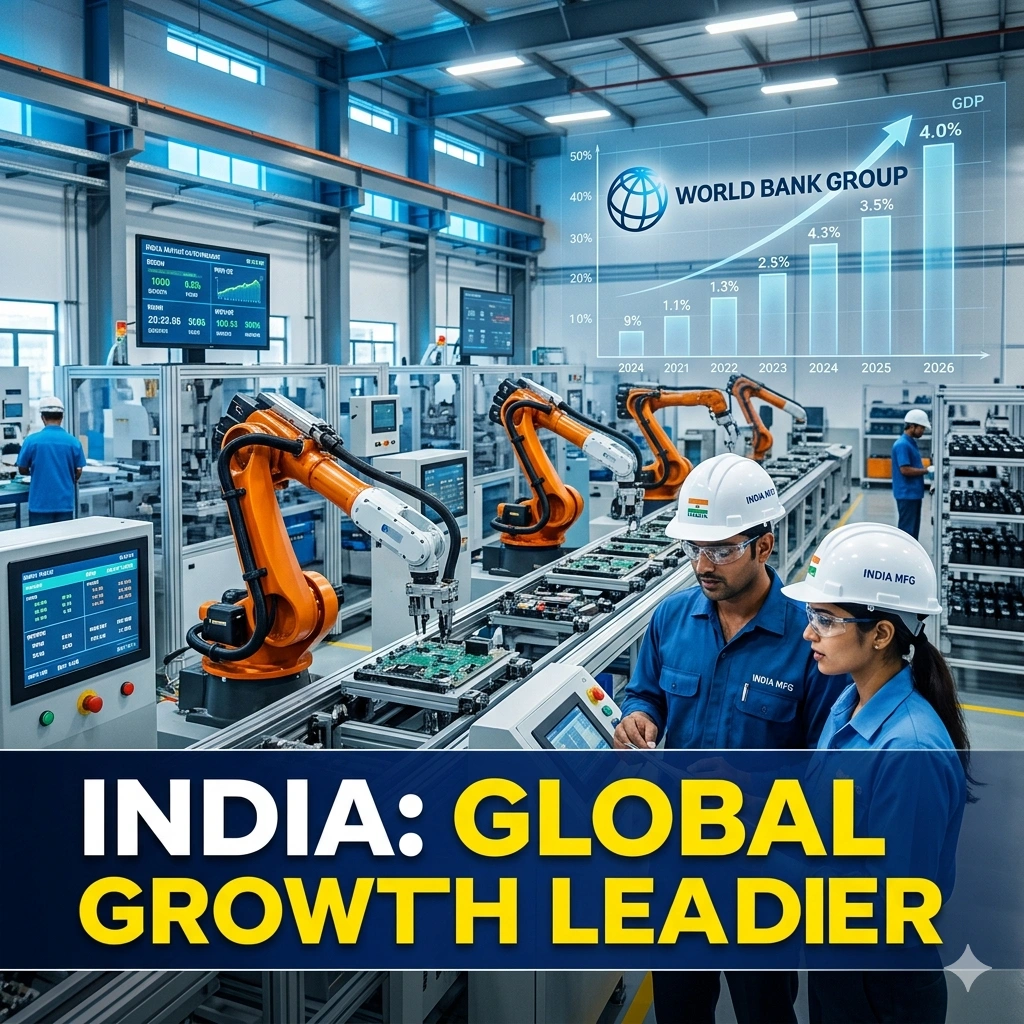
India Projects Growth
The World Bank recently published its comprehensive India Development Update, which provides a detailed roadmap of the nation’s economic journey through the upcoming years. According to the report, India Projects Growth at a steady rate of 6.6% despite the rising costs of energy imports driven by ongoing conflicts in the Middle East. This growth rate remains one of the highest among the world’s major economies, signaling a period of relative stability for investors.
The Acting Director for India, Paul Procee, emphasized that the country’s macroeconomic fundamentals remain exceptionally strong. A healthy financial sector combined with a manageable debt-to-GDP ratio has created a safety net that protects the domestic market. Consequently, the international community views the Indian fiscal landscape with a sense of cautious optimism.
Structural Resilience Amid Global Energy Volatility
One of the most impressive aspects of the current economic climate is how India Projects Growth while facing significant external pressure. The energy crisis triggered by regional conflicts has sent shockwaves through global supply chains, yet the Indian industrial sector has adapted quickly. Large-scale investments in renewable energy sources are beginning to pay off by reducing the overall dependence on fossil fuel imports. Furthermore, the diversification of energy partners has allowed the nation to mitigate the impact of sudden price spikes. This adaptability is a testament to the structural reforms implemented over the last decade.
The role of the manufacturing sector cannot be understated when discussing why India Projects Growth for the foreseeable future. Production-linked incentive schemes have successfully attracted multinational corporations looking to diversify their manufacturing bases away from traditional hubs. This influx of foreign direct investment is creating a multiplier effect throughout the domestic supply chain. Small and medium enterprises are finding new opportunities to integrate into global value chains, which further strengthens the national economy. As long as the business environment remains predictable, the manufacturing sector will likely continue its upward trajectory as the backbone of the industrial strategy.
Unlocking Private Sector Potential for Job Creation
For the nation to sustain the momentum where India Projects Growth, the involvement of the private sector is absolutely paramount. While public spending has traditionally been the primary engine of infrastructure development, the government is now seeking more significant private contributions. The World Bank report highlights that unlocking large-scale employment in manufacturing and healthcare requires a more streamlined regulatory framework. By reducing the bureaucratic hurdles for new businesses, the state can foster an environment where innovation thrives. This approach is expected to bridge the gap between economic growth and job availability.
Investment in agribusiness is also a high priority, as it remains the primary source of livelihood for a significant portion of the population. By modernizing agricultural practices and improving market access for farmers, the government aims to boost rural incomes. When India Projects Growth, it implies that the benefits must reach the grassroots level to be truly effective. Technology integration in farming, such as precision agriculture and digital marketplaces, is transforming the sector into a more profitable enterprise. These advancements are crucial for ensuring food security while simultaneously contributing to the national export tally and reducing rural poverty.
- Streamlining environmental clearance processes for industrial parks.
- Implementing skill development programs tailored to high-tech manufacturing.
- Enhancing the digital infrastructure to support remote work and e-commerce.
- Providing tax incentives for companies that invest in research and development.
Strategic Industrial Policies and Market Failures
The recent analysis by global economists suggests that targeted industrial policies are essential for addressing specific market failures. As India Projects Growth, the implementation of specialized industrial parks is becoming a cornerstone of its development strategy. These zones provide the necessary infrastructure and logistics support to allow businesses to operate at peak efficiency. However, the report also notes that the results of such policies have been mixed in the past. To ensure future success, the focus must shift toward improving the quality of exports and meeting international standards.
Effective industrial policy also involves a commitment to human capital through comprehensive skill development programs. The workforce must be equipped with the technical skills required for modern manufacturing and high-end services. If India Projects Growth, it must ensure that its labor force is not left behind by the rapid pace of technological change. Collaboration between the government and educational institutions is vital for creating a curriculum that aligns with industry needs. This synergy will help in reducing the mismatch between the skills available and the requirements of the job market across various states.
Regional Economic Dynamics in South Asia
The broader South Asian region is also experiencing a shift in economic dynamics as India Projects Growth. While some neighboring countries are struggling with debt crises and political instability, the Indian economy serves as a stabilizing force for the entire region. Trade agreements and regional connectivity projects are facilitating a more integrated economic environment. This integration allows for a more efficient exchange of goods and services, which benefits all participating nations. The rebound of the regional economy depends heavily on the continued performance of its largest member.
Despite the positive outlook, the region must remain vigilant against the risks of climate change and environmental degradation. Sustainable development practices are no longer optional but a necessity for long-term survival. Since India Projects Growth, it has the opportunity to lead the region in adopting green technologies and sustainable urban planning. By setting a high standard for environmental stewardship, the nation can ensure that its development is not achieved at the expense of future generations. The balance between industrialization and conservation will be a defining theme for the next decade.
Macroeconomic Buffers and Foreign Exchange Reserves
A major reason why India Projects Growth is the existence of substantial foreign exchange reserves. These reserves provide a buffer that allows the central bank to intervene in the currency market during times of extreme volatility. By maintaining a stable rupee, the government can keep import costs predictable, which is essential for businesses that rely on foreign raw materials. This financial stability is a key attraction for foreign institutional investors looking for a safe haven in emerging markets. The disciplined management of these reserves has been a hallmark of the recent fiscal strategy.
Inflation management is another area where the country has shown significant prowess compared to its peers. While many developed nations have struggled with persistent price increases, the Indian central bank has utilized a proactive interest rate policy to keep inflation within a manageable range. Because India Projects Growth, it demonstrates that expansion and price stability can coexist if managed correctly. This stability protects the purchasing power of the middle class, which in turn fuels domestic consumption. A strong domestic market is the ultimate defense against global economic downturns and supply chain disruptions.
- Consistent monitoring of the Consumer Price Index to adjust monetary policy.
- Maintaining a diverse portfolio of foreign currency assets and gold.
- Encouraging the use of local currency in international trade settlements.
- Strengthening the regulatory oversight of the non-banking financial sector.
Future Outlook and the Viksit Bharat Vision
Looking toward the end of the decade, the vision of a developed nation is becoming more tangible as India Projects Growth for the current cycle. The “Viksit Bharat” roadmap outlines a comprehensive strategy for economic social and cultural transformation. It involves not only increasing the GDP but also improving human development indicators such as literacy and healthcare access. The transition from a developing economy to a developed one requires a sustained growth rate over several decades. The current projections are a positive step in that long-term journey.
To reach these ambitious goals, the focus must remain on innovation and the digital economy. The rapid adoption of digital payment systems and online services has already revolutionized the way business is conducted in the country. As India Projects Growth, the expansion of the digital ecosystem will provide new avenues for entrepreneurship and service delivery. Expanding the reach of high-speed internet to rural areas will be a critical factor in ensuring inclusive development. The democratization of technology is perhaps the most powerful tool for social mobility in the modern era.
Overcoming Infrastructure Bottlenecks
Infrastructure remains both a challenge and an opportunity as India Projects Growth in the coming years. The government has committed significant resources to the construction of highways, railways, and ports to improve logistical efficiency. Reducing the time and cost of transporting goods across the country is essential for making the manufacturing sector competitive on a global scale. These large-scale projects also serve as major employment generators, providing jobs for millions of workers. The modernization of the transportation network is a prerequisite for achieving a five-trillion-dollar economy.
In addition to physical infrastructure, the development of social infrastructure is equally important. Investing in schools and hospitals ensures that the population is healthy and well-educated, which are the foundations of a productive workforce. When India Projects Growth, it includes the expansion of the healthcare system to provide affordable care to all citizens. The lessons learned from the global health crises of the past have underscored the importance of a resilient public health network. Strengthening this sector will provide a safety net that allows families to focus on economic advancement and wealth creation.
The Role of Global Partnerships
International collaboration will play a significant role in the years ahead as India Projects Growth. Strengthening ties with major economic blocs and participating in global forums allows the nation to influence international economic policy. These partnerships facilitate the transfer of technology and the adoption of global best practices in governance and business. By being an active participant in the global community, the country can better navigate the complexities of international trade. Collaborative efforts in areas like climate change and cybersecurity are also vital for national security.
The relationship with international financial institutions like the World Bank remains a key component of the development strategy. These organizations provide not only funding but also technical expertise and data-driven insights. As India Projects Growth, the guidance from these experts helps in refining fiscal policies and identifying potential risks. The transparency provided by regular economic updates fosters trust among international investors and rating agencies. This trust is essential for maintaining the flow of capital needed for large-scale development projects across the nation.
- Participating in multilateral trade agreements to expand export markets.
- Hosting international summits to showcase investment opportunities.
- Collaborating on global health initiatives to develop new vaccines and treatments.
- Sharing expertise in digital governance with other developing nations.
Resilience Against Supply Chain Disruptions
The global supply chain has undergone significant changes, and India Projects Growth by positioning itself as a reliable alternative. The “China Plus One” strategy adopted by many global firms has led to a surge in interest in the Indian market. By offering a stable political environment and a large internal market, the nation is attracting companies that want to de-risk their supply chains. This shift is particularly evident in the electronics and pharmaceutical sectors, where Indian companies are becoming global leaders. The resilience of the domestic supply chain is a major competitive advantage.
To capitalize on this trend, the government is focusing on improving the “Ease of Doing Business” rankings. This involves simplifying labor laws and rationalizing the tax structure to make the country more attractive to foreign investors. As India Projects Growth, these administrative reforms are crucial for sustaining the inflow of capital. The creation of a single-window clearance system for new investments is a major step in the right direction. By making it easier for businesses to start and operate, the nation is unlocking its full economic potential and fostering innovation.
Navigating the Middle East Conflict Impact
The geopolitical situation in the Middle East remains a wildcard, but India Projects Growth because of its strategic hedging. While energy prices are volatile, the nation has sought to secure long-term energy contracts and increase domestic production. The shift toward electric vehicles and green hydrogen is also part of a broader strategy to insulate the economy from oil price shocks. These forward-looking policies are essential for maintaining stability in an increasingly unpredictable world. The ability to remain neutral and maintain trade with all parties is a hallmark of Indian foreign policy.
The impact of the conflict on trade routes is another area of concern that policymakers are monitoring closely. Diversifying the maritime and land-based trade corridors is a priority for ensuring the continuous flow of goods. As India Projects Growth, it is investing in projects like the International North-South Transport Corridor to provide alternative routes to Europe and Central Asia. These initiatives reduce the vulnerability to disruptions in traditional shipping lanes like the Suez Canal. Strategic autonomy in trade and energy is the ultimate goal of these efforts to safeguard the national interest.
Strengthening the Financial Sector
A robust financial sector is the backbone of any growing economy, and it is a major reason why India Projects Growth. The cleaning up of bank balance sheets over the last several years has created a more stable lending environment. Banks are now better capitalized and more willing to lend to productive sectors of the economy. The rise of fintech companies is also providing new ways for individuals and small businesses to access credit. This financial inclusion is a powerful driver of economic activity in previously underserved regions and rural communities.
The capital markets have also shown remarkable resilience, with domestic institutional investors playing an increasingly important role. This reduces the dependence on volatile foreign portfolio investment and provides a more stable source of capital for companies. As India Projects Growth, the stock market continues to reach new heights, reflecting the confidence of both domestic and international investors. The regulatory oversight provided by the Securities and Exchange Board of India ensures that the markets operate with transparency and integrity. This institutional strength is a key pillar of the national economic architecture.
Global Trade and Export Diversification
Diversifying the export basket is a critical strategy to ensure that India Projects Growth in a sustainable manner. Moving beyond traditional exports like textiles and gems, the nation is now making significant strides in high-tech engineering and software services. This shift not only increases the value of exports but also reduces the vulnerability to fluctuations in specific global commodity markets. By fostering a culture of quality and compliance, Indian exporters are gaining ground in highly regulated markets such as the European Union and North America.
The government is also actively pursuing free trade agreements with key partners to lower tariffs and remove non-tariff barriers. These agreements are expected to provide a significant boost to the export sector by opening up new markets for Indian goods. As India Projects Growth, these trade deals will play a vital role in integrating the domestic economy with the global trade network. Supporting small-scale exporters through credit guarantees and market intelligence is another priority. These measures help in building a more diverse and resilient export ecosystem.
Enhancing Rural Demand and Infrastructure
Boosting rural demand is essential for maintaining the momentum where India Projects Growth. With a large portion of the population residing in rural areas, their purchasing power directly impacts the national economy. Government initiatives like the Mahatma Gandhi National Rural Employment Guarantee Act provide a safety net that supports rural consumption. Additionally, improving rural infrastructure like roads and electricity enhances the productivity of the rural workforce. These efforts ensure that the benefits of national development are distributed more equitably across the geographic landscape.
Investments in rural telecommunications are also transforming the way rural India interacts with the economy. Access to digital services enables farmers to get real-time price information and helps small business owners reach a wider market. As India Projects Growth, the digital bridge between urban and rural areas is closing, creating a more unified national market. This connectivity also facilitates the delivery of social services like education and healthcare to remote corners of the country. Empowering the rural population is a fundamental requirement for achieving long-term social and economic stability.
Urbanization and Smart Cities Development
Rapid urbanization is a defining trend of this decade, and it is a key driver as India Projects Growth. The Smart Cities Mission aims to modernize urban infrastructure and improve the quality of life in cities through the use of technology. Efficient public transport, sustainable waste management, and reliable water supply are essential for supporting a growing urban population. These projects attract significant investment and create millions of jobs in construction and service sectors. Well-planned cities are the engines of modern economic growth.
The focus on affordable housing is another critical aspect of the urbanization strategy. Ensuring that every citizen has access to a safe and affordable home is a social and economic priority. As India Projects Growth, the real estate sector is expected to be a major contributor to the GDP. By simplifying the regulatory process and providing financial incentives, the government is encouraging the development of large-scale housing projects. This not only addresses the housing shortage but also stimulates demand for building materials and labor.
Conclusion and Final Observations
In summary, the ongoing narrative that India Projects Growth is a clear indicator of a nation on the rise. Despite the myriad of challenges posed by the global energy crisis and regional conflicts, the Indian economy has demonstrated a unique blend of resilience and dynamism. The combination of strong macroeconomic fundamentals, proactive government policies, and a vibrant private sector has created a solid foundation for future expansion. As the nation moves toward its “Viksit Bharat” vision, the focus will remain on ensuring that this development is both inclusive and sustainable.
The road ahead will require continued vigilance and a willingness to adapt to a rapidly changing global landscape. However, the current data suggests that the country is well-equipped to handle whatever challenges may arise. By investing in its people, its infrastructure, and its digital future, the nation is securing its place as a global economic powerhouse. The fact that India Projects Growth is more than just a statistical projection; it is a testament to the hard work and ingenuity of a billion people striving for a better future. The international community will continue to watch with great interest as this story unfolds.
For more details & sources visit: World Bank
Read more about India news on 360 News Orbit – India.