
Germany bets on international students to secure the future of its economy amid a historical labor shortage that threatens industrial stability. This strategic move aligns with a broader European trend, yet Germany stands out due to its aggressive policy shifts and welcoming regulatory environment. As the nation faces a demographic cliff, the federal government is prioritizing the integration of global talent into the domestic workforce. This shift represents a fundamental transformation in how the German state views higher education, transitioning from a purely academic pursuit to a vital engine for economic migration.
The current landscape reveals that nearly 20 million workers are expected to retire by 2036, creating a vacuum that domestic birth rates cannot fill. Consequently, Germany is positioning itself as a premier destination for qualified migration, offering clear residency pathways and a massive increase in English-taught academic programs. Experts at the PIE Live Europe conference recently highlighted how Germany is successfully leveraging its education sector to bridge a projected shortfall of 7.5 million workers. By offering stability and a predictable future, the country is outshining traditional study hubs like the United Kingdom or Canada.
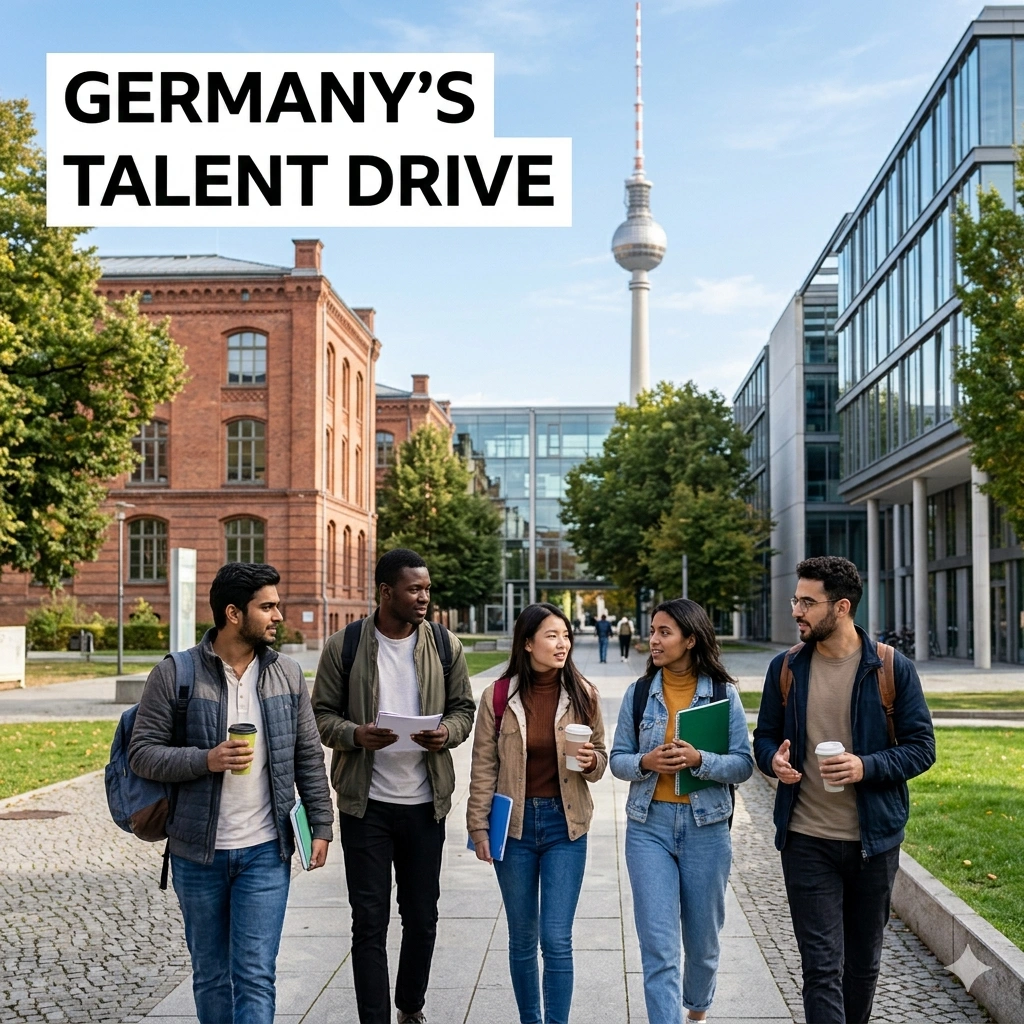
Understanding the Economic Necessity of Qualified Migration
The core reason Germany bets on international students lies in the sheer scale of its impending labor deficit across all industrial sectors. Without a consistent influx of skilled graduates, the German “Mittelstand” or medium-sized enterprises would lose their global competitive edge. Government officials have recognized that attracting students is more effective than recruiting mid-career professionals who may face higher cultural barriers. Students who graduate from German institutions are already integrated into the local culture and possess the specific technical skills required by German employers.
This proactive approach involves substantial investment in university infrastructure and the removal of bureaucratic hurdles that previously hindered non-EU citizens. The focus is no longer just on academic excellence but on the practical application of knowledge within the local labor market. As a result, the bridge between the classroom and the corporate office has never been shorter or more efficient in German history. This integration is vital for maintaining the high productivity standards that the German economy is known for globally.
GERMANY BETS ON INTERNATIONAL STUDENTS
The specific phrase Germany bets on international students summarizes the nation’s 2026 strategy to remain an industrial superpower through intentional demographic management. By focusing on international talent, the country is effectively importing the innovation and energy needed to sustain its massive manufacturing base. This bet is backed by significant legislative changes that simplify the transition from a student visa to a permanent work permit. Education has become the primary filter through which the state identifies and retains the world’s most promising young professionals.
Furthermore, the public university system remains largely tuition-free, which serves as a powerful magnet for students from diverse economic backgrounds. While other nations are increasing fees, Germany maintains its commitment to accessible education as a long-term investment in its social security system. The logic is simple: a student who pays no tuition today will pay decades of income tax tomorrow. This visionary fiscal policy is why Germany bets on international students as a central pillar of its sovereign wealth and social stability.
The Rise of English-Taught Programs in Public Universities
One of the most significant changes in the German academic landscape is the proliferation of English-language degrees, which now total roughly 2,400 programs. This expansion ensures that Germany bets on international students who may not yet be fluent in the German language but possess high-level technical skills. By lowering the linguistic barrier for entry, universities are attracting a broader demographic of applicants from India, China, and the Americas. This inclusivity is a strategic choice to ensure that language does not become a bottleneck for talent acquisition.
However, the government still encourages German language acquisition during the course of study to facilitate better social integration and workplace safety. Most universities now offer mandatory or highly subsidized language courses alongside technical subjects like engineering or data science. This dual-track approach ensures that by the time a student graduates, they are linguistically prepared for the local market. The success of these English-taught programs is a testament to Germany’s flexibility in a rapidly changing global education market.
Structured Migration Pathways and Post-Study Work Rights
Germany offers a predictable and structured migration pathway that is currently more attractive than the volatile policies seen in the UK or Australia. Graduates are permitted to stay in the country for up to 18 months specifically to find a job related to their degree. During this period, they have full access to the labor market, allowing them to gain internship experience or secure permanent roles. This period of security is a major factor in why Germany bets on international students over other destinations.
Once a graduate secures a position, the transition to an EU Blue Card or a German residence permit is streamlined and highly efficient. The 2026 regulations have further shortened the timeline for applying for permanent residency and even citizenship for high-achieving graduates. This clarity of purpose provides students with the peace of mind necessary to commit several years of their lives to the German system. It transforms the “study abroad” experience into a “life abroad” reality, which is the ultimate goal of the current administration.
- Graduates can stay for 18 months post-graduation to seek relevant employment.
- The EU Blue Card provides a direct path to permanent residency for skilled workers.
- Fast-track citizenship options are available for those who demonstrate exceptional integration.
- Family reunification policies have been eased to support long-term settlement of talent.
Addressing the Housing Crisis in Major Educational Hubs
Despite the optimistic outlook, the fact that Germany bets on international students brings significant logistical challenges, particularly regarding affordable housing. Cities like Berlin, Munich, and Hamburg are experiencing acute apartment shortages that can deter prospective students from enrolling. The surge in international enrollment—recently reaching a 6% annual increase—has placed immense pressure on existing student dormitories and private rental markets. Local governments are now racing to approve new construction projects specifically designated for student living.
To mitigate this, many universities are partnering with private developers to create “student villages” that offer all-inclusive living arrangements. There is also a push to encourage students to look at institutions in smaller cities or eastern Germany, where housing is more plentiful and affordable. These regional universities often have closer ties to local industry, providing unique career opportunities that are not as competitive as those in the capital. Solving the housing puzzle remains the most critical task for ensuring the sustainability of this migration strategy.
Industry Partnerships and Practical Career Integration
A key component of the strategy where Germany bets on international students is the deep collaboration between academia and the industrial sector. German “Fachhochschulen” or universities of applied sciences are renowned for their practical approach, often requiring mandatory internships within German companies. These partnerships allow students to build professional networks before they even receive their diplomas, significantly increasing their employability. Employers, in turn, get a first look at potential recruits and can shape the curriculum to meet current technological demands.
In 2026, these industry links have been digitized and expanded through national talent portals that match students with companies based on their field of study. This ecosystem ensures that the “talent gap” is addressed with precision, placing engineers in automotive hubs and IT specialists in tech clusters. This level of coordination between the state, the private sector, and educational institutions is unique to the German model. It minimizes the risk of underemployment and ensures that the investment in international education yields a high economic return.
- Mandatory internships provide direct exposure to the German corporate environment.
- Project-based learning often involves solving real-world problems for local manufacturers.
- Career fairs on campus are frequently attended by global giants like Siemens and Bosch.
Comparison with Other Global Education Hubs
When examining why Germany bets on international students, it is helpful to compare its policies with other major nations. While Canada and the UK have recently introduced caps on international student numbers due to political pressure, Germany is doing the opposite. The German government views international students as a solution rather than a problem, leading to more welcoming rhetoric and stable visa processing. This divergence in policy is causing a significant shift in global student mobility patterns toward Central Europe.
The predictability of the German system is its greatest asset in the 2026 market. Students and their families are increasingly risk-averse, preferring a destination where the rules of migration are unlikely to change overnight. Germany’s commitment to “qualified migration” is a long-term bipartisan consensus, which provides a level of political stability that is currently rare in the West. This stability, combined with the lack of tuition fees, creates an unbeatable value proposition for the world’s brightest minds.
Long-Term ROI for Students and the German State
The return on investment for the student is clear: a world-class education followed by a high-paying career in one of the world’s most stable economies. For the state, the ROI is measured in the billions of euros added to the GDP and the preservation of the social safety net. Because Germany bets on international students, it is effectively future-proofing its economy against the inevitable decline of its native-born workforce. Every successful integration of an international graduate is a victory for the country’s demographic resilience.
Furthermore, these students often become unofficial ambassadors for Germany, strengthening international trade and diplomatic ties with their home countries. This “soft power” is a secondary but significant benefit of the internationalization of German campuses. As these graduates rise to leadership positions globally, their familiarity with German standards and business culture facilitates smoother international cooperation. The 2026 data suggests that this strategy is not just about filling jobs, but about building a global network of German-educated professionals.
- High starting salaries for graduates in STEM fields contribute to immediate tax revenue.
- International alumni networks foster global trade partnerships with German firms.
- Cultural diversity on campus prepares domestic students for a globalized workforce.
- Long-term retention rates for international graduates in Germany are among the highest in the OECD.
The Role of Private Universities in Talent Acquisition
While public universities handle the bulk of students, private institutions are playing an increasingly important role in how Germany bets on international students. These private entities often offer more specialized programs and personalized career services tailored to the needs of non-EU applicants. They are particularly effective at responding quickly to market trends, such as the sudden demand for AI specialists or renewable energy experts. Private universities often have higher tuition fees, but they justify this through intensive language support and direct job placement guarantees.
The government has supported the growth of the private sector by streamlining accreditation processes, ensuring that degrees from these institutions carry the same weight as public ones. This hybrid model allows for a more flexible and scalable education sector that can adapt to the changing needs of the 7.5 million-worker gap. By fostering a competitive environment, Germany ensures that the quality of education remains high across both public and private spheres. This diversity of choice is another reason why Germany has become a top-tier global destination.
Germany’s Commitment to Global Innovation
In conclusion, the fact that Germany bets on international students is a calculated and necessary response to a demographic reality. By opening its doors and simplifying its systems, Germany is not just surviving a talent crisis; it is reinventing itself as a modern, diverse, and innovative nation. The success of this 2026 initiative will likely serve as a blueprint for other aging societies across the globe. As the country moves forward, the integration of global talent will remain the cornerstone of its industrial and social policy.
The journey for an international student in Germany is now more supported and clear than ever before. From the first English-taught lecture to the final citizenship ceremony, the path is designed to foster success and belonging. For those seeking a stable and prosperous future in Europe, the German “bet” is one that offers a winning hand for everyone involved. The nation’s willingness to adapt and welcome the world is its greatest strength in an uncertain global economy.
For more details & sources visit: The PIE News
Read more about Germany news on 360 News Orbit – Germany.