
Russian Intelligence Hackers have launched a massive global cyber-espionage campaign, compromising over 18,000 routers to intercept sensitive data. This sophisticated operation, linked to the GRU’s “Fancy Bear” group, targets home and small business devices across 120 countries to steal passwords and bypass authentication.
The campaign specifically exploits unpatched MikroTik and TP-Link hardware to redirect legitimate internet traffic toward malicious spoofed websites. This allows the Russian Intelligence Hackers to capture session tokens and login credentials without the victim ever realizing their connection has been compromised.
Security agencies worldwide are issuing urgent warnings as the scope of the attack expands into government and law enforcement sectors. Understanding the methods used by Russian Intelligence Hackers is the first step in securing your digital perimeter against this ongoing international threat.
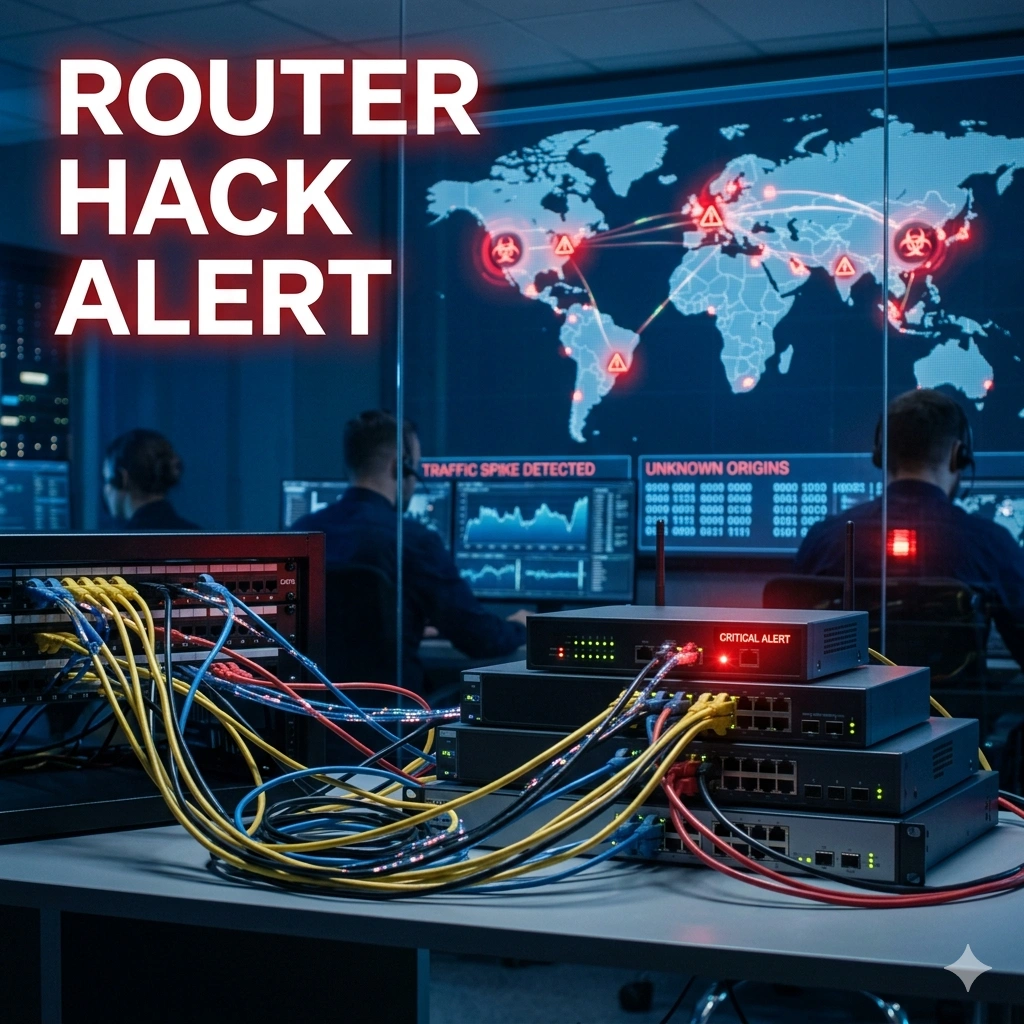
Russian Intelligence Hackers
Russian Intelligence Hackers, specifically the group known as APT 28 or Fancy Bear, have successfully weaponized thousands of consumer-grade routers. By gaining administrative access to these devices, they can modify internal DNS settings to control exactly where a user’s traffic is routed.
This method allows Russian Intelligence Hackers to perform “man-in-the-middle” attacks on a global scale, affecting 120 different nations simultaneously. The primary goal is the theft of authentication tokens, which are then used to bypass two-factor security measures on high-value accounts.
Experts note that Russian Intelligence Hackers often target Southeast Asia and North Africa to gather intelligence on foreign policy and military movements. The opportunistic nature of the initial infection means that anyone with an outdated router could inadvertently become a part of this botnet.
Exploiting Unpatched Firmware
The core of the strategy used by Russian Intelligence Hackers involves identifying devices that have not received a security update in several years. Many home users rarely check their router settings, making them easy targets for automated exploit kits developed by the GRU.
Once Russian Intelligence Hackers find a vulnerable device, they inject a malicious payload that persists even after the router is rebooted. This persistent access ensures that the hackers can continue to monitor traffic and steal data over a prolonged period of time.
To defend against Russian Intelligence Hackers, security researchers recommend enabling automatic updates on all networking hardware. Closing these known vulnerabilities is the most effective way to prevent your device from being hijacked for state-sponsored espionage activities.
Redirection and Traffic Interception
The technical sophistication of the Russian Intelligence Hackers is evident in how they redirect traffic without triggering standard browser warnings. By using valid-looking certificates on their spoofed sites, they trick users into entering their most sensitive information.
When a user attempts to visit their email provider, Russian Intelligence Hackers send them to a mirror site that looks identical to the real thing. Once the password and token are captured, the user is often redirected back to the legitimate site, leaving no trace of the theft.
This level of precision highlights why Russian Intelligence Hackers are considered one of the most dangerous state-sponsored groups in the world today. Their ability to remain hidden while operating at such a massive scale is a testament to their technical resources.
Targeting Government and Law Enforcement
While the initial infection phase is broad, Russian Intelligence Hackers eventually narrow their focus on specific high-value targets within the compromised network. This includes government departments, law enforcement agencies, and international email providers.
By filtering the traffic flowing through 18,000 routers, Russian Intelligence Hackers can identify specific individuals of interest for deeper surveillance. This selective targeting allows the GRU to gather strategic intelligence while maintaining a large network of “zombie” devices.
Security agencies in the UK and the US have warned that Russian Intelligence Hackers are looking for internal documents and private communications. These stolen assets are often used for blackmail, political manipulation, or to gain a competitive advantage in international negotiations.
The Global Reach of APT 28
The reach of the Russian Intelligence Hackers extends across Central America, North Africa, and Southeast Asia, creating a truly global web of compromised nodes. This geographic diversity makes it incredibly difficult for international law enforcement to shut down the entire operation.
Each region provides unique intelligence opportunities for the Russian Intelligence Hackers, depending on the geopolitical interests of the Kremlin at any given time. The botnet acts as a versatile tool that can be shifted to different targets with a few lines of code.
International cooperation is now at a record high as nations work together to dismantle the infrastructure used by Russian Intelligence Hackers. Sharing threat intelligence is the only way to keep up with the rapid pace of their digital incursions.
Bypassing Two-Factor Authentication
One of the most alarming aspects of the campaign by Russian Intelligence Hackers is their ability to bypass 2FA by stealing active session tokens. These tokens prove to a website that a user has already logged in, allowing the hackers to skip the security code phase.
By hijacking the router, Russian Intelligence Hackers can snatch these tokens as they pass through the network in real-time. This effectively renders traditional text-message or app-based security codes useless for protecting sensitive accounts.
Cybersecurity experts are now advocating for hardware-based security keys as a more robust defense against Russian Intelligence Hackers. Unlike digital tokens, physical keys are much harder to steal through remote network exploitation.
Impact on Small Businesses
Small businesses are particularly vulnerable to Russian Intelligence Hackers because they often lack dedicated IT security staff to manage their networks. A single compromised router in a small office can expose the data of every employee and customer.
The Russian Intelligence Hackers exploit this lack of oversight to establish long-term footholds in corporate networks. From there, they can move laterally to other devices, potentially stealing financial records or proprietary intellectual property.
It is vital for small business owners to understand that Russian Intelligence Hackers do not just target large corporations or governments. Every connected device is a potential entry point for state-sponsored actors seeking to expand their reach.
Recommendations from the NCSC
The UK’s National Cyber Security Centre has issued a set of urgent recommendations to combat the threat posed by Russian Intelligence Hackers. The first step is to perform a factory reset on any router that is suspected of being compromised.
Following the reset, users must immediately update to the latest firmware to block the entry points used by Russian Intelligence Hackers. Changing default passwords to strong, unique phrases is another critical step in hardening the device against future attacks.
The NCSC also advises disabling remote management features that allow Russian Intelligence Hackers to access the router from the open internet. Keeping the management interface restricted to local connections significantly reduces the attack surface.
Role of Black Lotus Labs
Researchers at Black Lotus Labs were instrumental in uncovering the command-and-control structure used by Russian Intelligence Hackers. Their analysis revealed how the hackers utilized a decentralized network to manage their 18,000 compromised routers.
By mapping the connections, they were able to identify the specific IP addresses used by Russian Intelligence Hackers to exfiltrate stolen data. This information has been shared with ISPs around the world to help block malicious traffic at the source.
The work of private security firms is essential in the fight against Russian Intelligence Hackers, as they often have the visibility into global traffic patterns that government agencies may lack. This public-private partnership is a key defense mechanism in 2026.
Future Trends in State-Sponsored Hacking
The tactics used by Russian Intelligence Hackers in this campaign suggest a shift toward more persistent and stealthy network-level attacks. As endpoint security on computers improves, hackers are moving “down the stack” to networking hardware.
We can expect Russian Intelligence Hackers to continue refining their methods for hijacking “Internet of Things” (IoT) devices in the coming years. Every smart device in a home or office represents a new potential tool for state-sponsored espionage.
The evolution of Russian Intelligence Hackers requires a corresponding evolution in how we think about home network security. The router is no longer just a utility; it is the front line of a global digital conflict.
Human Element in Cyber Defense
While technology plays a major role, the human element remains a significant factor in the success of Russian Intelligence Hackers. Social engineering and the failure to follow basic security hygiene are often what allow these attacks to succeed.
Educating users about the risks posed by Russian Intelligence Hackers is a long-term project that requires constant effort. Awareness campaigns can help people recognize the signs of a compromised connection, such as unusual lag or frequent log-out requests.
By fostering a culture of security, we can make it much more difficult for Russian Intelligence Hackers to find easy targets. Collective vigilance is the best way to protect the global internet ecosystem from those who wish to exploit it.
Technical Analysis of the Malware
Technical reports on the malware used by Russian Intelligence Hackers show that it is highly modular, allowing for different functions to be added as needed. This flexibility allows the hackers to switch from simple data theft to full-scale network disruption.
The code used by Russian Intelligence Hackers is designed to be “fileless” in some cases, meaning it runs entirely in the router’s memory. This makes it incredibly difficult for traditional antivirus software to detect the presence of the infection.
Understanding the internal workings of this malware is a top priority for security researchers trying to stay ahead of Russian Intelligence Hackers. Reverse-engineering the code allows for the creation of better detection signatures and defensive tools.
Response from Router Manufacturers
Manufacturers like MikroTik and TP-Link have responded to the threat of Russian Intelligence Hackers by releasing emergency patches and security advisories. They are working to simplify the update process for non-technical users to ensure higher adoption rates.
However, the challenge remains that millions of older devices are “end-of-life” and no longer receive updates against Russian Intelligence Hackers. In these cases, the only safe option is for the user to replace the hardware entirely with a modern, supported model.
The pressure on manufacturers to prioritize security over features is increasing as a result of the Russian Intelligence Hackers campaign. Secure-by-design principles are becoming the new standard for the next generation of networking equipment.
Global Geopolitical Consequences
The actions of Russian Intelligence Hackers have significant geopolitical consequences, further straining the relationship between Russia and the Western world. Sanctions and diplomatic expulsions are often the result of these high-profile cyber-espionage operations.
The use of Russian Intelligence Hackers to target 120 countries shows a blatant disregard for international norms and digital sovereignty. This aggressive posture is likely to lead to stricter international regulations regarding state behavior in cyberspace.
As the digital and physical worlds continue to merge, the impact of Russian Intelligence Hackers on global stability will only grow. Protecting the integrity of the internet is now a matter of national security for every country involved.
Summary of the Router Hijacking Incident
The hijacking of 18,000 routers by Russian Intelligence Hackers is a wake-up call for the entire world. It demonstrates the scale and ambition of modern cyber-espionage and the vulnerability of our daily networking hardware.
- Infection Count: Over 18,000 routers globally.
- Countries Affected: 120 nations across multiple continents.
- Target Hardware: Primarily unpatched MikroTik and TP-Link devices.
- Primary Goal: Theft of passwords, tokens, and 2FA bypass.
The world must remain vigilant against the threat of Russian Intelligence Hackers to ensure the safety of our private data and national secrets. Taking the time to secure your router today can prevent a major security breach tomorrow.
Conclusion and Final Warnings
The campaign by Russian Intelligence Hackers serves as a stark reminder that the internet is a battlefield where state actors are constantly vying for control. The 18,000 compromised routers are just one part of a much larger and more complex puzzle.
Staying ahead of Russian Intelligence Hackers requires constant effort and a commitment to security best practices at every level of society. From the home user to the government official, everyone has a role to play in digital defense.
As we move further into 2026, the threat from Russian Intelligence Hackers will likely continue to evolve, finding new ways to exploit the technology we rely on every day. Our response must be equally adaptive, combining technical innovation with human awareness.
The theft of passwords and tokens is a serious violation of privacy, but it is also a signal of a much broader conflict. By securing our routers, we are not just protecting ourselves; we are defending the very foundations of a free and open internet.
Final checks of your home network should be performed immediately to ensure you are not one of the thousands currently being monitored by Russian Intelligence Hackers. Don’t wait for a notification of a breach to take action.
For more details & sources visit: TechCrunch
Read more about Russia news on 360 News Orbit – Russia