
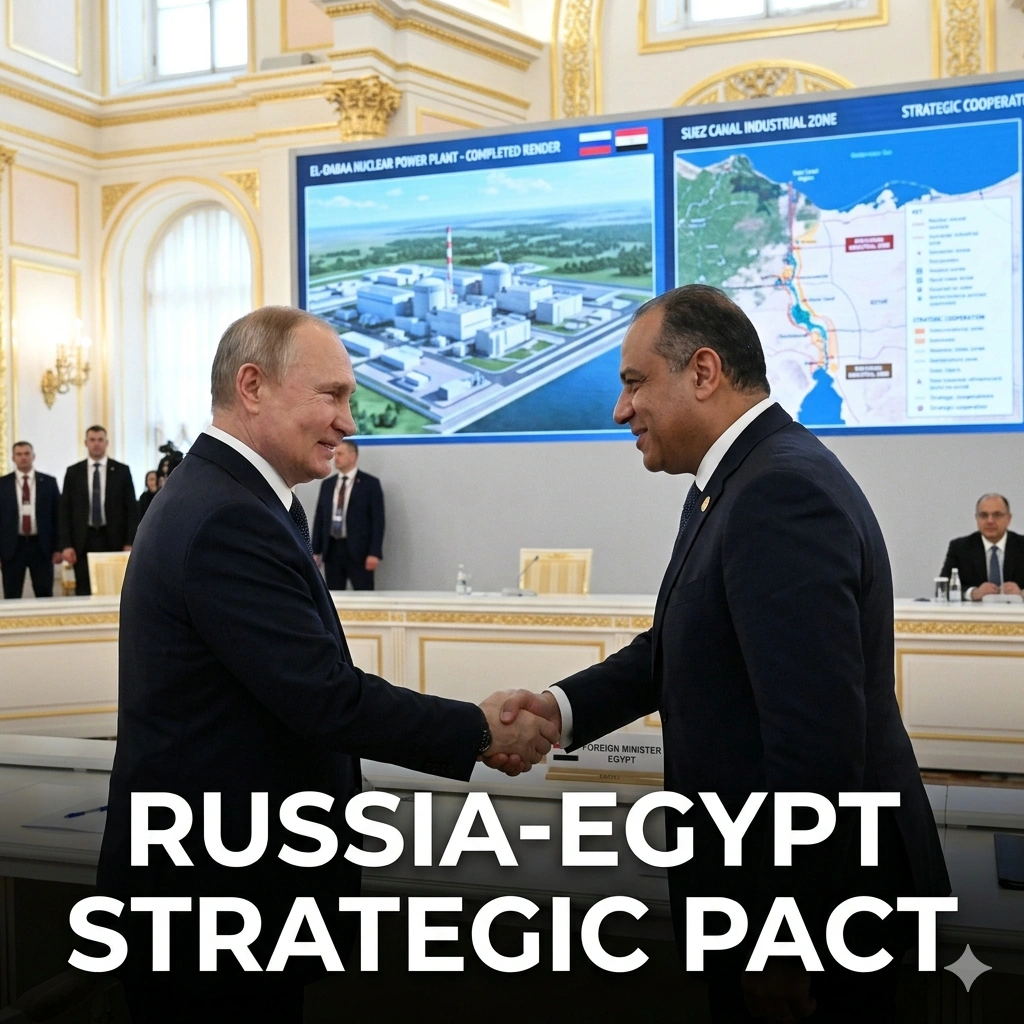
Russian President Vladimir Putin and Egypt’s top diplomat have solidified a historic partnership aimed at reshaping regional power dynamics. This high-level meeting at the Kremlin comes at a pivotal moment, as both nations seek to navigate the complexities of a volatile Middle East. The discussions highlight a shared commitment to long-term stability and economic prosperity through massive infrastructure investments. By reinforcing these ties, both Moscow and Cairo are sending a clear signal to the international community about the strength of their bilateral relations. The collaboration spans across critical sectors, including nuclear energy, industrial manufacturing, and high-level diplomatic coordination. As global tensions fluctuate, this strategic alignment serves as a cornerstone for African and Mediterranean security.
The Strategic Importance of the Russia Egypt Alliance
The Russia Egypt Alliance serves as a fundamental pillar of Russia’s foreign policy strategy within the African continent. This partnership is not merely transactional but represents a deep-seated geopolitical commitment to mutual growth and security. Egypt’s unique geographical position makes it an indispensable partner for Russia’s maritime and trade ambitions.
Furthermore, the alliance allows Egypt to diversify its international relations, balancing its traditional Western ties with a strong Eastern partnership. This multi-vector approach provides Cairo with greater leverage in regional negotiations and access to advanced Russian technology. The economic synergy between the two nations has reached unprecedented levels in recent years.
Consequently, the Kremlin views Egypt as a gateway to the broader African market, while Cairo sees Russia as a reliable source of energy and industrial expertise. The recent meetings have only served to deepen this trust, paving the way for decades of cooperation. Both leaders are committed to ensuring that this partnership remains resilient against external political pressures.
Accelerating the El-Dabaa Nuclear Power Plant Project
A primary focus of the Russia Egypt Alliance is the construction of the $28 billion El-Dabaa Nuclear Power Plant. This massive undertaking is largely financed through a Russian state loan, covering 85% of the total project costs. The facility is set to become a beacon of modern engineering and clean energy in the North African region.
Once the four Generation III+ reactors are fully operational by 2028, Egypt will secure its position as a regional energy superpower. This project provides thousands of local jobs and fosters a new generation of Egyptian nuclear scientists trained by Russian experts. The technical exchange involved in this project is a testament to the depth of the alliance.
Russian energy giant Rosatom is leading the construction, ensuring that the highest safety standards are met throughout the process. This facility will not only provide electricity for millions of homes but also power the industrial expansion currently underway. The success of El-Dabaa is a central metric for the strength of the partnership.
Russia Egypt Alliance
The Russia Egypt Alliance is currently manifesting in the physical development of the Russian Industrial Zone (RIZ) near the Suez Canal. This ambitious project aims to create a manufacturing hub that utilizes Egypt’s strategic trade routes to supply goods across Africa and the Middle East. It represents a significant shift from traditional trade to localized industrial production.
[Image showing a conceptual map of the Russian Industrial Zone on the Suez Canal with the Russia Egypt Alliance text in the alt-tag]
Ten major Russian firms have already committed to establishing operations within this zone, ranging from automotive manufacturers to heavy machinery producers. This industrial footprint ensures that the economic ties between the two nations are tangible and long-lasting. The RIZ is expected to become a central node in the global supply chain for Russian products.
By situating this hub at the Suez Canal, Russia gains unparalleled access to one of the world’s most important shipping lanes. Egypt, in turn, benefits from the influx of foreign direct investment and technology transfer. This mutual economic benefit is a core driver of the continued warmth in bilateral relations.
Diplomatic Coordination Amid Middle East Volatility
The Russia Egypt Alliance is playing a critical role in stabilizing a region currently shaken by conflicts involving major global powers. President Putin and Foreign Minister Badr Abdelatty spent considerable time discussing strategies to mitigate the fallout from recent hostilities. Their goal is to foster a diplomatic environment where dialogue takes precedence over military action.
- Both nations are advocating for a multi-polar approach to regional security challenges.
- Russia and Egypt are coordinating their stances within international bodies like the United Nations.
- The alliance seeks to involve other regional players in a comprehensive peace process.
- Joint efforts are being made to address humanitarian crises resulting from regional instability.
Cairo’s role as a mediator is bolstered by its strong relationship with Moscow, providing a unique channel for communication between conflicting parties. President Putin has explicitly recognized Egypt’s “key” status in maintaining the delicate balance of power in the Middle East. This diplomatic synergy is essential for preventing further escalation in the region.
Industrial Expansion and the Suez Canal Hub
The development of the Russian Industrial Zone is a masterstroke within the Russia Egypt Alliance framework. This zone is designed to act as a launchpad for Russian companies to enter the African Continental Free Trade Area. The logistical advantages of the Suez Canal make it an ideal location for such an ambitious international project.
Beyond the automotive sector, the zone is expected to house chemical processing plants and specialized electronics assembly lines. This diversification of industry within the RIZ will create a resilient economic ecosystem. The Egyptian government has provided significant tax incentives and streamlined regulations to facilitate this growth.
Russian engineers and managers are working closely with their Egyptian counterparts to ensure the zone meets international standards. This collaborative spirit is a hallmark of the modern relationship between the two countries. The RIZ is more than just a business park; it is a symbol of a shared industrial future.
Russia’s Strategic Pivot to Africa via Cairo
The Russia Egypt Alliance is the cornerstone of the Kremlin’s broader “Pivot to Africa” strategy. By strengthening its position in Egypt, Russia establishes a reliable base of operations for its diplomatic and economic outreach across the continent. This move is particularly significant as African nations seek to diversify their global partnerships.
Egypt’s influence within the African Union makes it an ideal partner for Russia’s continental ambitions. The upcoming Russia-Africa Summit, which President el-Sisi has been invited to co-chair, will be a defining moment for this strategy. It will showcase the practical benefits of the alliance to other African leaders.
Moscow is offering African nations an alternative to Western-led development models, focusing on sovereign industrialization and energy security. The success of the Egyptian model serves as a powerful case study for other countries in the region. This continental outreach is a long-term project that requires the stability provided by the Cairo-Moscow axis.
Cooperation in the Automotive and Manufacturing Sectors
Within the Russia Egypt Alliance, the automotive industry is emerging as a surprising area of growth. Russian car manufacturers are looking to assemble vehicles in Egypt to take advantage of lower production costs and proximity to emerging markets. This move helps Russia maintain its manufacturing output despite international sanctions.
The manufacturing sector in the Russian Industrial Zone is not limited to vehicles; it also includes the production of agricultural machinery. This equipment is vital for the food security of many African nations, further enhancing the strategic value of the RIZ. The transfer of manufacturing knowledge is a key component of this cooperation.
- Egyptian workers are receiving specialized training in Russian manufacturing techniques.
- New assembly lines are being designed to handle both domestic and export demand.
- The partnership includes the development of local supply chains for raw materials.
- Joint research initiatives are looking into the adaptation of machinery for African climates.
These industrial efforts provide a solid foundation for the economic partnership, moving it beyond simple commodity trading. The integration of Russian technology into the Egyptian manufacturing landscape is a long-term investment. This cooperation ensures that both nations remain competitive in the global industrial market.
The Role of the Russia-Africa Summit 2026
The Russia Egypt Alliance will be front and center during the Russia-Africa Summit scheduled for October 2026. This event is expected to be the largest gathering of its kind, with a focus on sustainable development and security cooperation. Egypt’s co-chairmanship of the summit highlights its leadership role on the continent.
President Putin intends to use this platform to announce new investment packages and security agreements with various African nations. The summit will also serve as a forum to discuss the transition to a more equitable global financial system. Egypt’s involvement ensures that the agenda reflects the specific needs of African economies.
The preparation for this summit involves intense diplomatic activity between Moscow and Cairo. Both sides are working to ensure that the outcomes are actionable and lead to measurable improvements in continental stability. The summit is a clear indication that the Russia-Africa partnership is entering a new, more mature phase.
Addressing Regional Conflicts and Global Security
The Russia Egypt Alliance is deeply concerned with the ongoing conflict involving the U.S., Israel, and Iran. During the Kremlin talks, both sides emphasized the need for a balanced approach that respects the sovereignty of all nations involved. They are working to prevent the regional volatility from spiraling into a larger global crisis.
Putin expressed a readiness to work with various international leaders, including the U.S. administration, to find common ground. Egypt’s longstanding diplomatic ties with all major players in the Middle East make it a vital intermediary. This cooperative security model is a core tenet of the alliance’s foreign policy.
The two nations are also collaborating on counter-terrorism efforts across the Sinai Peninsula and North Africa. Sharing intelligence and tactical expertise has become a routine part of their security relationship. This cooperation is vital for protecting the economic investments, such as the El-Dabaa plant, from asymmetric threats.
Economic Resilience Through the Russia Egypt Alliance
In an era of global economic uncertainty, the Russia Egypt Alliance provides a much-needed sense of stability for both nations. The use of local currencies in bilateral trade is being explored to reduce dependency on the U.S. dollar. This financial strategy is part of a broader trend among BRICS nations and their partners.
The trade volume between Russia and Egypt has seen consistent growth, driven by agricultural exports and industrial equipment. Russia remains a major supplier of wheat to Egypt, ensuring the food security of its large population. In return, Egypt provides a stable market for Russian energy and technology.
This economic resilience is built on a foundation of mutual necessity and shared strategic goals. Both nations understand that their prosperity is linked to the success of their joint projects. The Russia Egypt Alliance is therefore a pragmatic response to the challenges of the modern global economy.
The Future of Energy Cooperation Beyond Nuclear
While the El-Dabaa plant is the most visible part of the Russia Egypt Alliance in the energy sector, other areas of cooperation are also expanding. Joint ventures in oil and gas exploration are being discussed, particularly in the Eastern Mediterranean. Russia’s expertise in deep-sea drilling is highly valued by the Egyptian government.
The alliance is also looking toward future energy technologies, including green hydrogen and renewable energy components. The Russian Industrial Zone could potentially house factories for solar panels and wind turbine parts. This forward-looking approach ensures that the energy partnership remains relevant in a changing global landscape.
By diversifying their energy cooperation, Russia and Egypt are preparing for a long-term transition to more sustainable power sources. This strategic foresight is a key strength of their bilateral relationship. The energy sector will remain the backbone of the alliance for the foreseeable future.
Cultural and Educational Exchanges
The Russia Egypt Alliance is also being strengthened through increased cultural and educational ties. Thousands of Egyptian students are currently enrolled in Russian universities, particularly in engineering and medical fields. These students act as cultural ambassadors, building lifelong bridges between the two societies.
- Scholarship programs have been expanded to encourage more academic exchange.
- Cultural festivals showcasing Russian and Egyptian art are becoming more frequent.
- Language programs are being established to facilitate better communication in business.
- Joint scientific research projects are tackling issues like water scarcity and climate change.
These people-to-people connections ensure that the alliance has deep roots in both societies. It is not just a partnership between leaders, but a growing connection between the Russian and Egyptian people. This cultural depth provides the social capital necessary to sustain the relationship through political shifts.
Conclusion: A Partnership for the New Era
The Russia Egypt Alliance has proven itself to be a resilient and multifaceted partnership that goes beyond simple geopolitics. Through massive investments like the El-Dabaa nuclear plant and the Suez industrial zone, the two nations are building a shared future. Their diplomatic coordination is essential for the stability of the Middle East and Africa.
As the world transitions toward a multi-polar order, the strength of the Cairo-Moscow axis will only become more significant. Both nations have demonstrated a clear-eyed understanding of their mutual interests and a willingness to commit the necessary resources to achieve them. The alliance stands as a model for modern international cooperation.
The meetings between President Putin and Foreign Minister Badr Abdelatty have set a clear course for the coming years. With the Russia-Africa Summit on the horizon, the impact of this alliance will be felt far beyond the borders of Egypt. The Russia Egypt Alliance is truly a cornerstone of 21st-century diplomacy.
For more details & sources visit: Modern Diplomacy
Read more about Egypt news on 360 News Orbit – Egypt.