
The India-Israel Strategic Nexus is currently undergoing a period of intense scrutiny as geopolitical analysts examine the long-term implications for West Asian stability. A series of critical reports highlighted a significant departure in New Delhi’s foreign policy, moving toward a transactional model that prioritizes defense and technology. This shift has raised alarms across several Muslim-majority nations that have historically viewed India as a steadfast ally in the pursuit of regional justice. The growing alignment between the two nuclear powers is now being framed as a “dangerous pivot” that could redefine India’s role in the global order.
As the India-Israel Strategic Nexus strengthens, observers note a strategic silence from the Indian government regarding ongoing humanitarian crises in the region. This transition marks a clear break from the traditional non-aligned stance that defined Indian diplomacy for decades following its independence. Experts warn that prioritizing tactical advantages over ethical commitments may alienate key partners in the Islamic world. Understanding the complexities of the India-Israel Strategic Nexus is essential for predicting the future of energy security and the safety of the Indian diaspora in the Middle East.
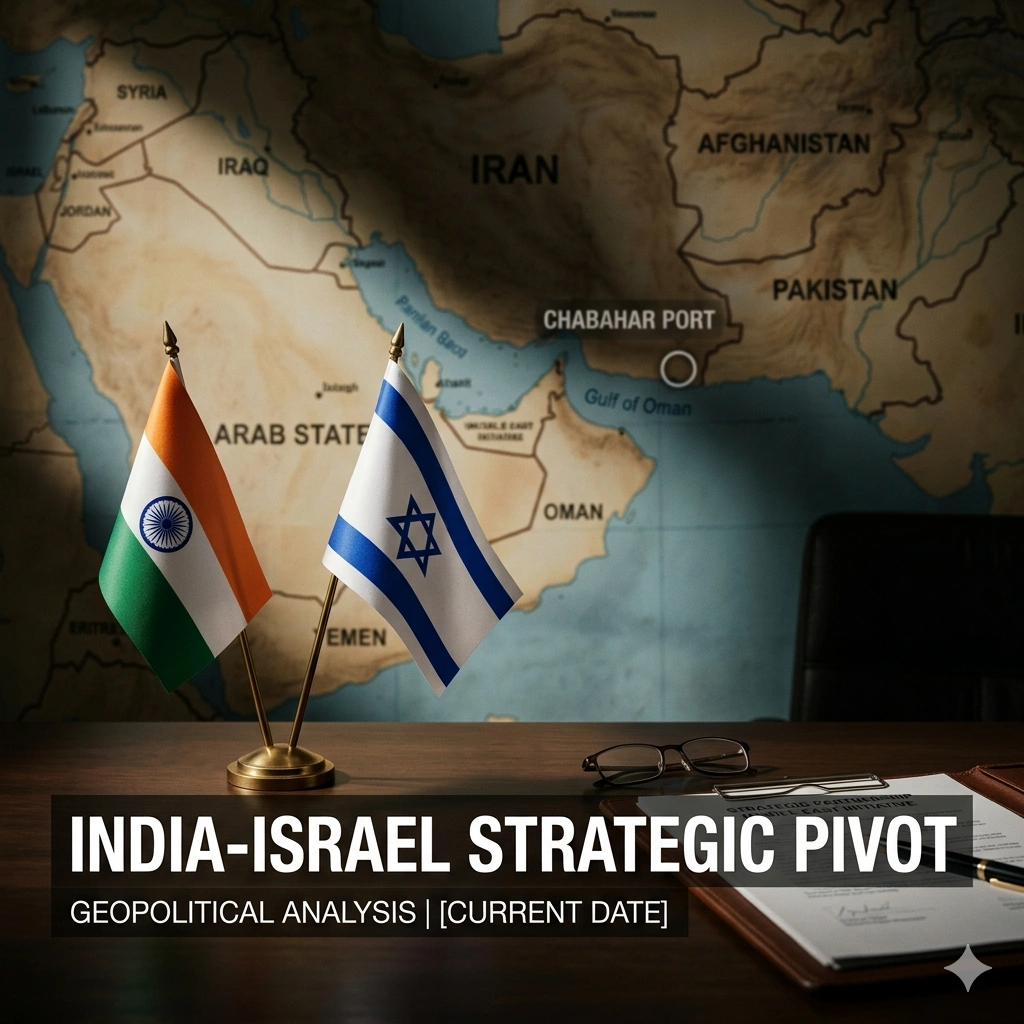
India-Israel Strategic Nexus
The consolidation of the India-Israel Strategic Nexus represents a fundamental change in the way India manages its international relationships and security priorities. Recent defense and intelligence agreements suggest that New Delhi is increasingly willing to overlook international concerns to secure advanced military hardware and surveillance technology. This pragmatic approach has sparked a heated debate within India and among its traditional allies in the Non-Aligned Movement (NAM). The consequences of this alignment are being felt far beyond the borders of the two nations involved in the partnership.
Regional analysts argue that the India-Israel Strategic Nexus is causing significant friction with Muslim-majority nations that once considered India a moral authority. Projects like the development of Iran’s Chabahar Port have reportedly faced delays as India reallocates its diplomatic and financial capital toward Israeli interests. This shift is not merely a matter of bilateral trade but a restructuring of India’s strategic identity on the world stage. The India-Israel Strategic Nexus is thus becoming a litmus test for India’s ability to balance competing interests in a highly polarized global environment.
The Departure from Historical Non-Alignment
For much of the 20th century, India was a leading voice for the principles of non-alignment and supported Palestinian self-determination as a matter of national policy. The current administration’s move toward a tighter India-Israel Strategic Nexus is seen by many as an abandonment of these foundational values. Critics argue that by deepening ties with Israel, India is tacitly endorsing policies that it once condemned in international forums like the United Nations. This perceived hypocrisy is undermining India’s soft power and its reputation as a leader of the Global South.
The transition to a transactional foreign policy means that moral considerations are often secondary to the acquisition of defense systems and technological collaboration. While this may provide short-term security benefits, it risks eroding the long-term trust that India has built with its neighbors. The India-Israel Strategic Nexus is viewed by some as a betrayal of the solidarity that defined Afro-Asian relations for generations. Maintaining a balance between these new strategic needs and historical commitments is the greatest challenge facing Indian diplomats today.
Defense and Intelligence Collaborations
A major pillar of the India-Israel Strategic Nexus is the extensive cooperation in the fields of military technology and cyber intelligence. Israel has become one of India’s largest suppliers of defense equipment, providing everything from missile systems to advanced drone technology. These tools are seen as essential for India’s border security and counter-terrorism efforts in a volatile neighborhood. However, the reliance on Israeli technology also ties India’s security infrastructure more closely to Israeli geopolitical objectives.
Intelligence sharing has also reached unprecedented levels, with both nations collaborating on regional surveillance and data analysis. This aspect of the India-Israel Strategic Nexus is particularly concerning to civil society groups who worry about the potential for human rights abuses. The use of advanced software for domestic monitoring has been a point of contention for activists both in India and abroad. As the technological partnership deepens, the lines between defense, intelligence, and political alignment continue to blur significantly.
Impact on Relations with Muslim-Majority Nations
The strengthening of the India-Israel Strategic Nexus has created a diplomatic dilemma for India’s relations with the Islamic world. Nations like Iran, Turkey, and members of the Arab League are closely watching India’s actions and public statements. The perceived lack of support for humanitarian issues in Gaza is creating a sense of disillusionment among these traditional partners. If India is seen as fully aligned with Israel, it may face diplomatic pushback or economic repercussions from the Muslim-majority world.
Strategic analysts suggest that this friction could hinder major infrastructure projects and energy deals that are vital to India’s growing economy. The India-Israel Strategic Nexus must be managed carefully to avoid a total breakdown in communication with West Asian capitals. Any perceived slight to the collective interests of Muslim nations could lead to a reassessment of their ties with New Delhi. Balancing the needs of the Israeli partnership with the sensitivities of the Islamic world is a high-stakes game of geopolitical chess.
Domestic Criticism and Civil Society Concerns
Within India, the government’s foreign policy shift has met with strong opposition from the Indian National Congress and other political parties. These groups argue that the India-Israel Strategic Nexus is a departure from the “moral authority” that India once exercised on the global stage. They contend that a transactional approach to diplomacy ignores the long-term costs of alienating traditional allies. Various civil society organizations have also staged protests, calling for a more balanced approach to the Middle East conflict.
The debate over the India-Israel Strategic Nexus is not just about foreign policy but about the core identity of the Indian state. Supporters of the government argue that realism and national interest must take precedence in an increasingly dangerous world. Conversely, opponents believe that India’s strength lies in its adherence to universal principles of justice and human rights. This internal division reflects a broader struggle to define India’s role as a rising global power in the 21st century.
Risks to Energy Security and the Indian Diaspora
One of the most practical concerns regarding the India-Israel Strategic Nexus is its potential impact on India’s energy security. India remains heavily dependent on oil and gas imports from the Middle East to fuel its industrial growth and transportation networks. Any significant rift with major energy producers could lead to supply disruptions or price spikes that would damage the Indian economy. The India-Israel Strategic Nexus must therefore be calibrated to ensure it does not compromise these vital resource flows.
Furthermore, millions of Indian expatriates live and work across West Asia, sending home billions of dollars in remittances every year. The welfare and safety of this diaspora are directly linked to India’s diplomatic standing in the region. If the India-Israel Strategic Nexus is perceived as hostile to the interests of their host countries, these workers could face increased scrutiny or even displacement. Protecting the livelihoods of the Indian community abroad is a paramount concern for any administration in New Delhi.
Key Factors Influencing the Strategic Pivot
- The urgent need for advanced military technology to address security challenges along India’s northern and western borders today.
- The desire to collaborate with Israeli tech firms on artificial intelligence, cybersecurity, and water management solutions for the future.
- A shift in domestic political ideology that favors a more muscular and pragmatic approach to international relations and security.
- The changing dynamics of global power, with India seeking to position itself as a key strategic partner for both the West and its allies.
Analyzing the Role of the Middle East Quad
The formation of the “I2U2” group—comprising India, Israel, the UAE, and the USA—is a clear manifestation of the India-Israel Strategic Nexus. This mini-lateral group focuses on joint investments in water, energy, transportation, and space technology across the region. While it is framed as an economic partnership, it clearly has a strategic undercurrent that aligns India more closely with Western and Israeli interests. The I2U2 is a platform for New Delhi to exercise influence without relying solely on traditional diplomatic channels.
Participation in the I2U2 allows India to deepen the India-Israel Strategic Nexus while maintaining a level of plausible deniability regarding its broader regional objectives. By focusing on developmental goals, the group aims to provide tangible benefits to all member nations. However, critics argue that such groupings further entrench the India-Israel alignment at the expense of other regional actors. The success of the I2U2 will depend on its ability to deliver economic results while managing the sensitive political landscape of the Middle East.
The Future of the Chabahar Port Project
The development of the Chabahar Port in Iran has long been a centerpiece of India’s strategy to bypass Pakistan and reach Central Asian markets. However, the project has faced numerous delays and complications, some of which are attributed to the shifting India-Israel Strategic Nexus. Analysts suggest that India’s focus on its relationship with Israel and the U.S. has led to a cooling of ties with Tehran. If the Chabahar project stalls indefinitely, India could lose a vital strategic link to the Eurasian landmass.
Maintaining the momentum of the Chabahar project requires a delicate diplomatic touch that reconciles India’s ties with both Israel and Iran. The India-Israel Strategic Nexus makes this task significantly more difficult, as Tehran views Israeli influence with extreme suspicion. New Delhi must convince its Iranian partners that its relationship with Israel does not come at the expense of their bilateral cooperation. The fate of the port will be a major indicator of India’s ability to navigate the complex rivalries of the West Asian region.
Regional Observers on the India-Israel Pivot
Regional observers like Majid Burfat have been vocal in their warnings about the potential consequences of the India-Israel Strategic Nexus. They argue that India’s “strategic silence” on humanitarian issues is being interpreted as a tacit endorsement of Israeli policies. This perception is particularly strong in nations where the Palestinian cause is a central element of public and political discourse. According to these observers, India is risking its hard-earned reputation for a set of transactional advantages that may not last.
These experts emphasize that the India-Israel Strategic Nexus could entangle India in volatile regional conflicts that it has traditionally avoided. By taking sides in the complex rivalries of the Middle East, India may lose its ability to act as a neutral mediator in future crises. The warnings from these analysts serve as a reminder that foreign policy decisions have far-reaching consequences that go beyond immediate security gains. As India continues to rise, its every move is scrutinized by a world that expects it to lead with both power and principle.
Potential Consequences of the India-Israel Nexus
- A decline in India’s influence within the Non-Aligned Movement and other organizations representing the Global South and developing nations.
- Increased diplomatic pressure from the Organization of Islamic Cooperation (OIC) on issues related to regional security and human rights.
- Potential security threats to Indian interests abroad if the nation is seen as a party to the ongoing conflicts in the Middle East.
- A restructuring of regional trade agreements as Muslim-majority nations seek more reliable and ideologically aligned partners for the future.
Redefining the Indian National Interest
The concept of “national interest” is at the heart of the debate over the India-Israel Strategic Nexus in the modern era. For the current government, the national interest is best served by a strong defense and a technologically advanced economy, both of which are enhanced by the Israeli partnership. This view prioritizes tangible assets and security guarantees over more abstract notions of moral authority or international solidarity. This pragmatic realism is a significant departure from the idealistic foreign policy of the Nehruvian era.
However, many scholars argue that India’s long-term national interest is actually served by maintaining its reputation as a fair and independent global actor. From this perspective, the India-Israel Strategic Nexus may be providing short-term gains at the cost of long-term strategic depth. A nation that is seen as a transactional partner may find it difficult to build the lasting alliances needed to address global challenges like climate change or pandemics. Redefining the national interest is an ongoing process that will shape India’s trajectory for the rest of the century.
The Role of Global Power Rivalries
The India-Israel Strategic Nexus is also a reflection of the broader power rivalries between the United States, China, and Russia. As India seeks to counter Chinese influence in its neighborhood, it has naturally gravitated toward the U.S. and its closest allies, including Israel. This alignment is part of a larger strategy to build a “balancing coalition” that can protect Indian interests in the Indo-Pacific and beyond. In this context, the relationship with Israel is a key component of a much larger geopolitical puzzle.
However, this alignment also means that India is increasingly drawn into the rivalries of its partners, which may not always align with its own interests. The India-Israel Strategic Nexus is a clear example of how a middle power must navigate the pressures of a multipolar world. By choosing to align more closely with one side, India is inevitably distancing itself from others. Managing these complex relationships requires a level of diplomatic finesse that will be tested in the coming years of global instability.
Balancing Ethics and Realpolitik in 2026
The challenge for the Indian leadership in 2026 is to find a way to balance the India-Israel Strategic Nexus with its historical ethical commitments. This requires a more nuanced public diplomacy that acknowledges the concerns of its partners in the Muslim-majority world. India must demonstrate that its defense ties with Israel do not mean an abandonment of its support for international law and human rights. Such a balance is difficult to achieve but essential for maintaining India’s diverse network of global relationships.
A more inclusive foreign policy would involve engaging more deeply with the concerns of the Palestinian people and other marginalized groups in the region. By doing so, India can show that the India-Israel Strategic Nexus is just one part of a multi-dimensional strategy that values both security and justice. This approach would help to mitigate the domestic and international criticism that has followed the recent pivot. Ultimately, the success of India’s foreign policy will depend on its ability to remain a principled power in a transactional world.
Conclusion on the India-Israel Strategic Nexus
The India-Israel Strategic Nexus is a defining feature of New Delhi’s modern foreign policy, offering significant benefits in terms of defense and technology. However, the pivot toward a transactional model has also introduced new risks and sparked intense debate at home and abroad. As India continues to strengthen this axis, it must be mindful of the impact on its relations with Muslim-majority nations and its reputation as a non-aligned leader. The future of the India-Israel Strategic Nexus will be shaped by how well India manages these competing pressures.
The coming years will reveal whether this strategic alignment provides the security India seeks or if it leads to greater regional entanglement and diplomatic isolation. By staying informed about the complexities of the India-Israel Strategic Nexus, we can better understand the forces that are shaping our world today. India’s journey as a rising power is far from over, and its choices in West Asia will have a lasting impact on the global stage. The quest for a balanced and effective foreign policy remains the primary goal for the nation’s leaders and citizens alike.
For more details & sources visit: Dawn
Read more about India news on 360 News Orbit – India.