
Geopolitical researchers are sounding the alarm over a dangerous escalation between Algeria and Morocco that risks destabilizing the Maghreb and undermining European energy and migration security. This intensifying security dilemma requires immediate diplomatic intervention to prevent a full-scale regional conflict. The collapse of bilateral trade and an intensifying arms race have created a volatile atmosphere where Algeria-Morocco tensions threaten to spill over into the broader Mediterranean basin. Experts argue that the European Union must adopt a unified strategy to mitigate these rising risks before they become unmanageable.
Following the 2021 severance of diplomatic ties, the friction has already damaged European interests in profound ways. When Algeria-Morocco tensions reached a breaking point, Algeria shuttered the Maghreb–Europe Gas Pipeline, which significantly reduced annual energy flows to Spain. This decision removed roughly 4 billion cubic meters of gas from the European market during a period of high demand. Furthermore, Spanish exports to the Algerian market plummeted by nearly 46% following Madrid’s shift in stance on the Western Sahara sovereignty dispute.
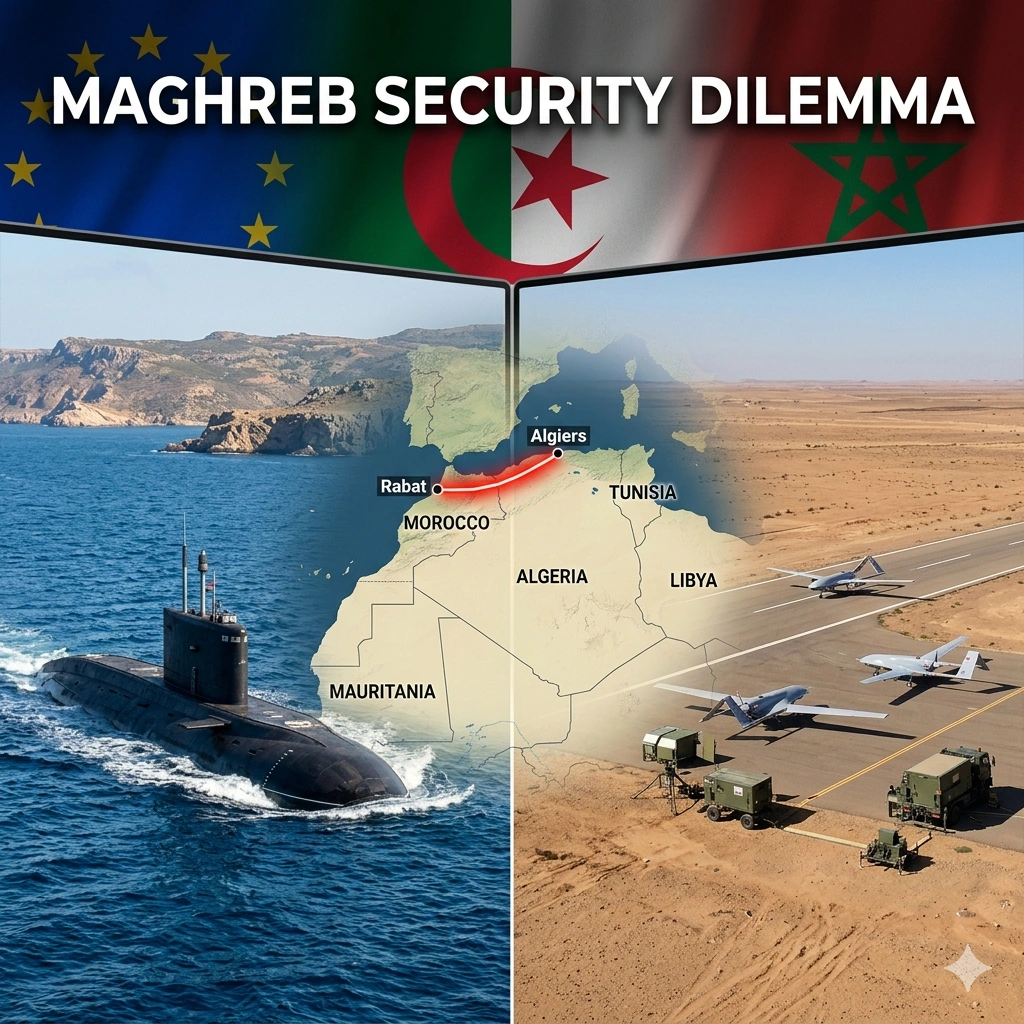
Algeria-Morocco Tensions
The current state of Algeria-Morocco tensions represents a multi-layered confrontation between North Africa’s two largest military powers. Research led by prominent analysts identifies five distinct levels of escalation that are currently driving the region toward a potential breaking point. These include divergent global alignments where Algeria leans toward Russia and China while Morocco strengthens ties with the United States and the West. This geopolitical split exacerbates the long-standing Western Sahara sovereignty dispute and fuels a massive military arms race.
Military spending in the region has reached unprecedented levels as both nations seek to achieve tactical superiority. As Algeria-Morocco tensions continue to simmer, the total collapse of economic interdependence makes the prospect of de-escalation even more difficult to achieve. Without shared trade interests to act as a buffer, the two neighbors remain locked in a security dilemma where every defensive move by one is viewed as a provocation by the other. The risk of a “hot conflict” remains a persistent concern for international observers.
Impact on European Energy Infrastructure
The disruption of energy supplies is perhaps the most immediate consequence of the current Algeria-Morocco tensions for the European continent. For decades, the Maghreb-Europe Gas Pipeline served as a vital artery for transporting Algerian natural gas through Moroccan territory into Spain and Portugal. The closure of this pipeline was a direct result of the deteriorating political climate and has forced European nations to seek more expensive alternatives. This shift has increased energy costs for millions of households across the Mediterranean.
Beyond the immediate loss of volume, the instability caused by Algeria-Morocco tensions has made long-term energy planning in the region nearly impossible. Investors are increasingly wary of backing new infrastructure projects that span across these contested borders. Italy, France, and Spain are particularly vulnerable to these disruptions, as they have historically relied on North African stability for their industrial energy needs. The persistence of this diplomatic freeze threatens the transition to greener energy sources that require regional cooperation.
Military Arms Race and Regional Stability
The massive accumulation of sophisticated weaponry is a defining characteristic of the modern Algeria-Morocco tensions. Both nations have invested billions of dollars in advanced drone technology, missile defense systems, and fighter jets. This arms race is not merely a display of national pride but a calculated effort to deter perceived aggression from across the border. However, the presence of such high-grade hardware increases the likelihood of a localized skirmish escalating into a full-scale war.
Security experts suggest that the lack of communication channels between the two military commands further heightens the danger. In the context of Algeria-Morocco tensions, a simple border misunderstanding or a technical malfunction could trigger a retaliatory strike that neither side truly desires. The absence of a “hotline” or formal military dialogue means that both capitals are operating on assumptions rather than direct intelligence. This environment of mistrust is the primary driver of the current regional instability.
Migration Pressures and Border Security
A major conflict resulting from Algeria-Morocco tensions would almost certainly trigger unprecedented migration pressures on southern Europe. Both nations serve as gatekeepers for migration routes originating in sub-Saharan Africa. If central authority in either country were weakened by war, the existing border controls would likely collapse. This would lead to a humanitarian crisis of significant proportions, overwhelming the processing capabilities of Mediterranean nations like Italy and Greece.
Current Algeria-Morocco tensions have already impacted how these nations manage their borders and cooperate with European security agencies. While some level of security cooperation remains, the political animosity hinders the exchange of intelligence regarding human trafficking networks. Europe finds itself in a difficult position, needing to balance its relationships with both Algiers and Rabat to ensure border integrity. A failure to mediate these tensions could lead to a permanent shift in migration patterns across the sea.
Diplomatic Stalemate in Western Sahara
The core of the enduring Algeria-Morocco tensions remains the unresolved question of Western Sahara. Morocco claims the territory as its sovereign land, offering an autonomy plan under its monarchy. Conversely, Algeria provides significant support to the Polisario Front, which seeks full independence for the Sahrawi people. This fundamental disagreement has paralyzed the Arab Maghreb Union and prevented any meaningful regional integration for over three decades.
Recent international shifts, including the U.S. recognition of Moroccan sovereignty over the territory, have only intensified Algeria-Morocco tensions. Algiers views these developments as a threat to the regional balance of power and has responded by deepening its military ties with traditional allies. The United Nations has struggled to find a path forward that satisfies both parties, as the zero-sum nature of the dispute leaves little room for compromise. This stalemate continues to be the primary engine of North African instability.
Economic Consequences of Disintegration
The economic cost of the ongoing Algeria-Morocco tensions is staggering for the populations of both countries. Economists estimate that regional integration could add significant percentage points to the GDP growth of both nations. Instead, the borders remain closed, and trade is virtually non-existent between two of Africa’s most vibrant economies. This lack of cooperation stifles job creation and prevents the development of a unified North African market that could compete globally.
Furthermore, the persistent Algeria-Morocco tensions discourage foreign direct investment from companies looking for a stable regional base. Businesses are often forced to choose between operating in one country or the other, fearing that presence in both might complicate their legal or political standing. This economic fragmentation traps both nations in a cycle of underdevelopment and high youth unemployment. Without a diplomatic breakthrough, the “lost opportunity” for North African prosperity will continue to grow each year.
The Role of Global Power Rivalries
Global powers have inadvertently worsened Algeria-Morocco tensions by using the region as a theater for their own strategic competition. Russia has found a willing partner in Algeria for military hardware sales and energy cooperation. Meanwhile, the United States has solidified its “Major Non-NATO Ally” status with Morocco, conducting frequent joint military exercises. These competing spheres of influence make it harder for regional actors to find common ground without outside interference.
The involvement of China in large-scale infrastructure projects adds another layer of complexity to the existing Algeria-Morocco tensions. As Beijing expands its Belt and Road Initiative, it must navigate the sensitive political landscape of the Maghreb. While China typically maintains a policy of non-interference, its economic weight cannot be ignored in the regional power balance. The intersection of these global interests means that any localized conflict could quickly draw in international stakeholders, complicating the path to peace.
Strategies for Conflict Prevention
To mitigate the dangers posed by Algeria-Morocco tensions, analysts advocate for a “soft dual containment” strategy by the European Union. This approach involves maintaining strict neutrality while offering incentives for both nations to engage in confidence-building measures. Small steps, such as reopening air corridors or establishing joint environmental task forces, could serve as a foundation for more significant diplomatic progress. The goal is to create “islands of cooperation” that can survive even when political rhetoric is high.
International mediation must also focus on the human element of Algeria-Morocco tensions. Track II diplomacy, involving academics, business leaders, and cultural figures, can help maintain some level of connection between the two societies. By emphasizing shared history, language, and religion, these initiatives aim to counteract the nationalist narratives that often dominate state-controlled media. While these efforts may not solve the territorial disputes, they can reduce the social hostility that often fuels the drive toward war.
Conclusion and Future Outlook
The trajectory of Algeria-Morocco tensions suggests that the region is at a critical crossroads. The combination of an arms race, energy disruptions, and diplomatic isolation has created a “perfect storm” of security risks. If the international community fails to act, the Mediterranean may face a crisis that dwarfs previous regional instabilities. However, there is still time to pivot toward a more stable future if both Algiers and Rabat can find a way to prioritize regional security over historical grievances.
Addressing Algeria-Morocco tensions requires a long-term commitment from the global community to foster stability in North Africa. This includes not only diplomatic mediation but also economic investment that benefits the citizens of both nations. By reducing the reliance on military posturing and increasing the focus on mutual prosperity, the cycle of escalation can be broken. The stakes for Mediterranean security could not be higher, and the window for a peaceful resolution remains open, though it is narrowing rapidly.
- The closure of the Maghreb-Europe Gas Pipeline reduced annual gas flows to Spain by 4 billion cubic meters.
- Spanish exports to Algeria experienced a 45.9% decline in 2022 due to the Western Sahara policy shift.
- Both nations are currently ranked among the highest military spenders in Africa relative to their GDP.
- Global alignments have split the region between Western-backed and Russia/China-aligned interests.
- The migration routes through North Africa are vital for the security of the southern European border.
- The 2020 Guerguerat crisis marked a significant turning point in the recent escalation of hostilities.
- The arms race involves advanced drone technology and missile systems that increase the risk of accidental war.
- Economic integration is currently at a standstill, costing both nations billions in potential annual revenue.
- The Mediterranean security framework depends heavily on the stability of the relationship between Algiers and Rabat.
As we look toward the remainder of 2026, the international community must monitor the evolution of Algeria-Morocco tensions with extreme vigilance. The risk of “sleepwalking into war” is not just a theoretical concern but a documented possibility based on current military movements. Strategic patience combined with proactive diplomacy remains the best tool to ensure that the Maghreb does not become the next major global flashpoint. Only through a sustained effort to de-escalate can the Mediterranean region hope to achieve lasting peace and security for all its inhabitants.
The ongoing Algeria-Morocco tensions have also sparked concerns among environmental agencies regarding shared natural resources. Water scarcity in North Africa is an existential threat that requires a coordinated regional response. However, the current political climate prevents any meaningful collaboration on transboundary water management or climate change adaptation. This lack of cooperation on environmental issues will likely exacerbate the social pressures that contribute to political instability in the coming decade.
In summary, the resolution of Algeria-Morocco tensions is not just a local issue but a global necessity. The interconnectedness of modern energy markets and security frameworks means that a crisis in North Africa is a crisis for the world. International organizations must prioritize this file before the current cold war turns into a hot conflict. The path forward is difficult, but the cost of inaction is far higher for everyone involved in the Mediterranean security architecture.
For more details & sources visit: Stimson Center
Read more about Algeria news on 360 News Orbit – Algeria.