
Brazil offshore wind potential 1,200 GW record-breaking growth is the cornerstone of a transformative new era for South America’s largest economy. The National Council for Energy Policy (CNPE) has officially approved the strategic guidelines required to unlock the nation’s maritime energy resources, a move that aligns with the recent Law No. 15,097/2025. This regulatory milestone is designed to provide legal certainty for global investors while positioning the country as a primary hub for renewable energy.
By establishing clear rules for area identification and technical studies, the government is moving rapidly to capitalize on a Brazil offshore wind potential that could redefine the global energy landscape. The framework introduces a digital-first approach to licensing, ensuring that the transition to green energy is as efficient as it is ambitious.
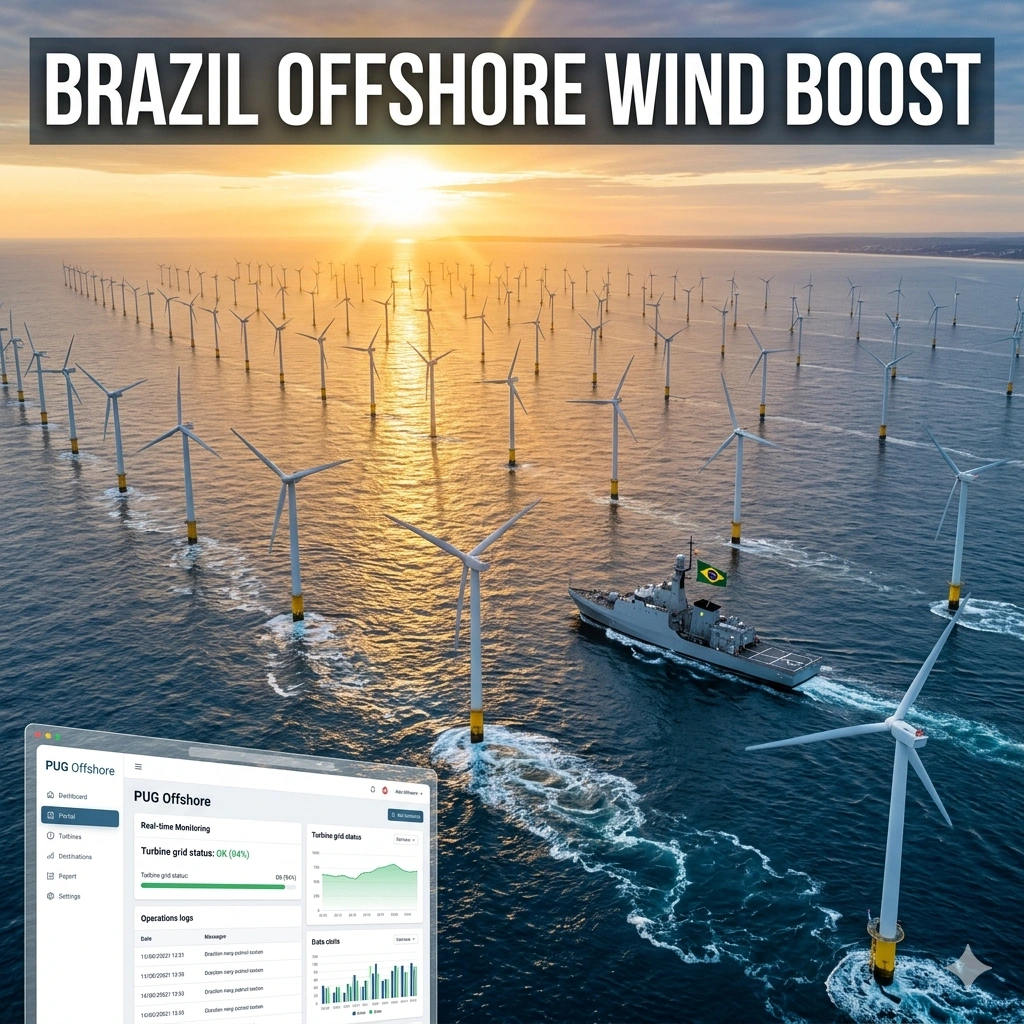
Unlocking the 1,200 GW Maritime Energy Frontier
The sheer scale of the Brazil offshore wind potential is difficult to overstate, with technical estimates suggesting a capacity of 1,200 gigawatts across various maritime regions. This potential is strategically distributed across the Northeast, Southeast, and South coasts, where consistent wind speeds provide ideal conditions for large-scale power generation. The CNPE’s new guidelines serve as the blueprint for tapping into these resources, moving beyond theoretical estimates into actionable project development. By formalizing the regulatory decree, Brazil is signaling to the international community that its waters are open for sophisticated energy infrastructure.
Moreover, the development of this Brazil offshore wind potential is expected to be a massive engine for socioeconomic development over the coming decades. Government projections indicate that the sector could support more than 500,000 high-quality jobs by the year 2050. These roles will span manufacturing, specialized engineering, maritime logistics, and long-term maintenance of offshore turbines. This strategic focus ensures that the energy transition does not just provide clean electricity but also fosters a robust industrial ecosystem that can sustain the Brazilian economy for generations to come.
Brazil Offshore Wind Potential
The regulatory framework approved this week provides the necessary structure to harness the Brazil offshore wind potential through a series of specialized administrative tools. Central to this plan is the identification of “Prism” areas, which are specific maritime blocks designated for energy exploration and production. These areas will be managed through a unified digital interface known as the Single Portal for the Management of Offshore Areas (PUG Offshore). This portal is designed to eliminate bureaucratic bottlenecks by centralizing all project approvals, environmental licenses, and technical documentation in one location.
- The framework establishes a 12-nautical-mile baseline from the coast for the initial identification of development zones.
- Regional assessments will prioritize the Northeast and South regions due to their superior wind profiles and existing port infrastructure.
- The PUG Offshore system will integrate data from various federal agencies to streamline the “one-stop-shop” licensing process.
- Technical studies will be mandated to ensure that wind farms do not interfere with existing maritime shipping lanes or biodiversity.
Digitalization of the Offshore Licensing Process
A major hurdle for large-scale energy projects has historically been the complexity of multi-agency licensing, but the new guidelines for Brazil offshore wind potential address this directly. The PUG Offshore platform represents a leap forward in administrative transparency and speed. By digitizing the workflow, the CNPE aims to reduce the time from initial bid to first power generation. This digital infrastructure is crucial for maintaining the interest of multinational energy firms that require predictable timelines for their multi-billion dollar capital investments in the maritime sector.
Furthermore, the digitalization strategy includes a robust spatial planning component that accounts for environmental sensitivity. The guidelines emphasize that while the Brazil offshore wind potential is vast, development must be balanced with the protection of marine ecosystems. The PUG Offshore portal will feature real-time data overlays showing migratory paths and protected coral reefs, allowing developers to design projects that minimize ecological impact. This proactive approach to environmental governance is intended to satisfy strict international ESG (Environmental, Social, and Governance) standards, making Brazilian projects more attractive to green finance.
Economic Impacts and Job Creation Projections
The decision to unlock the Brazil offshore wind potential is fundamentally an economic strategy as much as an environmental one. The projected 500,000 jobs by 2050 will be distributed across the entire supply chain, from the production of massive steel towers to the deployment of advanced subsea cables. Coastal cities in the Northeast are already preparing for this windfall by upgrading their port facilities to handle the massive components required for offshore turbines. This industrial shift is expected to revitalize regional economies that have traditionally relied on more volatile sectors like tourism or artisanal fishing.
In addition to direct employment, the Brazil offshore wind potential will stimulate significant indirect economic activity. Local service providers, specialized maritime transport companies, and educational institutions will all see increased demand for their services. The government is already discussing partnerships with technical schools to create specialized curricula focused on offshore wind technology. This ensures that the workforce of the future is prepared to lead the green energy sector, keeping the economic benefits of the energy transition firmly within the country’s borders.
Strategic Guidelines for Regional Development
The CNPE resolution outlines how different regions will contribute to the overall Brazil offshore wind potential through targeted development strategies. The Northeast is characterized by high, constant winds and shallow waters, making it the most cost-effective region for early-stage projects. Conversely, the South and Southeast regions offer proximity to the country’s largest industrial centers, reducing the costs associated with long-distance power transmission. By balancing these regional strengths, the government aims to create a diversified and resilient national energy grid.
- The South region will focus on deep-water technology to leverage its proximity to major energy-consuming hubs like São Paulo.
- The Northeast will serve as a testing ground for floating wind technology, which could further expand the usable maritime territory.
- Interconnection studies are currently underway to ensure that the massive power generated offshore can be integrated into the national grid.
- Local content requirements are being evaluated to encourage the growth of a domestic manufacturing base for wind turbine components.
Legal Structure of Law No. 15,097/2025
The success of the Brazil offshore wind potential relies on the rock-solid legal foundation provided by the new legislation passed in 2025. Law No. 15,097/2025 sets the rules for the “assignment of use” of maritime spaces, ensuring that developers have secure, long-term rights to the areas they develop. This law prevents overlapping claims and provides a clear mechanism for the payment of royalties to the state. The CNPE’s recent guidelines act as the “regulator’s manual,” detailing exactly how the provisions of this law will be executed on a day-to-day basis.
Investors have long called for this level of detail to mitigate the political and legal risks associated with offshore ventures. With the guidelines now in place, the path is clear for the first official auctions of offshore blocks. The government expects to finalize all remaining regulatory decrees by May 2026, which will trigger a surge in formal project submissions. This legal clarity is the final piece of the puzzle needed to convert the theoretical Brazil offshore wind potential into a tangible, power-producing reality that can drive national growth.
Maritime Boundaries and Environmental Research
A key feature of the recent announcement is the establishment of the 12-nautical-mile reference point, which defines the initial boundaries for the Brazil offshore wind potential. This boundary was chosen to balance the need for high-velocity winds found further out at sea with the logistical ease of remaining closer to shore. However, the CNPE has noted that these boundaries are not set in stone. As ongoing environmental and economic research provides more data, the government may expand these zones to include areas further onto the continental shelf.
This adaptive management approach is essential for a sector that is still in its infancy in South America. Extensive maritime surveys are currently being conducted to map the seabed and monitor avian migration patterns. This data will be fed back into the PUG Offshore system, allowing for the “Prism” areas to be refined over time. By basing the development of the Brazil offshore wind potential on rigorous scientific data, the government is ensuring that the sector grows in a way that is sustainable and avoids the costly legal challenges that have delayed projects in other parts of the world.
Future Projections for 2030 and Beyond
Looking ahead, the roadmap for the Brazil offshore wind potential suggests that the first operational turbines could be spinning as early as 2030. Between now and then, the focus will be on infrastructure development and the completion of the first round of competitive bidding. The government’s goal is to have several gigawatts of capacity under construction by the end of the decade. This aggressive timeline is necessary if Brazil is to meet its international climate commitments and maintain its status as a leader in the global green energy transition.
The long-term vision involves not just domestic consumption but also the potential for green hydrogen production. By using the massive surplus from the Brazil offshore wind potential to power electrolyzers, the country could become a major exporter of carbon-free fuel to Europe and Asia. This “green hydrogen” synergy is a key part of the government’s 2050 strategy, turning the ocean’s wind into a versatile energy commodity. As the global demand for clean energy continues to rise, Brazil’s strategic maritime resources will become increasingly central to the world’s energy security and environmental health.
Navigating the Challenges of Offshore Logistics
While the Brazil offshore wind potential is immense, the logistical challenges of building in the open ocean are equally significant. Constructing and maintaining massive turbines requires specialized vessels, deep-water ports, and a highly coordinated supply chain. The CNPE guidelines emphasize the need for “Port Infrastructure Clusters” that can serve as staging areas for offshore assembly. These clusters will require billions of dollars in investment but are essential for reducing the overall levelized cost of energy for offshore wind projects.
Additionally, the synchronization of offshore wind with the existing hydropower-dominated grid presents technical hurdles. Because wind is variable, the national grid operator (ONS) must implement advanced forecasting and energy storage solutions. The Brazil offshore wind potential will likely be paired with large-scale battery systems or pumped-storage hydro to ensure a steady supply of electricity. These technical solutions are already being integrated into the national energy plan, ensuring that the influx of offshore wind power strengthens rather than destabilizes the country’s electrical infrastructure.
Conclusion and Strategic Next Steps
The approval of these strategic guidelines is a watershed moment for the energy sector, confirming that the Brazil offshore wind potential is the next great frontier for the nation. By providing a clear regulatory path, digitalized licensing, and long-term economic projections, the CNPE has laid the groundwork for a multi-decade boom in renewable energy. As the world watches, Brazil is proving that it has the political will and the natural resources to lead the global shift away from fossil fuels. The journey toward 1,200 GW has officially begun, promising a cleaner, wealthier, and more resilient future for all Brazilians.
For more details & sources visit: TGS4C
Read more about Brazil news on 360 News Orbit – Brazil.