
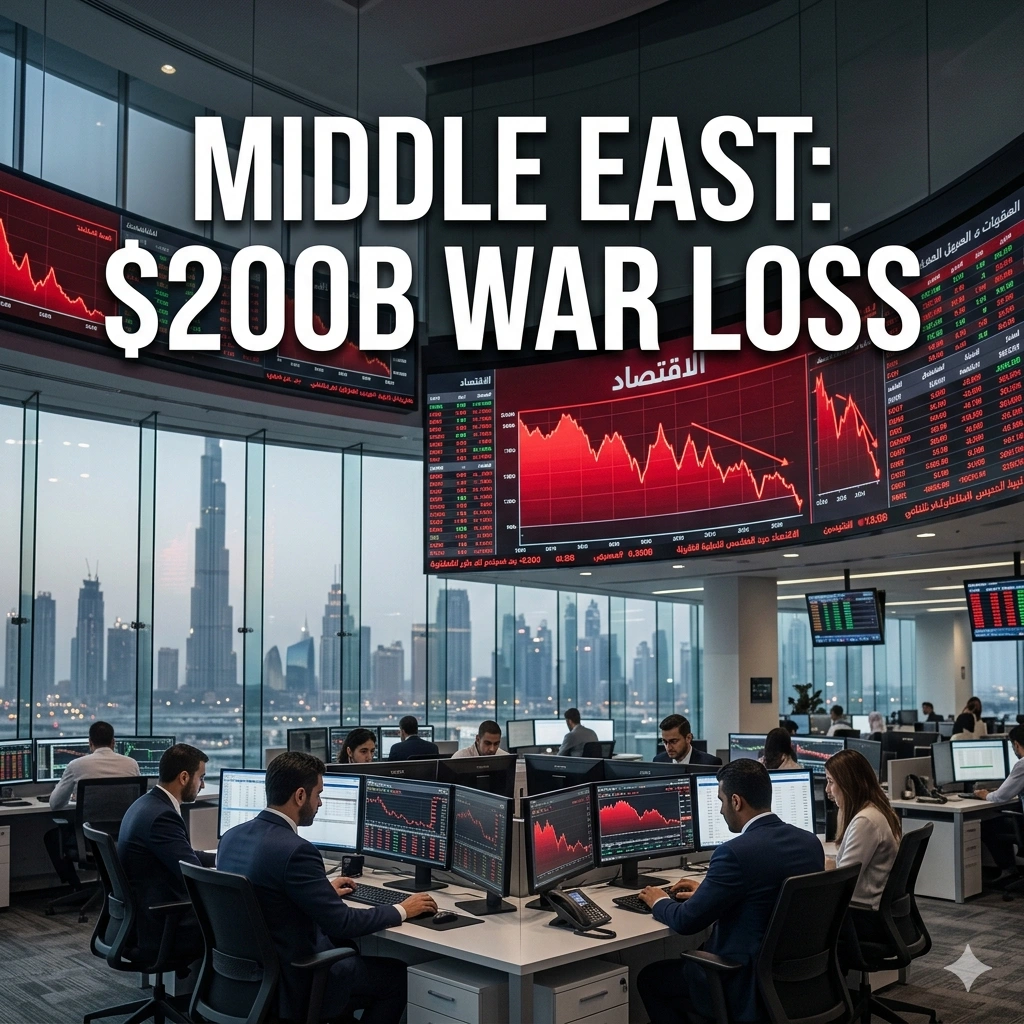
The Iran conflict economic blow has officially reached a staggering $200 billion threshold, according to the latest emergency report from the United Nations Development Programme. This massive financial hemorrhage is not limited to the immediate combat zones but is rippling through the entire Middle East, threatening to destabilize decades of developmental progress. As the war involving the U.S., Israel, and Iran escalates, the regional GDP is projected to contract by an alarming 6%. For millions of families, this Iran conflict economic blow translates to a desperate struggle for survival as food and energy prices skyrocket. The closure of the Strait of Hormuz has essentially throttled the lifeblood of global trade, making this crisis a worldwide concern.
The UNDP Assessment of Regional Contraction
The United Nations has titled its latest assessment “Military Escalation in the Middle East: Economic and Social Implications,” and the findings are devastating. Abdallah Al Dardari, the UN Assistant Secretary-General, warned that the Iran conflict economic blow will cause GDP declines exceeding 5.2% across the Gulf Cooperation Council and Levant regions. This contraction is fueled by a total halt in foreign investment as the region is now deemed a high-risk zone by global markets. The report emphasizes that even if a ceasefire were signed tomorrow, the structural damage to these economies would take years to repair. The Iran conflict economic blow is effectively wiping out the “peace dividend” that many Arab nations had relied on for modernization.
Financial markets have reacted with extreme volatility, as the uncertainty of a prolonged conflict discourages long-term capital formation. The Iran conflict economic blow is particularly harsh on diversifying economies like Saudi Arabia and the UAE, which were in the midst of ambitious transition projects. Now, resources that were earmarked for infrastructure and technology are being diverted to emergency subsidies and defense spending. The UNDP highlights that the loss of investor confidence is perhaps the most invisible but damaging aspect of the Iran conflict economic blow. Without a stable geopolitical environment, the flow of international finance has slowed to a trickle, leaving local businesses to wither.
Unemployment and the Poverty Surge
Beyond the high-level GDP figures, the Iran conflict economic blow is creating a human rights catastrophe by spiking unemployment rates. The report projects that 3.6 million jobs will be lost as industries ranging from tourism to logistics collapse under the weight of the war. This surge in joblessness is expected to push an additional 4 million people into extreme poverty, reversing years of progress in human development. The Iran conflict economic blow is creating a “lost generation” of workers who find themselves without income in an increasingly expensive world. In countries already struggling with inflation, this combination of factors is a recipe for internal social unrest.
The social fabric of the Middle East is being stretched to its breaking point by the Iran conflict economic blow. Families that were previously considered middle-class are now finding it impossible to afford basic necessities like wheat and cooking oil. The UNDP report suggests that the increase in poverty will lead to higher rates of school dropouts and a decline in public health outcomes. Because the Iran conflict economic blow is so widespread, there is no “safe” neighbor for refugees to flee to for economic relief. Every nation in the Arab world is currently bracing for a spike in the cost of living that shows no sign of slowing down.
Energy and Food Security Crisis
The closure of the Strait of Hormuz is the primary driver behind the energy spike associated with the Iran conflict economic blow. As one of the world’s most critical maritime chokepoints, its blockage has sent global oil and gas prices to record highs. This has a secondary effect on the cost of fertilizer, which in turn drives up the price of food across the globe. The Iran conflict economic blow is therefore not just a regional issue but a catalyst for a global inflationary cycle. Middle Eastern nations that rely on food imports are finding their procurement budgets stretched beyond capacity.
The UNDP report paints a grim picture of food silos emptying as shipping lanes remain contested or blocked by naval activity. The Iran conflict economic blow has made the logistics of moving grain and essential medicine a nightmare for humanitarian agencies. Supply chain disruptions have led to “panic buying” in several major Arab cities, further driving up local prices. Governments are currently scrambling to find alternative trade routes through the Red Sea or overland, but these are often more expensive and less efficient. The Iran conflict economic blow is a stark reminder of how interconnected global energy and food systems truly are.
Iran Conflict Economic Blow
The Iran conflict economic blow is exacerbated by a growing diplomatic rift in Europe regarding military participation. Italy has recently joined Spain in refusing to grant airbase access to U.S. military aircraft involved in the hostilities. This lack of a unified international response makes the Iran conflict economic blow even more difficult to manage from a policy perspective. Without a clear path to de-escalation, the financial markets remain in a state of perpetual anxiety. The Iran conflict economic blow is currently the single largest threat to the stability of the global financial system in 2026.
- Regional GDP is expected to contract by $200 billion by the end of the fiscal year.
- Unemployment is set to rise by four percentage points across the Middle East.
- Over 4 million people are at risk of falling below the poverty line.
- Energy and fertilizer prices have hit a five-year high due to supply chain breaks.
Many economists argue that the Iran conflict economic blow is a structural shift rather than a temporary dip. The destruction of physical infrastructure in combat zones will require a multi-billion dollar reconstruction effort that the UN warns may never be fully funded. The Iran conflict economic blow is also impacting the transition to green energy, as nations revert to coal and older oil refineries to meet immediate needs. This environmental setback is a hidden cost that will be felt for generations. The sheer scale of the Iran conflict economic blow makes it one of the most significant economic events of the 21st century.
Impact on the Gulf Cooperation Council (GCC)
The GCC nations, traditionally the economic anchors of the region, are facing a 5.2% decline in GDP due to the Iran conflict economic blow. These countries are seeing their massive sovereign wealth funds take hits as global markets fluctuate wildly. While high oil prices usually benefit these exporters, the inability to safely transport their products through the Strait of Hormuz negates any potential gains. The Iran conflict economic blow is forcing these wealthy nations to rethink their 2030 vision plans and focus on domestic survival. Security costs for protecting desalination plants and oil refineries have also ballooned significantly.
The Levant region is also suffering immensely, with Lebanon and Jordan seeing a total halt in their tourism industries. For these nations, the Iran conflict economic blow is a death knell for economies that were already on life support. The influx of new displaced persons from the conflict zones is putting an unbearable strain on public services. The Iran conflict economic blow has turned once-thriving trade hubs into ghost towns as merchants flee the uncertainty. Regional cooperation has broken down as nations prioritize their own food and fuel reserves over collective agreements.
The Role of International Investment
Investment in the Middle East has reached a “zero-point” because of the Iran conflict economic blow and the risk of wider escalation. Multi-national corporations that had established regional headquarters in Dubai or Riyadh are now moving their staff to safer hubs in Europe or Asia. This brain drain is a long-term consequence of the Iran conflict economic blow that will be hard to reverse. The UNDP report highlights that capital formation has dropped by nearly 40% in just a few months. Without new projects and businesses, the region faces a period of prolonged stagnation.
[Image showing a bar chart of regional GDP decline by sector]
The Iran conflict economic blow is also affecting the global tech industry, which relied on regional data centers and growing markets. Venture capital for Middle Eastern startups has completely dried up, leaving a vibrant ecosystem of entrepreneurs without support. This lack of funding is a critical component of the Iran conflict economic blow, as it prevents the creation of new jobs. The UN is calling for a “Global Marshall Plan” for the Middle East to counteract these effects, but international donors are distracted by their own domestic inflation. The Iran conflict economic blow remains an isolated tragedy in terms of financial support.
Social and Humanitarian Implications
The human cost of the Iran conflict economic blow is visible in the rising rates of malnutrition and the collapse of local healthcare systems. Hospitals are running out of imported medical supplies because of the trade blockades. The Iran conflict economic blow is preventing the purchase of high-end diagnostic equipment and essential drugs for chronic diseases. Public health officials warn that we may see the return of preventable diseases as vaccination programs are interrupted. The Iran conflict economic blow is a multi-dimensional crisis that hits the most vulnerable members of society first and hardest.
- Education spending is being slashed across the region to cover security costs.
- Women and children are disproportionately affected by the rise in food insecurity.
- Infrastructure projects for clean water are being suspended indefinitely.
- The mental health crisis following the economic collapse is reaching epidemic levels.
Social mobility has effectively stopped in the region because of the Iran conflict economic blow. Young people who were looking forward to a modernizing economy are now looking for ways to emigrate. This exodus of talent will make the eventual recovery from the Iran conflict economic blow even more difficult. The UN warns that the psychological impact of losing $200 billion in wealth will lead to a rise in radicalization and further conflict. The Iran conflict economic blow is a vicious cycle that creates the very conditions for more war.
Conclusion: A Region at a Crossroads
The Iran conflict economic blow of 2026 is a wake-up call for the international community to prioritize peace over geopolitical posturing. The $200 billion loss is a figure that should haunt every diplomat and policy maker involved in the region. The Iran conflict economic blow has shown that in the modern age, there is no such thing as a “limited” war. Every bomb dropped and every ship blocked has a direct impact on a family’s ability to eat in Cairo, Amman, or Riyadh. We must find a way to mitigate the Iran conflict economic blow before the damage becomes permanent.
The UNDP report is a final warning that the window for economic recovery is closing fast. If the conflict persists through the summer, the Iran conflict economic blow could double in size, leading to a total regional collapse. We must advocate for open trade routes and immediate humanitarian corridors to soften the Iran conflict economic blow. The future of 400 million people depends on the world’s ability to address this $200 billion crisis. Let us hope that the Iran conflict economic blow is the catalyst for a new era of regional diplomacy and stability.
For more details & sources visit: The Express Tribune
Read more on Iran news: 360 News Orbit – Iran.