
President el-Sisi Urges Donald Trump Strong Diplomatic Moves to End Crisis are currently dominating the international headlines as the Middle East faces a pivotal moment. The Egyptian leader has made it clear that the path to regional stability must go through Washington, D.C., specifically appealing to the current administration’s unique leverage. This direct communication highlights the deteriorating security situation in the Gulf that began with major kinetic exchanges in late February. President el-Sisi Urges Donald Trump to leverage American diplomatic and economic might to prevent a total collapse of the current regional order.
The urgency of this message stems from the catastrophic potential of a prolonged conflict between major regional powers and Western interests. As the war enters its second month, the ripple effects are being felt from the oil markets of the Gulf to the shipping lanes of the Mediterranean. President el-Sisi Urges Donald Trump to recognize that traditional multi-lateral diplomatic efforts have reached a stalemate, requiring a bold intervention. Egypt’s position as a historical mediator makes this appeal particularly significant, as it reflects the collective anxiety of neighboring Arab states.
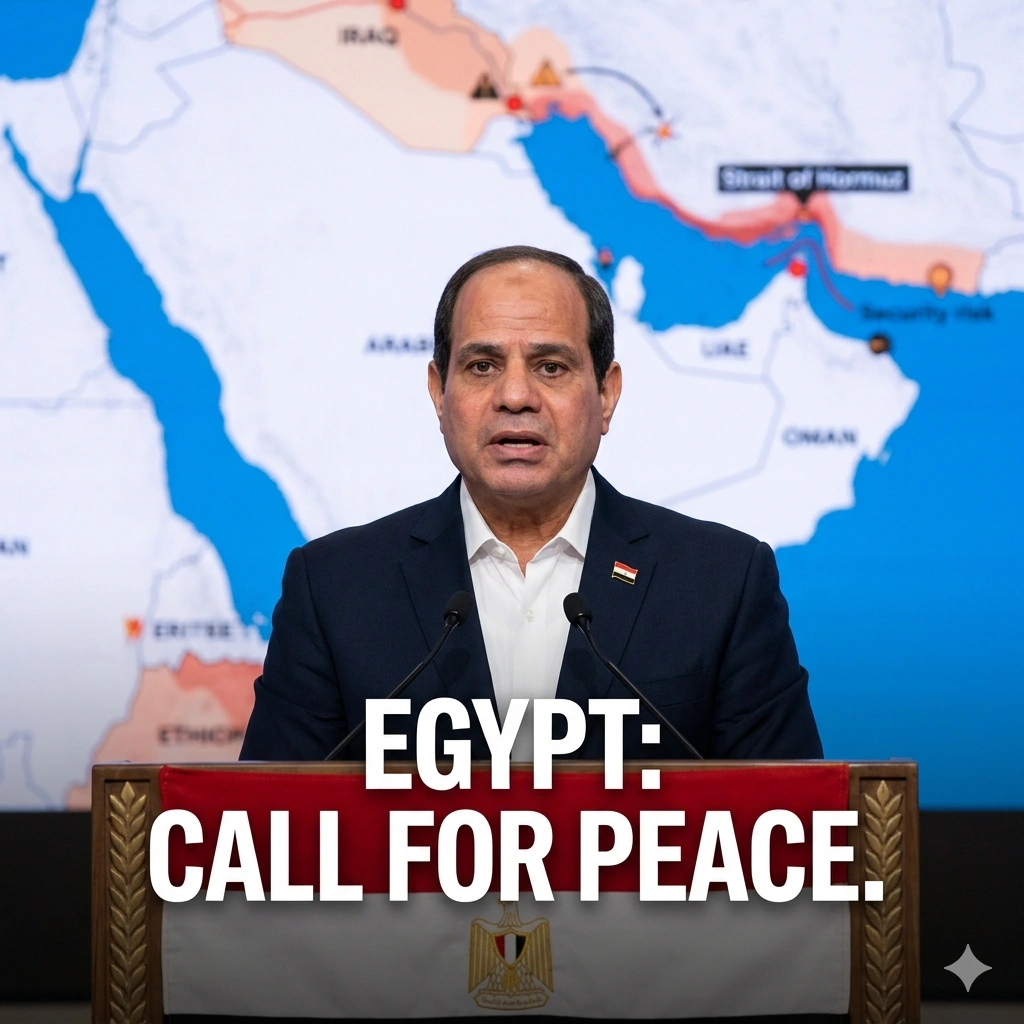
The Geopolitical Weight of the Appeal
The recent statement from Cairo serves as a stark reminder of the United States’ role as the primary security guarantor in the Middle East. President el-Sisi Urges Donald Trump to act because the Egyptian government views the U.S. as the only entity with sufficient influence over all belligerents. This perspective is shared by many regional capitals that fear the current trajectory will lead to an uncontrollable regional conflagration. The phrase “nobody can stop the war but you” encapsulates the high expectations placed on American leadership during this period of intense volatility.
Strategically, Egypt is concerned that the escalation will permanently alter the power balance in the region, leading to long-term instability. President el-Sisi Urges Donald Trump to intervene before the conflict reaches a point of no return where diplomatic de-escalation is no longer possible. The Egyptian administration has been working behind the scenes to facilitate dialogue, but those efforts require the heavy lifting that only a superpower can provide. This public plea is a calculated move to force the crisis to the top of the White House’s global agenda.
Impact on the Suez Canal and Global Trade
One of the primary drivers behind the Egyptian president’s urgency is the direct threat to the Suez Canal’s operational security. President el-Sisi Urges Donald Trump to consider the global economic consequences of a disrupted maritime corridor, which is vital for Egypt’s national revenue. The ongoing conflict has already led to increased insurance premiums for vessels traversing the Red Sea and the Gulf of Aden. If the war expands, the risk of a total blockade or significant reduction in traffic becomes a terrifying reality for the North African economy.
- Shipping volumes have seen a noted decline since the February strikes began.
- Global energy prices remain volatile as long as the Gulf remains a combat zone.
- Alternative trade routes are being explored by major logistics firms to bypass the risk.
- Supply chain delays are impacting manufacturing sectors across Europe and Asia.
Regional Security and the Threat of Escalation
The fear of a broader regional war is the central theme of the message where President el-Sisi Urges Donald Trump to act as a peacemaker. Military analysts point out that the current exchanges could easily draw in neighboring states, turning a localized conflict into a continental disaster. The Egyptian military has been on high alert, monitoring its borders and ensuring that the domestic front remains secure. However, no amount of internal preparation can fully shield the country from the fallout of a total regional meltdown.
Furthermore, the humanitarian implications of a widened war are weighing heavily on the minds of Arab leaders. President el-Sisi Urges Donald Trump to realize that displacement and infrastructure destruction will create a new refugee crisis that could destabilize North Africa and Southern Europe. The Egyptian president emphasized that the cost of peace, however high, is far lower than the cost of an uncontained war. This pragmatic approach to security is the hallmark of Cairo’s current foreign policy during this unprecedented crisis.
President el-Sisi Urges Donald Trump
The core of the diplomatic effort is centered on the fact that President el-Sisi Urges Donald Trump to utilize a personal brand of diplomacy to break the deadlock. Unlike traditional bureaucratic processes, direct presidential intervention is seen as the quickest route to a ceasefire agreement. The Egyptian leader believes that the unique relationship between the two presidents could be the key to unlocking a functional peace process. This “leader-to-leader” strategy is designed to bypass the slow-moving gears of international organizations that have so far failed to stop the fighting.
Inside the Egyptian cabinet, there is a belief that the U.S. president’s desire for “great deals” could be applied to a comprehensive Middle East peace framework. President el-Sisi Urges Donald Trump to view the resolution of the Iran conflict as a historic achievement that would define his legacy on the world stage. By framing the intervention as an opportunity rather than just a burden, Egypt hopes to incentivize a more aggressive American diplomatic push. The coming weeks will be critical in determining if this high-stakes gamble in public diplomacy will yield the desired results.
Economic Fallout in North Africa
The North African economic landscape is particularly vulnerable to the shocks caused by the war in the Gulf. President el-Sisi Urges Donald Trump to understand that Egypt’s internal stability is closely tied to the health of the global energy and food markets. Rising costs of imports are putting pressure on the Egyptian pound, making it harder for the government to maintain social safety nets. This economic pressure is a “silent killer” that could lead to domestic unrest if the war is not brought to a swift conclusion.
- Inflationary pressures are mounting on basic commodities like wheat and fuel.
- Foreign direct investment has slowed as investors adopt a “wait and see” approach.
- Tourism, a vital sector for Egypt, is seeing a rise in cancellations due to safety concerns.
- The national budget is being diverted from development projects to emergency security measures.
The Role of Gulf Partners in the Crisis
While the focus is on Washington, the role of Saudi Arabia and the UAE cannot be ignored in the context of why President el-Sisi Urges Donald Trump to lead. These nations are on the front lines and have their own complex relationships with both Iran and the United States. Egypt acts as a bridge between these Gulf monarchies and the Western world, ensuring that a unified Arab voice is heard. The coordination between Cairo and Riyadh is at an all-time high as they seek a common exit strategy from the current military quagmire.
The Egyptian leader’s appeal also serves to remind the U.S. of its commitments to its long-standing allies in the region. President el-Sisi Urges Donald Trump to honor the strategic partnerships that have been the bedrock of Middle Eastern security for decades. Without clear American direction, there is a risk that these allies might take independent actions that further complicate the conflict. A unified strategy led by the White House is seen as the only way to keep the coalition together and focused on a peaceful resolution.
Military Readiness and Border Control
Amidst the diplomatic maneuvering, the Egyptian Armed Forces have maintained a posture of “armed neutrality” while President el-Sisi Urges Donald Trump to negotiate. Surveillance along the eastern borders has been intensified to prevent any spillover of non-state actor activity. The military leadership is providing the president with daily briefings on the technical aspects of the war, including missile trajectories and naval movements. This high level of readiness is intended to show that while Egypt seeks peace, it is fully capable of defending its sovereign interests if necessary.
The technical challenges of monitoring a war that involves high-tech drones and cyberattacks are significant. President el-Sisi Urges Donald Trump to share intelligence and defensive technology that can help regional partners protect their critical infrastructure. The fortification of the Suez Canal zone remains a top priority, with new anti-drone systems and coastal sensors being deployed. This defensive buildup is a necessary precaution in an environment where the rules of engagement are constantly shifting.
Public Sentiment in Egypt and the Arab World
The Egyptian public is watching the conflict with a mix of concern and solidarity with those affected by the violence. President el-Sisi Urges Donald Trump to act partly because of the domestic pressure to see a resolution that protects Arab dignity and interests. Social media across the region is filled with calls for an end to the “senseless destruction” and a return to the negotiating table. The Egyptian government must balance its strategic needs with the emotional and political expectations of its large and youthful population.
- Pro-peace demonstrations have been organized in various cities across Egypt.
- Educational forums are discussing the history of the region to provide context to the current war.
- Charitable organizations are preparing aid packages for civilians caught in the crossfire.
- Local media outlets are focusing on the human stories of those impacted by the maritime disruptions.
The Breakdown of Traditional Diplomacy
The reason President el-Sisi Urges Donald Trump to intervene so directly is the perceived failure of the United Nations and other international bodies. Throughout March 2026, various resolutions and “statements of concern” have done little to stop the exchange of fire. The Egyptian leadership views these institutions as too divided and slow-moving to handle the rapid escalation of a modern conflict. Consequently, the “Sisi-Trump” channel is seen as a more viable and effective alternative to the gridlock of the UN Security Council.
This shift toward bilateral or “minilateral” diplomacy is a growing trend in global politics, especially in the Middle East. President el-Sisi Urges Donald Trump to recognize this reality and take the lead in forming a “coalition of the willing” for peace. This would involve a small group of influential nations working outside the standard bureaucratic frameworks to achieve a fast-acting ceasefire. Egypt is ready to host these high-level summits in Cairo or Sharm El-Sheikh to facilitate the process as soon as Washington gives the green light.
Energy Security and the Global Market
The war on Iran has sent shockwaves through the global energy market, which is why President el-Sisi Urges Donald Trump to stabilize the situation. As a net energy importer in some sectors and an exporter in others, Egypt is uniquely sensitive to price fluctuations. The risk of the Strait of Hormuz being closed remains the “doomsday scenario” for global energy security. If this chokepoint is compromised, the global economy could face a recession deeper than anything seen in recent history.
- Oil prices have spiked by over 20% since the conflict began on February 28.
- Natural gas supply chains to Europe are being re-routed to avoid combat zones.
- Renewable energy projects in the region have seen a surge in interest as a security hedge.
- Emergency energy reserves are being tapped by several nations to stabilize domestic prices.
President el-Sisi’s Historical Relationship with Trump
The rapport between the two leaders is a crucial element in why President el-Sisi Urges Donald Trump to take the lead. During previous years, they have maintained a level of mutual respect and frequent communication that is rare in international relations. This personal connection allows for a level of honesty and directness that is often lost in formal diplomatic cables. President el-Sisi is essentially “cashing in” on this political capital to save the region from a catastrophic war.
This relationship is not without its critics, but in a time of war, results matter more than optics. President el-Sisi Urges Donald Trump to use his influence over Israeli and Gulf leaders to create a coordinated front for de-escalation. The Egyptian president understands the American president’s preference for direct action and is tailoring his message to match that style. By positioning Trump as the “only one” who can fix the problem, el-Sisi is appealing to the very core of the U.S. leader’s political identity.
Long-term Consequences of Inaction
The message where President el-Sisi Urges Donald Trump to intervene contains a subtle warning about the consequences of American withdrawal or hesitation. If the U.S. does not lead the peace process, other global powers like China or Russia may step in to fill the vacuum. This would significantly diminish American influence in a region that has been a cornerstone of its foreign policy for nearly a century. Maintaining the current world order requires active participation and leadership in the face of crisis.
Furthermore, the radicalization of the region’s youth is a long-term threat that thrives in the chaos of war. President el-Sisi Urges Donald Trump to consider that every day the conflict continues, the seeds of future instability are being sown. A quick and decisive end to the war would allow for reconstruction and the return of economic opportunity, which are the best antidotes to extremism. The Egyptian leader is looking at the horizon, not just the immediate tactical situation, and he sees a dark future if peace is not secured now.
The Role of International Media and Public Perception
The way the conflict is portrayed in the media is another factor in why President el-Sisi Urges Donald Trump to control the narrative. Global news cycles are currently dominated by images of destruction, which can fuel further anger and escalation. By taking a bold step toward peace, the U.S. could change the global conversation from one of war to one of reconciliation. Egypt’s state-owned media has been instructed to support the president’s call for peace, preparing the public for a potential diplomatic breakthrough.
- Journalists are facing increasing risks while reporting from the Gulf combat zones.
- Cyber warfare includes the spread of misinformation designed to incite panic.
- International NGOs are calling for a “media ceasefire” to allow for humanitarian aid.
- The Egyptian press highlights the diplomatic efforts of the presidency as a beacon of hope.
Conclusion and the Path Forward
The appeal where President el-Sisi Urges Donald Trump to end the war on Iran is a defining moment for 2026 diplomacy. It highlights the desperation of regional leaders and the immense responsibility placed on the shoulders of the United States. Whether this plea will result in a concrete ceasefire remains to be seen, but the move has certainly shifted the diplomatic focus back to the White House. Egypt has done its part by sounding the alarm; now the world waits for the American response.
In the final analysis, the stability of the Middle East, the security of global trade, and the legacy of the current U.S. administration are all on the line. President el-Sisi Urges Donald Trump to choose the path of the peacemaker, a choice that could prevent a global tragedy and usher in a new era of cooperation. As the sun sets over the Suez Canal, the hope for a peaceful tomorrow rests on the decisions made in the coming hours and days. The stakes could not be higher, and the window for action is closing fast.
For more details & sources visit: Al Jazeera
Read more about Egypt news on 360 News Orbit – Egypt.